Tag: chemistry

  • Instafire Fire and Charcoal Starter

    Instafire Fire and Charcoal Starter

    InstaFire Fire Starters

    A few weeks ago I was approached by the guys at Instafire to try out their product. I saw it on Sharktank and was already familiar with it so of course I said okay. I have messed with various fire starters before so I was not really expecting much, but after using it, I think its one of the best firestarting products I have used.

    It burns a lot like vasoline soaked cotton balls for those woodsman who have tried that common tool, but it is infinitely less messy and burns a lot hotter.

    Using Instafire is simple, if its the charcoal starter (as seen in the video above) just light two sides of the bag and place under the grate so air can flow, then stack charcoal on the grate so the flames can ignite it.

    My camera did not do so well in the heat, so it is a little foggy in the video, but you can see in it that a single starter pack burned long after the coals started to turn white, which is an indication that this stuff is as fire and forget as a burning tool can be.  You don’t have to mess with lighting and relighting and pouring lighter fluid and relighting over and over again.

    Now for the fire starter bag, I didn’t video this because its just too easy – pour the contents on a non-porous surface (like a rock) light it and put your wood over it.  I am not one to follow directions, so I poured mine on a log and then pout more wood over it and that works as well.

    This product is simple and contains no hazardous chemicals – its basically wood pulp, a special blend of paraffin wax, and perlite.  When its done, it is a great fertilizer for your garden.

    Instafire is such a great product, in 2011 it won the innovative product of the year award as well as being funded on Sharktank.

    It comes in small individual bags you can keep in your hunting bag or emergency kit, as well as large buckets you can keep at the cabin or near the fireplace.  I love it and have decided to become an affiliate – which, as you know, I review a lot of stuff, but I don’t become an affiliate very often.

  • Chemical Warfare Agents – Toxicity at Low Levels

    Chemical Warfare Agents – Toxicity at Low Levels

    Book Review: Chemical Warfare Agents
    Buy at Amazon

    Chemical Warfare Agents is another good technical reference for those worried about WMD exposure. Like last week’s book, this is a professional text, therefore it is very detailed and information orientated.

    If your just a casual prepper then the price tag will probably turn you off, and you may be better off with a simpler book. However, if you have a understanding of chemistry, or are seriously concerned about weapons of mass destruction, then this is a good reference book to keep in your library.

    I got this book from college when I was getting my degree in Emergency Management – since my minor was homeland security I ended up with a lot of books like this.

    For some reason I never could bring myself to sell my college textbooks, figuring, I guess, that they may come in handy in the future.

    I guess that’s why I have a shelf full of algebra books.

    Update:

    I did finally sell all my algebra books, I went to the used book store with all my college text books (except for the Emergency management and homeland security texts), as well as all the non-fiction that was not useful.  I also ditched all the fiction that was not part of a collection – i.e. Louis Lamour, Stephen Hunter, Classics….  I used the money to buy some more prepper books like this, as well as to save some space in the library.

  • Handbook of Chemical and Biological Warfare Agents

    Handbook of Chemical and Biological Warfare Agents

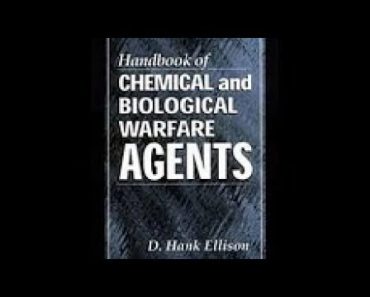
    Book Review: Handbook of Chemical and Biological Warfare Agents
    Buy at Amazon

    The Handbook of Chemical and Biological Warfare Agents is an expensive book, and it goes into a lot of detail – basically it is used as a text in various college level WMD classes.

    There is a lot of half information about dealing with chemical and biological agents, and a lot of people buying equipment to protect their families without access to effective information to ensure they are spending their money of the right equipment.

    You cannot seem to read a website about Chem-Bio without some rehash of the smells of certain chemical agents, but if you smell newly mowed hay or almonds – then you probably won’t last long enough to do anything about it…

    As I said before, this book goes into a lot of depth, HOWEVER, if your concerned about WMD, then you may want to consider learning a little more than most people.

    If you are worried about WMD (weapons of mass destruction) or CBRNE (Chemical, Biological, Radiological, Nuclear, and Explosive) then you may want to get this book to learn about the things you are afraid of.  But I am not sure the price justifies the information for the general prepper.  I mean, the information is definitely worth the money, but there is a LOT more information in the book than most people need.

    Chemical and Biological Warfare Agents works well with the chemical warfare agents book I also reviewed.

  • The Chemistry of Powder and Explosives

    The Chemistry of Powder and Explosives

    Book Review: The Chemistry of Powder and Explosives
    Buy at Amazon

    If you are interested in pyrotechnics, then The Chemistry of Powder and Explosives is a good starting place. It is an older title but it is still relevant, as are all classics.

    This book does a great job of explaining the chemistry behind energetic materials. If you have an interest in this area then you need to read his book.

    It has a really nest section on making fireworks, a large section on black powder, Manufacture of single based propellants, various nitrates and nitric esters, primary explosive compounds, and great history of this field.

    As I stated earlier, this is an older book, but the great thing about chemistry is that the laws don’t change according to whim. We might discover more things we can do, but the basics remain the same.

    Now, the caveat, while I do think that knowledge of how this works ans the skill at doing it are important and necessary to both the security of a free state as well as vital to the industrialization of a nation, I do not condone violations of the law.

    I think you should definitely buy The Chemistry of Powder and Explosives, read it, study it, and even seek out legal classes if you have the desire, but do not build anything with this knowledge until you have the proper permits, licenses, and safety protocols in place.

  • OilExTech 100A Microwave Essential Oil Distiller Review

    OilExTech 100A Microwave Essential Oil Distiller Review


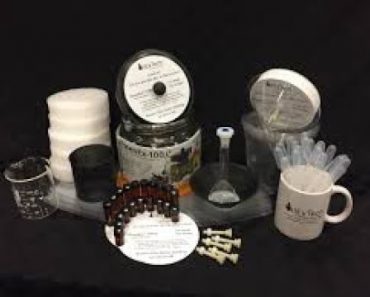
    OilExTech.com - Essential Oil ExtractionI reviewed the Original OilExTech Microwave Essential Oil Distiller some time ago, and I liked it, but I had a hard time with the ice molds.  So when the company asked if I wanted to try their new advanced model I jumped on the chance.

    This video is just the unboxing, as right now I am in the middle of getting ready for Thanksgiving and Christmas and need to prepare to do this review right as the OilExTech website now has recipes I want to try.

    They Have a Great Website

    In addition to having great recipes, success stories and lots of how to articles on their site, they also link to scientific studies about the process and analysis of the oils captured from this method compared to traditional methods.

    In my original videos I got lots of comments about microwaves “killing” the oils and while I would not expect everyone to explore the science I would hope that educated DIY’ers would love to have facts available.

    I haven’t gotten around to tape this device in use, I am working to perfect my technique.  I find it is very easy to use, but the separating the oil from the hydrosols requires a little more finesse than I can muster.  That was my problem with the original one.  It is not a design problem it is a Dave problem.