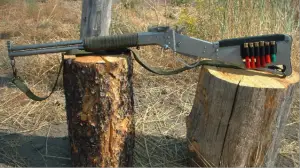
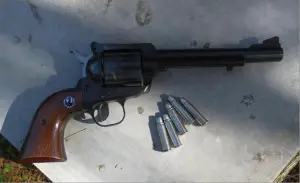
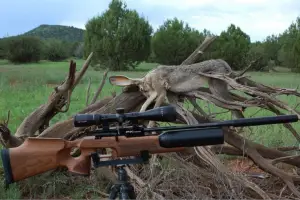
Hunting can be the most adventurous yet greatly dangerous outdoor sport. Therefore, making it as safe as possible for yourself as a hunter and the others in the locality is essential. This sport requires a set of weapons that, if not used with expertise and safety, can cause serious injury or even death.
Therefore, it is necessary to learn all the pre-requisites and method of safety rather than blindly heading out for it. There are even complete courses for hunters and even the people who live in the hunting areas.
Following are a few basic tips that will ensure a safe hunting experience for you:
Weapon Safety:
The safe use of weapons is extremely important to take care of. Taking this matter lightly can even cause a veteran hunter to hurt himself or others. Therefore, make sure you are well-informed about the rules and ways to use a weapon safely on the hunt.
Using the gun and putting your finger on the trigger just for the sake of a good laugh with other hunters can cost a life. Therefore, remember not to put your finger on the trigger until you are completely sure about the target you want to fire at. The same goes for the use of crossbows and other dangerous weapons you take along on the hunt.
Be Distinguishable:
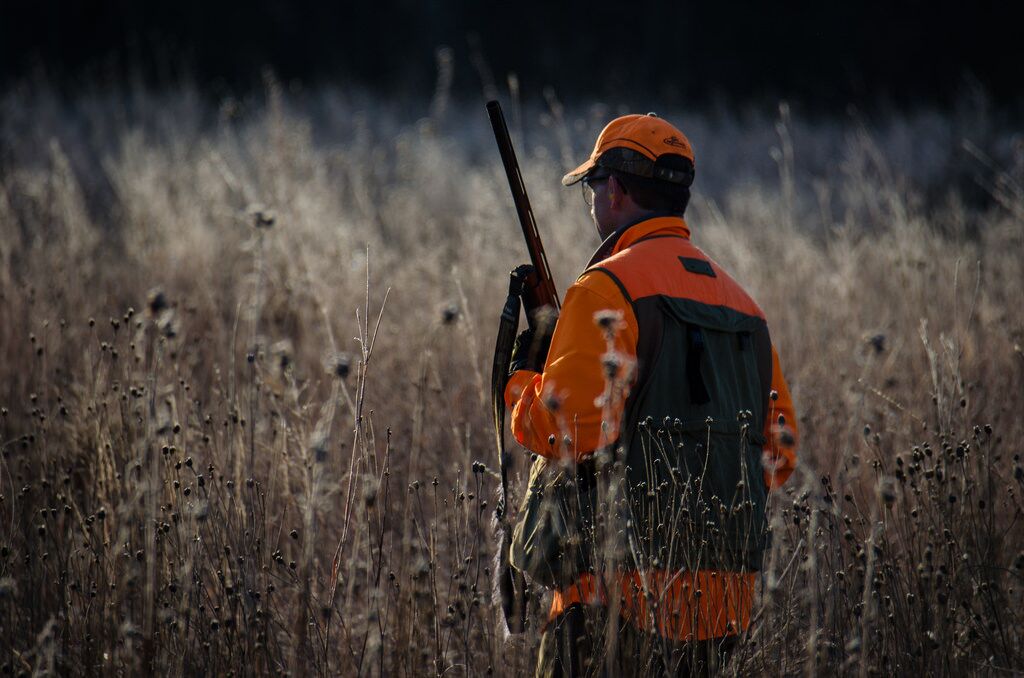
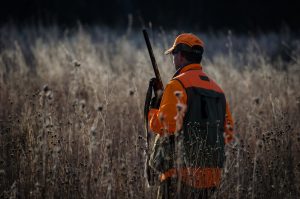
If you are in the field, you must know that there are other hunters in there as well. They can easily mistake you with an animal, if you do not make yourself distinguishable. For this purpose, wearing a bright orange jacket and cap help you stay safe because it is what commonly hunters wear on the hunt. Different brands make special jackets and hat for hunters to serve the purpose.
Heavy-Duty Snake Proof Boots:
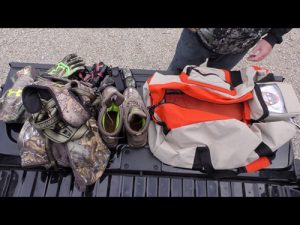
Hunting requires a lot of running and hiding in the woods and climbing trees as well. Not to forget, making such moves demand a pair of heavy duty boots. Moreover, if the boots are snake proof, that is even better as the field is mostly filled with snakes and harmful insects. Therefore, wearing such boots can ensure foot protection and keep you running for as long as you require.
Hunting in A Group:
Going out alone in the field can be greatly hazardous, especially if you are newbie. Hunting in a group is always preferable until you are completely ready for being on your own. You often need someone to provide immediate aid in case of injury or any mishap. Therefore, taking one or more hunters along with you can prevent you from feeling helpless in case of an injury or so.
Safety Course for Hunting:
If you are just getting started in the field of hunting, taking a safety course for it is essential. Moreover, it can also be helpful to refresh the concepts for those who have not been hunting for quite some time. Such courses include almost all the information and guidance you need for a safe hunting experience.
If you’re in shape, a nine-pound rifle shouldn’t be a problem. And if you’re out of shape “what the [hey] are you doing out there in the first place?”
So, deer rifles really shouldn’t be over ten pounds for those who plan on hiking in.
Distance
A longer barrel provides more accuracy over distance. Inside your barrel are grooves that add spin to your bullet.
The longer the barrel, the longer the grooves, the more the spin. Both the spin and speed of your bullet improve accuracy the higher they are. Which is why you’ll see really long barrels on sniper’s guns.
If you want to shoot distance, you’re going to need a good scope. A good scope will allow you to quickly line up the shot at 350 yards or more.
Standard scopes typically have some sort of adjustment nobs so you can adjust for elevation and wind. You’ll want this adjustment if you’re going to be anywhere but a tree stand.
Action
Action refers to the manner in which a round is chambered. In a hunting rifle, there are three methods. Bolt. Lever. And Semi-auto.
Most deer rifles are bolt action.
Bolt action is easier to maintain than either lever or semi-auto. It’s also the most reliable method to chamber a round.
Semi-auto has the possibility of getting jammed. And lever can get debris stuck in the mechanism too easily.
The sign of a good hunting rifle is its ability to eject cartridges and chamber a round without risk of jamming.
Chambering
Chambering, or better known as caliber, will either enhance or hinder your hunting.
The best deer hunting calibers include .423 Winchester, .25-06 Remington, 6.5 Creedmoor, .270 Remington, 7mm Remington Magnums, and .308 Winchesters. And the best overall is the 7mm-08 Remington.
Anything less than this will require more shots to kill your buck. Don’t waste your time.
Recoil
This is probably the least important with a deer hunting rifle. You will most likely shoot one round at a time.
If you’re a new hunter, recoil might be intimidating. So you might want to find a rifle that compensates for recoil.
Conclusion:
A lot of what determines your loyal hunting rifle is personal preference. If you have friends with multiple rifles or have multiple hunters as your friends, have them take you out to the range to shoot their guns. Find out what you’re comfortable with.
Also, don’t go for the Walmart or sports store rifles. Get your rifles at a reputable place like Christensen Arms Guns. You’re going to be spending a lot of time with your gun. Don’t sell yourself short.
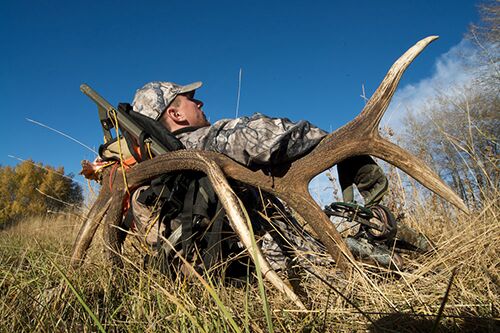
The deer hunting season is always so brief yet so intense that it calls for any deer hunter to be thoroughly prepared for it so as to take advantage of each situation that will present itself.
The aim is to become a deer hunter that has all the tricks and skills that are necessary to trick a deer into a range that a nice shot can be taken.
What better way is there to develop skills than to get some deer hunting tips that can be easily understood and implemented by anyone regardless of their hunting expertise.
There are quite some useful tips that have been determined by experienced deer hunters which can land you your priced game come next hunting season.
Additionally the folks over at WildernessToday have an infographic on the best places to shoot a deer.
The notable tips that will nullify the need to ask how fast can a deer run?
including the ones listed below:
Cover Scent
Via Outdoorlife.com
lt is important to fully cover up your scent when you go for deer hunting. This is because deer are capable of detecting human smell for up to a mile away.
Deer can also detect any smell left on the ground and in the air.lt is, therefore, advisable that hunters use scent eliminators to prevent deer from detecting them.
lt can simply be sprayed on the bottom of hunting boots and hunting stands located in the woods.
Hunters can also invest in scent-free soaps before embarking on deer hunting trips. Bathing with scent-free soaps is the only way of ensuring that the hunter’s scent is not left in the air.
Dupe Deer
Via OutdoorLife.com
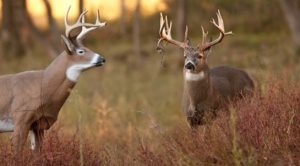
lt is vital to trick deer using calls or decoys if you desire to be successful in deer hunting. This mainly serves to bring deer into the hunter’s range where a clean shot can be taken.
Modern decoys are just exemplary as they are designed with lifelike features. Attention should be directed to the setup of the decoy as it is the main determinant of success.
Alternatively, deer hunters can use calls. Calls can be produced by bleat cans and grunt tube. Hunters can even attempt rattling antlers as a way of luring deer to take a perfect shot.
Calls can also be made with the mouth after some practice. This is even better as it frees up the hunter’s hands for accurate shooting and safer gun handling.
lt is very important to learn the techniques of using the and when they are appropriate so as to increase your chances of success.
Deer Attractants
Via hubpages.com
This is yet another successful strategy that has repeatedly been used by deer hunting veterans.
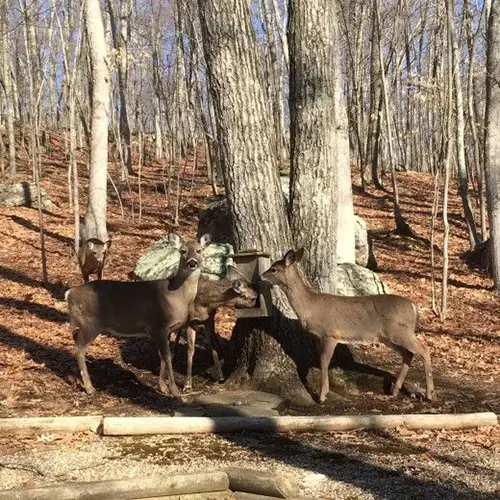
There are several types of deer attracts in the market today; they range from deer feeders, deer urine and even deer feed.
These attractants are a good way of attracting deer to your hunting stand from which a close range short that is more relative accurate can be taken from.
Using A Bow
The use of a compound bow in deer hunting has turned out to be a pretty good idea. The bow should fit both your strength and your size to guarantee comfort during use.
Hunting deer using a bow and arrow requires adequate training for one to fully hone the archery skills required.
This can be achieved by practicing shooting at different positions and elevations using locally available targets.
The recommended Arrowhead is razor-sharp broadheads as they are quite efficient about hunting game and also leave behind a good trail of blood.
Deer have an exemplary sense of hearing. ln fact, deer can detect movements that are up to 0.25 miles away on non-windy days.
Unfortunately, deer can take a period of up to two whole hours to return if they detect suspicious movements. It is, therefore, advisable to set up hunting stands two days in advance to avoid making unnecessary noise through movements.
Hunters can also try walking carefully through the woods so as not to scare off deer.
Hunting stores also have boot covers or hunting boots that are specially designed to be sound eliminating; they can greatly reduce sound produced while walking.
When To Hunt
Deer activity is highest in the early morning and near dusk, these are the best times to hunt.
Stands meant for evening hunts ought to be set up next to deer feeding areas while the morning hunts ought to target their routes to bedding.
Where to hunt
It is vital for hunters to scout for deer hunting grounds before the onset of the hunting season. The ideal hunting location that needs to be discovered is where they mate, drink, defecate and feed.
However, it should be noted that different seasons of the year put deer in different home ranges but which can be easily identified through indicators such as droppings and tracks.
Dressing
Via http://www.deeranddeerhunting.com
Comfort is important for successful deer hunting and that is why is necessary for hunters to always dress warmly while in the woods. Hunters should invest in heated socks, hunting jacket, good quality boots and warm gloves. This is because cold can ruin a good hunting day.
Small Area
Deer hunting should be carried out in a small acreage, preferably a ridge or a trail. Concentrate on heavy used areas or corridors to increase chances of success rather than to roam over a wide country.
Weather
Deer activity is very high before a storm; they will carelessly move to feeding areas at this time even if it is during the day.
The period just right after a storm is also ideal for hunting as they like feeding at this time as well. Deer hunters should be highly vigilant on their feeding areas during such weather, farm fields and oak woodlots are good feeding grounds.
Conclusion
The above insightful information about deer hunting tips outlines the top skills, tricks, and tips that are required to be incorporated into successful deer hunting. They are both easy to understand as well as to implement and are meant to develop both newbie deer hunters as well as experienced ones
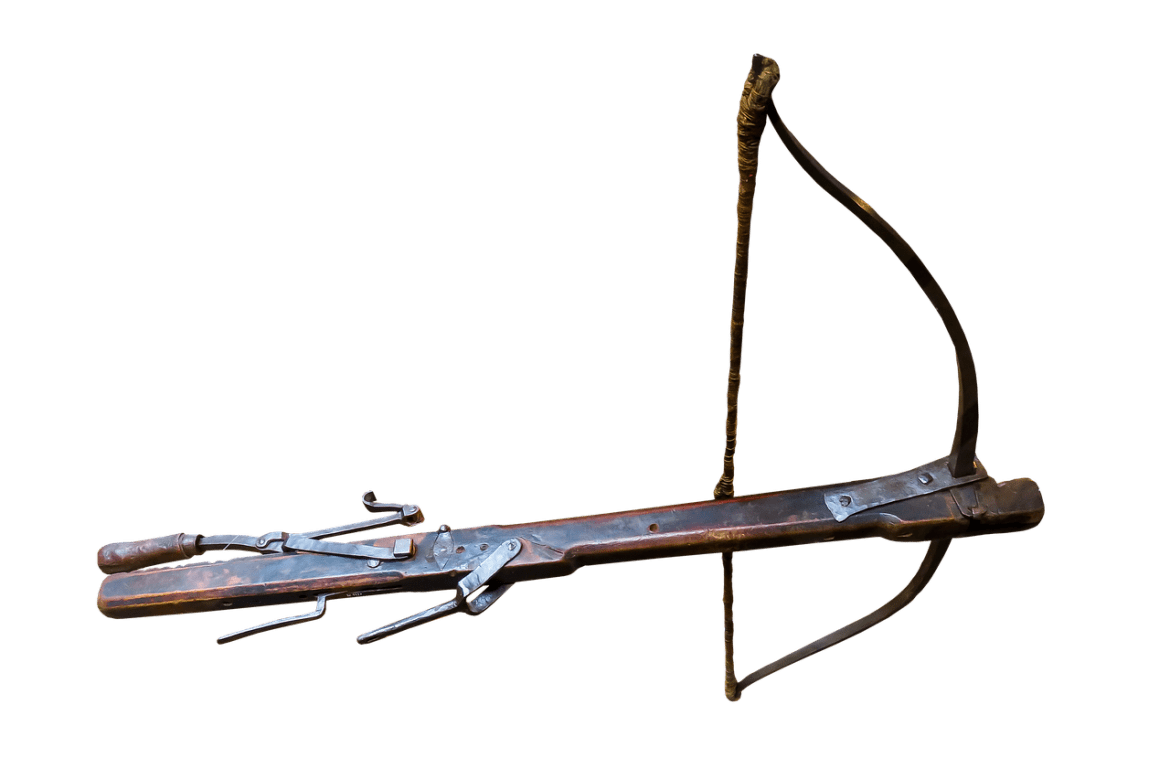
Every hunter out there who hunts regularly must have heard of or is familiar with Crossbows. Crossbows date back to medieval times, about two thousand years and still thrive well in today’s market, among hunters, artifact, relic and weapon collectors alike.
A crossbow is a type of bow that consists of horizontal bow-like assembly mounted on a stock that shoots projectiles called bows or quarrels. If you can handle a rifle or a bow, then you probably can handle a crossbow with some practice, but before you shoot a crossbow keep in mind that, as with most weapons, safety measures are necessary.
How to Cock a Crossbow
To use a crossbow, you will cock the bow before you load your arrow, then pull the string back by exerting even pressure on both sides of the barrel. Be careful not to misalign the string even by as little as half an inch as this will shift the arrows point of impact, and you will most likely miss your target.
You can decide to cock with tools or do it by hand although cocking by hand is quite a chore. It is a much better idea to invest in a cocking rope which is a featherweight device that reduces the amount of effort exerted in pulling the string. There are also other cocking aids such as the crank operated cocking aid which may come with the crossbow.
How to Shoot a Crossbow
1. To shoot your crossbow, load the arrow into the barrel. The arrows use either flat nocks or moon nocks. Make sure that the arrow is safely in place.
2. Aim for a target. Crossbows come with either a mounted scope or a sight pin arrangement created for getting a clear aim before shooting. Make sure there are no obstructions that could get in your way before you shoot. Also, don’t wrap your thumb around the crossbow forearm.
3. Let it fly. Once you have your target in sight, squeeze the trigger as you would when firing a gun, keeping the target in view as you shoot.
Crossbows are better than Guns
Any seasoned hunter will have a crossbow in his arsenal, for not only is it easy to use, it also has great hunting benefits. Compared to guns, it requires little or no practice to handle a crossbow.
Ammunition Used
Most hunters who hunt with rifles find it easy to switch to a crossbow because the same concept and technique that we use for crossbows applies to firing a gun. The only real difference is the ammunition in each weapon; an arrow from a crossbow and a bullet from a rifle. Also, there’s a kick back when you fire a gun, called recoil. That does not happen when you shoot a crossbow.
Crossbows and Stealth
Gun shots are also quite loud compared to crossbows. When you fire a rifle and miss your shot, chances are the target will escape. A hunter using a crossbow, on the other hand, has the advantage of stealth.
An arrow from a crossbow will not alert the target of your presence, and in the unlikely event that it does, the other game in that area would not notice. Crossbows are also more accurate than rifles, create less damage and they create little to no mess when it hits a target.
State Legislation for Hunting
Most states view crossbows as a part of archery, so hunters that wield crossbows enjoy an extended season of hunting compared to gun hunters, also, bowhunting is much more challenging and exciting and sporting than rifle hunting. This gives the crossbow hunting more leeway when it comes to hunting in most states compared to hunters who use rifles.
Crossbows and Longbows
A hand-drawn bow or longbow on the hand is entirely different from using a gun to hunt. In fact, the crossbow is more similar to the rifle than the longbow.
Using a longbow requires skill, practice, and precision. The archer has to be physically involved in shooting a hand drawn bow.
Your whole body becomes part of the weapon, and if it not aligned at the right angle, you are most likely to miss your target by a long shot.
Crossbows, on the other hand, require less upper body strength to fire a bow. One can use both arms to span a bow into the heart of a game.
Accuracy in shooting a longbow means that each time, the weapon must be the same shape and at the right angle and position. If the parts of the hunter’s body controlling the bow or the bow itself is at a slightly different angle, the entire weapon changes shape, and the shooter will most probably miss the target.
Crossbows are not difficult to use
The only real similarity between both weapons is that they both produce a fast moving projectile launched from a string.
Compared to the Crossbow, the longbow is quite cumbersome and has draw weights although it is also powerful and has an excellent range.
Modern technology has recreated a lot of weapons, including crossbows. Crossbows have evolved over time into sleeker, stronger and much better versions of their medieval counterparts and utilized the compound mechanisms from traditional bows.
Non-bowhunters can quickly master the use of crossbows within a short period. Obviously, a crossbows remains an asset to hunters, as it is a very useful weapon to have in your arsenal for your next hunting expedition.
When you set out on any hunting adventure, the only thing that occupies your thoughts is to get the most out of this trip. But hunting is not just about killing the prey. Your own survival, from any possible threat (of an animal or straying in the woods) also matters. Straying in the wood or being attacked by a pack of animals are quite common things.
How do you face a terrible situation like that? How would you defend yourself? And the answer is, by using your weaponry. Many of the novice hunters must be thinking, what are great survival guns? Let’s discuss them in detail.
Click Here to Purchase
What are the possible surviving situations?
Many times, we pick a far-off territory to hunt down the big or small game animal. There have been many cases where hunters lost their way. The main task in a situation like this should be your own survival until the aid arrives.
You’d have to hunt for your self-defense as well as for feeding yourself.
If you are attacked by a pack of wild animals like boar or bear, you need a swift defense. In both situations, you need an easy-to-operate survival gun.
Features to Look for in a Survival Gun
When you want a gun only for the sake of your own survival, the features that you should prefer include;
A Light Weight/Small Gun
It shouldn’t be too heavy or big. When you already are so overloaded with all the hunting gear, you should look for convenient firearm. The lighter it is, the easier it is to carry and handle.
Ultimate Firepower
The item should be the one that gets you prey as well as protects you from an unexpected attack. Opt for a gun that promises enough firepower. So, you can defend yourself in a single shot.
Reliability and Durability
What if your weapon jams or doesn’t function smoothly, at the very moment when the threat is around? What are great survival guns without reliability, NOTHING. Of all the features, its ability to work in toughest conditions, is what matters the most. The gun that you are going to carry in the far-flung land, must be reliable. Get advice from experienced hunters. Ask them about their viewpoint. Look for the professional and reliable ammo manufacturers. Instead of picking one, related to a lesser unknown brand.
An All-Purpose Weapon
This point is not for you, if you set out in a layered defense, with a variety of weapon. What if you want a single versatile weapon that operates both in self-defense and hunting? For that, the best option is a weapon that operates beyond your range as well as in close quarters.
Easy to Use
It should be easy in use. The aiming of target and pulling of trigger, both should be easy. The features must be handy. By the time, you get some experience in this field, you can opt for more technical weaponry. Its maintenance is another great task in itself. Make sure you know and understand all the functions of the gun properly.
Note:If you are a novice hunter, prefer using a simple weapon. Guns in .22 caliber are not just affordable, they are also easy to operate.
Check Local Law
Each state has defined its own ammunition laws. Before making your decision about the survival gun, it is very important to learn the requirements of weaponry. Ask the local authorities in person about their take on great survival guns’ suitable there. Look for the laws of the territory that you are going to hunt in. Mostly the laws defined by the local law enforcing authorities are related to the size of gun, type of gun and the size of the barrel. Having a prior knowledge of all those features, would make it easy to make the final choice. In case of not following this step, you might survive the animal’s attack. But your ultimate destination might be a corner in the jail.
Your Hunting Conditions
You can’t pick the right survival gun without analyzing your hunting conditions and environment. Here are a few questions that you must ask yourself, before picking the one. The questions include;
How far I am going to be, from my own territory?
How far is the rescue service?
How long would I be hunting?
Would I need a firearm to protect myself?
What is the capacity (space) of my luggage?
How much weight can I afford?
If you find a firearm that deals with all the above-mentioned questions, that is the right choice for you. Just go ahead.
Weather Friendly Weapon
Weather leaves long lasting effects on your weapon. Wet or cold weather tend to affect the performance of your weapon (even the newest). A spine chilling cold weather may freeze or jam your weapon. Secondly, a weapon exposed to rain or other moisture conditions causes corrosion and rust in your weapon.
What to Do?
To tackle such undesirable condition, it is recommended to use the weapon with parts made of polymer or stainless steel. Secondly, it is highly recommended to clean the weapon well after every use. If you fear the failing of some specific parts of the weapon, pack some spare parts with you.
Conclusion: That is all that you should know about great survival guns. Being a novice, you must have to follow each and everything mentioned here. But most of all, you must know how to use a gun. Mange your time to learn about the small details. Like how to pull the trigger, how to handle it and finally how to shot your target. Never leave your place without practicing enough with the weapon, you have finally picked. Hope this detailed guide about picking the right weapon would be helpful for you. You must be ready by now to pick the most appropriate weapon for your survival.
All the best. Hope you pick the best!!!
Joseph Gleason is the founder of Captain Hunter. We provide guides on how to hunt effectively, answer reader questions, and reviews of the latest hunting gear. We specialize in providing expert information that does exactly what it claims.
Our dedicated staff members are each seasoned professionals with a passion for hunting built upon years of in the field experience.
 Hunting can be the most adventurous yet greatly dangerous outdoor sport. Therefore, making it as safe as possible for yourself as a hunter and the others in the locality is essential. This sport requires a set of weapons that, if not used with expertise and safety, can cause serious injury or even death.
 If you are in the field, you must know that there are other hunters in there as well. They can easily mistake you with an animal, if you do not make yourself distinguishable. For this purpose, wearing a bright orange jacket and cap help you stay safe because it is what commonly hunters wear on the hunt. Different brands make special jackets and hat for hunters to serve the purpose.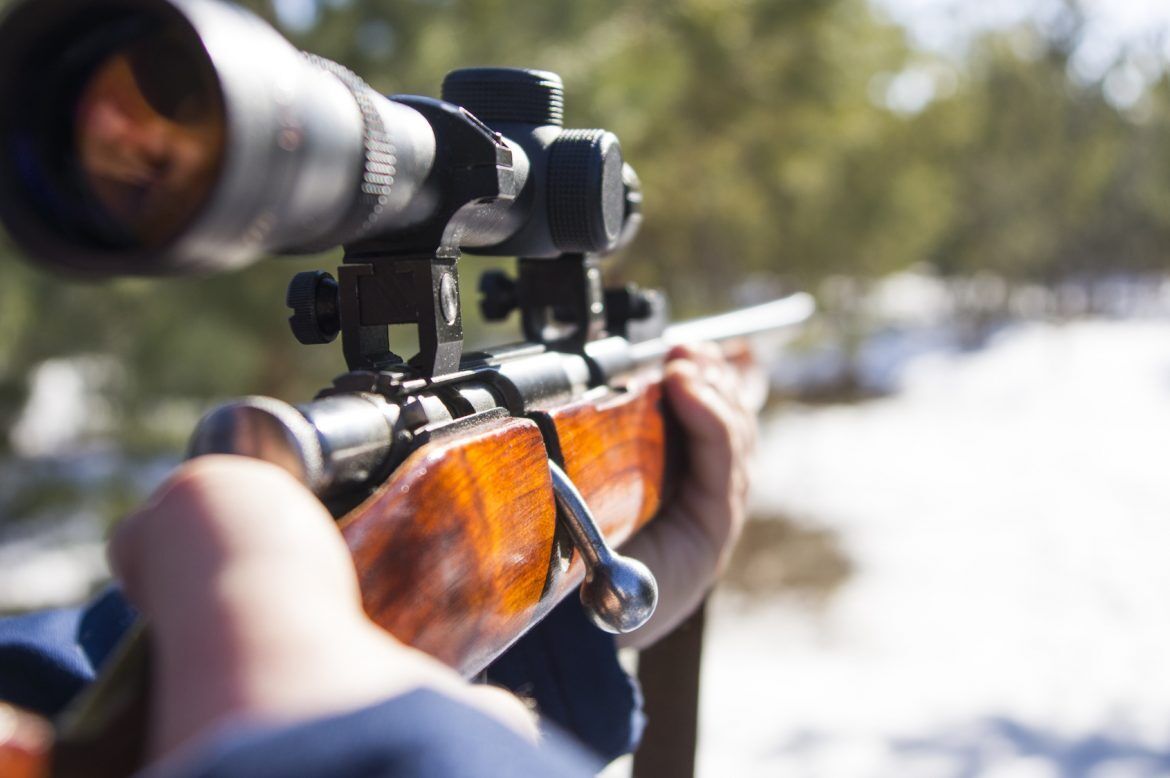

 The deer hunting season is always so brief yet so intense that it calls for any deer hunter to be thoroughly prepared for it so as to take advantage of each situation that will present itself.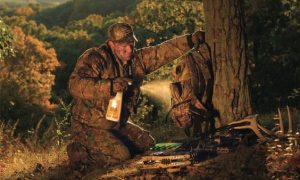

 Every hunter out there who hunts regularly must have heard of or is familiar with Crossbows. Crossbows date back to medieval times, about two thousand years and still thrive well in today’s market, among hunters, artifact, relic and weapon collectors alike.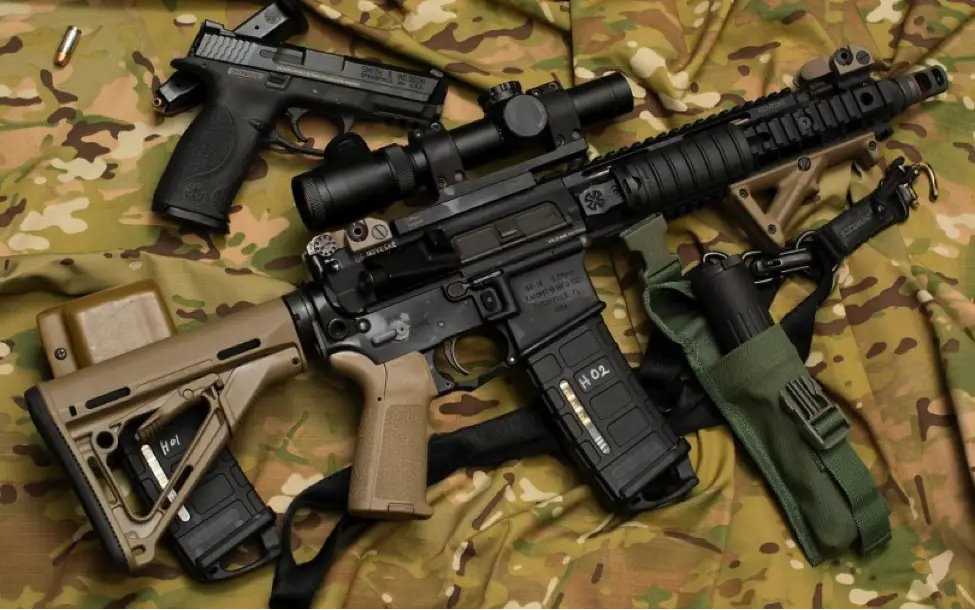

 What are the possible surviving situations?