Tag: law

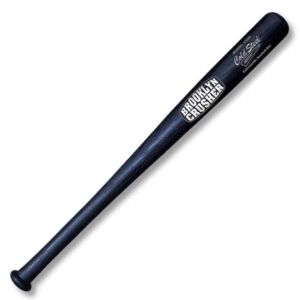
  • Tennessee Laws on the Use and Carrying of Batons

    Tennessee Laws on the Use and Carrying of Batons

    Buy at Amazon

    I am NOT a lawyer and am not giving legal opinions.  The following information is copied directly from the State of Tennessee website and is the code of law for the state.  I believe that if you want to carry a baton, you need to be familiar with baton law.  Law also changes, so please check the most recent version of this code.

    Since in my state it is illegal to carry a club or baton, I like to use a tactical pen to use for wrist locks and strikes.  with proper training they are a very effective weapon and aren’t as legally suspect.
    39-17-1307. Unlawful carrying or possession of a weapon.

    (a) (1)  A person commits an offense who carries with the intent to go armed a firearm, a knife with a blade length exceeding four inches (4″), or a club.

    (2) An offense under subdivision (a)(1) is a Class C misdemeanor, except it is a Class A misdemeanor if the person’s carrying of a handgun occurred at a place open to the public where one (1) or more persons were present.

    (b) (1)  A person commits an offense who possesses a handgun and:

    (A) Has been convicted of a felony involving the use or attempted use of force, violence or a deadly weapon; or

    (B) Has been convicted of a felony drug offense.

    (2) An offense under subdivision (b)(1) is a Class E felony.

    (c) (1)  A person commits an offense who possesses any deadly weapon with intent to employ it in the commission of or escape from an offense.

    (2) An offense under subdivision (c)(1) is a Class E felony.

    [Acts 1989, ch. 591, § 1; 1990, ch. 1029, § 6.]

    39-17-1308. Defenses to unlawful possession or carrying of a weapon.
    (a)  It is a defense to the application of § 39-17-1307 if the possession or carrying was:

    (1) Of an unloaded rifle, shotgun or handgun not concealed on or about the person and the ammunition for the weapon was not in the immediate vicinity of the person or weapon;

    (2) By a person authorized to possess or carry a firearm pursuant to § 39-17-1315 or § 39-17-1351;

    (3) At the person’s:

    (A) Place of residence;

    (B) Place of business; or

    (C) Premises;

    (4) Incident to lawful hunting, trapping, fishing, camping, sport shooting or other lawful activity;

    (5) By a person possessing a rifle or shotgun while engaged in the lawful protection of livestock from predatory animals;

    (6) By a Tennessee valley authority officer who holds a valid commission from the commissioner of safety pursuant to this part while such officer is in the performance of the officer’s official duties;

    (7) By a state, county or municipal judge or any federal judge or any federal or county magistrate;

    (8) By a person possessing a club/baton who holds a valid state security officer/guard registration card as a private security officer/guard, issued by the commissioner, and who also has certification that such officer has had training in the use of club/baton which is valid and issued by a person certified to give training in the use of clubs/batons;

    (9) By any person possessing a club/baton who holds a certificate that the person has had training in the use of a club/baton for self-defense which is valid and issued by a certified person authorized to give training in the use of clubs/batons, and is not prohibited from purchasing a firearm under any local, state or federal laws; or

    (10) By any out-of-state, full-time, commissioned law enforcement officer who holds a valid commission card from the appropriate out-of-state law enforcement agency and a photo identification; provided, that if no such valid commission card and photo identification are retained, then it shall be unlawful for such officer to carry firearms in this state and the provisions of this section shall not apply. The defense provided by this subpart shall only be applicable if the state where the out-of-state officer is employed has entered into a reciprocity agreement with this state that allows a full-time, commissioned law enforcement officer in Tennessee to lawfully carry or possess a weapon in such other state.

    (b)  The defenses described in this section are not available to persons described in § 39-17-1307(b)(1).

    [Acts 1989, ch. 591, § 1; 1990, ch. 1029, § 7; 1993, ch. 200, § 1; 1996, ch. 1009, §§ 20, 21; 1997, ch. 476, § 3; 1999, ch. 295, § 1; 2003, ch. 144, § 2.]

    In the State of Tennessee, it is against the law to carry a baton for self defense (TCA 39-17-1307).  However if the person carrying the baton is either a licensed security guard or armed civilian with a valid certification card then they have an affirmative defense to the charge (similar to carry permit for handgun).

  • Complete C&R License Process from Form to First Purchase

    Complete C&R License Process from Form to First Purchase

    .

    Shooting: C&R License from form to first purchase
    Buy at Amazon

    I recently got my Type 03 Federal Firearm License (more commonly called a C&R License).  Stubbornly, I put off getting a Curio and Relics license for years.  Once I saw how easy it was to get one I knew I should have done it decades ago.

    If you are interested in older guns, war surplus, or inexpensive guns, then the Curio and Relic FFL ( what C&R stands for) might be something to look into.

    There are some misconceptions about this type of federal firearm license.  For some of you there might be some hesitance in getting a license to go about exercising a Constitutional Right.  However, there are a lot of practical benefits of getting such a license.

    Practical Benefits of a Curio and Relics License.

    A C&R license gives you almost all the benefits of a Type 1 or Dealer FFL. The only two differences are that a Curio Relic license is for guns older than 50 years old that have historical value.  However, some newer guns are also C&R guns depending on historical significance.  You also cannot use this license to engage in the commercial business of dealing guns.

    The BATFE Determines if a Gun is a Curio or Relic.

    According to the ATF website:

    To be recognized as curios or relics, firearms must fall within one of the following categories:

    • Have been manufactured at least 50 years prior to the current date, but not including replicas thereof; or
    • Be certified by the curator of a municipal, State, or Federal museum which exhibits firearms to be curios or relics of museum interest; or
    • Derive a substantial part of their monetary value from the fact that they are novel, rare, bizarre, or from the fact of their association with some historical figure, period, or event.

    They have a published list here: http://www.atf.gov/publications/firearms/curios-relics/index.html

    You Can’t be a Dealer on a C&R License, but You Can Make Occasional Sales

    It is also important to know that you CAN sell parts of your collection; you just cannot buy a gun for the specific purpose of selling it. For an example – There are places where you can buy a crate of 20 Mosin Nagant rifles for around $1900, but if you do not have the cash, you cannot make a deal with your 10 buddies to sell them a rifle to make up the difference.

    What I like about the type 03 license is that I can order guns directly from distributors and have them shipped to my door without background checks – even from out of state. I can also get the guns at dealer pricing.

    As a matter of fact many places like have dealer pricing that is available when you send them a copy of your license. I actually saved more money on the first order on parts from midway then I spent on the license. (Unfortunately I believe Midway and Brownells have discontinued dealer pricing for C&R Licensees.)

    The cost of the license is $30 for three years. But as you write the check or put in your credit card, now that the ATF will cash your payment the day they get it, but it may take weeks to months before you get the actual license.

    The process to get the C&R license is very easy:

    • Download the application form at the BATFE website.
    • Copy 1 of the download is to be filled out and submitted to the Bureau of Alcohol, Tobacco, Firearms and Explosives along with the application fee.
    • Copy 2 of the download is to be filled out and sent to the Chief Law Enforcement Officer (CLEO)in your community.
      • The CLEO is typically the Chief of Police or Sheriff where you live.
      • The form asks for the CLEO to sign that there is no legal reason you should be denied the license, not that he approves.
      • As long as you can legally own firearms then the CLEO does not have a reason not to sign.
    • Submit your fee and your paperwork

    The approval process can take anywhere from about six weeks to three months, depending upon the backlog at the ATF. Once approved, you will need to renew your C&R FFL every three years or anytime you move to a new address.

    Once you get your license there are some things to do

    (some you can do while you wait)

    • The first thing to do is make a lot of copies of the license.
    • Place the original in a safe place (like your gun safe).
    • It makes it easy if you then sign a copy and scan it as a PDF – you will need to send a signed copy to anyone you use you C&R with, either to buy guns or receive dealer discounts.
    • Next you need to buy a logbook. At the bottom of this article I have a link to the logbook I bought. It is one of the cheaper logbooks, has a lot of room, and is good quality.
      • You must have a logbook, because you have to log each gun you buy on your license. However, if you buy a gun that is not related to your C&R it does not have to be logged (Actually it SHOULD NOT be logged in your C&R log). i.e. If you buy a Gen 4 Glock or some other new manufacture gun do not log them.
      • Any gun purchased on the license must also be logged out when it is disposed of – meaning if you sell something in your collection, you must log who you sold it to, when you sold it, and list the number off some form of government issued identification issued to them – Driver License or FFL number.

    Home Visit Misconceptions

    Many people say they won’t get an FFL because that allow the Feds to come into your home without a warrant. This is a misconception. The BATFE does have the right to inspect you C&R inventory and log book once a year, but you can bring your paperwork and collection to them.

    If you have a Type 01 FFL, they can do one unannounced yearly inspection during your posted business hours, but typically the structure listed on a commercial FFL is not someone’s home.

    Getting my Curio license has been worthwhile to me.  Buying a Mosin Nagant at C&R price of $110 including shipping sure $150 for the same gun at a dealer.  One gun makes your money back.

    Being able to buy guns and having them shipped to my door is really cool.

  • What is Reasonable

    What is Reasonable

    What is Reasonable
    Buy at Amazon

    If you have any defensive firearm training of any sort, you have to have heard the term “Reasonable Force” at some point. The Reasonableness standard is probably the most important test when someone is trying to decide if your defensive action is justified or not.

    However, you may ask just what is reasonable?

    This is a large part of any firearm training I provide because I believe it is a lot easier to teach an individual HOW to shoot than it is to teach the WHEN to shoot.

    Each state has its own laws, and I am not an attorney so I cannot give you a legal opinion on the law, but based upon my training and experience as a firearm instructor I can give you some points of consideration for you to research on your own.

    I also feel the need to inform you that my training is geared more toward armed professionals (LE and Security), and that the majority of legal case law that I know is geared toward them. However, I do believe that many of the lessons learned from police shootings apply to civilians as long as the armed citizen understands the entire situation, including the legal differences between LE and citizen.

    In my security classes I talk a lot about Tennessee vs. Garner and Graham v. Conner, but they are just the starting point for learning about legal use of force.

    For citizens, it is important to know that you do not get to decide if your action is reasonable. Of course you think your action was right – otherwise you probably would not have done it.

    The first person to decide on the reasonableness of your act will be the responding officer, then prosecutors, judges, the media, your family, friends, and the general public.

    We know that no single person is perfect – and as a group we are not perfect – there is no real person that we can hold to be perfectly reasonable 100% of the time, but by creating the legal fiction of a reasonable man –Our legal system can use this fiction as an objective tool to avoid subjective decisions. This creates a system where the law works in a foreseeable, uniform and neutral manner when attempting to determine fault.

    The reasonable person standard assumes that each person has a duty to behave as any reasonable person would under the same or similar circumstances.

    The law cannot predict specific circumstances of each case, but the reasonable person standard does not change. You have act in a reasonable way, no matter what is happening.

    The question on reasonableness is; would a reasonable person, in the similar circumstances act as you did.

    This is not democratic – it is not comparing your actions to that of the average person, the average person may be wrong (look at the last couple elections or the ratings for reality TV)– but the fictional Reasonable Person is not.

    The Reasonable Person weighs:

    The foreseeable risk of harm his actions may create against the utility of his actions.

    The extent of the risk he is going to create;

    The likelihood such risk will actually cause harm to others;

    Any alternatives of lesser risk, and the costs of those alternatives

    Taking such actions requires the reasonable person to be informed, capable, aware of the law, and fair-minded. Such a person might do something extraordinary in certain circumstances, but whatever that person does or thinks it is always reasonable.

    This is pretty hard for the average person to live up to without a certain amount of preplanning, training, and serious thought.

    Calculus of Negligence

    Federal Judge Learned Hand wrote about a concept called the “calculus of negligence” he wrote that the duty to provide against injuries is a function of three variables: probability of injury; the gravity of the resulting injury, and the burden of adequate precautions.

    It can be expressed as B<PL

    B is the cost (burden)

    P is the probability of loss.

    L is the gravity of loss.

    The product of P x L must be a greater amount than B

    As this applies to self-defense –

    B (The cost in life caused by your actions in shooting the bad guy) has to be less than the product of the probability of him hurting you and how serious your injuries would have been.

    If we used a scale from 0 – 100 for injuries – 0 being no injury and 100 being death:

    and you shot someone and killed them(100) because he said he was going to kill you but he had no ability to do so (0 for probability 100 for the gravity)

    Is your action reasonable? Since you did the highest harm (100) against a 0% probability but with a 100 gravity of loss (100*0)=0

    You’re obviously going to jail.

    Now – this is an unrealistic formula to use in a self-defense situation, please so not call a time out on the two way range so you can whip out your calculator to decide to shoot back or not. However, since understanding the concept essential, I threw it in to help illustrate the concept.

    Reasonable Officer Test

    The “reasonable officer” standard is a method often applied to law enforcement and other armed professions to help determine if a use of force was correctly applied. While the use of officer will seem to exclude the armed citizen, and the armed citizen is not a professional, I would posit that the test is useful to them as a guide for their actions.

    The test is usually applied to whether the level of force used was excessive or not.

    If an appropriately trained professional:

    Knowing what the subject of the investigation knew at the time and following their agency guidelines (such as a force continuum)l;

    Would have used the same level of force or higher;

    Then the standard is met.

    For the armed citizen:

    If an appropriately trained individual:

    Knowing what the shooter knew at the time and following the applicable laws on self defense;

    Would have used the same level of force or higher;

    Then it would be hard to say the citizen’s action was unreasonable.

    What is appropriately trained?

    Carrying a gun creates a risk to others – the reason it is called a gunfight is because you have a gun. Whenever a person undertakes a skills-based activity (like shooting) that creates a risk to others, they are held to the minimum standard of how a reasonable person experienced in that task would act, regardless of their actual level of experience. By deciding to be armed you are taking on the responsibility to know what you are doing and will be held accountable – even if you don’t know anything about your gun, the law, or accepted self-defense shooting technique.

    However, factors external to the defendant are always relevant. So is the context within which each action is made. It is within these circumstances that the determinations and actions of the defendant are to be judged. There are a virtually unlimited amount of factors that could provide inputs into how a person acts: individual perceptions, knowledge, the weather, etc. The determination of reasonableness has to be made after taking into account the totality of the incident – how big was the attacker, how skilled, was it dark, how fit was the citizen, what was their level or training. It is because of this concept that things like “New York Triggers” and DA only guns were built – lawyers make fortunes attempting to prove or disprove how things such as ammunition type and who manufactured it, firearm modifications, training records apply in specific cases.

    Emergency versus Non-Emergency

    Lastly, since self-defense is a circumstance that requires urgency is important to preventing hindsight bias from affecting the trier of fact. Given pressing such circumstances, a reasonable person may not always act in a manner similar to how she would have acted in a more relaxed setting. An example would be toy guns versus real guns – if your being kidnapped, and someone is pointing a gun at you and telling you to get in their car, you may not have the presence of mind to tell if the gun is real or airsoft (actually many states have laws that state that for the purposes of determining the crime, the fact that a gun is loaded, unloaded real or fake do not change the charge). If you defend yourself and it later is found that the gun is a fake, this concept may protect you from prosecution.

    This is a complicated concept, but if you are an armed citizen you need to understand it. I spend a lot of time thinking about it, and how this concept would change how I act in a situation where I had to protect myself or my family. No internet article or video is going to be enough – I don’t know your state law, and I am no lawyer. Please get training from someone in your area, and if you decide to carry a firearm I would recommend spending a little money and finding a lawyer to talk with you for an hour or two about the specifics of your state’s law.

    Self Defense Laws of All 50 States (With Plain-Talk Summaries Limited Edition Cover)

    Understanding the USE of Handguns for Self-Defense