Tag: right

  • Top 10 Survival Skills Your Child Should Know Right Now

    Top 10 Survival Skills Your Child Should Know Right Now

    Top 10 Survival Skills Your Child Should Know Right Now
    Buy at Amazon

    Every individual needs to be able to take care of his or herself, including children. They may not be adults yet, and they may have fewer responsibilities than most of us, but they do need to learn how to survive in this cruel world, especially when outdoors. Hence, in this post, we’ll be rounding up the top survival skills your child should know.

    It is every parent’s responsibility to teach their kids various skills they can use throughout their lives. In this modern world of ready-to-eat food and high-tech gadgets made for utmost convenience, the art of survival skills fade as majority of us rarely use them.

    However, the greatest thing about survival skills is that no one can predict when and where to use them.

    Apparently, it’s better to know how to execute a certain necessary skill, such as starting a fire with wet wood, in case of an emergency than to be stuck without any knowledge.

    So without further ado, here’s a list of the top survival skills every kid should learn.

    Top 10 Survival Skills Your Child Should Know Right Now

    1. Finding Safe Drinking Water

    Finding safe drinking water is a crucial skill since the human body can live without food for several days, but not without water. It is, therefore, necessary for every kid to know how to locate water sources and how to purify them.

    First off, if the potable water you consume in your home is sourced from a deep well or faucet, you might want to teach your kids how to continue drawing water from them if electricity’s out.

    When outdoors, make sure your child brings a bottle of water at all times. Otherwise, the safest water sources outdoors are springs, streams, ice, and snow. Lakes, ponds, and creeks are unsafe, no matter how clear they can be. Next, show them the proper way of testing spring water and other water sources to make them safe for drinking.

    Water can be boiled, filtered, or treated with chemicals such as iodine to rid it of bacteria and viruses.

    2.  Basic First Aid

    Every child and adult should learn basic first aid. First aid is beneficial during emergency situations. It could be a life saver, especially if your child is alone and injured.

    Your kid needs to be shown where the first aid supplies can be found, emergency numbers to call, as well as some basic skills such as treating minor wounds, burns, and tying a sling.

    This animated video below will teach your kids how to do basic first aid in case of accidents.


    3. Building Fire
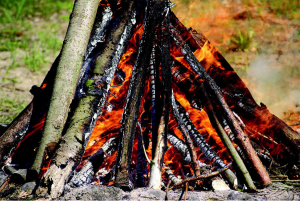
    Building fire is an essential outdoor skill.

    Teach kids how to gather wood, light matches, keep the fire under control, cook with it, and most importantly, kill it when not in use to prevent forest fires.

    You might want to go as far as teaching children how to start a fire with wet wood as an advanced survival skill.


    4. How to forage

    Differentiating poisonous plants and shrubs from non-poisonous ones is a great skill to possess. You can teach your kids this lesson by simply taking them on nature walks and pointing out which are edible or poisonous as you go along.

    Since it may be hard for kids to keep track of so much information, encourage them to keep a journal with pictures and names of each plant for future reference.

    Start with non-poisonous and edible plants first then move on to those with dangerous look-alikes such as nettle, berries, watercress, dandelions, and cattails.

    5. How to find or build shelter in the wilderness

    Kids should acknowledge the importance of a shelter in a survival situation and how to find one when needed.

    You can teach them how to find the right spot to position a tent, areas to avoid, and creating makeshift shelters if you don’t have a tent with you.

    This skill is one of the most fun things to learn, especially building makeshift shelters. You can teach them how to use fallen trees, dry leaves, and other outdoor objects to stimulate their resourcefulness.

    6. Self-defense

    Children can protect themselves through acquiring self-defense skills. Enrolling them in a self-defense class can benefit him or her in many ways.

    They can learn self-discipline, feel more confident, and be able to defend themselves against attackers and potentially dangerous situations.

    For the meantime, you can refer to the video below for basic self-defense techniques for kids.


    7. Handling a knife

    The mere thought of sharp objects scares children away. Knives have become a taboo subject among the youngsters because of its possible dangers, but these tools are also present in our daily lives; that’s why children need to know how to use it safely.

    The more aware and knowledgeable they become about knives, the less likely they are to experiment with it. Children should be taught how to hold a knife, walk with a knife, cutting objects with knives, and storing them properly.

    8. How to swim

    Sadly, drowning is one of the most common forms of accidents faced by children outdoors. Children do love the water, and it’s inevitable to keep them away from it. Hence, the only way to make sure they’re safe while enjoying the waters is to teach them how to swim and float.

    Don’t know how to swim yourself? Let little Emma help you!


    9. How to fish

    Fishing is fun. It’s a good form of bonding for parents and kids. It’s easy to learn, and it’s not complicated at all – it doesn’t involve lots of expensive equipment.

    Furthermore, kids can appreciate the outdoors more if they know how to fish because of the free food. Teach your children how to fish in 10 simple steps from this article.

    10. Reading a map, compass, and GPS
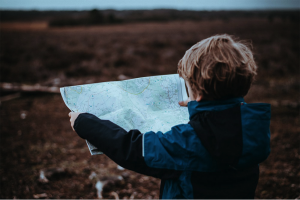
    Maps, compasses, and GPS devices let children know where they are and help them find their way in case they get lost.

    GPS systems can let you know your location instantly, but if you run out of battery, compass and maps are your only options for navigation.

    Not only will reading these tools provide children with information on their whereabouts, but they also help in enriching kids’ spatial thinking by making them visualize objects in relation with one another.


    Final Thoughts

    Children should be taught survival skills early on so they can be prepared anytime, especially during a zombie apocalypse. Kidding! So, there you have it — the top 10 survival skills that are extremely helpful for children and for adults too. Know that those 10 bullets are just the tip of the iceberg as there are about a hundred or so skills you can learn from the outdoors.

    Hey, camper! Did you find this post useful? Have you learned a lot? Do you know other survival tips or tricks? Let us know in the comments section below. Don’t forget to share this post. Cheers!


  • No Need to Be Afraid of the Dark with the Right Night Vision Scope

    No Need to Be Afraid of the Dark with the Right Night Vision Scope

    No Need to Be Afraid of the Dark with the Right Night Vision Scope
    Buy at Amazon

    Hunting in low or no-light is possible – and it’s easier to catch more – with the right night vision scope. This buyer’s guide will share everything you need.
    Are you tired of missing your shots in the dark?

    You need the right night vision scope. With proper night vision equipment, you have No Need to Be Afraid of the Dark with the Right Night Vision Scope.  You can see a person standing over 200 yards away on a moonless, cloudy night.

    Having been around since World War II, night vision technology has really improved and has become much for affordable and accessible for citizens. In the past, night vision devices were only available to military personnel.

    Night vision technology allows you to see in those low light conditions when you’re out hunting in the dark. With these devices, you can also magnify things and make them appear closer.

    This, of course, is great for hunting.

    But with all the devices out there, it can be overwhelming and difficult to know what is best for hunters. Read on to learn everything you need to know about the night vision devices on the market today.

    How Night Vision Works

    Night vision gives you a clearer picture in low light situations as it works to amplify the existing light. If there is no light in a dark room, night vision cannot work. It needs any kind of light (such as moonlight) to be effective.

    In technical terms, the objective lens of a night vision devices takes ambient light through an image intensifier tube. The image intensifier tube applies power to the image tube components and converts the light to electrons. These electrons create thousands of new electrons as they pass through microchannels.

    When the electrons exit the microchannels, they collide with a screen coated with phosphors and make the image green. The electrons and phosphors then combine to create photons. At the end, the same image originally seen is created in a way that makes the image appear green as the light is amplified.

    Why Choose a Night Vision Scope

    Night vision scopes have always been prioritized by developers over other night vision devices because of their applications. Because of that, night vision scopes have advanced better and faster over the decades.

    Night vision scope applications are pretty realistic for hunting and shooting range. With a scope, you don’t have to try and spot the game with your binoculars and put them down before getting back to your rifle and shooting. Night vision scopes allow for less errors in hitting your target.

    With its relevance to the military, night vision scopes will continue to get better and be the best among night vision devices.

    Night Vision Generations

    Night vision devices are split into four generations, and it is important when buying to understand the technical aspects of these generations.

    1st Generation

    The first generation of night vision started in the 1960s. This type is still used today and is inexpensive in comparison to the other three. Since these were made with lower technology, the need the light of a full moon to do any good.

    2nd Generation

    The second generation night vision scopes go back to the 1970s. Less light is required for a bright image, and there is also an amplification plate that makes the image clearer and bright. These are a bit more expensive that the first generation devices, but you’re paying for better technology and imaging.

    3rd Generation

    The third generation night scopes have much more advanced technology than the first two. Made with gallium arsenide in the light amplification tube, these devices ensure a brighter, sharper and clearer image. Of course, they’re also much more expensive in comparison to the first two generations.

    4th Generation

    This generation is still hard for civilians to find. By removing the protective coating on the microchannel plate, the fourth generation optics improved clarity and performance by 20 percent. Yet, these are not capable of lasting as long as the others.

    Performance Features to Consider

    As a hunter, it’s important to understand that night vision scopes are different than night vision binoculars. Scopes allow you to aim to hit a target rather than merely observe it. Many different factors come into play with determining the quality of scopes.

    Clarity

    You need to have a good resolution to see and operate in the dark. Good clarity ensures that you can identify your target before shooting.

    When checking resolution in night vision scopes, the higher the lines per millimeter (LP/MM) the greater the clarity. 64-72 lp/mm is an excellent resolution feature to shoot for.

    Range

    You need to know your recognition range when buying a night vision scope. Don’t place as much importance on the total range, because the recognition range is more important.

    You’ll often see recognition ranges for full moons, quarter moons, starlight only and overcast ranges because manufacturers often measure range by the amount of ambient natural light. Longer optics tend to be better at producing more light.

    Ergonomics

    Night vision scopes are similar to regular scopes in that they’ll still weigh the same. A night vision scope with a higher magnification is going to be bigger and heavier. It may be harder to aim and more uncomfortable with a heavy optic.

    Keep that in mind if you are into brush hunting or off-hand shooting. For those, you might want to go with a lighter optic.

    Durability

    Night vision scopes are pricey, so you want to make sure yours is going to stay strong for you for a long time to come. Consider investing in a waterproof optic so the electronics have a lesser chance of being shut down by water. Also, check the amount of recoil the scope is rated for.

    Infrared illuminators

    Some optics will have an infrared illuminator or at least have the ability to attach one. This is another important factor to consider. With an infrared illuminator, you can shine an infrared light and make the night vision slightly brighter.

    When you’re out hunting and it is pitch black outside, an illuminator can certainly come in handy.

    There is a lot to consider when buying the right night vision scope, but knowing what to look for will be helpful in the process.

    There is another night vision device that is also help hunter to own the night but work pretty difference from night vision scope, it’s thermal scope. If you want to find more, you can check out IOutdoorPursuit for everything you need to know about thermal scopes. Once you find the right product, you’ll be unstoppable in the dark.

  • Who gave you the right to take my Guns from me

    Who gave you the right to take my Guns from me


    Who gave you the right?
    Buy at Amazon

    I love Steve Lee and the Lees, my son grew up (and still grows up) dancing to “I like guns”, but while the Lees have some whimsical songs that are fun to listen to, they also have some very powerful ideals behind their music.

    Steve Lee gives a monologue before the music video to “Who gave you the right to take my Guns from me”

    His words give valuable insight into the core reason behind the assault on our Gun rights.

    If we allow ourselves to have this crucial civil liberty stolen from us then we will have no ability to protect our other rights.

    There is already a concerted effort to erode our other fundamental rights in t he name of state security.

    It should be so self evident that we have a right to defend ourselves, our families, our country, and our way of life that gun control should never even be thought off – but as the video shows this is not the case because most people choose to love by feelings.

    For me I ask – Who gave you the right to try to take my rights?  I know I did not agree to this.