In any disaster situation, energy is a premium. If you are cooking over a fire – every second of heat is paid for several times over with work finding, carrying, chopping, and stacking firewood. If you are using a petroleum based fuel you have to rely on your supply – which is something you may not be able to replace easily.
Therefore, anything you can do to cook your food faster is something to consider. Besides energy costs – time saved cooking is time gained to take care of other things (which is useful outside of a disaster).
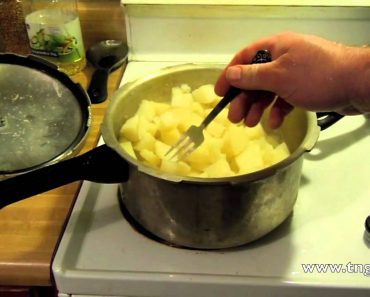
Today’s article talks about one such time saving method of cooking. For simplicity sake we are going to use potatoes as our video example – but as you can see from the chart below – cooking in a pressure cooker works with all manner of foods.
Cooking Times Chart
Obviously many factors will influence you cooking times. Use this information as a guideline, but the actual cooking times may vary depending on your pressure cooker, heat source and the quality and/or quantity of the food.
All times are for 15psi pressure using a cooking rack.
For most vegetables, the cold water release method is recommended for tender-crisp results, and the quick release will produced a more ‘cooked’ result. Dense vegetables like whole potatoes and yams, or winter squash can benefit from the natural release. For instructions on the release method please look at the instructions at the end of the chart.
Vegetables
Cooking Times
Liquid
Release
Artichokes, small whole, trimmed
4 to 5 minutes
1/2 cup
Cold water or Quick
Artichokes, medium whole, trimmed
6 to 8 minutes
1/2 cup
Cold water or Quick
Artichokes, large whole, trimmed
9 to 11 minutes
1/2 cup
Natural release
Artichoke, hearts
2 to 3 minutes
1/2 cup
Cold water or Quick
Asparagus, thick whole (fresh or frozen)
1 to 2 minutes
1/2 cup
Cold water or Quick
Asparagus, thin whole
1 to 1 1/2 minutes
1/2 cup
Cold water or Quick
Beans, green, or wax, (fresh or frozen)
2 to 3 minutes
1/2 cup
Natural release
Beets, small whole
12 minutes
1/2 cup
Natural release
Beets, large whole
20 minutes
1 cups
Cold water or Quick
Beets, 1/4 inch slices
4 minutes
1/4 cup
Cold water or Quick
Broccoli, florets (fresh or frozen)
2 – 3 minutes
1/2 cup
Cold water or Quick
Broccoli, spears
3 minutes
1/2 cup
Cold water or Quick
Broccoli stalks, 1/4″ slices
3 to 4 minutes
1/2 cup
Cold water or Quick
Brussels sprouts, large (fresh)
4 to 5 minutes
1/2 cup
Cold water or Quick
Brussels sprouts, small (fresh or frozen)
3 minutes
1/2 cup
Cold water or Quick
Burdock Root; cut 1 inch thick
10 minutes
1/2 cup
Cold water or Quick
Cabbage, any variety – shredded
2 – 3 minutes
1/2 cup
Cold water or Quick
Cabbage, any variety – quartered
3 to 4 minutes
1/2 cup
Cold water or Quick
Carrots, whole
3 to 5 minute
1/2 cup
Natural release
Carrots, 1 inch chunks
4 minutes
1/2 cup
Cold water or Quick
Carrots, 1/4 inch slices
1 minute
1/2 cup
Cold water or Quick
Cauliflower, florets
2 to 3 minutes
1/2 cup
Cold water or Quick
Cauliflower, whole
6 minutes
1/2 cup
Cold water or Quick
Celery, 1 inch slices
3 minute
1/2 cup
Cold water or Quick
Corn, kernels (fresh or frozen)
1 minute
1/2 cup
Cold water or Quick
Corn on the cob (fresh or frozen)
4 minutes
1/2 cup
Cold water or Quick
Eggplant, sliced 1/8- to 1/4 inch slices
2 to 3 minutes
1/2 cup
Cold water or Quick
Eggplant, 1/2 inch chunks
3 minutes
1/2 cup
Cold water or Quick
Endive, thickly cut
1 to 2 minutes
1/2 cup
Cold water or Quick
Escarole, coarsely chopped
1 to 2 minutes
1/2 cup
Cold water or Quick
Greens, Beet, coarsely chopped
1 to 4 minutes
1/2 cup
Cold water or Quick
Greens, Collard coarsely chopped
5 minutes
1/2 cup
Cold water or Quick
Greens, Kale, coarsely chopped
1 to 2 minutes
1/2 cup
Cold water or Quick
Greens, Kohlrabi, cut in pieces
3 to 4 minutes
1/2 cup
Cold water or Quick
Greens, Mustard, cut in pieces
3 to 4 minutes
1/2 cup
Cold water or Quick
Greens, Swiss chard, coarsely chopped
2 minutes
1/2 cup
Cold water or Quick
Greens, Turnip greens, coarsely chopped
4 minutes
1/2 cup
Cold water or Quick
Leeks, Whole, large (white part only)
3 to 4 minutes
1/2 cup
Cold water or Quick
Leeks, Whole, small (white part only)
2 to 3 minutes
1/2 cup
Cold water or Quick
Mixed Vegetables, frozen
2 minutes
1/2 cup
Cold water or Quick
Okra, small pods
2 to 3 minutes
1/2 cup
Cold water or Quick
Onions, whole
7 – 9 minutes
1/2 cup
Cold water or Quick
Onions, quartered
3 minutes
1/2 cup
Cold water or Quick
Parsnips, 1 inch chunks
4 minutes
1/2 cup
Cold water or Quick
Parsnips, 1/4 inch cubes
2 minutes
1/2 cup
Cold water or Quick
Peas, shelled (fresh or frozen)
1 minute
1/2 cup
Cold water or Quick
Pepper, whole sweet, or Bell (green, red, yellow), mild Mexican chilies
3 minutes
1/2 cup
Cold water or Quick
Potatoes, new, or small (2 inch diameter), whole
8 minutes
1/2 cup
Natural release
Potatoes, red, whole
10 minutes
1/2 cup
Natural release
Potatoes, red, halved
6 minutes
1/2 cup
Natural release
Potatoes, red, cubed
4 minutes
1/2 cup
Cold water or Quick
Potatoes, large baking-size russets, whole
25 minutes
1 cups
Natural release
Potatoes, russet, peeled & quartered
8 minutes
1/2 cup
Natural release
Potatoes, russet, 1 1/2 inch chunks or slices
5 minutes
1/2 cup
Cold water or Quick
Potato, Sweet, sliced or chunks
5 minutes
1/2 cup
Cold water or Quick
Potato, Sweet, whole
18 minutes
1/2 cup
Natural release
Potatoes, white, whole 7-10 ounces
16 minutes
1/2 cup
Natural release
Potatoes, white, half
10 minutes
1/2 cup
Natural release
Potatoes, white, cubed
4 – 5 minutes
1/2 cup
Cold water or Quick
Pumpkin, 2 inch chunks
3 to 4 minutes
1/2 cup
Cold water or Quick
Pumpkin, half of a 7-8 inch
10 minutes
1/2 cup
Natural release
Rutabagas, 1 inch chunks, peeled
4 minutes
1/2 cup
Cold water or Quick
Rutabagas, 2 inch cuts, peeled
6 – 8 minutes
1/2 cup
Natural release
Spinach, (fresh or frozen), coarsely chopped
1 minute
1/2 cup
Cold water or Quick
Spinach, fresh, whole leaves
0 minute
1/2 cup
Cold water or Quick
Squash, Acorn, halved
8 minutes
1/2 cup
Cold water or Quick
Squash, Banana, cubed
3-4 minutes
1/2 cup
Cold water or Quick
Squash, Butternut, 1 inch chunks
4 minutes
1/2 cup
Cold water or Quick
Squash, Butternut, halves
6 minutes
1/2 cup
Cold water or Quick
Squash, Chayote or merliton, halved
5 minutes
1/2 cup
Cold water or Quick
Squash, Chayote or merliton, peeled, 1/2 inch sliced or cubed
2 minutes
1/2 cup
Cold water or Quick
Squash, Hubbard 1 inch chunks
8 – 10
1/2 cup
Cold water or Quick
Squash, Patty Pan, sliced or cubed
0 minutes
1/2 cup
Cold water or Quick
Squash, Spaghetti, 2 lbs. whole or halves
9 minutes
1/2 cup
Cold water or Quick
Squash, Summer, or Yellow, 1/2 inch slices
0 minutes
1/2 cup
Cold water or Quick
Squash, Zucchini, 1 1/2 inch slices
2 to 3 minutes
1/2 cup
Cold water or Quick
Tomatoes, quartered
2 minutes
1/2 cup
Cold water or Quick
Tomatoes, whole
3 minutes
1/2 cup
Cold water or Quick
Turnips, small, quartered
8 minutes
1/2 cup
Cold water or Quick
Turnips, 1/2- inch chunks
5 minutes
1/2 cup
Cold water or Quick
Yams, 1/2 inch slices
6 minutes
1/2 cup
Cold water or Quick
Cold Water Release Method
This is the fastest method, used to immediately stop the cooking process by lowering the heat AND the temperature. If an immediate release of pressure AND temperature is desired, the pot is carried to the sink and cold water run over the lid (but not the valve).
Always position the cooker in the sink so that it is tilted at a slight angle. Let the cold stream of water run over top of the lid, but not directly over the vent pipe or valve, letting it rundown the side of the cooker to cool it quickly.
If your faucet is too short to allow water to run over the top of the cooker use the sprayer attachment if available, otherwise partially filled with sink with cold water before setting the cooker in it.
This method is mainly used for food with very short cooking times, or where it is essential to stop the cooking process as fast as possible. Use this method for serving fresh, tender-crisp vegetables, or delicate seafoods. Owners of electric pressure cookers do not have the cold water option, and that limits some of the foods and recipes they can cook.
Precautions for the Cold Water Release Method
NEVER run water directly over the pressure release vent or valve when using the cold water release method. Direct the water to the outer edge of the lid so that it runs down the side of the pot. A variation on this method is to fill the sink with several inches of cold water and then sit the pressure cooker in the cold water bath. (When the pressure cooker is removed from heat the air molecules inside the pot begin to cool and contract, and if the vent opening is blocked by the stream of water, then no air molecules can get inside to replace the volume. The air inside the cooker rapidly contracts as it cools so there is less air pressure inside the pot than outside. This creates a very powerful vacuum that can actually cause the lid (or the weakest area of the metal) to collapse as the vacuum sucks it down inside the pot.)
Quick or Touch Release Method
Some pressure cookers with this option can vent the pressure without lowering the heat of the food. There is a special release valve on some new pressure cookers that allows for the rapid release of pressure by just turning a knob or pushing a button.
Precautions for the Quick or Touch Release Method
Do not use the quick release method for foods that increase in volume, froth or foam, or those that are mostly liquids, like soup or broth because the contents could foam, or boil up and vent through the release valve.
(Puffed cereals are made in HUGE versions of this type of device – cooked rice in a hot pressurized container is suddenly vented to normal atmosphere and the difference in internal pressure and external pressure causes the rice to puff – I wonder if this can be done in a cooker with this feature?)
Natural Release Method
This is the slowest method to gradually drop the pressure and the temperature to finish the cooking process. (This is the only method to use when you are CANNING)
In this method you remove the pressure cooker from the heat source and to allow the pressure to subside naturally. If you are cooking beans, potatoes, or other foods which have a skin that you wish to remain intact, this is the preferred method.
Use this release method for foods that increase in volume, froth or foam, or those that are mostly liquids, like soup or broth. Most meats and other long cooking recipes are finished this way to complete the cooking process.
If you own an electric model, keep in mind that the heating element will retain heat and that will prolong the cool down period which may result in foods that are overcooked.
Precautions for the Natural Method
The food inside the cooker continues to cook throughout this slow cool down process. This method is commonly used for finishing large cuts of meat; foods that foam froth or expand during cooking; and foods that are mostly liquid, such as stock or broth. The natural release method should not be used for delicate vegetables or fish, or any food or recipe with very short cooking times.
As you see cooking in a pressure cooker saves time and energy. It is also extremely easy.
I have even took this to another level as I just bought an instapot that adds a pressure cooker to a crock pot. It makes cooking in a pressure cooker even easier.