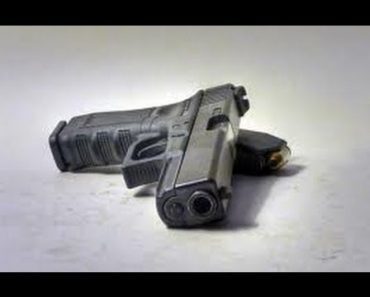
This post shows one such firearm safety procedure and why you should always check your firearm chamber, physically as well as visually when unloading.
Firearm safety rules and procedures are fundamental to our safe use of firearms. Later we will delve into the 4 fundamental rules of gun safety and why they are the fundamental rules. For now let’s just talk about one thing. Why do we need to physically check to make sure our firearm is empty? Isn’t enough just to look into the chamber to see there is not a bullet inside?
I get a lot of personal joy helping someone become more comfortable shooting. However, the main reason I like firearm training is the knowledge I get from keeping current in the field. To teach defensive firearm use I need to learn about how the mind works under stress, and how to apply that knowledge to physical tasks.
Why You Should Physically Check Your Firearm Chamber
You don’t rely on just your eyes to ensure our firearm is unloaded is because you cannot always trust them. To be more accurate, we cannot always trust our brain to accurately interpret what our eyes are telling it. Our brain is constantly being hit by stimuli, our clothes, background noises, smells, air currents, and other things would drive us crazy if the brain was not able to catalog and then ignore what it finds to be unimportant. It also creates little shortcuts to deal with minor repeatable tasks. If a stranger says “hello, how are you?” your brain automatically responds with something like “Pretty good, you?” (Or if you’re a Dave Ramsey fan “Better than I deserve”).
Of course someone is saying, “That’s stupid, I would never go into autopilot with something important like seeing if my gun was unloaded?”. I bet if they thought about it, they could not remember a recent time that they actually thought through the steps it takes when they start their car, they just do it. Cars are serious business; more people are killed by cars than by handguns.
Furthermore, I bet that if they really think, they can remember a time when, after changing jobs, they found themselves missing a turn to their new workplace because they found themselves on autopilot driving to work.
When your brain goes about deciding to ignore the unimportant as background, it is creating ruts to preserve its processing power work together in this case. If you find yourself “going through the motions” of gun handling you may be in for a surprise.
Basically, if you expect to see an empty chamber, you will probably see an empty chamber. You can learn more about this in the book Thinking, Fast and Slow.
By physically using a finger to Check Your Firearm chamber you fix both of these root causes. By taking the extra step, your brain attaches extra importance to the act of ensuring the chamber is clear. When your finger actually touches a round, the double dose of reality jars the brain into admitting its mistake.
Train like you Fight!
 I know this may sound a little farfetched to some, but put this in your head for perspective. You fight like you train. For decade’s law enforcement trainers told their students to let the rounds fall to the ground when reloading their revolvers. Rather than reload quickly law enforcement students would instead take the time to dumping spent rounds into their hands. Cops dumped the rounds in their hands so they wouldn’t have to pick them up later. Officers routinely said they would only do that on the range. They argued that they were smart enough to know the difference between range ease and street tactics.
After the Newhall shooting, the officers killed in the line of duty were found with casings in their pockets and unloaded firearms in their hands showed both trainers and students that training outweighed notional ideas of what you might or might not do. The officers involved were good cops and they fought back the best they could. However, they did not have a full understanding of their tactics and training issues involved and they ended up murdered.
We might not carry revolvers as much anymore, but firearm fundamentals and mental preparedness apply to any firearm action type. You can easily check your firearm chamber by feel in a semi auto as a revolver.
Take what I am saying to you, and apply it to your situation. I would hate to hear about a negligent discharge caused by an “unloaded gun”.


 I needed learn how to make Green Sand for metal casting. If you watched the furnace video you saw me making refractory, and making green sand is about the same process. Simply put, it is a mixture of sand, bentonite clay, and a bit of water. Using this kind of sand is called green sand casting.