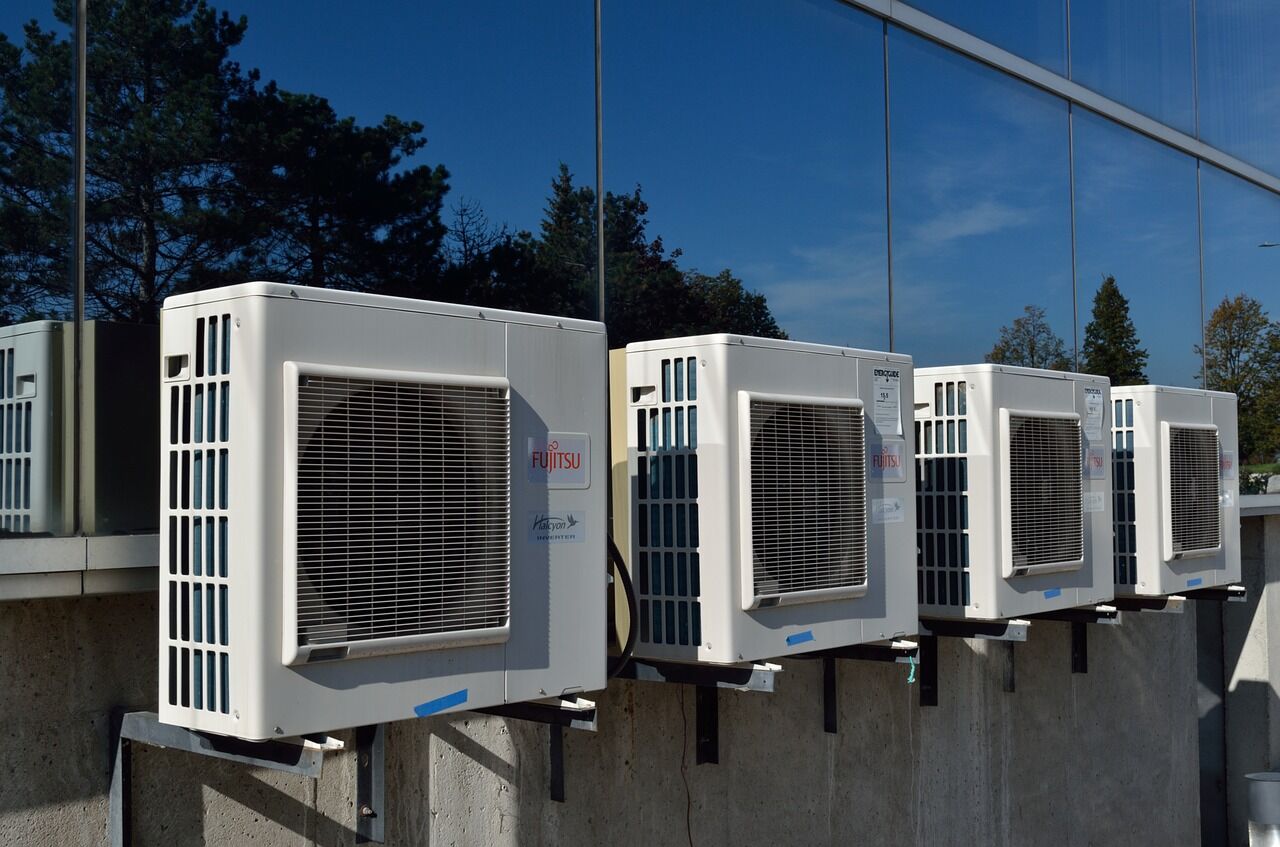
HVAC failure is not only annoying because you lose your climate-controlled environment but it can also be costly to fix or replace the system. It’s a good idea to know the warning signs so you don’t lose money by not getting the repairs done.
Grinding Sound
A grinding sound is never good when it comes to your HVAC system. If you hear a grinding noise when it starts, when it’s running or when you turn it off, it might be time to check with a professional.
Humming or Buzzing When the System Turns On
Many people think a humming or buzzing noise is normal when their air conditioner is running. The professionals at Master Service Heating, Air Conditioning & Refrigeration see this a lot, but it’s actually not a noise that’s supposed to happen. If you have humming or buzzing in your system, you might have a problem.
Hot Smell When Your Heat Is On
If it smells hot when you turn your heat on, you could have a problem Your heating system should not smell hot when you turn it on. If it has a hot smell to it, then it could be burning up energy and could be causing problems for your system. It could also make it harder for your system to work which could cost you money.
Popping or Hissing Coming from Your Vents
It might be time to upgrade your HVAC if you hear a popping or hissing sound coming from your system. The HVAC system shouldn’t really make much noise while it’s running even if your air conditioner is working hard to cool off your home.
Gear Noise When You Turn the Air Off
Once you turn the air off, all noises should stop. If there’s something in the air conditioner making a noise like a gear going, you might need to replace your system. The gear noise is usually just the system doing what it needs to power down, but it can indicate a problem if it’s not something that normally happens.
When you know what to look for, you can better prepare to make sure your system is working the way it should. It’s always a great idea to check and make sure you don’t have any leaks or other problems with your HVAC system when you hear one of these noises or smell something off with your heating and cooling system.
Do you want to know how to build your own plastic injection molding machine? If so, then this article will set you on the write path.
Why Build a Plastic Injection Molding Machine?
Creating with plastic can be fun and can be a profitable hobby as well. But most plastic components these days are created by huge, expensive plastic injection molding machines. Molten plastic is forced under enormous pressure into intricate molds.
On the surface it appears to be a technology well beyond the realm of the home shop.
However, the book Secrets to Building a Plastic Injection Molding Machine simplifies this technology making it possible for you to inexpensively injection mold small parts from common recycled plastic.
What is inside the Book?
Secrets to Building a Plastic Injection Molding Machine shows complete step-by-step instructions revealing the secrets of building a small inexpensive tabletop injection molding machine capable of molding up to a half ounce of plastic.
Although a half ounce may not appear to be much plastic, the truth is, that it is more than enough to produce many small useful items.
Best of all you’ll be molding with plastic recycled from milk jugs, soda bottles, plastic oil cans, and more. Your raw materials are free and plentiful. You will learn the basic principles of injection molding and how to design and make your own molds.
You will start by making a simple mold to test the machine. Then you will mold a plastic knob for the machine itself. Next, you’ll progress to a mold that creates a small plastic container with a snap lid.
The Joys of DIY Plastic Injection Molding
Before long you will be creating new products of your own design. You will be able to cast replacements for broken or missing parts, or you can make copies of plastic components. The possibilities are endless.
The moldings are incredibly professional in quality. Your friends will never understand how you were able to do it. Injection molding is a technology that has given us an incredible standard of living. Here are the secrets that will allow you to put this technology to work in your home shop. Build a molder, and explore a whole new technology today.
If you have this machine, and the others in the Gingery build your own metalshop series there really isn’t anything you can’t build.
The Art of Natural Building is the encyclopedia of natural building for non-professionals as well as architects and designers. From straw bale and cob, to recycled concrete and salvaged materials, this anthology of articles from leaders in the field focuses on both the practical and the esthetic concerns of ecological building designs and techniques. Includes examples of diverse natural dwellings, from a Hybrid Hobbit House to a thatched studio and a cob office.
This is a good primer for concepts, and shows a lot of different ways of natural construction. I imagine, if you are experience, handy, and smart, then you could manage to construct a home using this as your sole guide, but I use it more as a reference to help narrow down what I want, and then get more specific construction books.
It has some very nice pictures, and is a great book to sit down and thumb through while dreaming about what kind of homestead you want to build.
This book has spurred my imagination, I sit and look at it and dream of a time when I can build the buildings it describes. I am a large supporter of cob construction and other forms of natural building, I just wish I had more time to do instead of dream.
I think its funny as can be, WT’s first video was supposed to be him showing you the world he and I built and explaining the mods we used to create it, But that was a little too structured for my boy and he changed his mind and now he just wants show you his building in minecraft.
Actually he wanted to build by HIMSELF, so we tried again, this time he wanted me to site right next to him because he did not want to build all by himself….
Fun times with a 5 year old
There are a couple of ways to play minecraft, and not a lot of rules – you can focus on playing the game, building a house, completing advancements, protecting yourself from monsters. basically surviving. If you want to sleep you have to make a bed, to do that you have to build an axe to cut down a tree and then convert the wood to planks, you have to pick flowers and find sheep to shear to make wool you dye. Combine the colored wool and the planks to make a bed…. It can get involved.
Personally I like to build perfect villages and castles with roads and infrastructure. My boy likes fighting monsters with me….
He plays in survival mode – meaning everything he has he has to earn in the game – and if he dies he loses it. I play in what he calls “cheating mode” the game calls it creative. My mode allows flying and unlimited build material. I rarely let him play in that mode because I like to see him figure out how to decide and prioritize when he builds in minecraft. This means he gets a treat when I let him play in creative – he can build much much faster (and can destroy my perfect towns in the blink of an eye (its okay dad we can fix it together….) LOL
I think mostly my boy doesn’t like building in minecraft, he likes playing with me. Which is actually why I like playing the game too.
WT Building in Minecraft: First Video
WT has his own channel for his grandparents to watch his stuff, but he wanted to do some videos with me.
When my boy said he wanted to make minecraft videos like hobbypig and toy reviews like Ryan I figured I would let him. It is a great feeling when your boy wants to do things with you.
My wife was not really excited about adding more technology into the household, but after seeing what minecraft can teach (mostly coding, but some cause effect and resource management) she relented.
I make videos sharing what I do, and to me its a positive. I’m not in it for fame or fortune. This isn’t here to make my boy a YouTube star or to line my pockets, I want my boy to feel good doing what his daddy does while learning to be independent.
My boy sees that and he sees people on YouTube like Ryan’s toy review that he connects with and he wants to emulate. We tightly monitor what our boy does while still giving him freedom to grow in his own direction, so I keep a firm hand on him so he does not see the negatives or the trolls but his mother and I support his creative endeavor.
I could probably do a whole post on why Minecraft is positive, but almost anything can be positive if it is monitored and the child parented. This maybe something you would not do with your child, and I get that, but for mine we are going to test it out.
WT Building in Minecraft: Parkour
I am sure 90% of the readers of this site don’t subscribe to see this kind of content, but it makes my son very happy when I take the time to share his work.
He worked very hard on his minecraft world, and he wanted to share it like the YouTube he watches do with their creations.
I like supporting my son, and while too much technology can be a bad thing with developing children, I think exposure to it at appropriate levels is also important.
I had to “fight” with his mother about allowing him a minecraft account because she did not want him to veg out on the computer all summer.
She has a valid point, but also minecraft is a way to learn basic computer coding, and because you have to manage wood, stone, food – and other resources in the game it does teach concepts like cause and effect and resource management.
I am not quite ready to let him play with others, but when he is older it is also a way to manage group dynamics as people have to work together to build towns and such.
Since you carry a gun for self-defense or to save the life of another, then you are concerned with combative firearms skills rather than shooting merely for the experience of shooting. To reach this goal, you engage in training, mostly in the form of practice on a range. How close you get to your goal will depend on the effectiveness of your training. Building shooting muscle is a big part of proper training regimen.
Since you carry a gun for self-defense or to save the life of another, then you are concerned with combative firearms skills rather than shooting merely for the experience of shooting. To reach this goal, you engage in training, mostly in the form of practice on a range. How close you get to your goal will depend on the effectiveness of your training.
Let’s use weight lifting and body building as an analogy. If you want to get bigger and stronger, we know that you have to concentrate on working the large muscle groups of the legs, back, chest and shoulders. You do this by training mostly with the foundational exercises for these muscles: squats, dead lifts, bench presses, presses, rows, pull-downs and so on. There’s a total of maybe a dozen core exercises on which you spend most of your time. Yet there are hundreds of lifts you could do, and most of these work the smaller muscles. They are useful, but if your goal is size and strength, you use them sparingly, since you have only a limited amount of time and energy. Mostly these ancillary exercises are used to refine your shape and to add variety in your core routine to avoid boredom.
But if you go into any gym, you’ll see people spending their precious training time on these secondary exercises. Either they don’t know any better, or they think they have invented a “better” way, or they read in a magazine somewhere that so-and-so does this exercise, or they’re bored with the core exercises.
Now, go to any range and watch people there. You’ll see a great deal of shooting for tiny groups, with eyes focused on the sights of the pistol — regardless of the range. You’ll see people shooting at ten to thirty yards, rather than at zero to seven yards. You’ll see people standing still as they shoot. And so on.
Now, it is certainly a better marksman and better shooter who can shoot tiny groups, particularly at long ranges. But in the light of our goals, these kinds of skills are secondary. They are far less likely to be needed for our job than other, more foundational, skills. How do we know this? Here’s three sources.
The first is the consistent statistics from law enforcement shootings in which officers were killed. These FBI-compiled numbers have been pretty much the same for many years: 50% of LEOs killed are killed at five feet or less, and 75% killed are killed at ten feet or less. The second source is the Police Marksman Association survey done in 1992 showing the average police gunfight was won at about 20 feet seven yards (but note that this conclusion was from a pretty small sample.) Finally, there is the data from NYPD’s SOP-9 that indicates that from 1994-2000, 69% of their shootings (of all types) were at two yards or less, and 88% were at seven yards of less. These numbers are pretty consistent form year to year.
So what do these statistics mean in terms of training? That the bench press and squats of firearms survival training are the techniques to handle threats at seven yards and in. We detail the techniques relevant to these distances below, but first, a caveat.
We do most emphatically not mean to say that training at long handgun distances (15 to 50 yards) is not useful or even not important. Police officers certainly have to engage in long-range shooting on the job. We are just noting that these long-range skills are less likely to have to be used than close-range skills — that’s just the facts — and thus we suggest that they constitute your ancillary — not core — training. Longer range skills and super-tight marksmanship skills are the equivalent of weight exercises to develop the smaller muscle groups. They are less likely to be used, but they can 1) be useful in and of themselves, 2) they help to keep the training interesting, and 3) they round you out.
Contact distance to 2-3 yards At this distance, if you do not already have your gun out, and you are facing a deadly force attack, you simply will not have time to draw your weapon. The physics of the situation dictate that you will have to at least initially deal with this attack with empty hands techniques. This reality, of course, means that the “equalizing” factor of the firearm — one of its chief advantages — is negated. It also means that life is unfair, as the small, the weak, the injured and the older are at a disadvantage to their undoubtedly younger, more fit attacker. Life is, in fact, not fair. Sorry.
Your only choice here, if you want to honestly deal with your most likely self-defense scenario, is to pick up some vicious empty hand techniques. These, of course, work better if you are in shape, whatever your age. Such techniques are called “combatives” these days, as opposed to “martial arts”. The integration of combatives with the use of the firearm generally goes by the term “extreme close quarters shooting”, and the leading edge material in this area today comes from a man known as “SouthNarc”, for the apparent reason. His DVD on the subject, “Fighting Handgun Volume I” is available from Shivworks, www.shivworks.com, and is highly recommended.
3 yards to 7 yards At this distance, if you are trying to hit an exposed person, the proven method of Applegate-style target focused shooting (as opposed to many other methods of “point shooting”) is the most likely technique to be useful. This is for the simple reason that under a lot of stress (some combination of startle and fear), you are hard-wired to look at the threat, not anything less important from an evolutionary viewpoint, like your sights. (Of course, if you aren’t much startled, or not in much fear, you may well be able to focus on your sights.) Here the gun is held very firmly, the gun raised to intersect the eye/target line, and the trigger pulled. The technique works both one-handed and two-handed, and most people find that that the tighter they hold the gun, the better results they get (relaxed, “firm but not too tight” holds work well, by contrast, for precision and non-stressful shooting.) Since most shooters have been trained to look for their front sight, practicing target-focused shooting takes some mental concentration. Interestingly, when I am having a not-good day on the range with semi-sighted fire at these distances, if I force myself to target-focus, I can often improve results. If you are in a law enforcement or military unit, Lou Chiodo of Gunfighters Ltd (www.gunfightersltd.com) is a great source for instruction in this method of shooting.
7-10 yards and out At these distances, traditional sighted shooting is appropriate. And we strongly recommend that you practice it, and not only because longer range shooting may be necessary. When we cite the distances above, we are assuming that you need to hit a man-sized attacker. Hits anywhere on the torso are acceptable, with most instructors insisting on hits within a roughly 8½ x 11 inch area (the size of a standard piece of paper) as the goal. If you have only a part of your attacker available as a target, then the precision demanded of you increases, and thus the effective distance increases. A half a man target area available at 5 yards is about the same difficulty as a whole man at 10 yards, and so on.


 Do you want to know how to build your own plastic injection molding machine? If so, then this article will set you on the write path.

 The Art of Natural Building is the encyclopedia of natural building for non-professionals as well as architects and designers. From straw bale and cob, to recycled concrete and salvaged materials, this anthology of articles from leaders in the field focuses on both the practical and the esthetic concerns of ecological building designs and techniques. Includes examples of diverse natural dwellings, from a Hybrid Hobbit House to a thatched studio and a cob office.

 I think its funny as can be, WT’s first video was supposed to be him showing you the world he and I built and explaining the mods we used to create it, But that was a little too structured for my boy and he changed his mind and now he just wants show you his building in minecraft.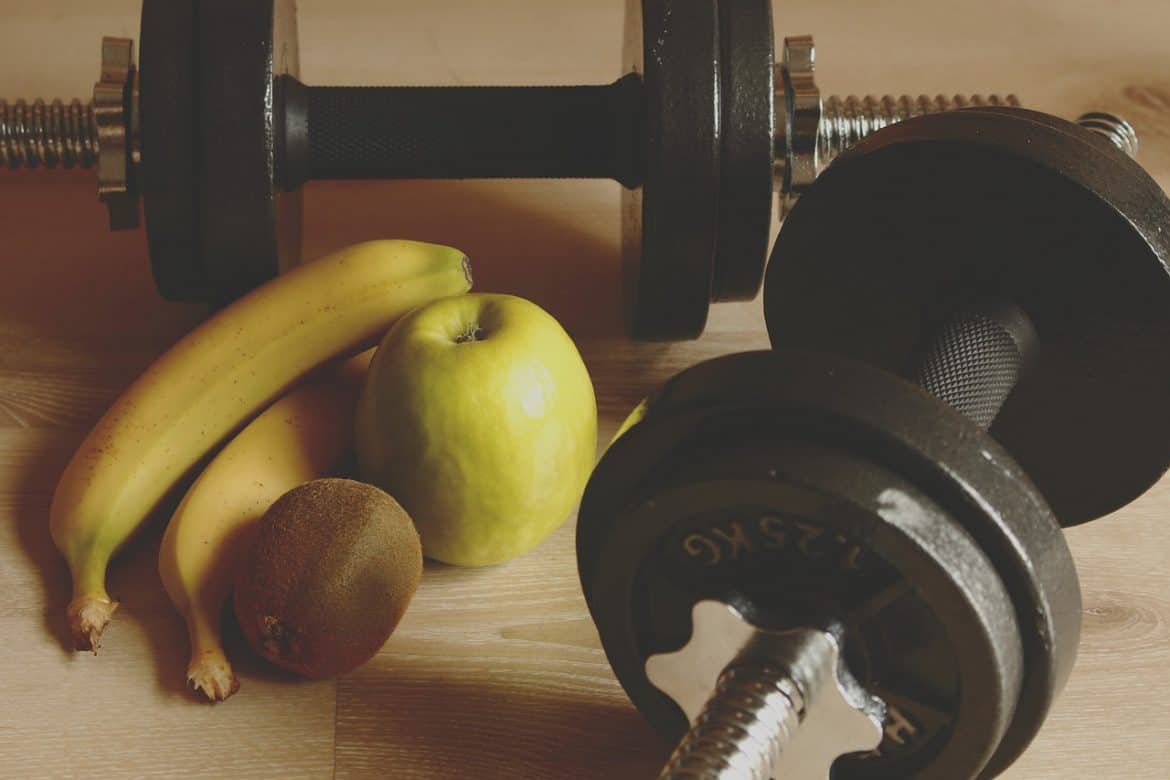

 Since you carry a gun for self-defense or to save the life of another, then you are concerned with combative firearms skills rather than shooting merely for the experience of shooting. To reach this goal, you engage in training, mostly in the form of practice on a range. How close you get to your goal will depend on the effectiveness of your training. Building shooting muscle is a big part of proper training regimen.