Tag: China
-
Balancing Security vs. Liberty
Buy at Amazon Benjamin Franklin once said, “Anyone that gives up essential liberty for momentary safety deserve neither.” It is amazing how this once commonplace sentiment has changed over the years. In today’s America it is almost considered required to exchange liberty for safety. It is important to realize that neither option is a right, nor can it be guaranteed. In most of Europe, violence is never considered morally justified. This thought leads to slavery. If there is nothing worth fighting for, then nothing is worth having. This trend of choosing security over liberty is becoming more accepted in this country than the founding fathers ever believed possible.
In America we have gun-free school zones. We also have school shootings. Jesse Ventura was forced to apologize when, after the Littleton Colorado School shooting, he commented that, “If someone in that school had a gun, they could have saved a lot of lives.” His statement was considered outrageous. It might be a distasteful subject, but the idea merits thought. In Israel guns in school are commonplace; they also have little if any violence in the education system.
An American citizen cannot sue the police for failing to protect them. They have no right to constant protection by the police. They also face prejudice, up to and including incarceration if they protect themselves. States of this country do not allow lawful citizens to carry firearms in pubic. Many businesses in right-to-carry states disallow firearm possession in their stores. Do any of these stores hire full time security whose sole job is to protect their patrons? Do criminals intent on mayhem follow these laws? If given a choice, would an armed criminal chose a location where firearms where allowed or disallowed?
Is the idea of violence so terrible that we as Americans should give up out Constitution in order for a measure of fleeting safety? How important is the Bill of Rights to you? Should we allow police unrestricted accesses into our personal lives for the sole purpose of protection? Should we allow the trend of the government to dictate who is dangerous to us, without question. This trend was seen in Nazi Germany, Communist Russia, China, and other countries where people lost the right to protect themselves. Have we as Americans lost the will to do what is needed? Do we have to delegate the distasteful to others? If you as a responsible person feel violence is evil, what is your justification to give over your power to someone else to use violence on your behalf?
Government is needed. Without it there would be chaos. However, government is not always right just because it exists. President Washington said, “Government is like fire; it is a wonderful servant but a fearful master.” Government should serve the people, but it has a tendency to have the people serve it. Before you blindly accept what is presented to you as your best interest, decide for yourself if it truly the case. Our country was founded by men who chose liberty over security. Should you do any less?
-
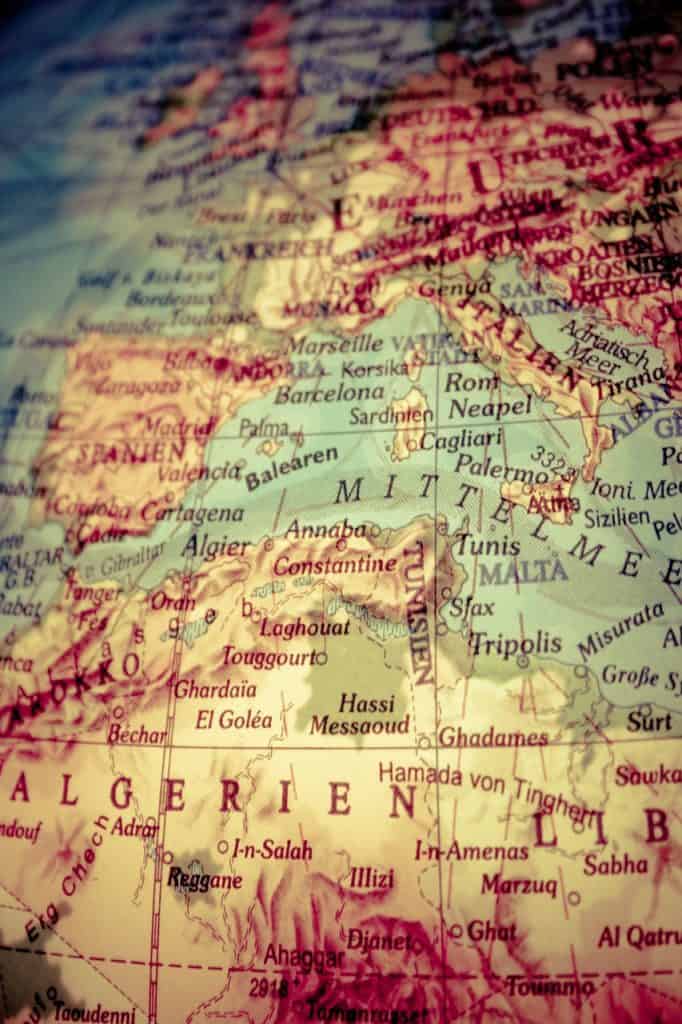
Disaster Prepping Around The Globe: The World’s Riskiest Places To Live
Buy at Amazon When prepping for a disaster, it is important to understand all the different risks which can be faced. Also the effects those disasters can have. Looking after yourself during a tornado requires very different action to surviving a flood. Being prepared for different types of risk is crucial. You also need to understand the levels of risk faced where you live.
Due to factors like climate, geology and human interference, parts of the globe are much safer than others, and some areas face extremely diverse risks. By having a survival kit that fits your needs and preparing a plan in case the worst happens, you could ensure you and your family make it through the disaster: no matter where in the world you live.
The most deadly kinds of disaster
The three big killers are floods, earthquakes and cyclones. Historic events such as the China floods, the Shaanxi earthquake and the Bhola cyclone caused the loss of over 3,000,000 collectively, and the world’s ten worst disasters killed over 7 million people in total. Other causes of natural disasters are tsunamis, avalanches, hurricanes, heat waves and droughts.
Preparing for these disasters requires a little common sense: you really only need to be ready for those likely to affect you. If your local climate is hot throughout the year, heavy snow is unlikely to be an issue. If you are far from the coast, tidal waves should be of little concern. For those in the highlands, flooding is rarely an issue. However, there are parts of the world which are at high risk of a serious disaster because of their geography and climate. It is also important to remember the golden rule of disaster preparedness: expect the unexpected!
The riskiest places on Earth
There are some factors which make a location’s risk higher. These include being close to a river or the coast, so that flooding is possible. The location might also be on a tectonic fault where earthquakes are likely, or active volcanoes may exist. Other places might have multiple risk factors – a nearby lake, a high mountain range, an incoming coastal air stream and an underground fault line. When multiple factors combine, the chance of a serious disaster is much higher, and the chance of multiple concurrent disasters also occurs. If you live in a high risk area, you had better make sure your survival kit is stocked to handle a range of situations.
Some of the areas highlighted as having high risk levels:
- Verkhoyansk, Russia
- California, United States
- Mount Merapi, Indonesia
- Vanatu
- Manila, Philippines
On the other hand, Qatar, Malta, Saudi Arabia and Barbados have been highlighted by the United Nations University for Environment and Human Security as the safest places to live if you want to avoid a natural disaster.
There are also many places which did not make the list, but which are known to be at risk because of a combination of factors. The United States in particular has had a tough year in terms of Mother Nature’s wrath, experiencing everything from heavy snow and hail to wildfires and mudslides in the past six months. Australia has also seen its fair share of fires and droughts during the previous three years. Knowing what type of incident is likely to happen and having the tools to survive it is important if you want to be ready for the worst.
Building a survival kit
It should become part of your weekly routine to stock up your disaster kit. There is no reason it should be expensive to do so. Check out OZCodes.com.au for discount codes on products from leading outdoor equipment retailers and suppliers. Create a kit that suits your budget. Remember to tailor your kit to the place you live and the things you might face if a disaster hits. You can’t fight a wildfire with a snow shovel! However, some of the basics will be needed no matter what situation arises: such as a comprehensive first aid kit, a reliable weapon, plenty of safe food and water, and the tools to create shelter, warmth and power if needed.
Reactions to the situation will depend on the type of disaster, as well. Early warning is possible in the event of fire or floods, but not always if a tornado or earthquake hits. Sometimes evacuating will be the best option, in which case you will want to grab your bag and hit the road. Other times, getting to the safety of a cellar or shelter and waiting out the disaster is more appropriate. This is where the survival kit for a long term stay should be stored.
Whatever situation you could face in the future, having the knowledge and equipment to face it properly could mean the difference between life and death. Know the risks: get familiar with the climate and geography of your home town. Read up on previous disasters in the region so you know what you should expect. This is especially true if you move to a new town or even a different country.