If you’re in shape, a nine-pound rifle shouldn’t be a problem. And if you’re out of shape “what the [hey] are you doing out there in the first place?”
So, deer rifles really shouldn’t be over ten pounds for those who plan on hiking in.
Distance
A longer barrel provides more accuracy over distance. Inside your barrel are grooves that add spin to your bullet.
The longer the barrel, the longer the grooves, the more the spin. Both the spin and speed of your bullet improve accuracy the higher they are. Which is why you’ll see really long barrels on sniper’s guns.
If you want to shoot distance, you’re going to need a good scope. A good scope will allow you to quickly line up the shot at 350 yards or more.
Standard scopes typically have some sort of adjustment nobs so you can adjust for elevation and wind. You’ll want this adjustment if you’re going to be anywhere but a tree stand.
Action
Action refers to the manner in which a round is chambered. In a hunting rifle, there are three methods. Bolt. Lever. And Semi-auto.
Most deer rifles are bolt action.
Bolt action is easier to maintain than either lever or semi-auto. It’s also the most reliable method to chamber a round.
Semi-auto has the possibility of getting jammed. And lever can get debris stuck in the mechanism too easily.
The sign of a good hunting rifle is its ability to eject cartridges and chamber a round without risk of jamming.
Chambering
Chambering, or better known as caliber, will either enhance or hinder your hunting.
The best deer hunting calibers include .423 Winchester, .25-06 Remington, 6.5 Creedmoor, .270 Remington, 7mm Remington Magnums, and .308 Winchesters. And the best overall is the 7mm-08 Remington.
Anything less than this will require more shots to kill your buck. Don’t waste your time.
Recoil
This is probably the least important with a deer hunting rifle. You will most likely shoot one round at a time.
If you’re a new hunter, recoil might be intimidating. So you might want to find a rifle that compensates for recoil.
Conclusion:
A lot of what determines your loyal hunting rifle is personal preference. If you have friends with multiple rifles or have multiple hunters as your friends, have them take you out to the range to shoot their guns. Find out what you’re comfortable with.
Also, don’t go for the Walmart or sports store rifles. Get your rifles at a reputable place like Christensen Arms Guns. You’re going to be spending a lot of time with your gun. Don’t sell yourself short.
When you’re in a sudden SHTF situation, a lot of things will probably go through your mind.
Have you prepared enough? Do you have enough food? Does your family have enough protection? Do you have a plan? Will you survive?
One of the most important things to consider if ever caught in a survival situation is to make sure that you have a dependable firearm.
The right equipment to help aid the firearm, like the best rifle scope is also necessary.
Preferably, you will want a rifle that can take on several different tasks, from hunting for food to self defense for protection.
Though there is no “perfect” survival gun, popular survival rifles out there to have for an SHTF situation is a rimfire rifle or some form of a .22 LR.
Factors to Consider When Choosing The Best Rifle Scope For Survival
Regardless of the type of rifle you choose, there are a lot of factors to consider when choosing the best survival rifle, including:
Ammo costs (ammo costs are usually determined by the caliber size. The bigger the size the more expensive the round.)
Killing power (You want a caliber that kill varmint for food, and potentially bigger game like a deer)
Protection (not considered a ‘man stopper’ but it will get the job done if you need it to)
Long Range (A rifle with range at least up to 100 yards for defense or hunting. A handgun is really only effective within 25 yards)
Cost (depending on your prepper budget, you may want to find a rifle that is at a lower cost but still built well)
Weight and Mobility (You may need a lightweight rifle because you’ll be using it a lot for hunting and potentially for defense)
Equipment (the equipment needs to be top quality and durable to aid your rifle so you can be more efficient)
What’s the most important factor to consider?
The reasons above are ALL important factors when picking a firearm. One of the most important things that will help you in almost every area is by getting a high quality rifle scope
Even if a .22LR wasn’t your top choice, having a rifle scope equipped to your survival rifle may be the difference between food for the next few days or not.
Is a rifle optic really that important?
The answer is a big YES! A rifle scope does so many things for you and makes your survival situation that much easier to bear.
Basically, a scope improves accuracy and allows you to see your target with clarity, even at long distances. Improvements in rifle scope design have allowed even entry level scopes to be high quality.
Let’s explain more reasons why an optic is important for survival:
A rifle scope can allow you to in low light conditions.
Like hunting later in the evening, when it’s dark and way past the time that you would normally be able to see your target with just the iron sights. The same is true at dawn. Sure, you would be able to see with the iron sights, but not as quick nor as early as with a scope.
When you and your family are hungry, and there are no grocery stores open and you need some food, you need to go hunting for it. Using a rifle scope will help with higher precision and accuracy. Your success rate of getting food on the table greatly increases with the proper rifle scope.
Depending on what you are hunting for, you need to be able to have proper shot placement for a clean and fast kill. Having a rifle scope will increase your chances of hitting the proper spot of the animal. This will also increase your chances to actually kill the animal in less shots.
You’ll likely be shooting more varmint than big game, but in either case, the animal will likely run away if you miss after the first shot. This makes precision and accuracy an important factor. Even if you hit the target, but miss your spot, it may still run and even get away.
Long Range Shooting
When hunting for food in survival mode, you’ll likely be shooting animals up to 100 yards away. If you want an accurate and efficient kill, using a scope is essential. A scope can also help those of whose vision is not what it used to be.
Most scopes on the market have a magnification power setting that will allow you to see very clear up to 100 yards, no problem.
Depending on your budget, you can find a scope that can even reach up to 500 yards or more. Keep in mind that you will need to consider which rifle caliber you choose for survival if you are going to shoot targets at long distances of 200 yards or more.
For example, if you got a scope for a .22 LR, 100 yards is about as far as you should go for the highest efficiency, especially if you were going to shoot a deer.
Cost
Scope prices vary greatly. From as low as $30 in some cases all the way up in the thousands of dollars. For survival, you need a high quality scope that is durable, will hold its zero, and is clear with enough focus and power to get the job done when needed.
You just need a rifle scope that does the basics, without any fancy features and add-ons. The extra features on a scope are what drive the price of the optic up dramatically.
The old rule of thumb was that a scope should cost at least half of what your gun did in order to get a quality scope for your rifle. Nowadays, this isn’t the case. You can find a high quality scope for under $200 and even under $100 in some cases.
$100-$200 is a small price to pay for the value you will be getting by adding an optic on your rifle.
How to choose the best rifle scope
Choosing the best rifle scope for an SHTF situation can be difficult, as there are a lot of different factors that determine the best rifle scope.
Assuming that you are limited and need an all around great scope for survival narrows the choices down.
The best way to prepare yourself for an important purchase like this is to learn how a scope works so you can fully understand the mechanics behind it. Below is a quick diagram for your reference.
Now that you have an idea of where things are located and the important terms on an optic, there are a few things to consider when choosing the best optic:
Objective Lens
An objective lens is the front lens of the scope. It gathers the light and its size gives the field of view. The bigger the objective lens, the more light is able to come into the scope allowing for greater clarity and a brighter sight picture. This is especially important if you are hunting at dusk or dawn or in other low-light conditions.
A bigger objective lens also affects the field of view (FOV). The bigger the lens the more ground you will be able to see through the optic. For example, a FOV of 100 yards means that you can see 100 yards from left to right through your scope.
The best objective lens size for a scope in survival mode is probably between 30mm and 40mm. Anything bigger and the scope starts to get too bulky making it hard for mobility and ease of use.
Also, if the objective lens gets too big you will need higher mounts and scope rings in order for the objective lens to avoid touching the gun barrel, making it seem even bulkier when on your rifle. Cost usually goes up as well if you go higher than 40mm.
Optic Style and Tube Size
The best type of scope style you can get for survival is a tube body style. These are more high quality and best all around scopes. The other style to get for your optic is a heads up style or holographic style, but with these scopes there is no variable magnification setting. Instead, you are stuck focusing at a specific magnification (fixed magnification).
30mm tube style size is pretty standard and a great size for a survival situations. Anything bigger will start getting too heavy and bulky and less mobile. Remember that the scope rings you buy must match the diameter of the scope body.
Variable or Fixed Magnification
Magnification power allows the user to adjust the power given. A typical scope you will see is 3-9x40mm. What this means is that at 3x, you will see 3 times larger than the naked eye and at 9x, 9 times larger than the naked eye. 40 refers to a 40mm wide objective lens.
This magnification set is a variable magnification as you can adjust the power between 3x and 9x allowing you to shoot at short and long distances with great focus and clarity.
Some scopes are single or fixed power (1×25 or 4×30 for example) which means no adjustments.
Make sure you choose a variable magnification scope. The best variable magnification scope that you can get is probably the 3-9x40mm. This allows you to shoot at very long distances (up to 500+ yards if needed at the 9x) but still be able to have great clarity and focus at shorter distances (50 to 100 yards with the 3x)
Adjustments
You don’t need anything fancy when it comes to adjustments. All it does is raise the price of the scope by adding unnecessary features. You just need the basics. All you need on your optic for survival is elevation and windage adjustments, parallax adjustments if you choose a higher magnification, and eyepiece focus adjustments capabilities. For windage and elevation, the standard is one click changes impact ¼” at 100 yards.
Reticle
Choosing the right type of reticle is extremely important as well. There are all types of reticles like simple cross hair, mil dots, duplex reticles, BDCs, and many other variations. Some reticles are even illuminated or light up using a battery or ambient light.
Having the correct reticle is extremely important, especially for survival. When choosing the right reticle, you don’t want so much going on that you lose focus on what is really important, which is simply hitting your target.
The best reticle for survival is a Duplex reticle. Manufacturers making variations of the duplex reticle but the concept is the same. It’s a modified crosshair style that features thick bold lines on the outer part of the crosshair for fast target acquisition, but at the center where the two lines cross are much finer lines so you can still see the target you are shooting at. Some duplex reticles have dots that help measure the distance for bullet drop (BDC) at longer distances.
Durability
You need a scope with some necessary features for long term use and durability. Pick a scope with lens coatings. This block different wavelengths and repels water.
Also make sure the scope is seals for air tight use or it will get foggy with moisture and you won’t be able to see through the glass.
Getting high quality mounts and scope rings are also important. Don’t buy cheap scope rings. Cheaper scope rings are more likely to cause the scope to lose its zero from getting loose after long term use.
The downside to scopes
The downside to scopes is that they are more fragile than iron sights. You must keep your iron sights for backup. Redundancy is the name of the game in survival preparations and could save your life in a survival situation.
Though a good quality scope can last a long time, things happen. You could drop your rifle and damage the scope. The scope could for some reason lose its zero after a few hundred rounds. The glass could fog up on a cold day if the seal breaks. These are all things to consider.
Due to some of these unplanned scenarios, having back up scopes is something that a lot of shooters live by. Some hunters have 2 to 3 scopes just for one rifle depending on the situation and perfect as backups in case something happens.
Having easy off mounts can be a solution to increase the life of your rifle scope. You can make sure to take the scope off of the rifle and carry it in your pack when you are traveling. Wrap it with something soft, like blankets or extra clothes for some cushion. Taking it off and on may be a hassle without easy off mounts. What’s important is that the scope should not change zero when it is reattached.
Take good care of your rifle as well. If you drop your rifle with the scope attached, the scope is much more fragile and will break easier and faster than your rifle will.
Choosing the best rifle scope for survival
Find the best rifle scope for survival is tough. With so many factors to consider and so many different scopes to choose from it can be a daunting task. To makes things easier, just be sure to understand the situation you are in when SHTF. You will need a good all around scope that will get the job done. Get a great scope for the money that is still high quality and durable and will help you put food on the table and for protection when trying to survive.
In the end, I recommend a scope that is a 3-9x40mm. This is a great scope for a variety of calibers and environments.
Which size of scope would you recommend for survival? Do you have any specific scopes models that you would recommend for an SHTF situation?
Guest post by Gary Fretwell, rifle optics guru and big game tracker at GoShootGuns.com. He is a 33-year-old die hard hunter from Wyoming. He served in Iraq, loves his Ar-15, and is an Asset Protection Officer and a big game tracker who helps hunters like himself find big game.
DIY gunsmiths have been demanding the book since the best-selling Home Workshop .50-Caliber Sniper Rifle videotape first came out. In this companion book, Bill Holmes uses easy-to-follow foldout drawings and precise dimensions to take you step-by-step through the process of designing and constructing your very own .50-caliber rifle easily and inexpensively.
Find out this master gun maker’s professional secrets to fashioning the receiver, barrel and accessories, bolt, trigger assembly, buttstock, scope mount, bipod and muzzle brake using commonly acquired materials.
Once you have made all the component parts, Bill then instructs you in the right way to assemble and test-fire your new home workshop firearm. With Bill Holmes as your guide, construction is a snap.
Warning: It is your responsibility to make sure that you have complied with all local, state and federal laws with regard to the manufacture of any firearm.
I have wanted to build my own .50 Caliber Rifle for decades, and the .50 Caliber Rifle Construction Manual is a great way to go about doing it. One day I will get around to it and try this for myself. until then, I just look at this book.
Its exceptional accuracy, controllability, and wide array of accessories make the carbine an essential tool for modern warriors.
In this exclusive video from Paladin Press, WARTAC founder Rich Nance and WARTAC instructor Aaron Peachman teach combat techniques and tactics designed to help you deploy the carbine under real-world conditions.
In Advanced Carbine Tactics they first they reveal the mindset needed to master the fundamentals of marksmanship, proper weapon handling and shooting positions, malfunction clearing and reloads, and shooting in low-light situations.
Then step-by-step instruction in one- and two-man room entry and the use of cover provide you with the advanced tools needed to maximize the carbine’s advantages in a firefight.
Ultimately, the will to win and expert training in sound combat tactics are what help you prevail in any violent encounter. This video delivers both.
Rich Nance is a black belt martial artist, with over 25 years of experience. Nance has been a police officer for 13 years and a SWAT team member for six years. He is a firearms instructor, patrol rifle instructor, less-lethal munitions instructor and his department’s lead defensive tactics instructor. In 2004 Nance and David Hallford founded WARTAC CQC , a company specializing in tactical training for law enforcement and military personnel. Aaron Peachman has 20 years of experience in the martial arts. He has been a police officer for four years and is a member of his department’s SWAT team. Aaron is an instructor for WARTAC CQC.
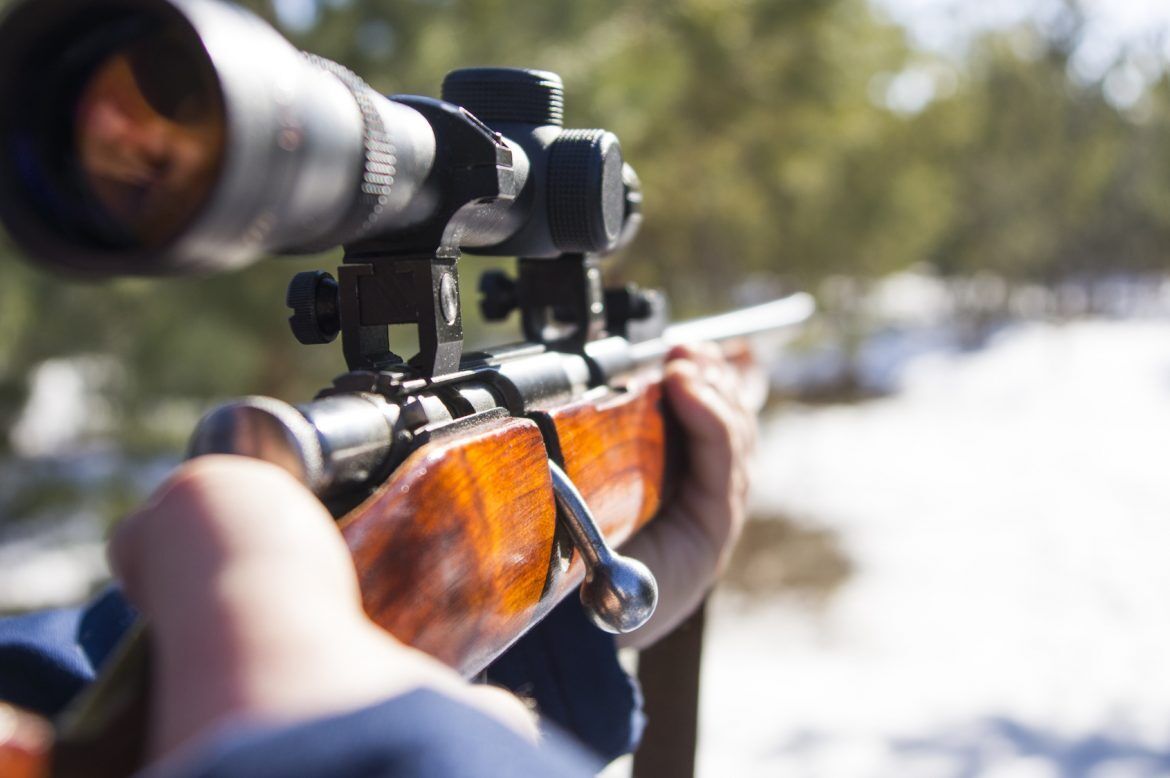
 When you’re out in the woods at your stand or stalking your prey in an open prairie, you want the hunting rifle that will bag your buck.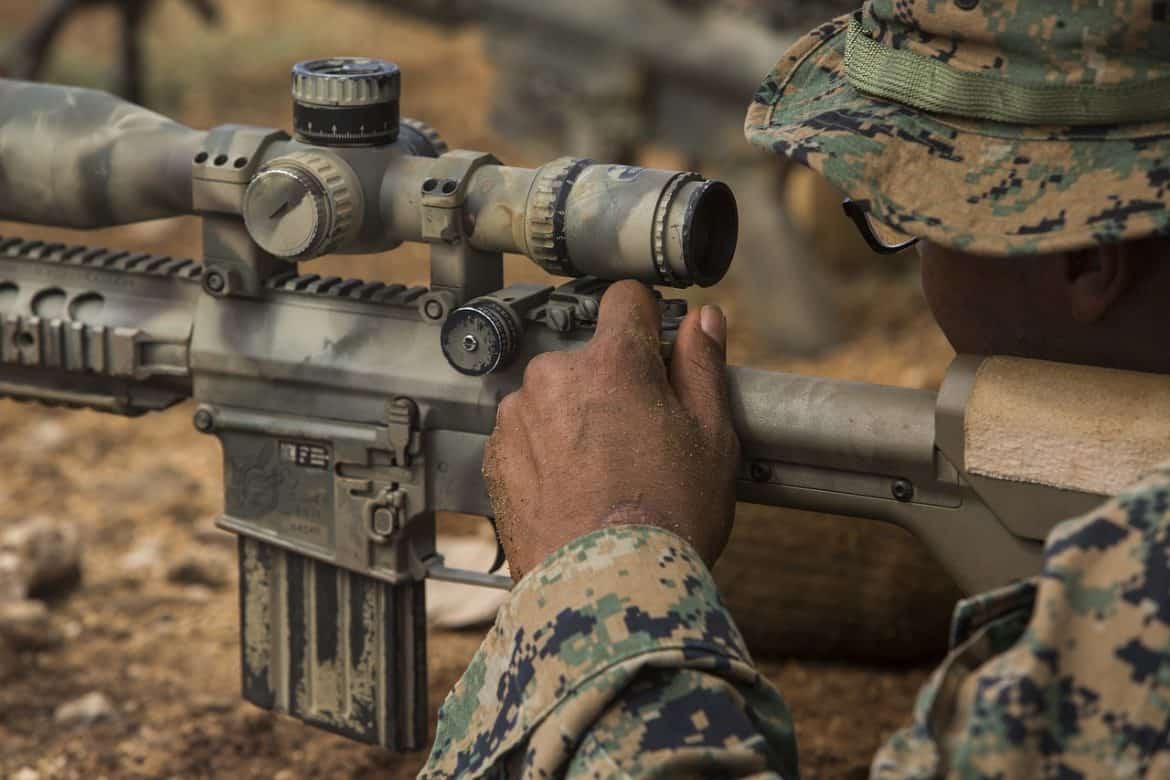

 When you’re in a sudden SHTF situation, a lot of things will probably go through your mind.

 The .50 Caliber Rifle Construction Manua

 Its exceptional accuracy, controllability, and wide array of accessories make the carbine an essential tool for modern warriors.