If your water heater is acting funny or if you’ve noticed anything different about it, you might need major water heater repair. These are signs that you should look for!
Sediment in Your Water
Sediment in your water can be cause for concern because it should be filtered out through the hot water heater. If there is any sediment in your water, parts of your water heater might not be working. Your hot water heater may also be malfunctioning causing the sediment to form in the first place. If you see sediment, it can be a huge signal that something is wrong with your hot water heater.
Water That’s Not Clear
If the water coming out of your hot water tap is not clear, you might need to contact plumbing services to get help. When your water isn’t clear, it can mean many different things, but it might be associated with your hot water heater. There are many things you’ll have to look at if your water isn’t clear so it’s best to call a professional to figure out what the actual problem with the water is.
An Odor that Comes from Your Heater
Your water shouldn’t smell bad! If the water has a rotten egg smell, it might have too much sulfur in it that the water heater isn’t properly filtering. If it has more of a metallic smell, that could be a problem with iron in your water. No matter what odor is coming from your water, it’s probably not a good thing. Make sure you talk with a plumbing professional to get help if you smell something wrong with your water.
Water that Isn’t Hot
If your water isn’t heating up, it could signal a big problem with your hot water heater. If your hot water heater suddenly stops working, it can make it difficult for you to live. You’ll need to adjust the temperature so that you can make sure it’s not something wrong with the thermostat. If that doesn’t work, you should always call a plumbing professional to learn whether you need major water heater repair.
Any of these could be signs of minor issues, too. Keep in mind that just because you have a sign of a major water heater problem doesn’t mean that you do have a major water heater problem. If you do have a problem, it’s important to get it fixed as quickly as possible.
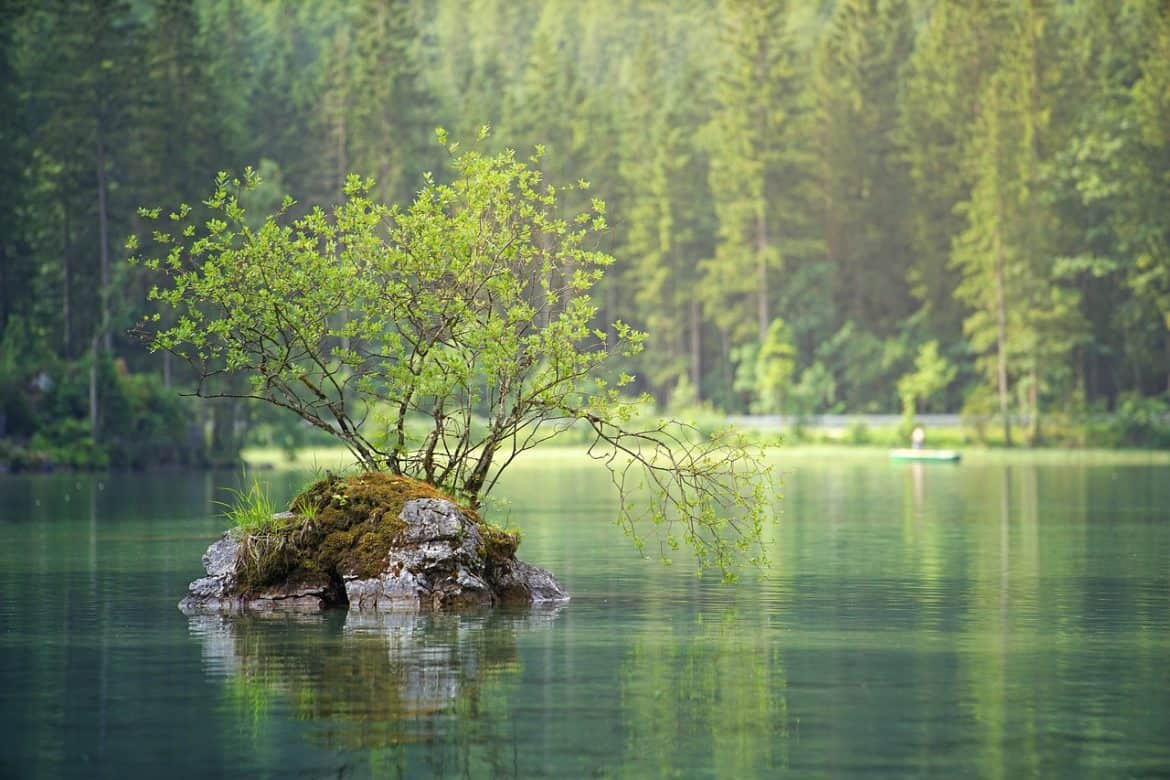
Only a very few people can survive the wild these days without the modern convenience, such as electricity and electronic gadgets, mobile devices. Although some can still survive without this modern equipment, nobody can survive without water.
Needless to say, water is highly essential for survival. Yes, you can package some water along with you to the wild; they cannot sustain you if you plan to spend a considerable period of time. If you want to spend more time in the wild, then you need to devise some ways to find water in the wild.
Start With the Obvious: Streams, Rivers, and Lakes
Streams, rivers, and lakes are the most obvious source of water in the wild. These sources of water offer clean, clear flowing water which is the best option you can ever think of. Generally, flowing water does not allow bacteria to fester. Small streams are what you should first look for once you get to the wild. You can also consider rivers as a second choice after stream. Larger rivers often have a higher percentage of pollution. If this is this only option available, you should consider purifying the water consumption. Lakes and ponds are also okay but they are stagnant and hence, a high rate of bacteria.
So, how do you find these sources of water? First, you should conduct a research on the location of rivers and streams before you embark on the journey in cases where possible. In the wild, you need to use your senses. If you stand still and silent, you should be able to hear the sound of flowing water. More so, If you stand at a sloppy ground, you should know that there is a flowing river or stream at the extreme base.
Another way to locate rivers or streams is by tracing animal footpaths which can lead to water. Insect swarms, although annoying, is another sign of water proximity. Another way to locate rivers or streams is by following the birds swarm early in the morning or late in the evening.
Collect Rainwater
Rainwater is one of the safest ways to get drinkable water without the fear of bacterial infections. If you are lucky to find yourself in a wild in the tropical region during the rainy season, you wouldn’t have to worry about water all through your stay in the wild.
There are basically 2 ways of collecting rainwater. The first is to place as many containers as you have in the rain. In cases where you have little or no container, then you can try this second method. Tarp around trees a few millimeters off the ground or tie the corners of a poncho, place a small piece of stone at the center to create depression and watch the water collect in it.
Collect Heavy Morning Dew
Heavy morning dew is another source of water in the wild. You can get up to 1 liter of water per hour from morning dew. To do this, tie some absorbent clothes around your ankles take a workout early in the morning before sunrise. When your cloth gets saturated, wring out the water and repeat the process over and over again.
Fruits/Vegetation
You should not underestimate the amount of water you can derive from plants. Plant fruits, roots, vegetables, fleshy plants, and other plants have a lot of water embedded in it. Collect EDIBLE plants, place them into a container, and smash them with a piece of stone or rock. Although it may be a very tedious process, it can be very useful in desperate situations. Try my Leaf Condensation trick.
Collect Plant Transpiration
You can also get some water by trapping the plant’s transpiration. Transpiration is a process whereby water is translocated from the root to the underside of the leaf before it is eventually released to the atmosphere. So, the trick here is to catch the water before it escapes to the sky.
First in the morning, tie a bag or anything that can be mold into a bed around the leafy green area of a shrub. Place a small piece of rock in the bag in order to create a depression and weigh it down a bit for easy water collection. Instead of the vapor to escape to the atmosphere, the water will be collected and retained in the bed. However, do not try this with a poisonous plant.
Tree Crotches/Rock Crevices
Tree crotches and rock crevices are another good sources of water, just like the fruit and vegetation. Although the process can be stressful and demanding, it is a good alternative, especially in difficult situations. To collect water from tree crotches or rock crevices, dip a cloth inside the hole, allow it to soak, and wring it out. Repeat this process as much as possible to get enough water.
Dig an Underground Still
This method is a relatively reliable source of water compared to other ways. It is a good option if you or your team is camping in the wild for a considerable long period of time. The process of digging well is very common which you are surely aware of. Although the process is tasking, the outcome always worth the energy invested. However, make sure you site your well or still close to a reputable water source or riverine area.
Conclusion
While you can survive without electricity or electronic gadgets in the wild, it is quite impossible to survive without water. Getting water in the wild may first sound difficult to you. However, we hope this guide on ways to find water will help you a lot.
Genny has a good tip on how to keep up with how much water you should drink in a day.
Water is a vital part of a healthy diet. It helps you to feel full, it lubricates your joints, helps your body eliminate waste, lets you sweat to keep cool, and is generally essential to life.
Unfortunately most people do not drink near enough water.
To ensure you drink enough water you should determine how much you weigh in pounds. Divide that number in half.
The number you get is the amount of water you should drink daily in ounces.
Example:
If you weigh 180 pounds, half of 180 is 90 so you should drink 90 ounces of water a day.
That is pretty easy, but the harder part is keeping up with how much water you have drunk.
This is the neat part of Genny’s tip.
Find a cup you can easily keep up with. (I like clear sports bottles with fruit infusers, but that is my personal preference).
Determine how many ounces it holds.
Divide the ounces in the container by the ounces you need to drink
Round up to get a whole number and place that many rubber bands around the container.
Example:
90 ounces of water for a 20 ounce bottle 90/20 = 4.5.
A 180 pound person with a 20 ounce bottle needs to drink the entire container 4 and a half times a day.
Fill your container and each time you drink it empty remove a band and refill it.
When you have removed all 5 bands you have drank your daily requirement of water.
This is a simple way to keep up with your daily water intake.
Genny has found that simple lifestyle changes are more sustainable than diets. The 21 day fix system has allowed her to loose more than 90 pounds and make permanent changes that ensure she does not only lose weight, but she keeps it off.
With all the ice and snow lately a friend of mine sent me this idea for an improvised method to winterize a water spigot. I tried it and it works.
Unfortunately due to the weather I was working a lot of overtime and I could not get this video out until now.
Basically a outdoor winter water spigot cover works by insulating the faucet from the cold outside temperatures.
Today’s video shows a way to do this without buying a cover. I think this is easier, but my wife would probably prefer a store bought solution.
Since trapped air can make an effective insulator, My friend wondered if multiple layers of plastic grocery bags could work.
Since I keep and reuse my grocery bags I simply grabbed a handful and loosely wrapped them in layers over the spigot and then held it in place with some duct tape.
I think this is a good idea to keep in the back of your head just in case. Especially as a way to keep your mind open to work around solutions.
Thanks for the great idea Raging Main…
I know this improvised attempt at winterize a water spigot looks pretty rigged up,. However, we had a really cold winter, including an ice storm that was big enough to rate a Presidential disaster declaration. Through it all my pipes didn’t freeze. Which is not a scientific measure, but it was free, easy, and seems to work so I am happy with it.
While at the National Prepper and Survialist Expo I saw a really cool product, and the vendor (Deployed Logix) was nice enough to give me this Hydropack Water Purifier to review and test out. I have read about this technology before, but I have not had the opportunity to review it before.
According to the manufacturer:
The HydroPack was designed for its ease of use, simply put the filter into virtually any dirty water and the filter goes to work making a clean drink.
The self hydrating pouch produces 12-17 fl. Oz. of sports drink.
The filter uses a passive osmotic process so it never clogs, requires no pumping and filters down to the atomic level (3-5 angstroms – which is .3-.5 billionths of a meter) so the filter removes even the smallest viruses to the same purity of a complicated reverse osmosis machine.
Forward osmosis filter requires no pumping, works in any virtually and water, even muddy water. Produces a sports drink for improved hydration.
Meets or surpasses reductions for bacteria, viruses and cysts as specified by the EPA for water purifiers
Easiest of our filters to use, simply put the HydroPack into the dirty water and it starts producing a clean drink.
The highest purity level of any personal filter, non-clogging filter produces a sports drink for improved hydration.
I simply dumped the pack in a bowl of dirty water and went to bed, when I got up, I just stabbed the included straw into the inflated package and drank the contents.
It tasted like a sports drink, and I did not have any negative views on the taste – my wife even drank some.
I would probably keep some alcohol wipes in my kit to wipe off the location your going to insert the straw to reduce cross contamination, but other than that, I think this has a place in a bug out bag. I would not keep these in bulk for bugging in due to cost, but I think they are very useful for on the go kits.



 Only a very few people can survive the wild these days without the modern convenience, such as electricity and electronic gadgets, mobile devices. Although some can still survive without this modern equipment, nobody can survive without water.

 Genny has a good tip on how to keep up with how much water you should drink in a day.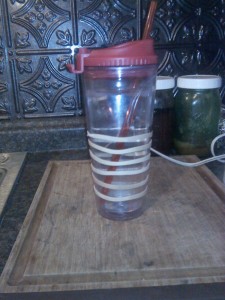


 With all the ice and snow lately a friend of mine sent me this idea for an improvised method to winterize a water spigot. I tried it and it works.

 While at the National Prepper and Survialist Expo I saw a really cool product, and the vendor (Deployed Logix) was nice enough to give me this Hydropack Water Purifier to review and test out. I have read about this technology before, but I have not had the opportunity to review it before.