
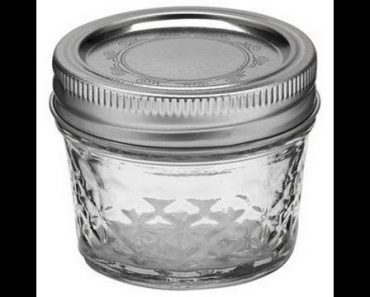
How to Make a Mason Jar Lid Cut from a Orange Juice Container

Better DIY Mason Jar Lid
Buy at Amazon

I am always in search of ways to make food storage easier, recently I shared a tip for making a mason jar lid from things in the kitchen.  It was a good tip, but this one is a little better.

Today we show a DIY mason jar lid cut from a orange juice container.  It makes poring simpler, and is an all around better tip.  As Genny says in the video, we saw this on survival blog and wanted to share.

I tend to visit Survival Blog very often, and Rawles even wrote the introduction to one of my books.

This is not the first mason jar tip we have shown.

We also used the top of a salt container as a lid.  Something else that works well is the top off of a Parmesan lid.  It is interesting and useful to note that many grocery tops are interchangeable is you are paying attention.  Mayonnaise jar lids are also pretty close to the threads on a mason jar.

We have also bought different types of lids from jars that had fruit infusers, to sprouting holes, places to hold straws.  The mason jar is an ingenious invention, and that product has been improved by all the different lids created for it.

How to Use Acid to Identify Limestone


How to Use Acid to Identify Limestone
Buy at Amazon

I needed some limestone to work some cement experiments trying to replicate both the Portland cement patent, and to make slaked lime for mortar mix.

This meant I had to be able to go about identifying Limestone. Luckily since limestone is calcium carbonate, (a base). Simple chemistry ensures that when it makes contact with acid it will fizz (which is CO2 being released) as the acid and the base attempt to counteract each other.

If you have a large weathered rock, you may get better results if you smash it into little pieces – limestone is brittle and crushes well. Then simply drop some strong vinegar or weak muriatic (hydrochloric) acid on the rock. If it fizzles, then it is a good bet its limestone.

This is a pretty easy thing to do.  I have done it successfully several times.  Limestone is a vital construction material as it is a key ingredient of cement.

At some point I want to try my hand at making my own cement from limestone, but for now the farthest I have done it to make my own slaked lime in the foundry I made some years back.

I hope that as I dig into the hillside at my land I will find more limestone.  Especially since I have a lot of moving water.  A cave would make my day.

DIY Chalkboard Mason Jar Lids: Great for Storage

How to Make DIY Chalkboard Mason Jar Lids

DIY Chalkboard Mason Jar Lids: Great for Storage
Buy at Amazon

These DIY chalkboard mason jar lids are great for storage.  While it was designed for spices, it can work in the garage for nuts and bolts, or the reloading bench for small parts like shell holders.

Simply take a baby food jar (or any other size you want), and paint the lid with chalkboard paint. You can then write whatever is in the jar on the lid.

If used with spices, you can then easily store in a drawer beside the stove, rather than above the stove.

However, the heat from the stove will cause a reduced lifespan of the spices.

Like the other mason jar lid tips, your mileage may vary on how useful this is.  I used this idea for spices for about 6 months and then went back to my old ways.  It works, no doubt about it.  Unfortunately my handwriting is horrible.

Besides on the counter I did not need a lot of labeling, as I could see through the jars.  However, if you used smaller jars and put them in a drawer so you could only see the top, then this would be an awesome tip for organization.

Try it, you may find a use for it.

How to Cook Rice in a Pressure Cooker

How to Cook Rice in a Pressure Cooker


Kitchen DIY: Rice in a Pressure Cooker
Buy at Amazon

Pressure cookers are great for preppers as it cooks things in a fraction of the time using less energy.

Today I show how to cook rice in a pressure cooker as a “I wonder if…”.  It was just a guess if it would work.

It did, and not I am going to show that method.

I have heard of a pot in a pot method that supposedly works much better.  After I do more research I will try it out later.

This is a faster method than my how to make sticky rice in a crock pot article.

From my experience here are some knowledge points for cooking rice this way.

  • Do not fill the pressure cooker more than halfway full.
  • Do not short change the standing time at the end of the process.

Ingredients:

  • ]1 cup rice
  • 2 cups water, broth, or stock
  • 1 tablespoon butter (optional, I sometimes use oil – or even omit it altogether)

Procedure:

  • Add all of the ingredients to the pressure cooker.
  • Securely fasten lid.
  • Cook over medium-high heat until it is at high pressure. (it will vent)
  • Reduce heat a little and continue cooking for 7 minutes.
  • Remove from heat (I let it set until it cools, but you can place in sink and release pressure by running cold water over the lid if you are in a hurry)
  • Let rice stand covered for 5 minutes. Check pressure before removing lid. If any pressure has built up, run under cold water again to release it.