


These days, mobile phones are instrumental parts of the daily lives of almost anyone in the world. From practical uses such as keeping in touch with loved ones or acquaintances, to entertainment purposes such as browsing through social media or gaming, there’s no denying the huge impact these devices have on human existence.
Besides all these, mobile phones may even prove to be crucial in life or death scenarios. Phones can also be used to contact necessary emergency personnel as well as function as a flashlight, compass, or GPS navigator.
Naturally, a phone with zero battery is useless. Therefore, phone chargers, especially wireless ones, are just as important as mobile phones during emergencies. With wireless chargers, you are free from the constraints traditional mobile charging methods have. Going wireless means faster and easier setup time while also being more energy efficient along with other benefits.
With all that being said, let’s take a look as to what wireless chargers are and how vital they can be during emergencies.
What are Wireless Chargers & How Do they Work?
Believe it or not, wireless charging already existed since the late 19th century, due to the technological prowess and innovations of Nikola Tesla. With his advancements in transmitting electricity through the air using the magnetic field between transmitters and receivers, Tesla essentially invented the first wireless charging system. However, for about a century, this technology was virtually useless due to minimal practical applications during the 1800s, and thus was not extensively developed. Today, conventional wireless chargers harness the same technology Tesla developed, using charging mats as transmitters to transfer energy to your phone, the receiver.
What are the Benefits of Wireless Chargers During Emergencies?
Faster to set up
During emergencies, every second counts. In these crucial situations, panic sets in most of the time and causes your body to respond much slower than usual. Laying your phone down onto the charging mat is all you need to do to charge your phone instead of wasting time, nervously fumbling over to connect the charging cable to your phone. By effortlessly putting it down on the charger mat, you’ll get to save precious time compared to using traditional chargers.
Wireless chargers are also beneficial for backup batteries. Charging your extra battery by simply placing it on a charging mat without needing to put it in a phone will come in handy during emergencies.
They fill up your phone faster
Although it’s been somewhat of an open secret over the past couple of years that wireless chargers are less efficient in charging smartphones, this is not the case now. Some of the latest smartphones with more advanced wireless-charging capabilities charge faster than traditional wired charging.
Having a full battery to use with handy phone features such as flashlights or GPS systems during emergencies is exceptionally crucial.
Easier to use
With traditional chargers, you are at the mercy of power outlets. In scenarios wherein power sockets are unavailable or are located in poorly situated areas, making short charging cables unusable, using traditional charging methods during emergencies is not recommended. These scenarios will result in instances wherein you’ll repeatedly be yanking your phone and may end up disconnecting or destroying your phone adaptor, wire, and even your phone itself.
With wireless chargers, you’ll be able to use your phone conveniently as these wireless chargers are situated on top of flat surfaces. Contacting the necessary authorities in case of emergency will be more convenient with your phone comfortably being on its right-side-up.
Additional Benefits
They’re cheaper
It is common knowledge that smartphone cables break easily. The poor quality results in constant replacements which cost more over time. With wireless charging, you’ll never have to deal with frayed and tangled charging cables again.
Furthermore, charging cables have also been known to accumulate rust as time goes by. On the other hand, wireless chargers are not corroded by liquid substances so easily, hence lasting longer and producing less waste over time than conventional charging cables.
They’re safer for you
There have been many documented cases of smartphone chargers short-circuiting and exploding. This results to damaged property or physical injuries for you or anyone near it. One of the additional advantages of using wireless chargers is that it reduces the risk of circuit sparks and electric shocks from plugging it in outlets since you only have to plug it in once and not move around with it.
They’re safer for your phone
Malware is harmful to your phone. And typically, Malware hides in cables, especially in public charging stations. With a charging mat, your phone is virtually safer as smartphone wireless charging is a relatively new technology. Hence people have yet to find a way to exploit it.


 Lock picking is the art of unlocking a lock by manipulating the components of the lock device using picks instead of the key.
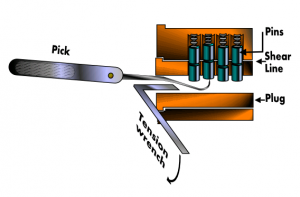 The first step in picking a lock is to insert the tension wrench into the keyhole and turn it in the same direction that you would turn the key.

 In recent years we have seen an increase in the increased risk and possibility of SHTF crisis type situations actually happening. Most emergencyies are relatively small. However, that is not always the case. To be honest, if you really want to keep your family safe, you definitely wouldn’t want to risk planning for anything other than the worst case scenario!
 Looking for unique prepper stocking stuffers?
 When we first saw these, we couldn’t have been more excited to share them as a gift idea. They’re cheap, small, chemical-free, and they’re simply brilliant.
 The thing about preppers, they prep for everything as much as possible, and this includes medical supplies. These newly, redesigned sponges have moved away from using exposed powder on wounds to using a hemostatic sponge that holds zeolite beads.
 Sometimes we get too distracted by the physical priorities of prepping that we may neglect supplies that help to ensure our mental and emotional survival. If you have the space or just a bookshelf to spare, make room for some games.
 This is another space-saving and convenient supply to add to your list of stocking stuffers.
 If your prepper has an arsenal of firearms, you may want to consider
 We all know optics play an important role in being prepared for your survival in many different scenarios. So, I don’t think we need to get too much into its benefits here.
 Okay, so this gift idea isn’t technically on the affordable end of the spectrum, but it’s so deserving of a mention. A Berkey water filter is an excellent gift because it can be used for everyday use and not just for when the SHTF.