If you’re thinking of taking up fishing as a pastime, then you’re about to take your first step into an activity which requires a great deal of skill, finesse and accuracy. Fishing is also a hobby which can bring you a lot of joy if you’ve got the time and patience to learn. As you set out, the various techniques and pieces of equipment out there may cause you some confusion.
Below is our “idiot’s” guide to 5 Essential Items for New Fishermen that you will need to invest in if you’re thinking of taking the plunge (forgive the pun) and devoting your idle hours to the pursuit of fishing.
Rod and Reel set
This is where you need to start. A good rod and reel are essential to helping you build your confidence as you start. Your rod and reel will be your trustiest friend, and you will need to be comfortable with whatever you pick. A rod and reel combo set is the best option for beginners, as it allows you to grasp the basics of fishing and begin to get a handle on your technique.
The other great advantage of rod and reel sets is that they are relatively inexpensive, meaning that if you decide fishing isn’t for you, you’re not going mad with your money.
What to look for in your first reel
The ideal reel needs to be about thirty centimetres longer than your height.
The rod needs to responsive; it’s essential you can feel the fish bite and are able to pull them out of the water.
Spincasting reels are the best option for absolute beginners, as the line can be cast automatically, mounted on top of the fishing rod.
Baitcasting reels are manually controlled, and offer greater distance, but they are perhaps more suitable for someone whose technique is more advanced.
It needs to have the necessary weight and lifting power that you are able to practice catching different types of fish.
The experts say that a monofilament is your best bet for a beginner. Durability is key for fishing line; they are classified in terms of their breaking strength, which is the weight they will support. Obviously, the breaking strength of the line needs to be matched with the size and weight of the fish you are trying to catch, so you need to bear this in mind when purchasing; if you’re planning on going for bigger fishing then you will need a rod with a greater breaking strength.
Fishing hooks
Again, as you grow more accustomed to fishing, you will want to practice with different types of hook. It’s important to understand the size classifications of different types of hook; the higher the number, the smaller the hook. Any size classification beginning with a 1 or 2 is best for a beginner, as it’s likely you’ll be starting on smaller fish, and you will want to learn precision catching.
Lures and baits are both integral to learning your fish-catching technique. Lures are like decoys which, you guessed it, enable you to “lure” your fish to the bait. Fishing spoons are a popular form of lure, as they mimic the shape and behaviour of prey. Meanwhile worms and insects make the most effective form of fishing bait. You will need to match the size of the bait to the size of the fish.
The types of fishing bait you use will most likely depend on what kind of water you are fishing in, and the kind of fish you are looking to catch. Weather and water conditions can of course, have an effect on the feeding patterns of the fish, which in turn will affect the kind of bait you use.
Floats and sinkers
Floats are used to keep bait close to the surface, allowing you to lure in fish feeding close to the surface. Sinkers provide casting weight, weighing down your bait and line so that you are successfully fishing at the level where fish are likely to be feeding.
This list of supplies is not exhaustive, but these are arguably the essential pieces of equipment for getting you comfortable with the strategies and techniques of fishing. The most important thing you need as you start out is a willingness to have fun, and the patience that comes with being a novice.
Basstasticoffers fishing equipment, clothing and accessories for both beginner and professional anglers and fishermen.
Anchors away – but, wait, what’s your anchor attached to? Rope is an important but often overlooked part of maritime activity, serving many functions.
Most widely used for docking, anchoring, towing, and rigging, rope is an important member of any boat crew! That’s why it’s important to pick rope for anchors and general marine use that will do its duty.
In the end, most boaters will generally use either Nylon rope or Polypropylene rope, depending on the size of their boat, weather conditions, and the activity they need it for of course.
To learn about the best rope for boating and marine use, read on!
What Rope Should You Use For An Anchor?
Unless you want to float away, having a good anchor in place is vital. The ground tackle system consists of the actual anchor and then the anchor rode, which can be a rope/chain combination or, all chain. Which kind of system you’ll uses largely depends on the size and type of boat you have.
However, if you decide that a rope/chain combo is the way to go, you should use Nylon rope. The elastic quality of nylon gives this rope great shock absorption. This is necessary given the force of the wind and waves. In addition, Nylon rope is very strong, flexible, rot/mildew resistant, and generally inexpensive. This rope is also easy to handle (compared to other types of rope) and holds up very well in the sunlight.
For nylon anchor lines, three strand rope is the preferred type, as it has stretch and resistance to abrasion, but braided will work as well. If you go with a braided line, be sure to pick a type that is less likely to snag. Remember, although your Nylon based anchor line will have no problem under tough conditions like wind, its breaking strength will decrease with age from knots, kinks, etc.
What’s the Best Rope For a Dock Line?
Just like with anchor lines, Nylon rope is generally your best choice for dock lines. When selecting rope for a dock line, it’s important to have two sets in mind: temporary slips and permanent slips, as they’ll both have different needs.
Nylon rope is the best for docking and mooring because of its strength and stretch. Double braid or three-strand line should do the trick. Easy to splice and reasonably priced, nylon rope is the way to go.
If you have permanent dock lines, you’ll want to protect the rope from chafe since it will be constantly in use. This can be done with chafe guards, eye splices or galvanized shackles. Transient, or temporary dock lines, are lines stored on board designated specifically for travel.
What Rope Do I Need For General Marine Use Like Pulling/Towing?
Polypropylene rope (sometimes referred to as the “Yellow Rope”) is most commonly used for activities like wake-boarding and water skiing. It’s also used to tow dinghies and tenders, although Nylon Rope can work too.
Polypropylene rope floats and is almost as strong as Nylon, making it perfectly acceptable for these types of activities. Keep in mind though, this rope is far less resistant to the sun’s UV rays and will not last as long as Nylon rope.
There’s a reason that sailors know so many different types of knots. It is because there are many ways to incorporate rope into their work. As you can see, rope serves many important functions onboard your vessel, so don’t skimp! Always select the best rope for boating and marine use that you can. Ootherwise it can rot, degrade, and break.
*Not part of an article on marine rope, but many of the reasons yellow Polypropylene rope works well for skiing makes it great for other tasks. I use it myself for lashing projects, and the 1/2 thick 600 foot roll pictured at the top is very useful for homestead building projects.
While some prefer to purchase a fishing net, some people enjoy the relaxation that comes from making their own.
If you are like me then knowing how to make your own fishing net is something you find to be a neat skill to have.
If a do it yourself net is what you’re after, there are several things you should keep in mind.
In this article, we are going to look at a few things to consider, the materials you will need, and the steps to making a net that you can use for your next fishing trip. Here is what you need to know.
Things to Consider
Before you get started making your fishing net, you need first to consider the size of the net you want to make. If you want a larger fishing net, you will need to repeat the steps until you have reached the size you want. If you want a smaller net, it might not take you quite as long to make it. However, before you buy your supplies and get started, you need to know your ideal net size.
You need to also consider the desired quality of your fishing net. Do you want a high-quality net or just a simple fishing net? Your preferences will determine the type of string and handle you should purchase to make your net out of. The last thing to consider before you get started is your intention for the net. How will you use your fishing net? If you are planning to use it for heavy duty fishing, you might want to invest in a high quality string. If you are just using it for a few fishing days out of the year, cheaper string should work just fine.
The Supplies
Now that you have somewhat of an idea about your ideal fishing net, you can start shopping for your supplies. To begin, you are going to need a set of needles. Your local sporting goods store should have several needle options. You will also need a good pair of scissors or a knife to cut the string or line that you will be using. Once you have these, you can then get your string or line. The amount you purchase will depend on the size of the net you want to make. Along with your line, you will need a few net gauges to help you decide how wide to make the holes in the net. To finish off the net making materials, you need a good set of net handles so you can easily use your net while you are out fishing.
How to Make Your Own Fishing Net
Now that you have your materials, it is time to get started making your net.
The first step will be the start of your net. Start by holding your thread snugly and making a loop. Tightly grip the intersection of the loop. By using your free hand, grab the tag end of the string, and thread it through the loop and around it once again. This makes your first knot of the net when you pull the knot closed.
The second step involves grabbing your net gauge. You will need to decide how wide you want the holes in the net. The fish size that you fish for the most will determine which gauge you need to use. For example, typical 20-pound fish will need a net with a 1-inch gauge. You can create this gauge by using your fingers, index and middle fingers. You should use both of them as your guide for creating your knots.
The third step is the construction of the first row. You will need to make this row as long as you want your net. If you happen to run out of thread during the process at any time, use a sheet bend knot to the last loop to connect more thread. You will need to pass that tag end back over the top and join those knotted ends with the new piece of thread. You will construct your net row by row.
Step four involves finishing off your net. You should gather the net up in your hands, letting it drape to the ground. A standard fishing net is only between 12 and 18-inches in depth. To finish off the net, you will fold a 1-inch flap of this netting over the handle of your choice. Use the needle to sew the net onto the handle by passing the thread under and over the handle until it is secure. Then, just knot off the net to finish.
Drew Bishop is a contributing writer and media specialist for Delta Net and Twine. He regularly produces content for a variety of fishing and outdoor blogs.
So, you want to learn how to fish with a crossbow?
Maybe you want to impress your hunting buddies with an innovative technique while catching a bunch of fish?
Well, it’s either that or you want to show off with your skills and new cool gadgets, right?
All in all, you are reading this article because you are a fisherman or you will be soon. Amateur or professional, whatever your level is, equipment is updating, upgrading and just getting better overall. You should too!
Luckily for you, I will show you everything you need to know about fishing by using a crossbow as well as about crossbows themselves. All that you need to do is kick back (be careful not to fall asleep as that would leave terrible consequences on the writer – me) and go through the article. You will be ready for crossbow fishing in no time!
Things you need to know about crossbows
Surely, you must have already heard about crossbows; at least in movies. However, even if you have never heard about them and have no clue what they are, don’t worry. No big deal! That’s actually the beauty of crossbows – they aren’t that hard to learn, but we will talk more about it later.
Okay, before we begin one thing must be cleared: You need to pay close attention to every paragraph of the article. Understanding how things work and learning to shoot correctly is one of the key things not just in fishing, but in every aspect of hunting. You need all pieces of the puzzle in order to make the picture, right? Same goes for hunting. You need all the information if you want to execute it successfully.
What is a crossbow?
Crossbows are actually quite ancient. They were one of the “go to” weapons in medieval times. Imagine how much they have changed since then. Back in those times, they were effective and strong weapons that people used in wars. Nowadays, they are adapted for hunting purposes. Don’t let that fact make you think that they have lost their power. Actually, they are better than ever.
Basically, all of the crossbows consist of:
Horizontal assembly that looks like a bow
The assembly is located on the stock
The stock fires arrows / quarrels
If you are able to handle a gun, not to mention a bow, you are already 90% there when it comes to handling a crossbow. If you never held a gun before (or a bow), you will learn pretty fast as well. Come to think of it, a crossbow may be a good starting point if you want to shoot from rifles.
How do you shoot a crossbow?
First things first! You must learn how to cock your crossbow.
It would be wise to invest in a cocking rope or the crank operating cocking aid. Some of this may even come with the crossbow you bought. If you didn’t receive it, buying a cocking rope would be a pretty good thing to do as it reduces the pulling effort you need to put in when you are getting ready to shoot. This will save you some time, and you know how hunting is – each second counts!
You can also cock your crossbow without any additional equipment, but that would make things pretty harder.
Now, after the crossbow is cocked, you must pull the string back and use the same amount of pressure on both sides of the barrel. Also, remember to place your string accordingly. If you don’t align it well (we are talking about inches here), the arrow will most likely miss its target and your prey will escape. We don’t want that to happen, do we?
Okay, so how do you shoot it now that you know the first step?
Load your arrow into the barrel. Make sure that your arrow is firmly in place. Safety is our number one priority!
Check for any objects that could deflect your shot or that could end up in front of your crossbow before you shoot.
Aim at your target. Your crossbow either has a scope already mounted on it or it has a sight pin.
Fire at your target! Simply squeeze the trigger and hold the crossbow tight. The arrow will be launched at your target. Remember to watch over your target at all times. Don’t look elsewhere!
These steps are essential for your crossbow fishing. As you can see, if you practice these points you will learn how to use the crossbow for hunting all sorts of animals, not just fish.
Okay, now that you know the basic information about the crossbows (keep in mind that you must learn the fundamentals first, not just in hunting with crossbows but in everything in life), let’s move to our specific topic – how do you use them for fishing?
Crossbow Fishing 1 on 1
This part of the article will give you tips and ideas regarding crossbow fishing. So, let’s begin.
I want to let you know right from the start that this type of fishing is way more challenging than your everyday fishing method. Before, you could just sit down comfortably, grab a beer that’s next to you, hold your fishing rod, and wait. That’s it! You would just wait, enjoying the silence (or getting annoyed by it) because you couldn’t risk scaring the fish away.
Well, this method will bring you the thrill of hunting and will definitely make fishing more interesting. However, you must keep in mind that some general rules are the same even when you are fishing by using a crossbow, because, well, fishing is fishing.
What are those rules, you may ask?
Silence is still your friend – Fish are easy to be scared. You will be making some noise because you will need to move around and look for the fish. However, making sure that you don’t move as quick and make loud sounds is a MUST.
Keep your eyes wide open – When it comes to regular fishing, you need to watch over your bait in order to know if the fish is hooked, and you need to pick a spot where you want to throw your bait. The rules are same here, only a bit more extreme. You have to pick a spot where you can see through water (that’s another reason why this method a bit more challenging) with ease. So, if your river is full with mud and its water is not transparent enough, you should avoid it.
Be patient – In regular fishing you just had to have patience when it comes to waiting for fish to take the bait. Here, you must have a different “type” of patience. You have to wait for your fish to appear, yes, but you also have to wait for the perfect angle. Don’t forget, your prey is in your hands now. If you miss, you won’t take anything, so wait for the best possible angle to shoot.
How does fishing with a crossbow look like?
Assuming you have cover all of the previous points and assuming that you have got the general idea of how your crossbow works, here is how it all looks like.
You have found a perfect river, the conditions are perfect and you have spotted your fish. Let’s just assume that everything is perfect because this is a learning tutorial. In real life, you will experience many difficulties, but that’s exactly what makes hunting so appealing and thrilling.
Okay, now you are going inside the water, carefully, not making any noise (because this is a perfect scenario). While you are approaching your fish, you are eyeballing it nonstop. So, you have your crossbow aimed at the fish you want to get. Good. Now, the “hard” part.
If you didn’t switch for arrows that are specifically made for fishing, you might as well call it a day. If you have the right gear equipped (and we will address that as well, later in the article), you are ready to shoot. You see, your arrows will be attached by your fishing line to your reel. You need to do this in order to retreat the fish.
Your gear is set, you have the right position, you are ready, now all you need to do is – SHOOT!
This is the part where it gets tricky. You have raised the alarm for other fish. The arrow is fast and will penetrate the water fast, but nearby fish will notice it and run away. It might also happen that your fish doesn’t get hooked on right away. You might just stun it for a bit. In that scenario, you must remain calm and remember to keep your eyes open. Your fish is stunned now, which means you will spot it easier.
After you have got a clear shot, shoot again. Now that your fish is hooked, simply use your reel and pull the fish out of the water. You have got your first fish using a crossbow, congratulations!
That scenario is basically how fishing by using a crossbow should look.
I mentioned that you need the right gear for the job, right? Here is what you need.
You will find useful tips regarding crossbows here.
Crossbows for fishing
Regular crossbows might not be as suitable for fishing as you would think. You might adjust your crossbow and still use it and be effective, but why bother when you can get a crossbow specifically designed for fishing?
It is pretty easy to spot a crossbow of that kind. Like I have mentioned earlier, it has a reel and its arrows are attached to the fishing line. However, your job is not done as soon as you spot one of them. Oh no!
You must keep in mind what kind of fish you want to catch. Is it small? Is it big? Is it huge?
A regular crossbow won’t be suitable for a big fish, such as the grass carp. With that being said, you will need a stronger crossbow for bigger fish.
If you have never held a crossbow designed for fishing before, keep in mind that it is quite heavier than your crossbows for other types of hunting. The arrows that these crossbows are firing are heavier as well, as they need to penetrate water.
While we are talking about gear, we have to address the specialized glass that can help you if you are fishing in murky waters. This can come quite in handy if you don’t pick a good river like we advised.
Conclusions
And that brings us to the ending of this article on how to fish with a crossbow. I hope you have enjoyed and haven’t fallen asleep at any part of it! If you have followed and learned the steps that this article showed you, I am sure that you will master your crossbow and start fishing in no time!
All in all, crossbows are pretty beneficial when it comes to hunting. As a matter of fact, they are even more beneficial than guns. Crossbows aren’t as loud as guns, which means you will be stealthier, and we all know that stealth is a key factor in hunting. Also, crossbows are considered as a part of archery in most states. That means that you could hunt longer than the “rifle guy”.
On top of that, crossbows are quite easy to learn. Keep in mind that practice makes perfect and that you will be having a hard time at first. Later, however, it will be a whole different ball game. Your fishing adventures will turn by 360 degrees and you will be getting your prey like it is nothing.
Which is better, saltwater fishing or freshwater fishing? A lot of fishermen are saying their own version of which is better for them. And they all have their good points one way from the other.
But saltwater vs. freshwater fishing is not really a thing. That is because each person or fisherman can benefit from any of them with a specific purpose.
In any case, for the purpose of comparison, this is an article to humor your queries. Here is a comparison about saltwater vs. freshwater fishing and which one suits you.
The Difference Between Saltwater and Freshwater
Before heading straight to the comparison, we must first learn to identify the difference between the types of bodies of water. The first thing is saltwater. The saltwater is basically the ocean and the sea. Those bodies of water that are high in salinity or in layman’s term “salty” are obviously the saltwater types.
The freshwater types are those that we call lakes, stream, rivers, ponds, and other wetlands with salinity as low as 0.05%. Naturally, freshwater areas are not as vast as saltwater areas and so is the amount of creatures in them.
Saltwater Fishing
As vast as the world can be, saltwater makes up the 96.5% of the Earth. Can you imagine the number of resources that people and other creatures can benefit from saltwater?
If you are to use that statistic in terms of the amount of what you can catch between those two, naturally, saltwater will win. But there is no such single person that can cover the whole of this planet just by fishing let alone angling. That would certainly be ridiculous.
But given the number of areas to which you can go for fishing, how many creatures can you actually catch from saltwater? Honestly, thousands to hundreds of thousands of species can be your prospect. Here are some of the common possible saltwater creatures that you can catch from saltwater:
The list can go on and on but we will stick to those for now. As you can see, it can be endless. And each of those fish has other subspecies.
The most beneficial about saltwater fishing is that the fish caught from there are a lot bigger than freshwater. It is not to say that freshwater fish cannot get bigger. It is just that it is more common with saltwater fishes to grow more than the other. And it is common for saltwater fish to have high in omega-3 fatty acid which is known to be good for the heart.
Another aspect about saltwater fishing is the part where a lot of big fish caught from these parts often fight back. And since it is common to catch huge fish in this area, expect a lot of fighting every time a fish bites into your bait. So if you are the adventurous type who likes more challenges then saltwater fishing could be good for you.
The bad thing about saltwater fishing is that due to its salinity volume, equipment such as metallic ones can easily get deteriorated. Boats get ruined much faster and so you will have to invest in a lot of repairs, renew, and replace.
It should worth noting that the chances of risk and danger in saltwater fishing are higher than freshwater. Not to mention the tides that occur with storms passing through. But that could easily be avoided if you just look out for news about the weather.
I don’t have much expoerience saltwater fishing except for my time at Camp Lejeune. I kept getting stranded out on the intercostal waterway because I bought cheap equipment. If you want good stuff Check Global Marine Top Pick Trolling Motor For Saltwater use if you don’t want to paddle back to shore.
Freshwater Fishing
For those who love to go fishing and enjoy more about the nature such as the trees and see some wild land animals, freshwater fishing should fit your portfolio.
Did you know that freshwater is only 2.50% of water all over the globe. But that percentage includes the frozen glacier, ice, snow, and fresh groundwater. Only 0.01% consists of surface water in lakes, swamps, and rivers. That is how small freshwater is around the world. So from that statistic alone freshwater gets defeated by unanimous decision.
Despite the size of freshwater, there are plenty of fish species that can be found and caught here. Here are some common fish that you can find in these bodies of water:
The same goes for freshwater fishes. Each fish has its own different subspecies so they are not limited to one type or appearance and even size.
Although it is not as common to find big fish on this side of the water, there is still some challenge to be had. One is if ever you caught a really big one, it is considered as a jackpot. The memory and the picture are worth hanging on your wall. If you are onto those kinds of stuff, that is.
Another good thing about freshwater fishing is with expenses. Unlike saltwater, your boat gets to last longer and with lesser maintenance to boot with. And since you can go fishing without always going out in the middle of the deeper areas of the water, you will not always have to spend more on fuel. So you can enjoy more without spending as much. All you need to do is to maintain your fishing equipment such as your rod, baits, and other stuff related to it.
The bad thing about freshwater fishing is the part where alligators can get a bite off of you. And more instances of encountering some wild and dangerous animal could occur. There is also some chance that a snake, a wild bear, a wolf, or other animals that can bite you along the way. Not to mention the leeches.
Also, since there are only a number of species in a freshwater lake or river, you could probably just catch common fish such as trout, bass, or catfish. With saltwater, you could end up with an octopus or a shark. There are even reports of freakish squids and other normally small-sized creatures. Otherwise, freshwater is likely best for those who just prefer simpler fishing activities.
Technically, you could use both natural bait and artificial bait on both bodies of water. There is no definite restriction regarding those things. Just as long as you can catch a fish with what you have, who are we to question which is better or not. It is your expertise that matters and not the bait you put on the end of your line.
I am not saying that freshwater fishing is easier than saltwater fishing. It is just that if you are looking for a comparison, size and abundance could easily topple the competition. But if you are looking for adventure, it does not matter whether you are into any of those types of fishing. Just as long as you are enjoying yourself and it is what you love doing then your choice is the best way to go fishing. Nothing more and nothing less.

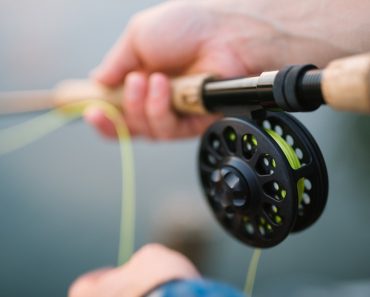


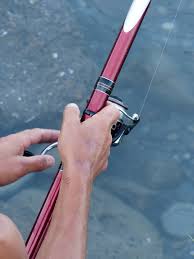 The experts say that a monofilament is your best bet for a beginner. Durability is key for fishing line; they are classified in terms of their breaking strength, which is the weight they will support. Obviously, the breaking strength of the line needs to be matched with the size and weight of the fish you are trying to catch, so you need to bear this in mind when purchasing; if you’re planning on going for bigger fishing then you will need a rod with a greater breaking strength.
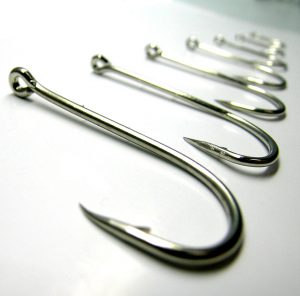 Again, as you grow more accustomed to fishing, you will want to practice with different types of hook. It’s important to understand the size classifications of different types of hook; the higher the number, the smaller the hook. Any size classification beginning with a 1 or 2 is best for a beginner, as it’s likely you’ll be starting on smaller fish, and you will want to learn precision catching.
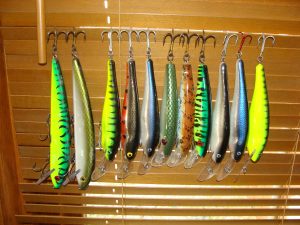 Lures and baits are both integral to learning your fish-catching technique. Lures are like decoys which, you guessed it, enable you to “lure” your fish to the bait. Fishing spoons are a popular form of lure, as they mimic the shape and behaviour of prey. Meanwhile worms and insects make the most effective form of fishing bait. You will need to match the size of the bait to the size of the fish.
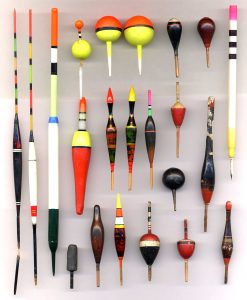 Floats are used to keep bait close to the surface, allowing you to lure in fish feeding close to the surface. Sinkers provide casting weight, weighing down your bait and line so that you are successfully fishing at the level where fish are likely to be feeding.

 Anchors away – but, wait, what’s your anchor attached to? Rope is an important but often overlooked part of maritime activity, serving many functions.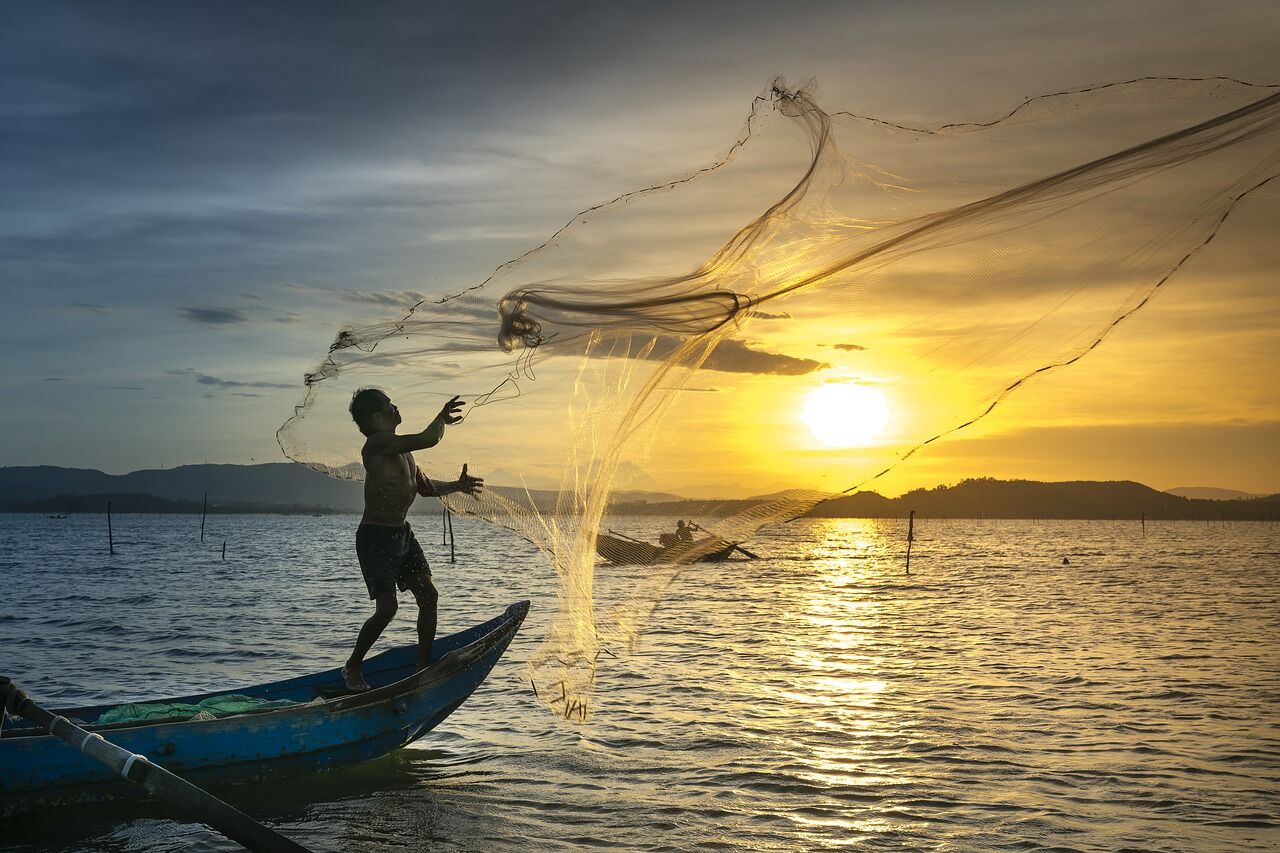


 So, you want to learn how to fish with a crossbow?

 Which is better, saltwater fishing or freshwater fishing? A lot of fishermen are saying their own version of which is better for them. And they all have their good points one way from the other.