Today I want to take a moment to show you how to make your own gun cleaning kit.
If you care for your things, you surely want them to look good and last long. Your gun might be one of those timeless objects, but it requires quite a lot of attention. If you recently bought a gun, there are plenty maintenance lessons to learn.
Why You Should Make Your Own Gun Cleaning Kit?
As you just made a significant investment, you might want to spare some money. Or, if you are like me and already have some gun cleaning materials from past gun purchases, you may not need to buy a complete kit.
Building your own cleaning kit is a cheap and efficient alternative. Here are some basic tips that will help you get it done.
What Does a Traditional Kit Contain?
First, we need to find out what exactly you need to put include in your gun cleaning kit. The items below are always present in kits you can purchase from specialized shops and online:
Patches: it’s recommendable to opt for cotton pieces which are more efficient
Lubricant or gun oil: this is used to lubricate the receiver components. A gun’s longevity depends on how you lubricate it. After buying a gun, make sure you read all the manufacturer’s instructions relating to lubrication. It is also important to purchase the specific products that are suitable for your weapon.
Additionally, some people like to use a solvent trap so that the dirty cleaning solvent is trapped instead of flowign out of the gun and onto the table.
Solvent to clean your gun: solvents are used to dissolve and remove the carbon and metal deposits in the bore. There’s a wide range of solvents on the market. Try to pick one that is less toxic and an ammonia-free (this substance is harmful to the steel barrels).
Brushes: they have to match the size of the gun’s bore. The can be made from:
Nylon
Brass
Plastic
If you own a rifle is better to go for a brass or a plastic brush. Be careful not to leave the brass brushes in a solvent for too long, it causes damage.
Cloth: cleaning your gun with a microfiber cloth will make it look shiny and faultless.
Cleaning rod: this item is essential for effective gun cleaning. It enables you to reach the parts of the gun you can’t clean by hand. The rod also has to go along with the size of the bore. There are various types of cleaning rods, if you are new at this, ask advice before purchasing one.
Cleaning pad: Be cautious. Prevent solvent from leaking on your carpet or couch using a pad.
How to Build Your Own Kit?
If you are passionate about gunsmith tools, building your own kit will be a piece of cake. Let’s focus now on making it yourself. You don’t have to buy all that stuff to clean your gun.
Your kit must be provided with the necessary containers to accommodate all the useful items. If you can sew, it’s great to make a custom size container out of an old piece of leather.
Some cleaning items can be replaced with homemade options:
The rod:
Instead of buying one you can replace it with a piece of string. This will be pulled through the bore along with the patches. You can easily clean most firearms using this improvisation. You just need a string that’s thin enough to go through the barrel. For my Mosin Nagant, I even go so far as using a wooden dowel as a cleaning rod
The brush:
This is one of your kit’s elements that can be replaced with other household objects. If you need a nylon brush for your gun, you might as well use an old toothbrush. You can cut it down to reduce its size and make it fit into the kit.
Cotton swabs:
You definitely have these things around the house. Cotton swabs can clean spots that are hard to reach by hand. Put them together in a plastic bag or an old container and include them in your homemade
The patches:
These items can’t miss from your gun cleaning kit. You have plenty object at home that can provide you the right material to make your own You could use old clothes or kitchen towels. Choose cotton items and mind the size of the gun before you start cutting them. Smaller bores require small thin patches and wider bores need thicker, larger pieces.
The bore cleaner:
You have to use a material that won’t wear off too quickly. You can choose a strong nylon thread. Measure its length according to the barrel of your gun. Then make a loop at one and so that you’ll be able to drag the patch through the bore. Mind the loop’s dimension, it must to match the bore’s diameter. Then secure the knot with a drop of resistant glue. The last step cut the thread and burn the ends with a lighter, so they don’t fray.
The oil container:
You will need it to store the gun oil. Get an old small plastic container. Picks something that allows the oil to come out drop by drop.
Flashlight:
Always have a flashlight in your kit because it will help you spot any imperfections you need to remove.
Toothpicks:
They are quite effective in rinsing the dirt that won’t go away using the brush. Toothpicks are useful to lubricate narrow spots that are hard to reach.
Pack all these items in your tool container. Make them fit inside compactly.
In Conclusion
One last piece of advice. Don’t forget gun safety while cleaning, you would not want to have a negligent discharge while attempting to work on your firearm.
These are the basic things you need to craft your own handmade gun kit. It’s not hard to come up with these items. Lastly, with a little bit of patience and a practical mindset, you’ll have your kit ready in no time.
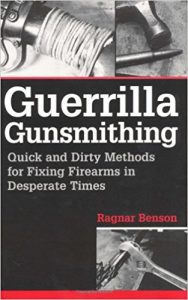
There may come a time when government restrictions severely limit not only access to firearms but the tools and means to repair and maintain them, or you may someday find yourself in the boondocks with a busted weapon.
That’s where the guerrilla gunsmith comes in.
Ragnar Benson has had experience as a guerrilla gunsmith repairing “junk” guns in some tough places around the world, and here he shares some innovative ways to patch up, cobble together and otherwise make operational everything from antique rifles still found in remote war zones to modern firearms suffering from appalling abuse.
Drawing on lessons and stories from backwoods experts he’s worked with under desperate conditions in Africa, the Philippines, Thailand, Pakistan and beyond, Ragnar tells how to employ last-resort but effective techniques to remove hopelessly stuck rounds and other barrel obstructions, straighten bent barrels, replace lost parts, smooth out dented magazines, make repairs to some pretty hopeless stocks, scrounge up workable ammo and more.
These are last-ditch, do-it-yourself methods, but they may be all you’ll have to fall back on deep in the bush or with your back to the wall, when the only things between you and the enemy are a rifle and the know-how to make it work.
Most cheese was historically made with animal rennet, nowadays, a lot of cheese is made with a mold based rennet.
It is possible to make a vegetarian rennet for those that are either vegetarian, vegan, or who do not have the resources to make animal based rennet.
Today we will make a DIY Vegetable Rennet out of Thistles.
The biggest problem with vegetable rennet is that it becomes bitter in aged cheeses.
This means it should not be used with raw milk, or cheeses like cheddar that need aging to build their sharp taste.
List of plants used to make a vegetable rennet:
Thistle
Fig
Yarrow
Ground ivy
Lady’s Bedstraw,
Nettle
Pineapple
Artichoke
Since Artichokes and Thistles are in the same family, we will show how to make rennet using them, but as a rule of thumb if you crush and extract the sap from the greenery any of the plants above you can use it to thicken milk.
Material:
Thistle flower head when it has turned brown, but harvest it before the plant produces the thistle down, in which case it is too late.
Or
The Purple head of the artichoke before it makes the head
Equipment:
Dehydrator
Pot
Procedure:
Dry the flower heads and pick off the purple stamens.
Boil water and drop thistles into the water and let steep into a thick dark tea.
Strain off the liquid. This is now thistle flower rennet.
The rennet can now be added to warmed milk to curdle it and begin the cheese making process.
Note:
Most cheese recipes using commercial rennet are in the teaspoon/tablespoon amounts, I started using a traditional recipe amount, but ended up using ½ cup of my homemade rennet to get a good result.
The state of absolute perfection is achieved by no Archer.
Many steps are involved in a complicated process and too many details to juggle during each shot.
Even archers with perfect coaching and perfect shooting form have to deal with the mental aspects of shooting a bow.
Using these Archery Tips you can be an expert in the most basic fundamentals of shooting form and understand the mental aspects.
Beyond that, the greater part of bow-shooting difficulties emanates from only five elements of the shot sequence.
Take them seriously, and they’ll provide an enhancement in bow-hunting accuracy.
Anchor Twice
A reliable anchor is the foundation of a perfectly executed shot. Anchoring creates the bases of the rear of the sighting system. With no solid anchor point, shots turn out to be unsteady and aiming is more difficult. This brings inconsistencies to your shooting.
The anchor point you choose is based on individual preferences and personal comfort. The anchor point should also be rooted in something static. Cheek, jawbones or teeth are quality anchor bases. They’re fixed and solid. Impressionable anchor bases such as lips, jowls and side burns are poor choices.
To take it one step further, an anchor point shouldn’t involve just one static point… but two static points. This gives you a two-point anchor making sure your shooting hand is placed “just so” for the duration of each and every shot. For instance, I snug my index-finger knuckle tightly into the divot behind my ear, and my thumb wraps around the lowermost point of my jawbone. Choose a method that works best for you.
A kisser button is another trick that performs the same function. It provides an added anchor and make sure your anchor schedule is consistent and repeatable. It assures your bow fits properly. A draw length that is too long can introduce a floating anchor. Get your drawing hand to the middle of your face, and adopt a dual-point anchoring system. Your anchor will become more consistent and your releases will be more controlled.
Watch That Bubble
Most quality bow sights comprise of an incorporated bubble level. Particularly for bow-hunters, levels help get rid of left-right misses, particularly from tree-stands or in broken topography. When shooting peep and sights, any deviations from vertical plumb makes the rest/arrow to swing left or right and send arrows off center. Canting a bow top-limb right—a familiar symptom for right-handed shooters—is instigated by loaded quivers. This causes arrows to miss the mark. The level acts as a reference, assuring each shot is launched consistently.
A fast developing shot opportunity may leave no time for a bubble check. This is why it’s imperative to instill these habits during practice. Check with the level before every shot. After some time, the correct feel will become second nature.
Haven said that, smart bow-hunters at least take a quick look at their bubble levels during challenging shots from tree-stands, in uneven terrain, or for ranges past 40 yards. Severely bending at the waist to address targets below you easily introduces a canted bow.
Fast-falling terrain can create the optical illusion of a level bow, when you’re actually tilting into the bow uphill. The longer the shot, the more deviations are compounded. It’s always worth the extra second to check your bubble. You don’t want to miss—or wound—a season-making animal due to a leaning bow.
Cradle It
A proper bow “grip” goes hand in hand with the bubble-level concept. Avoid the term “grip” in relation to holding the bow at full draw. The bow handle should never be gripped at all. Physically wrapping your hand around the handle to maneuver its attitude results in torque. Torque is the enemy of repeatable accuracy.
There’s a better approach: Put all your fingers together and hold them upright, as if offering your hand for a shake. Create a U with your thumb. Slide the bow handle into the U and allow it to cradle atop your fingers and thumb. You’re not holding the bow at all. Gravity does all the work. Come to full draw and turn your fingers slightly outward. This pushes the heel of your hand into the riser. The draw weight pushes down your solid skeletal structure so muscles remain relaxed. This allows a steadier sight picture and a more solid shooting platform.
There are two vital caveats: Your bow should sit up straight at rest and full draw without any manipulation on your part. This will need auditioning various stabilizers to determine the right feel. I find this is made easier by removing bow quivers and adopting a back quiver like Rancho Safari’s Catquiver line. Use the bow as engineered to be shot.
Take up a wrist sling and adjust it appropriately. The wrist sling eliminates the fear of dropping your bow on release or snatching at it during the shot in a subconscious attempt to avert losing control of it. Many leave their wrist slings loose to slip their hand in when hurried. But without definite support, the purpose of the wrist sling is largely overpowered. Adjust it to support the bow
Surprise Release
Punching the release trigger is a general mistake. An instance: The archer aims while the trigger finger is poised over the trigger, like a coiled snake. He then yanks the trigger when the proper pin sweeps into the bullseye. This leads to even bigger problems, such as shot nervousness and target panic.
If using an index-finger release, cut down the extension shank so the jaws hit the first joint of an open palm. At full draw, the trigger should hit the middle joint, instead of the sensitive tip. While triggering, use all fingers as a single unit.
This puts you in more control and allows you to squeeze more efficiently. Aim and allow your sight pin to float over the bullseye. Deliberately create a figure-8 if required. Continue to aim. Focus on allowing the pin to float and slowly increase trigger pressure until the arrow releases.
If trigger-punching habits are bad, ditch the index finger release and use a thumb-activated T-handle release. The shot sequence is the same. It allows the pin to float on the bullseye while aiming. But this time, cautiously wrap your thumb around the trigger barrel and pull into the draw to release the arrow.
You’re not physically squeezing the shot, but gradually pulling your shoulder blades together to amplify the pressure on the limbs against the cam’s draw stops. The draw pressure pulls the trigger barrel into your fixed thumb. This is a true, back-tension surprise release. This technique reduces anxiety and allows you to focus on aiming, and it will make you get a better shot.
Follow Through
The propensity is to jerk the bow down, watching arrows sail away, or basically allowing shooting form to fall apart once the release trigger is pulled. The problem is your timing can physically pull the shot off the mark. When shooting suffers, you usually get back on track by reminding yourself to concentrate on the follow-through. I keep on aiming until the arrow sinks into the target.
Follow-through involves strong concentration. It concentrates on keeping everything still once the shot cuts. It attempts to hold the pin on the bullseye until impact. Lastly, it requires mentally willing your arrow to go where you want it.
Pay Attention to the Tension on Your Draw Hand
This is one of the common problems we see in archers both with and without experience. Putting avoidable tension on your draw hand can lead to arthritis problems in the future. Even veteran archers can practice at length with archery bag targets and overlook this feeling during the rush of a good session.
To have a good release of your arrow, it’s very important that you relax your draw hand before the bow fires to break up the force created by the firing of the arrow. If your draw or even bow hand is tense, that tension will pushback against the force produced by the arrow which can cause the arrow to potentially jerk or rotate during the release.
In view of the fact that that can affect where the arrow will land, you want to stay away from that tension. Rather, you want to practice a clean and steady shot that you can repeat and that comes from a relaxed posture. If you aren’t sure how to start doing this, try concentrating exclusively on your thumb and forefinger. Usually, many people aim best near the start of their cycle than the end, so try not to focus on hitting the perfect shot when practicing this method.
As an alternative, focus on the movement of your elbow at the start of the draw and then the feeling in your thumb and forefinger during the aiming process. It’s recommended that you release your shot in about 5 seconds or less, or else you may find it difficult to continue to maintain the bow draw while also concentrating on relaxing your fingers.
Never Copy another Archer over Success – Find Out What Works For You
One more common issue occurs when archers spend a lot of time practicing together on the same range or see each other regularly in competition. One archer who is doing well time after time will see another individual struggling a little and offer some helpful advice. Or, the struggling archer – becoming more and more frustrated with their performance – will see a trick or particular bow accessory working well for another archer and feel like it’s compulsory for them.
While at times this can be very helpful, you should be careful with entirely changing your style or habits based on a short time frame of frustration or trouble. Everyone goes through ebbs and flows in their performance, and everyone’s background in archery and practice schedules are diverse. It’s worth exploring changes you can make to your routine or bow to improve your own performance – but make sure that process starts by figuring your own weaknesses and building on that – not just copying another archer seeing success.
This matters the most when discussing your stance and firing habits such as the length of time spent aiming. Every archer has a different physique and thus the force from the bow is handled differently by everyone. One archer may favor pushing the shoulder forward during setup, while another may be more contented just holding the shoulder naturally.
While of course there are unsafe practices and other forms that are discouraged, there are also many correct answers to problems around stance. All of the archers you train with may be comfortable with a completely closed stance, but that doesn’t mean it has to be mandatory for you. Try it for yourself at your local range and see what works for you.
Just 2 Seconds covers the lessons of past assassination to prevent future ones.
Think of every assassination you’ve ever heard about. For most people, a few of these major ones come to mind: Caesar, Abraham Lincoln, John Kennedy, Martin Luther King, Mahatma Gandhi, Indira Gandhi, Anwar Sadat, John Lennon, Israel’s Prime Minister Rabin, Pakistan’s Benazir Bhutto.
From start to finish, all of these attacks combined took place in less than one minute. And the hundreds of attacks studied for this book, all of them combined, took place in less than a half-hour. Those thirty minutes, surely the most influential in world history, offer important insights that can help today’s protectors defeat tomorrow’s attackers.
This 650-Page Book Contains:
An original work of new insights arising from ten years of research;
The Five Essential Lessons for protectors;
The Compendium – 400 pages of summarized attacks, near attacks, and incidents against at-risk persons all over the world from 1960-2007, more than 1400 entries;
and the Appendices – More than 100 pages of additional material and resources.





 Most cheese was historically made with animal rennet, nowadays, a lot of cheese is made with a mold based rennet.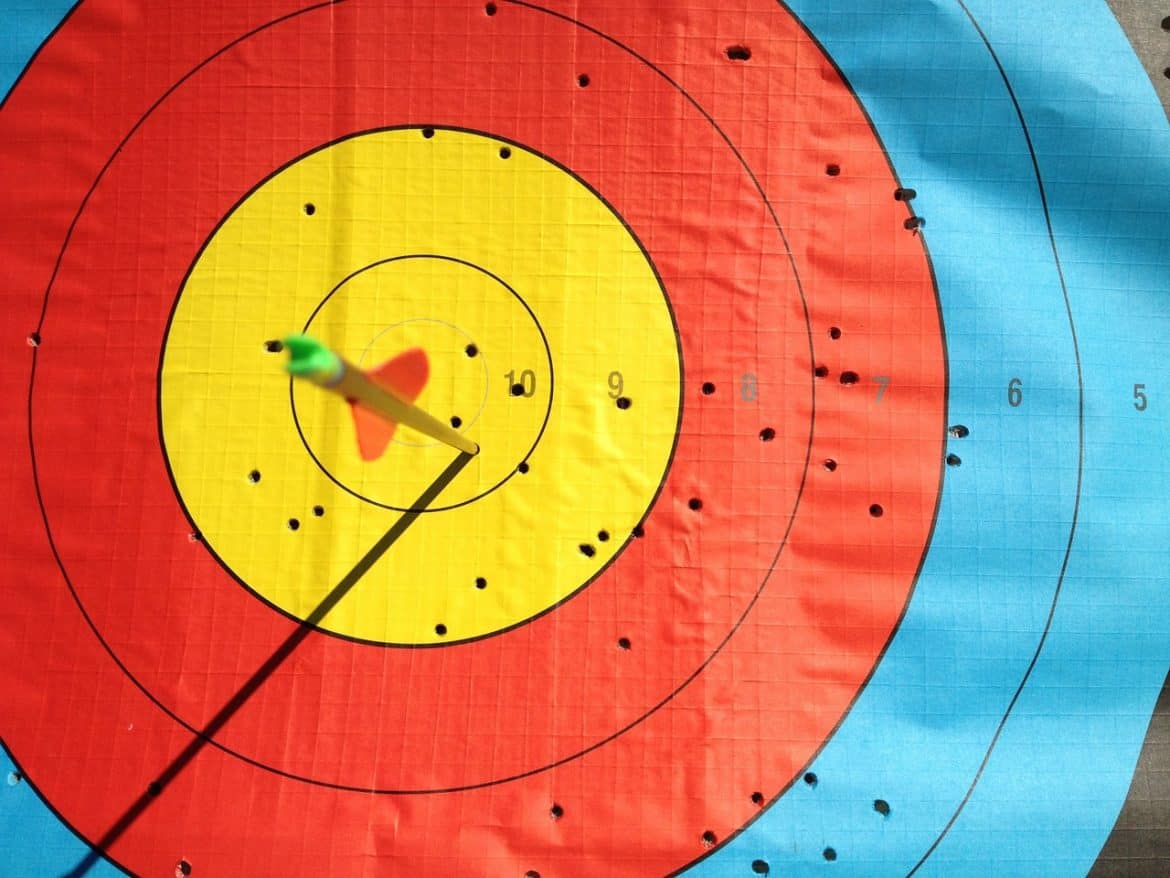

 The state of absolute perfection is achieved by no Archer.

 Just 2 Seconds covers the lessons of past assassination to prevent future ones.