
Concealed vs. Open Carry of Handguns

Concealed vs.  Open Carry of Handguns
Buy at Amazon

This post addresses the issue of concealed vs. open carry of handguns.

One of the things I love about gun owners is that they (as a whole) are a fiercely independent sort. They take what you tell them and apply it to their life and toss it up to winnow out what works for them and what doesn’t.

As an instructor of firearms I run into this very often, and it has definitely impacted my teaching style. If you have read my book, or taken one of my classes you will know that I when asked “what kind of gun should I buy” I refuse to give a make and model but (sometimes infuriatingly) quiz the questioner on what they want the gun for and help them decide for themselves, because, if they ever have to use it, I want them to have what works for THEM and not me…

Once a shooter knows the fundamentals, and the law of their jurisdiction, they can begin the journey toward being able to effectively employ a handgun for self defense. There are several schools of thought, and I can give my opinion, but in the end it is the gun owner that must decide what works for them.

With that in mind, and because of two incidents I will post videos of below (they are not ccw/open carry per se, but about law enforcement dealing with the armed citizen), I have had firearm usage bubble up to the front of my mind. I knew this would be a controversial post on youtube, and it has gotten quite a few comments but before I go further I would like to give a few caveats:

  • I have no problem with open carry. I think it is how the framers of the Constitution envisioned the bear arms portion of the 2nd Amendment.
  • I don’t have a problem with seeing guns in public, I carry one every chance I legally can, and feel a sense of fraternity with other individuals that take responsibility for their own life. They get the same knowing wink I give a guy wearing a “shoot me first” vest (oops I meant 5.11 Vest).
  • I am not telling you how you should carry your gun. It’s called personal protection, so how can I tell YOU protect how to YOU…

My mindset, therefore the direction of the majority of my classes revolves around the defensive rather than sporting uses of firearms. So when I think and talk about handgun carry I want every edge possible. That’s why as a general rule I advocate concealed rather than open carry.

Defensive use involves your reaction to a threat. I carry a gun because I know that bad guys exist and that they may choose me as a target. If they pick me, I want to have the most effective tools at my disposal. But I am not expecting an attack. If I was expecting an attack, I would either not be there, or I’d have a buddy on over watch with a .50.

So my use of a handgun in a defensive situation would be unexpected (not a “surprise” just unexpected). This gives the criminal the upper hand at the initiation of the problem. At this point I am reacting. Action is faster than reaction.

One of the big youtube comment streams was I am less likely to be attacked if I am open carrying. I admit that is likely to be true. However, you cannot prove a negative. You may not have been attacked because of your gun, OR you might not have been around a criminal planning a violent assault. My manner of dress, speech, presence, and alertness are my main deterrents.

In my mind MY gun is not used as a deterrent, it’s used as a fight stopper. And so I would rather employ it most effectively as a defensive tool than as a signpost saying “hey I got a gun, pick someone else.” If someone has to be chosen by the thug – that “oh crap, I didn’t know he had a gun” look is priceless on a thug.

Feel free to comment, and disagree. I have put a lot of time into developing this idea of what, how and why I carry a firearm, and it works for me, so I won’t be mad at you for disagreeing. If you have a better way, or a rational argument, who knows I may evolve to a better program.

Avoiding a Gun Tragedy

Avoiding a Gun Tragedy
Buy at Amazon

This post is about gun safety, and avoiding a gun tragedy by locking up unused firearms.

As advocates of gun rights and personal responsibility, it’s extremely important that we understand that, with the right to bear arms, comes the vital obligation to treat those arms with great caution and respect for others. Let’s not pretty things up here: Guns are designed specifically to kill people and animals. You might use yours only at the shooting range and have never harmed a single creature with it, but it is still primarily a device for killing. Never forget that for one second. A gun in the wrong hands is about the most dangerous thing most of us are ever likely to encounter.

A stolen gun can very easily end up in the hands of a criminal, of course, but that’s not the only moral reason we need to make sure our pistols and rifles are locked safely in a well-secured gun cabinet. The papers are full of instances where improperly secured guns were stolen from various people and used in suicides. You do not want the pain of knowing that your carelessness with a gun made it easier for someone with severe psychological problems to harm or kill themselves or others. The person who stole your gun may be responsible for his or her own actions, though many of those suicides are committed by teenagers, but you are just as responsible for keeping your dangerous weapon far from the hands of a troubled person.

That’s why you want to keep careful track of the weapons in your possession and where and how they are secured. At home, there is never an excuse to leave a gun unattended anywhere outside of a safe or gun cabinet. When outside, on your way to a hunting trip or a visit to the firing range, keep your gun either with you or well secured in your vehicle at all times. This might sound like super obvious common-sense stuff, but you’d be surprised how uncommon sense can be sometimes.

Lee Universal Decapping Die Review


Gear Review: Lee Universal Decapping Die
Buy at Amazon

For under $15.00 the Lee Universal Decapping Die is one of the best pieces of reloading gear you can get, heck it’s a bargain at double the price. I have broken a lot of decapping rods over the years and that ended as soon as I got this piece of equipment. The reason this die is so good (Lee calls it “Virtually” Unbreakable) is that the decapping pin is held in a collet so that if the decapping pin hits resistance – say you accidently throw in a berdan primed case, or the flash hole is off center, or WHATEVER, the pin will be pushed up out of the collet instead of bending or breaking under the pressure.

This is a much better design than any of the other decapping systems I have seen. In every other decapping die I know about the pin is threaded or otherwise fixed in the die, so that if it hits resistance it bends. The pins may be inexpensive, but finding a replacement at 5pm on a Sunday can be quite difficult. With the Lee die, you just need to loosen the collet with a wrench and push the pin to the depth you desire and then retighten it. This is much simpler and faster.

What is probably the best review of this piece of equipment is that if you perform an internet search for a review of the Lee Decapping die all you will find are forum posts where experienced reloaders are recommending this equipment to new shooters. I could not find a negative comments about this piece of equipment, and to me that says a lot.

I have no affiliation with Lee precision in any way, other than I like some of their products and I want to share with you what works for me.


How to Clean Brass Shell Casings

How to Clean Brass Shell Casings


How to Clean Brass Shell Casings
Buy at Amazon

If you’re already a reloader, then this post probably won’t tell you anything, but if you’re considering reloading then this is a topic you will need to become familiar with.
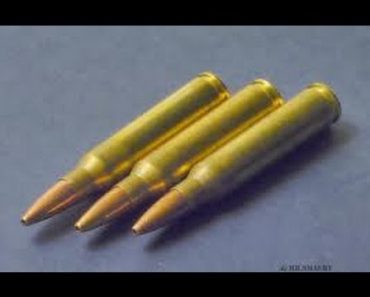
Unless you buy shell casings that are new, then your going to have to clean the residue from them.  Burnt powder as well as dirt and grime will impact the finished bullets.

If you don’t clean the casings you could have a foreign object stuck inside the casing cause a hang fire.

Additionally, it is more likely would be that grit on the outside of the casing would damage your expensive reloading dies or the chamber of you firearm.

The process to Clean Brass Shell Casings is Simple.

  • Sort out your brass by size and type.
    • if you do this after you clean you may have small cases nest inside of larger cases and if bits of cleaning media get involved the cases can wedge together. (that why we did the shell sorter review first – to emphasis sort before clean).
  • Put brass in a vibratory tumbler (think big rock tumbler).
  • Add media
  • Add cleaner chemicals if desired (I don’t)
    • Make sure it’s formulated for cleaning brass, ammonia based chemicals weaken brass cases.
  • Tumble the brass until its clean
    • This can take hours depending on dirtiness of the casings, cleanliness of the media, and the capacity of the tumbler.
  • Once the brass is cleaned to your satisfaction you need to separate the media from the casings.

THIS MAKES A MESS IF YOUR NOT CAREFUL

All sorts of commercial devices are sold to help clean cases.  But you don’t need them.  For the first couple years I used a big bowl and a colander .  Just make sure never to use this for anything else as it will be contaminated with lead.

I now use my shell sorters since the are designed to let everything smaller than the shell casing fall outside of the sorter.

Once this is done, you can lube your cases and begin the reloading process

Types of Media:

There are many types of media used to clean shell cases, and it can get pretty expensive. Personally I use walnut hulls that were ground up for use as sandblasting media because I got a BIG bag pretty cheap at a local cheap tool place.

Corn Cob

Corn cob is probably the most common media. It is less aggressive than walnut media (meaning it takes longer to clean). But it most think it gives a better shine.

Corn cob material is available from reloading supply outlets but also may be available from pet supply dealers who market it as bedding. Just make sure it is ground pretty fine as the large particles can not only get stuck in the cases, but don’t clean as well.
The corn cob material can be reused a few times before it becomes too dirty to be effective.

Walnut Hulls

Walnut hulls work in a manner very similar to corn cob. The organic materials rub against the brass during the tumbling process and clean residue from the exterior of the brass shell casing.

Some people use both either as a mix 50/50 corn/walnut, or clean with walnut and then polish with corncob. I like nice shiny cases, but since I like it simple, fast, and cheap – I normally just go with one or the other depending on the easiest media to get.
The walnut hulls can be reused a few times.

Additives

If you search on the various reloading forums you will find lots of opinions about cleaning of your brass. Some swear by the use of additives like Flitz polish, NuFinish, or Turtle wax. Just be careful of things like Brasso, as I have said the ammonia can weaken the case so that it cracks easier.

How to Deprime Shell Casings

How to Deprime Shell Casings


How to Deprime Shell Casings
Buy at Amazon

How to Deprime Shell Casings is something that really probably does not deserve its own post. If you cannot figure out how to do it your probably shouldn’t reload your own ammunition. However, I do have a couple things to say:

You Can Deprime in Bulk

I ended up with lots of brass before I started reloading and I wanted to deprime them in anticipation of reloading but I did not have a press. What I did was find a socket that fit the case, and inserted a long finishing nail into the case and into the flash hole. A wack with a hammer drove the primer out. I bent a lot of nails until I decided to ground a larger nail tip down. This is not something I recommend, but it worked for me, and is pretty much the process used by the Lee hand loaders.

Boxer vs Berdan Priming Systems

The only problem I had was with reloading surplus WWI and WWI rifle rounds, sometimes I have Boxer (single flash hole) primed rounds, and other times I had Berdan (double flash hole) primed rounds. Due to the case neck, I never really looked into the rounds to check and I screwed up many Berdan cases. That was no big deal as I couldn’t reload them anyway.

I have, on rare occasion screwed things up (Okay so maybe not so rare) and had to deprime a live primer. Most recently I reloaded a couple hundred .223 and found out I resized them wrong. I prefer to pull the bullet and powder, and just fire the primer so it’s inert, but for pistol rounds I have gently and smoothly pressed the live primer out. Either way I don’t reuse the primer as I want to make sure my rounds are going to fire, and I a worried about damage to the primer anvil.

I Often Use a Lee Handpress

Most of the time I deprime my cases separate from reloading (before cleaning). I like to use a Lee Handpress and a Lee universal decapping die.  It is a simple process to with those tools.  I can change cases and only have to change shell holders.

This process is one of the few reloading steps I feel comfortable doing while having a distraction in the room. (specifically watching TV, but on occasion this could mean having the wife in the reloading room talking about her day….)

Spent primers are small, and tend to get EVERYWHERE if you’re not careful. Most presses have a small collection cup under the ram that collects the primers. If you keep this clean, you can just dump out the primers every once in a while. A hand press doesn’t do this, and tends to keep the primers in the ram. Either way, your wife will be angry if you leave them in the carpet for her to vacuum up. I have heard you can recycle them, if your patient enough to collect up a LOT of them, but I never have.

Reloading is not hard, especially if you pay attention and get some good advice from a mentor. It’s not something that leads itself to learning on your own, as mistakes can be costly, but this is not rocket science if all you want to do is make some inexpensive target rounds.