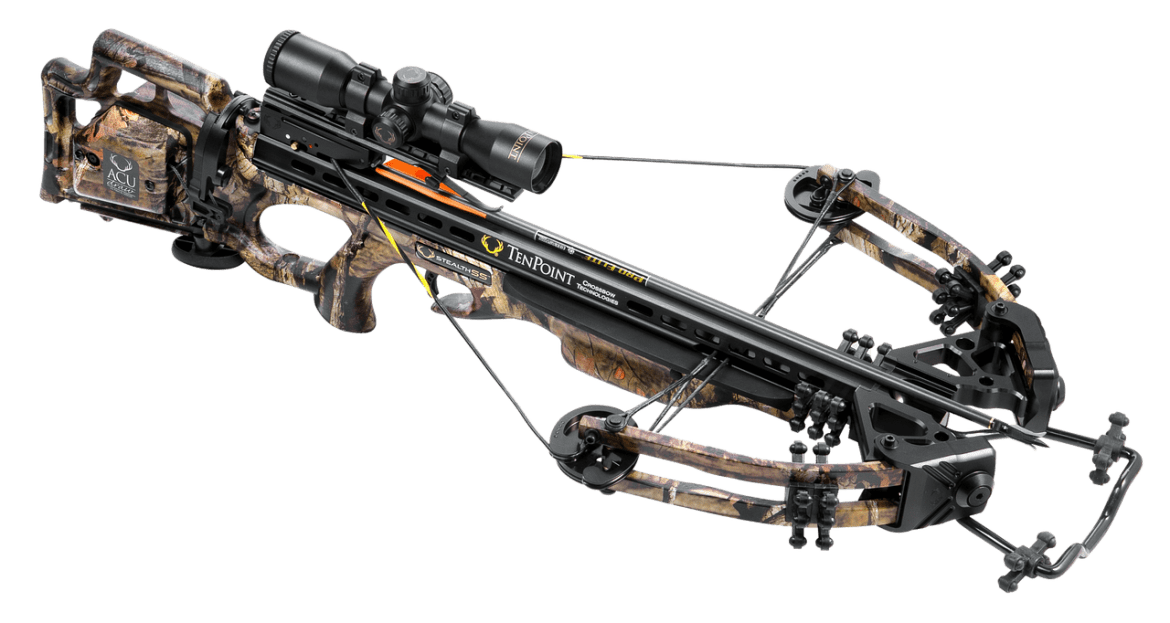
5 Tips to Be Successful in Crossbow Hunting

5 Tips to Be Successful in Crossbow Hunting
Buy at Amazon

If the unthinkable ever happens, you are going to need to figure out how to hunt for your food. Those bullets you have will eventually disappear and you’ll need to rely on sheer stealth instead.

Crossbow hunting is your best option and a valuable skill that any survivalist should know.

Load Your Crossbow with Care

Crossbows don’t hold ammunition like a firearm does, but they should be treated with the same care. Always carry your crossbow as if it were loaded and ready to fire. You also don’t want to point it at anything you don’t intend to kill.

When you climb up into your stand or hoist your crossbow up into the stand, be sure you’ve removed the bolt in the barrel. Only load the crossbow when you are in a hunting position and are ready to shoot.

When the time comes to unload or discharge your crossbow, do not dry fire it. Point the crossbow in a safe direction and then discharge. You can also purchase a portable target that makes discharging even safer.

 Nothing Good is Achieved Without Practice

You can’t become good at anything without practicing it on a regular basis. That’s especially true when it comes to hunting with a crossbow. Because you may not know what position you’ll be forced to fire from when the time comes, be sure to practice from multiple locations.

Start by learning how to shoot from angled shots in an elevated position. This is best practiced from a tree stand. Then, you can move onto sitting positions from a ground blind. In addition, you’ll want to learn techniques for shooting in low-light conditions.

Make sure that you use a stable rest any time you fire your crossbow.

Know Your Ranges

You will want to invest in a quality rangefinder. This will help you range objects so you can practice on many key distances before you go head to head with a big buck. The crossbow is very different from shooting a rifle and requires lots of practice.

As your arrow travels downrange, speed will be lost. As this occurs, you also begin to lose energy. If you shoot too far out in the field, your result might just be a wounded animal. As a general rule of thumb, 40 to 50 yards is about the maximum range you’ll be able to shoot at game.

Choose the Right Equipment

If you are choosing your first crossbow, keep in mind that budget prices don’t often equate to dependability. You may only have one bow that you can take with you and it needs to last the duration of your time in the outdoors. Choosing a bow that offers good customer service and a lifetime warranty are generally good indicators that the bow is made to last.

You’ll want to observe all state or local game laws regarding the required draw weights during hunting. Crossbows aren’t the only equipment you should take your time picking out.

Here is a list of the fastest crossbows you can hunt with.

Choosing the right bolts and broadheads is also an important part of being a successful crossbow hunter. Crossbow bolts are available in a variety of weights. The heavier bolts are the best option; normally weighing 300 to 350-grain.

The heavier bolts deliver a stronger downrange energy for a superior penetration. If you want to hunt medium-sized game, then a fixed-blade broadhead and expandable will work well. Read through the crossbow’s manual to find the proper length and recommended weight for your specific model.

No matter what style you ultimately decide on, it is important that you practice often. Spend time at the range fine-tuning the adjustments. The attached, pre-sighted scope is made for crossbows but rarely come ready to use.

To achieve the best practice experience, you’ll want a shooting aid for sighting. Place your initial shots around 20 yards. Then, adjust according to the wind and elevation before extending the range further. If you need help figuring out how to adjust the sight-in of your optic, refer to the owner’s manual.

 Be Sure to Use a Rest

Crossbows can be heavy and clunky. This makes it nearly impossible to keep going without a break. Whether you choose to do this by kneeling or sitting you’ll find products like a monopod to be useful. A rest is an essential product if you want accurate shots.

When you are ready to take that break, try padding your crossbow forearm with a soft item. This could be a rolled-up jacket, a backpack or even your hand. By doing this, you absorb the recoil and allows for easier sighting when shooting from a hard surface.

It can be difficult to travel during a survival situation with a rest, so you’ll want to plan some makeshift ideas for emergencies.

Our Recommendation for a Crossbow

If you are still unsure what crossbow is ideal for the survival situation, you’ll want to take a look at the Barnett Ghost 410 CRT Crossbow Package.

It weighs less than 8 pounds, features a 185-pound draw weight and comes complete with a 3×32 scope. It also features the popular Barnett’s proprietary Carbonlite Riser Technology (CRT). This helps to shift the balance point away from the riser and places it back to the shoulder of the shooter.

In addition, this bow provides a 5-to-1 safety factor and offers the perfect balance between weight and speed.

 Conclusion

You never know when you’ll need the help of a crossbow during survival situations. Whether it is to hunt prey or defend yourself, it will be important that you are trained and ready to use it at a moment’s notice. Keep in mind that in a pinch, a quality crossbow can also be made from materials found in the great outdoors.

While they won’t be as durable as something you’ve purchased, it will still keep you at a distance from the prey you are hunting. Another thing to consider is that bowstring can be utilized for multiple purposes as well, so it will be important to incorporate this efficient tool into your survival plan.
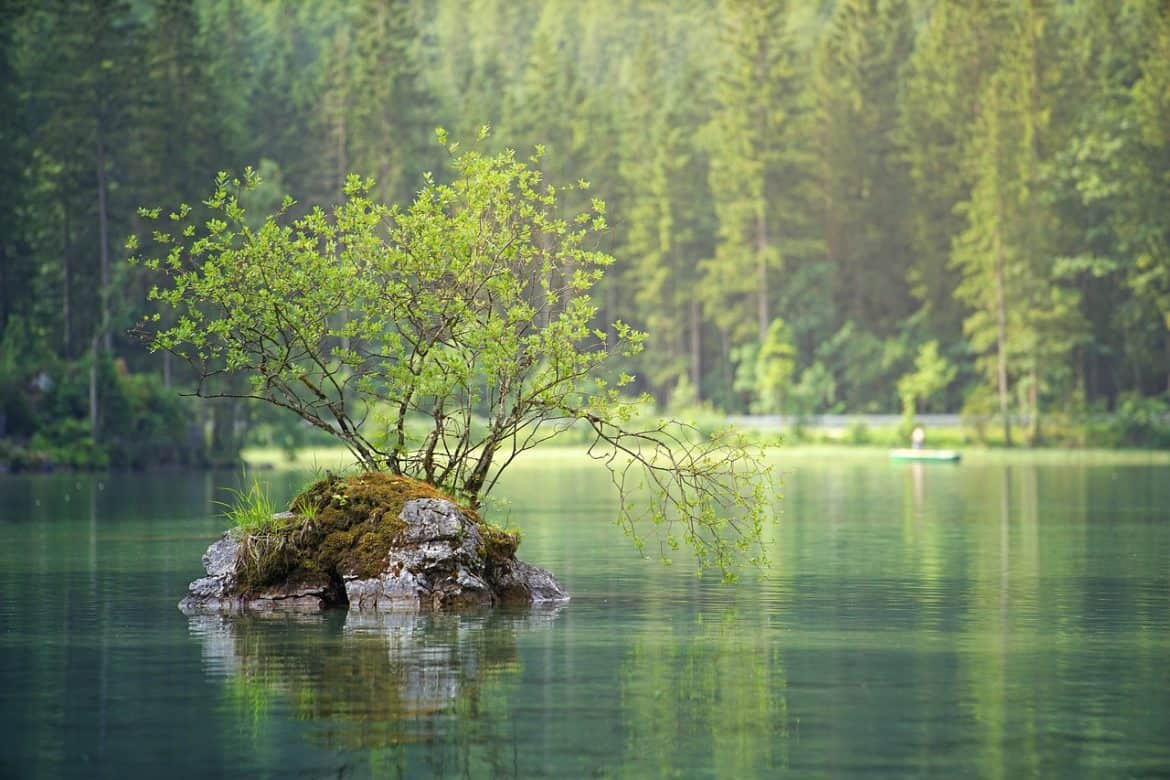
 

Survival Skills: 7 Ways to Find Water in the Wild

Buy at Amazon

Only a very few people can survive the wild these days without the modern convenience, such as electricity and electronic gadgets, mobile devices. Although some can still survive without this modern equipment, nobody can survive without water.
Needless to say, water is highly essential for survival. Yes, you can package some water along with you to the wild; they cannot sustain you if you plan to spend a considerable period of time. If you want to spend more time in the wild, then you need to devise some ways to find water in the wild.

Start With the Obvious: Streams, Rivers, and Lakes

Streams, rivers, and lakes are the most obvious source of water in the wild. These sources of water offer clean, clear flowing water which is the best option you can ever think of. Generally, flowing water does not allow bacteria to fester. Small streams are what you should first look for once you get to the wild. You can also consider rivers as a second choice after stream. Larger rivers often have a higher percentage of pollution. If this is this only option available, you should consider purifying the water consumption. Lakes and ponds are also okay but they are stagnant and hence, a high rate of bacteria.

So, how do you find these sources of water? First, you should conduct a research on the location of rivers and streams before you embark on the journey in cases where possible. In the wild, you need to use your senses. If you stand still and silent, you should be able to hear the sound of flowing water. More so, If you stand at a sloppy ground, you should know that there is a flowing river or stream at the extreme base.

Another way to locate rivers or streams is by tracing animal footpaths which can lead to water. Insect swarms, although annoying, is another sign of water proximity. Another way to locate rivers or streams is by following the birds swarm early in the morning or late in the evening.

Collect Rainwater

Rainwater is one of the safest ways to get drinkable water without the fear of bacterial infections. If you are lucky to find yourself in a wild in the tropical region during the rainy season, you wouldn’t have to worry about water all through your stay in the wild.

There are basically 2 ways of collecting rainwater. The first is to place as many containers as you have in the rain. In cases where you have little or no container, then you can try this second method. Tarp around trees a few millimeters off the ground or tie the corners of a poncho, place a small piece of stone at the center to create depression and watch the water collect in it.

Collect Heavy Morning Dew

Heavy morning dew is another source of water in the wild. You can get up to 1 liter of water per hour from morning dew. To do this, tie some absorbent clothes around your ankles take a workout early in the morning before sunrise. When your cloth gets saturated, wring out the water and repeat the process over and over again.

Fruits/Vegetation

You should not underestimate the amount of water you can derive from plants. Plant fruits, roots, vegetables, fleshy plants, and other plants have a lot of water embedded in it. Collect EDIBLE plants, place them into a container, and smash them with a piece of stone or rock. Although it may be a very tedious process, it can be very useful in desperate situations.  Try my Leaf Condensation trick.

Collect Plant Transpiration

You can also get some water by trapping the plant’s transpiration. Transpiration is a process whereby water is translocated from the root to the underside of the leaf before it is eventually released to the atmosphere. So, the trick here is to catch the water before it escapes to the sky.

First in the morning, tie a bag or anything that can be mold into a bed around the leafy green area of a shrub. Place a small piece of rock in the bag in order to create a depression and weigh it down a bit for easy water collection. Instead of the vapor to escape to the atmosphere, the water will be collected and retained in the bed. However, do not try this with a poisonous plant.

Tree Crotches/Rock Crevices

Tree crotches and rock crevices are another good sources of water, just like the fruit and vegetation. Although the process can be stressful and demanding, it is a good alternative, especially in difficult situations. To collect water from tree crotches or rock crevices, dip a cloth inside the hole, allow it to soak, and wring it out. Repeat this process as much as possible to get enough water.

Dig an Underground Still

This method is a relatively reliable source of water compared to other ways. It is a good option if you or your team is camping in the wild for a considerable long period of time. The process of digging well is very common which you are surely aware of. Although the process is tasking, the outcome always worth the energy invested. However, make sure you site your well or still close to a reputable water source or riverine area.

Conclusion

While you can survive without electricity or electronic gadgets in the wild, it is quite impossible to survive without water. Getting water in the wild may first sound difficult to you. However, we hope this guide on ways to find water will help you a lot.

Learning Survival from Books

Learning Survival from Books: 6 Best Books to Start

Learning Survival from BooksAre you making your first steps in the world of survivalism? If so, learning survival from books in the very beginning makes a lot of sense.

Books are essential to proper training.  The knowledge within them can guide your personal experiences and prevent mistakes.

Nothing beats practical experience with a good instructor, but that is not available to everyone.

Needless to say, survival books are not created equal. To learn from the best, you may want to consider a few of these titles.

The Prepper’s Long-Term Survival Guide

The list starts with the Prepper’s Long-Term Survival Guide. The book tops many charts in relevant forums and discussion boards. Published in 2014, this book is written by Jim Cobb – a trainer for a disaster preparedness company.

Cobb has long written articles about survival, disaster preparedness and budget-friendly preparation.

This book focuses predominantly on long-term survival in emergency situations. It doesn’t focus too much on surviving in nature.  Rather it addresses scenarios of chaos and turmoil (something that we could be facing in the near future?).

The book has a big number of positive reader reviews and most focus on the practical and actionable tips.

Cobb’s guide includes chapters on food, water, medicine and personal hygiene, security, tools and even how to survive the boredom that could be linked to living in a bunker for a prolonged period of time.

Wilderness Survival

 If you are specifically interested in wilderness survival, you will definitely fancy the second edition of Wilderness Survival by Gregory J. Davenport.

As the name suggests, this book will teach you how to make the best of your circumstances whenever you’re stranded in nature.

People who love the outdoor have to prepare for all kinds of extraordinary circumstances and the book provides a lot of valuable information.

The book is the result of the work and the experience of a former USAF survival instructor.

Davenport is also an escape specialist and a top survival expert worldwide.

Thus, learning from the best is possible with this title.

Some of the most important topics covered in Wilderness Survival include:

  • How to sustain health in the wilderness
  • Medical kits, gear and other essentials for survival
  • Personal protection
  • Sustenance
  • How to return home

The Survival Handbook

The name of this book by Collin Towell says it all. The Survival Handbook also comes with a pretty impressive cover design.  Not the most important characteristic of the book but certainly one that catches the eye.

Collin Towell is a prolific writer that specializes in the survival genre.

He’s published a number of books on the topic, including Essential Survival Skills, The Survival Handbook in Association with the Royal Marines Commandos and the Survival Handbook: Endurance Essentials for the Great Outdoors.

As the name suggests, the book offers a comprehensive look on everything pertaining to survival.

It doesn’t focus on one specific scenario as some of the previous entries in the list. Another great aspect of this publication is that it features a wide array of detailed illustrations that provide additional information on top of the text.

98.6 Degrees: The Art of Keeping Your Ass Alive

With such a cool title, 98.6 Degrees: The Art of Keeping Your Ass Alive by Cody Lundin deserves inclusion in the list.

A few of the essential topics that the book focuses on include the following:

  • Different survival situations and how they start
  • Survival psychology
  • Overcoming fear
  • Adaptation
  • Surviving in the outdoors
  • Your first line of defense
  • How to come in contact with rescuers
  • Survival kits

As you can see, the book discusses both actionable tips and somewhat philosophical aspects of staying alive. If you are interested in a comprehensive look at survival that’s delivered with a nice sense of humor, the book will be the right option for you.

98.6 Degrees is based on the experience and knowledge of Cody Lundin – the finder of Aboriginal Living Skills School. Another fun fact you may want to know is that Lundin is the only person in Arizona to hold a license for catching fish with his hands.

US Army Survival Manual

When learning, it’s a good idea to learn from the best.

Army personnel are professionally trained to survive all kinds of situations, which is why you may want to take a look at the US Army Survival Manual by the Department of Defense.

The US Army has training for survival in all kinds of climates and under any circumstances.

All of the information in this book has been field-tested, which adds to the practical application points of the publication.

The book features both step-by-step instructions and illustrations to ensure outdoor survival in any scenario.

There are actionable suggestions for hikers, hunters, athletes and outdoor enthusiasts who could face potentially dangerous situations.

Field Guide to North American Edible Plants

The final entry in the list is a slightly more specialized publication that can prove to be very beneficial for survival enthusiasts.

Field Guide to North American Edible Plants by Thomas Elias covers more than 200 edible plant species and there are detailed illustrations to make the identification of each easier. There is also information about the distribution of the species, their seasonality, the ways to harvest and to prepare each one.

This book isn’t the most imaginative survival guide out there but it can prove to be life-saving. Some wild plants are potently toxic and they can lead to serious issues. Thus, consuming plants to stay alive isn’t something simple or safe. The book is an ideal read for hikers and other individuals who like to spend a lot of time in nature.


From the Owner of this Website:

The Prepper’s Guide to Foraging is not a plant identification guide in the traditional sense. It is instead a guide to using plants to supplement other means of food production and subsistence living. Author David Nash believes that there is not enough land available for to support a large-scale return to the hunter-gatherer lifestyle in the event of a large-scale disaster, but that botanical knowledge does provide an edge to the well prepared.
This book advocates the acquisition of knowledge to allow its reader to safely identify, harvest, and use common North American plants. Wild plants can provide shelter, material, medicine, and food to help the reader extend stored food as well as to create items that may be otherwise unavailable during a crisis.


5 Main Health Benefits of Fishing

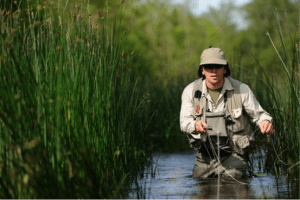
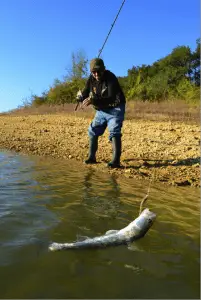
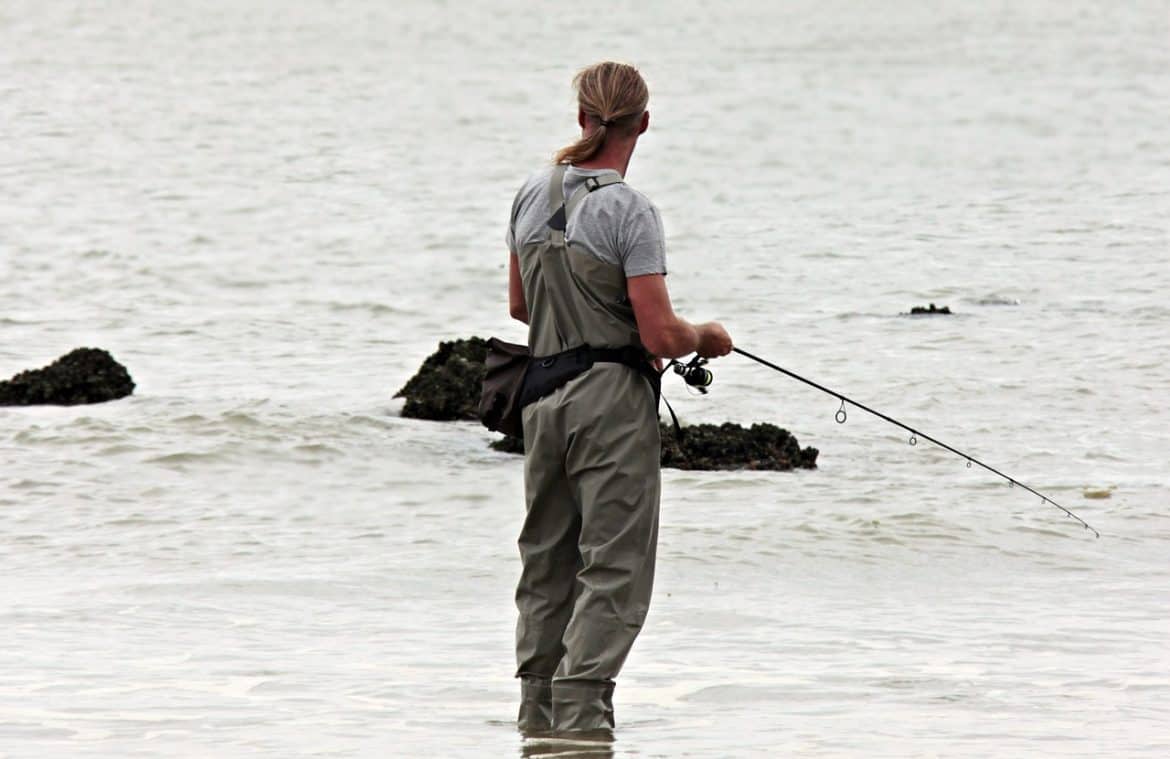
Health Benefits of Fishing Fishing is one of the all-time favorite hobbies all over the world. It is a favored outdoor activity by many people of all ages: children, adolescents, granny, all of them like fishing. Regarded oftentimes as a sluggish hobby, but the idea that many people engaged in fishing is beguiling.
Aside from being popular and accessible, it is also preferred because of the challenge and satisfaction therein, especially how many fish are obtained. Although fishing is a bit demanding hobby, you can actually get a lot of benefits not only recreation but most importantly is one’s well-being.

When you give a man a fish, you have fed him for a day. But when you teach a man how to fish, then he will be healthy for life! Read the 5 main health benefits of fishing below to learn why this all-time favorite hobby is also a great way to improve individual’s health.


Fishing keeps you physically fit.

Health Benefits of Fishing

As mentioned, fishing is a bit demanding plus a great way to enjoy the outdoors. Yes, fishing will give you fairly a heavy physical activity such as casting your rod, pulling the reel, lifting the fish, you might consider paddling, and other physical activities that you will keep you physically fit. Through these basic ways to catch a fish, it can surely burn calories, strengthen muscle tone and develop overall fitness.

Choosing a fishing spot is important to keep you physically fit. A long trek from your car can obviously boost your lower body, and setting up the equipment, casting off and winding in all would lead to physical exertion.  Also, there are a lot of fishing spots that require paddling and hiking which have been proven to improve cardiovascular functions. You can improve your dexterity and reflexes since your fingers and forearms are generally exercised. To simply put, you can make your fishing excursion physically engaging as you want.

Fishing soothes your mind.

Health Benefits of Fishing

Whether you fish in the freshwater or saltwater, both can actually make your mind calm and improve one’s mental state. Being out in nature, constantly face-to-face with your computer, I bet your brain wants to relax and fishing can help you clear your mind. When you are bored or exhausted, don’t doubt to go fishing, it will help your mind refreshed. Fishing has numbers of health benefits for your mind. How could fishing help you to have a healthy mind?

Fishing does not require mental abilities. It mainly relies on your skills. This is the reason why fishing impacts the mind a lot. Spending long hours in nature is not exhausting, in fact, it can help your mind unwind, loosen up from pressure and decrease anxiety. In short, fishing improves one’s level of concentration, peacefulness, and brainpower.

Fishing bestows patience.

Health Benefits of Fishing

It’s true, fishing has a great deal of patience. If you constantly practice, your patience sharpens and that’s a rewarding fishing offers you. You may have to spend hours or up until you get desperate before a fish will grab the bait. In this kind of struggle, being impatient will aggravate the condition and you will eventually find it difficult and frustrating to get fish.

Impatience causes a person to develop stress, weakening of immune system and raising of blood pressure. Patience, meanwhile, can soothe you and make you more content, and fishing impacts on learning patience which greatly benefits health. Persistence in fishing makes you more a patient person, accepting of loss but unwilling to quit. Ergo, fishing puts your patience to practice in this world of over-stimulation and instant gratification.

Fishing teaches Self-Reliance.

Health Benefits of Fishing

It is important to learn how to perform on your own and fishing teaches children to keep trying when they don’t succeed. That is how to be healthy in young minds’ social disposition. Children who are fond of fishing, shaped their confidence as they build their skills. This helps to lead to a greater work ethic which is necessary to be successful in their studies and future career.

As children build their skills in fishing, they become more confident which leads to greater independence. Once children understand the safety measures in fishing, they can engage with little to no help from their parents or guardians. Fishing is all about personal goals, and attaining those goals is a sure way to improve self-esteem.

Fishing promotes fun and bonding.


Health Benefits of Fishing

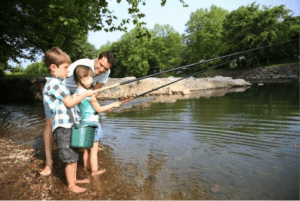
Fishing brings people together to have fun, bond and learn. Fishing as a hobby serves recreation and camaraderie between families, friends and even the community. Spending time with your family promotes feelings of security and well-being, the sense of belongingness and oneness.

Simply having fun, enjoying yourself is surely a huge health benefit. Your emotions towards your family, peers/colleagues, people in the community have greatly impacted your social being, thus feeling of happiness is vital and taking time out of life and spend it in fishing can wonderfully work in every area of your life.

Because of the memories, you shared together while preparing to get a fish, getting the fish will forever be remembered. These memories will pass through generations, your child’s children, perhaps your grandchildren’s grandchildren. Fishing is very great experience, isn’t it?

In A Nutshell

Health Benefits of Fishing

Fishing is an activity that upkeeps wellness. Being active like doing outdoors helps to make you feel better and increases a healthier lifestyle. There is no need to convince the millions of people and fishing enthusiasts, because fishing definitely promotes clear thinking, rebuild personal reserves like interacting with nature, enhance social interaction, provides the active learning opportunities and will advance your strength and mobility. Therefore, fishing is extremely good for your health. I hope these 5 health benefits of fishing are helpful to you.


About the Author

Karen Dean is the author for FishingSun.com.  She has been working and passionate with writing for over three years. She spends most of her off-work time reading books, practicing dance, and catching up with the new TV shows she’s been missing.
You can reach her at karen (at) fishingsun (dot) com

www.fishingsun.com

Facebook page: https://m.facebook.com/Fishing-Sun-605375712966582/


Easy solutions for common camping problems

Easy solutions for common camping problems
Buy at Amazon

Minor issues may seem important when you are isolated and unprepared at your campsite. In collaboration with Smores and Snores you should be prepared for any malfunctions related to camping with the tips and tricks below.

My gas stove does not turn on

Make sure the gas supply is intact

When your camping stove does not turn, you must first check that you have not run out of gas. Shake the gas cartridge; the more noise it makes, the lighter it is and the less gas inside.

  • If there is a lot of gas in the cartridge but it does not reach the burner, tighten all hose connections to eliminate any leaks.
  • Still no luck? Disconnect the hose between the cartridge and the burner and check each junction for blockages. Blow strongly through the pipe to remove anything that could block the gas supply. Connect the hose to the connectors and try turning it on again.

I can not light the campfire

Use an improvised fire starter

Unless your firewood is completely dry and you can make your fire out of the wind, it can be very difficult to start a fire. There is a range of materials that you can use to make small wood and thus light the fire:

  • Sawdust dipped in candle wax melted and rolled into a ball.
  • Plush from the pockets of your clothes.
  • Cardboard waxed milk or fruit juice, cut into slices.
  • Crumpled pages of an old guide.
  • Dry wood chips cut from the core of a stick or branch.

Another working tool is the Firesteel:

  • A Firesteel is the most reliable way to light a fire. Unlike matches or a lighter, these metal bars are unaffected by water and can be used to hit an intensely hot spark on your kindling.

There is mold on my camping chair

Refresh it with a stiff brush

If your camping chair was wet when it was stored during the winter, mold could have developed there. This is unsightly and can also destroy the fabric of the chair.

  • Use a stiff brush to remove the mildew from the surface, then rub the black stains on the fabric with warm water solution and bleach.
  • Allow the bleach solution to soak in the tissue so that all mold spores in the material are destroyed. Rinse with water, then let it air and sun dry.

The needle of my compass is stuck

Remove the static effect

The movement of a compass needle can be affected by static electricity in your clothing. Rub some water on the case of the compass to disperse the electric charge. This should release the needle.

My binoculars are foggy

Dry them to remove condensation

The condensation inside your binocular lenses can not be wiped off and, if ignored, it can lead to mold – a problem much more difficult to solve.

  • Put your binoculars in a warm, dry place for a day or two. This should evaporate any condensation.
  • Alternatively, put the binoculars in a large sealed storage food container or in a freezer bag with a few cups of rice or a desiccant such as silica gel crystals (available at photo shops).

Make your binoculars last

Delicate fingering and appropriate treatment

  • Put lens caps on your binoculars when you’re not using them. This keeps the dust out of the lenses and protects them from scratches.
  • Avoid touching lenses because your fingers will leave greasy prints difficult to clean. To remove fingerprints, rub the lenses very gently with a special optical cleaning solution and lens cleaning paper.
  • Use a camera cleaner with a soft brush and an air blower to blow off lens dust – never wipe with a tissue because you may scratch the surface.