52 Prepper Projects is a book about self-reliance and the journey toward a more self-sufficient life.
The author, David Nash, has been a “prepper” his entire life, and has always tried to learn how to do things instead of searching out where to buy things.
This book is designed to start with simple projects and progress to more complex projects. The projects get better as the reader gains more skill and confidence.
Each project in this book can be completed with simple hand tools and many projects build upon tools and skills created in earlier projects.
The 52 Prepper Projects Book is full of projects like the ones in this site. Actually some of the projects are on this site. However, in the book they are better documented and arraigned in a manner that makes sense.
The Book Is Similar in Content to This Site
This book is a companion to the tngun website. I feel like the projects in the book are worth having on paper in the even the internet is ever throttled or shut down. At one time that idea seemed like a 1984 type conspiracy, but Google and other internet giants have been working to reduce this type of information on the web.
This is more likely to happen than most American’s think. Therefore, having paper copies of things you find important is becoming more vital every day.
The Mosin–Nagant M91/30 is a bolt-action, internal magazine military rifle, developed by the Imperial Russian Army in the late 1800s, and used by the armed forces of the Russian Empire, the Soviet Union and various other nations.
I bought it because it is on the ATF’s Curio and Relic list, so I can buy them direct from the wholesaler. When I bought mine, it was $110 including shipping. (due to the current politics it has increased some). The Mosin is one, if not the, least expensive military caliber rifle available.
This is a Great Budget Gun
Not only is the gun inexpensive, military surplus ammunition is also commonly available. You can normally purchase it in either 440 round cases on stripper clips, or 880 round cases without stripper clips. I find both costs nearly the same. My strategy is to buy the first case with clips, and then reuse the clips.
Sometimes the rifle comes with a bayonet, but then nearly always come with a small tool kit and magazine pouch. The tools are essential, as the triangular screwdriver is used to measure the protrusion of the bolt (that is the subject of a whole separate post).
This Rifle Holds the Sniper Kill Record
Some may think themselves poorly armed if you hand them a WWII bolt action designed back in 1892, but during WWII a Finnish soldier named Simo Häyhä earned more confirmed sniper kills than any other combatant in any major war (he killed 505 enemies with his Mosin and 200 more with his 9mm submachine gun = all in under 100 days). I think any gun will do if you have the will and the skill, but I digress.
There are several different variants of the rifle, but the most common is the 91/30. It is possible to buy the 91/30 in case quantities of 20 in a large wooden shipping crate for less than a single AR-15.
You can also buy a spam can of 880 rounds of military surplus ball ammunition for less than the cost of a couple bricks of .22long at a gun show (around 80 dollars).
Due to the fact that you can buy a rifle and close to a thousand rounds in a battle proven combination for around $200, it is my intent to buy one every couple months so that if the poo ever is flung I can outfit all those latecomers that “come to my house” – at least the ones that bring food and have sense enough not to complain…
First Time Shooting a Mosin Nagant M91/30
This is my first experience shooting this rifle, I had heard horror stories about how much it kicked, and how loud it was, and it WAS louder than other 30 caliber guns I have shot, but it did not recoil that much – especially since it is a heavy rifle.
I did get the impression that it is capable of much more accurate fire than my offhanded quick test demonstrated. I hope to have some time to really test this gun out.
The only thing I have to say as a warning to others thinking about this gun as part of a disaster armory, or just looking to get a cheap plinking gun – ALL surplus ammunition for this is corrosive. That is not a big deal as long as you clean the gun well after each range session. If you take it home and forget about it after shooting corrosive ammo, you can (and probably will) ruin the gun.
Today I am taking some Sellier and Bellot 308 Match Ammunition to the range to try out in my CETME rifle.
Sellier and Bellot has been producing cartridge ammunition since 1825.
They produce ammunition using high quality components which is used by hunters, competition shooters, law enforcement agencies and militaries around the world.
This ammunition is new production, non-corrosive, in boxer primed, reloadable brass cases.
Here is the Technical Information on the rounds:
Caliber: 308 Winchester
Bullet Weight: 168 Grains
Bullet Style: Hollow Point Boat Tail
Case Type: Brass
Ballistics Information
Muzzle Velocity: 2628 fps
Muzzle Energy: 2577 ft. lbs.
I found this ammo to be good quality, but I had a problem with very hard primers. That is not always a problem and if you have a gun with a free floating firing pin, then it is a good thing, but if you are shooting a gun with a light firing pin spring you may have many failure to fire malfunctions with this ammo.
This .308 Math Ammunition is actually better than my ability to fire it, and after using it in other guns, I am starting to think that it may have been my gun – not for the group – that was my fault, but for the hard primers.
There are a lot of very good tutorials online about reloading, and Dillon presses in particular, but I wanted to take a couple minutes to tell you about my experience with the Dillon Square Deal B press.
First off, this is a relatively inexpensive progressive press (especially when compared to other Dillon Presses), it costs more than many single stage presses, but at around $350 it gives you the ability to reload a lot of rounds in a reasonable amount of time.
However, the Square Deal B press is a pistol only press, and uses a special set of proprietary dies. This makes the press easy to use, but it prevents you from switching dies from one press to another, or reloading anything other than common pistol rounds.
Get Strong Mounts
When looking at this press, I would definitely recommend purchasing the strong mounts. I have used this press as it comes out of the box, and with the addition of the mounts, and the mounts make a much sturdier platform.
Some things I have done that are not factory standard were to bolt a set of Allen keys on the strong mount, so that when I need to make adjustments to the press, I have the tools well at hand. Dillon makes a pretty set of tools dyed to match the press, but I just used a cheap set from the hardware store.
I also found someone on ebay that uses and injection molding machine to make a plastic knob that press fits onto the bolt head that adjusts the amount of powder inserted into the casing. This makes it easy to adjust powder levels without tools, and the wings give a visual reference point. I strongly suggest looking these up.
Don’t Start with a Progressive Press.
I would also suggest two things:
Don’t buy a progressive press as your first press. There is just too much going on at the same time. Learn on a single stage press so you get a good feel for the process. I did not do this, and as my story in the beginning of the video illustrates, I made a mistake (and blew up two revolvers).
Work slow. Dillon recommends weighing every 10th round for consistency. This is important.
The powder measure on the Dillon press is very good, but it is finicky with some powders. It does not work as well with flake type powders as it does with other powder types. When I use power pistol powder, I get inconsistent powder charges and have to weigh much more often than every 10.
Lastly I would recommend anyone new to reloading (especially those new to Dillion presses) to visit Brian Enos’s forums in addition to being a top tier shooter, Brian is a Dillion dealer, and has some really top shelf advice about Dillion presses – especially in the area of choosing the right press for your specific need.
The other day while reloading, I broke a part in my press, I knew better, but I was in a hurry and pulled the lever down to force my way past an obstruction.
What I did was break off a spacer pin and rounded out the hole in the press so that a new pin would not fit.
I called Dillon precision, and they responded just as they promised on their site. They have a no “BS” policy, and simply gave me a return authorization number and I sent them the machine – this lived up to the famous Dillon Precision Warranty.
Dillon presses may be more expensive than other companies, but they have the best customer service.
I have used their warranty twice on the same machine, both times they worked with me to solve my problems, while they can be a little slow, I have to say they do honor their word – at least in my experience.
I have cheaper presses like the lee brand, and am happy with them, but nothing beats the Dillon progressives for pure joy of kicking out a lot of rounds in a short amount of time. Add in the dillion precision warranty and they can’t be beat.



 The Mosin–Nagant M91/30 is a bolt-action, internal magazine military rifle, developed by the Imperial Russian Army in the late 1800s, and used by the armed forces of the Russian Empire, the Soviet Union and various other nations.
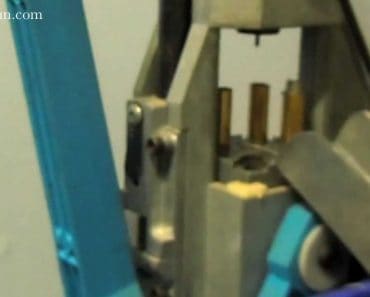

 There are a lot of very good tutorials online about reloading, and Dillon presses in particular, but I wanted to take a couple minutes to tell you about my experience with the Dillon Square Deal B press.

 The other day while reloading, I broke a part in my press, I knew better, but I was in a hurry and pulled the lever down to force my way past an obstruction.