Tag: preparedness

  • Dealing With Family That Doesn’t Understand Prepping

    Dealing With Family That Doesn’t Understand Prepping

    Dealing With Family That Doesn't Understand Prepping
    Buy at Amazon Book

    Any person who has begun to seriously prepare has had to make compromises between current wants and future needs, how much to spend on preparations, and how many people to stock supplies for.  If you’re married, you need to have a spouse that shares your concerns or you’re going to fight over every no. 10 can the mailman delivers.

    I don’t need to go into detail on how much you should store, or how to store it or what makes the cut on your list of lists, as survivalblog.com has visited this issue in depth.

    The purpose of this article is to help communicate the need to prepare with those in your family that you want to help without alienating them, or downgrading your own preparedness plans.  Learning how to deal with family that doesn’t understand prepping is as important as learning how to prep

    I am a professional firearm instructor, and am also employed full time as an emergency management planner.  Due to my job, my hobbies, and my personal beliefs, my former mother-in-law delighted in trying to insult me by calling me “Sgt. Tackleberry”.  She was unreachable, and not worth my effort to try to convince her of the importance in prepping.  She would rather buy timeshares of vacation property than spend money on a basic 72 hour kit.  That works for her, and I cannot judge her, but she would not be “come live with me if it ever did happen” as she believed.  Other members of my family have thought my preparations were a “phase” or some harmless idiosyncrasy.

    Those family members did not have a negative view of my preparations.  Historically my family looked at my preparations with amusement.  They tolerated my teenage experiments with wild foods or earthquake kits.  As I have grown older, and they have seen things on the horizon that personally touches them, they have begun to ask me for my opinion on coming winter storms, or should they buy gold or guns.

    It’s like being a firearm instructor and people asking you which gun to buy.  If you do your homework and build credibility people respect you more.  If you take the long view and work diligently these members of your family could be “converted” with patience and work.  While I cannot assume responsibility for them and make them prepare for disasters, I can be a role model and sounding board to help them understand the issues at play so that they can build a plan that works for them.

    If the world as we know it collapses, it’s not only about survival.  Once your survival needs are met, you’re going to have to rebuild, your going to have to continue with your life.  Having your loved ones with you makes that a lot easier.  The problem is that each person I add to my retreat lowers my safety margin IF MY SUPPLY AMOUNTS REMAIN FIXED, but if those people I add to my retreat bring their own supplies with them it dramatically increases my safety margin.  To me it is definitely worth it to help your family prepare.  Getting your family to understand prepping is vital to long term security.

    I have a few concepts that I use when dealing with family that doesn’t understand prepping.

    My first precept of dealing with family is not to preach.  My preparations are based on my needs and the things that I believe are important.  Each person has their own priorities, and preaching that you are right and they are wrong only pushes them away from the direction you need them to go.

    My second is never to prepare for a particular event.  I am sure there is still a lot of rotting food out there that was bought in bulk specifically for Y2K and some of those that bought it are convinced it was a waste of money.  I tell my family that my food storage can be used for Y2K, Armageddon, TEOTWAWKI, Pandemic Flu, Nuclear Winter, Job loss, or when I just don’t feel like cooking.   By having an all hazards approach and building capability and skills rather than building for specific events my planning work gets more bang for the buck.  The first time I read of the Deep Larder was an “Ah Ha” moment for me and changing my terminology has worked well in changing the response I get from my close loved ones.

    My last precept of helping my loved ones see the need to prepare is that if I have limited resources and time (and that’s a given) that is better to foster an appropriate mindset than concentrate on gear acquisition.  I could buy my mom a Springfield Armory M-14 and 10,000 rounds of match ammo, but it would be much more effective to get her to go with me to the range a couple times with a .22 and help foster a desire to shoot and then help her choose a firearm that fits her needs and desires.

    Whenever the family conversation gets around to disaster preparation I bring up concepts like “buying car insurance is considered a responsible action, but you don’t have any tangible benefit from buying it, if you never get into an accident.  With having a deep larder, even if zombies never attack, I still have the food.”  Or as Dave Grossman has said you never hear of elementary schools burning down but they all have fire extinguishers.  My favorite is “Noah built the Ark BEFORE the flood”.  I try to break everything down into manageable bites rather than cram it in and have them tune me out.  All this is is disaster insurance.

    The best case scenario is that your loved ones see the need to prepare for themselves and begin planning and preparing on their own, therefore augmenting your plan.  You cannot out argue someone into adopting your position.  As Dale Carnegie said “Those convinced against their will are of the same opinion still.”  What has worked for me is a quiet and consistent approach.

    I love my family and want what is best for them.  The best way I know to do that is to help them become more aware of the need to prepare.  My goal is to foster a since of self sufficiency and personal responsibility, and to help mentor them through the beginning steps of basic preparedness.

    Imagine how overwhelming it was when you first began to prepare, there is a LOT to learn, and even more skills and equipment to acquire.  We know that we cannot stock everything needed or prepare too much.  The process of preparing is every bit as important as the items you acquire.

    Researching and prioritizing is mental prep work so that when a large disaster occurs we are not comatose with emotional overload.  If I coddle my loved ones and try to remove the responsibility to prepare for themselves from them then I am doing them a disservice, and when the hard times comes they may not be emotionally ready to deal with the collapse.  What’s worse is that making them dependent on my charity would cause strain on otherwise healthy family relationships.

    Because of this, I feel it is worth supreme effort to work with my loved ones to prepare so that we can grow together in adversity and make our family bonds stronger.

    This Christmas I had my breakthrough, my parents asked me what they could do to prepare, and we had a very long discussion and came away with a workable plan.  Their location is more favorable for a long term retreat than my own, and they are going to provide the location and storage space for most of my preps.  We both win in the end.  Shortly after that discussion our town had an unusually long cold spell.  In the days before it we talked more about our short term plans and communication protocols and procedures.  While we did not have to evacuate to my parents, it was nice having all the details ironed out in the event we had to.

    All things considered being part of a Family That Doesn’t Understand Prepping is difficult, but if you are consistent, calm, and show (not tell) that you are doing this because you love your family then eventually they will understand.

    Don’t let your prepping cause you to loose the reason you are prepping in the first place.
  • 52 Prepper’s Projects for Parents and Kids

    52 Prepper’s Projects for Parents and Kids

    Book Review: 52 Prepper's Projects for Parents and Kids
    Buy at Amazon

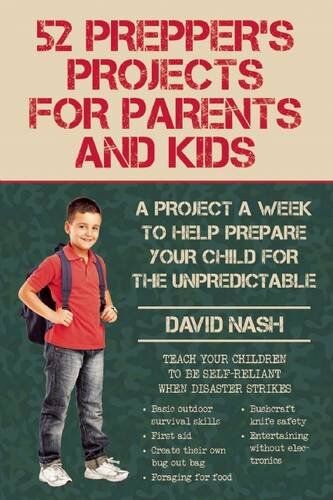
    Prepare your child for the unpredictable through 52 prepper projects. Teach them basic outdoors survival skills, first aid, how to create their own “bug-out bag,” and more.
    This was a fun book to write, I love trying out DIY Projects, and this time I got to try them out thinking about which ones would be fun and still teach something to my boy.

    Some of these projects are age  appropriate to little kids, but many are best suited for middle school or older children.

    Each project in 52 Prepper’s Projects for Parents and Kids has the reasoning for each project along with a discussion starter at the end of each project.

    Its not just about doing something with your children, or even having them do something.  The main idea of this book is to teach your kids how to be self reliant and think for themselves.

    Unfortunately critical thinking skills and personal responsibility are things that are lacking in out society.  This book is meant to help reduce that issue while still being fun and useful.

    If you have projects you have done with your kids, even if they aren’t in the book, I would love to hear about them.

  • Quick and Easy Tips to Make Sure Your Household is Prepared

    Quick and Easy Tips to Make Sure Your Household is Prepared

    household_emergency_preparedness_11_1Preparedness and planning resources have been a main topic of conversation on this site for quite some time. Preparedness is worth investing time into in order to ensure the safety and security for yourself and your family. In addition to taking the necessary steps to prepare a household for emergencies, it’s also important to establish a plan for protecting your home and saving specific items. Since recent data shows intense weather being the most frequent and main cause of death, it could be anything from a hurricane, to a home break-in that impacts your family. Because of this, knowing what items will keep you safe and allow you to feel secure moving forward is absolutely crucial.

    Here are some areas you need to focus on while developing an emergency preparedness plan:

    First and foremost, make a plan

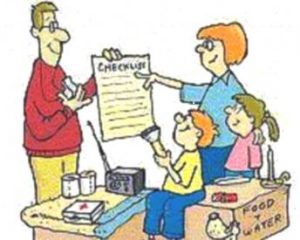
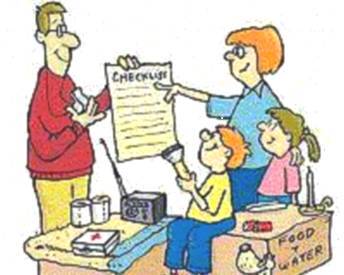
    Having a plan written down will teach your family how to react at a moment’s notice. This will not only keep them safe, but it’ll also give them peace of mind knowing that they’re prepared to react. Your plan should set multiple rendezvous locations near and far away from your home in order to account for multiple types of emergencies. It should also establish emergency contacts such as family members, neighbors, friends, etc. Be sure to thoroughly go over the plan, especially with any young children, and make a point to revisit and/or revise your emergency plan once or twice a year. Here are some tips on how to make your own.

    Purchase adequate supplies

    Emergency kits are a great way to make sure that you and your family have all of the essential items during a disaster or in the event of an emergency. The kit should include enough items to last a few days, or even up to a week, and should be placed in multiple locations around the house or place of work. The items included should be everything from food and water (at least one gallon per person), power sources like batteries or generators, various tools, and clothing or blankets. Remember to account for anyone who may have specific medical requirements as well. Having an adequate emergency kit will allow you to care for yourself and others, while also avoiding having to go out into potentially dangerous conditions.

    Invest in security

    Home security systems are often the first step individuals and families take toward protecting their households, and for good reason. These systems can be the perfect layer of defense for yourself, your family, and all of your valued belongings. It’s important to look for an all-inclusive system that monitors activity around your doors and windows, but also protects you from a multitude of situations such as fire, carbon monoxide poisoning, and flooding. Even though it’s difficult to anticipate every disaster you may be susceptible to, it can be easy and affordable to take a few simple measures. Check out this page here for everything worth looking for if you’re considering investing in a home security system. Remember to look for comprehensive security systems that are easy to set up, offer 24/7 monitoring, and work in various environments. Allowing yourself a little peace of mind can definitely go a long way in terms of preparedness.

    Safeguard your important documents

    When disaster strikes or a family is caught in an emergency situation, many might think to save material things, if anything at all. However, there are a few items that are worth saving if you’re able to, or better yet, securely protecting from a disaster that could damage your belongings. Among the many things worth protecting, safeguarding personal documents and various forms of identification is incredibly important. Identification ranges from passports and driver’s licenses, to social security cards and birth certificates. This may seem like a small detail to some, but being able to produce proper identification can make or break your eligibility to receive medical treatment or relief aid. It could also greatly affect your ability to access transportation in the event of an evacuation.

    Protecting financial information

    Aside from the important documents mentioned above, protecting financial information is something to take very serious as well. Records such as emergency funds, investments, insurance policies, and wills are some that can be very difficult to replace. Whether a social security number is lost or stolen, or even sensitive financial records, this could put your family in a very vulnerable spot when it comes to identity theft. Not only could this affect you for several years, but it can cause extreme worry and discomfort, as well as have an immense impact on future financial security. Make sure you consider purchasing a fireproof safe or procuring a safety deposit box, and establish a family emergency fund that can last anywhere from three to eight months.

  • Fix, Freeze, Feast

    Fix, Freeze, Feast

    Book Review: Fix, Freeze, Feast
    Buy at Amazon

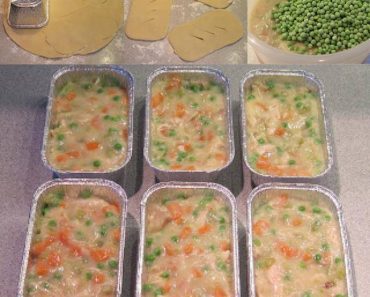
    Buy groceries in bulk, prepare family-friendly dishes, package in meal-sized freezer bags, then stock the freezer with ready-to-defrost-and-serve tasty homemade meals. This is the winning system of Fix, Freeze, Feast, a cookbook that has already attracted an enthusiastic following among busy families.

    Millions of shoppers save money by buying groceries in bulk – trays of boneless chicken breasts, pairs of flank steaks, flats of ripe tomatoes. But savings can quickly turn to losses if those bulk quantities spoil in the refrigerator or lie forgotten – unlabeled and unrecognizable under lays of ice crystals – in the back of the freezer.

    In the new paperback edition of Fix, Freeze, Feast, authors Kati Neville and Lindsay Tkacsik offer a complete system for taking full advantage of bulk purchasing and advance preparation to ensure no food is ever wasted. They show how easy it is to get organized, prepare ahead, and be ready to put healthful, satisfying meals on the dinner table (or breakfast table, or even brunch table!) at a moment’s notice. Theirs is a cookbook price-conscious shoppers will love and warehouse club members shouldn’t be without.

    Cooks will find 125 delicious, healthful recipes to choose from Each one includes directions for dividing, preparing, and storing raw ingredients; a second set of simple direction is included for thawing, cooking, and enjoying the food. Designed for the way people cook today, Fix, Freeze, Feast meals are lighter and fresher than traditional bulk-cooking recipes, with a focus on simple stews and stir-fries, quick grilled or broiled main courses, and popular ethnic meals such as Beef Fajitas and Cashew Chicken Stir-Fry. Fix, Freeze, Feast, also includes ready-to-bake cookie doughs, soups, side dishes, smoothies, and snacks. With these innovative techniques and recipes, dinner is always in the freezer!

    My wife swears by making ahead meals, she does this for her lunch every Sunday, me, I’m stuck with leftovers.

  • PRN Episode #34 Pathway to Preparedness

    PRN Episode #34 Pathway to Preparedness

    PRN Episode #34 Pathway to Preparedness
    Buy at Amazon

    Disaster Resilience is not about how much stuff you can buy, but rather how to balance skills, mindset, training, and then equipment and supplies to allow you to cope with disaster effectively.

    Today’s podcast is based upon the Pathway to Preparedness which is one of David’s more popular talks that he gives to preparedness groups.

    The show is scheduled for Monday at 10pm central time at this link.

    If you cannot listen on Monday, you can always download the podcast for listening at your own leisure.

    Pathway to preparedness sets out a path that anyone can follow to become more prepared.  Being prepared is more of a journey than a destination.  No one can ever become 100% prepared.  However, anyone can become more prepared.

    All you need to do is take stock of where you are and to make effort to increase your level of readiness.

    This is podcast #34 and the goal of these podcasts are to help people become more self reliant without making the same mistakes I did as I started out.

    I still make mistakes in preparedness, but those mistakes are well documented so you can succeed.

    I gave this talk at a state preparedness conference and felt I should share it here.