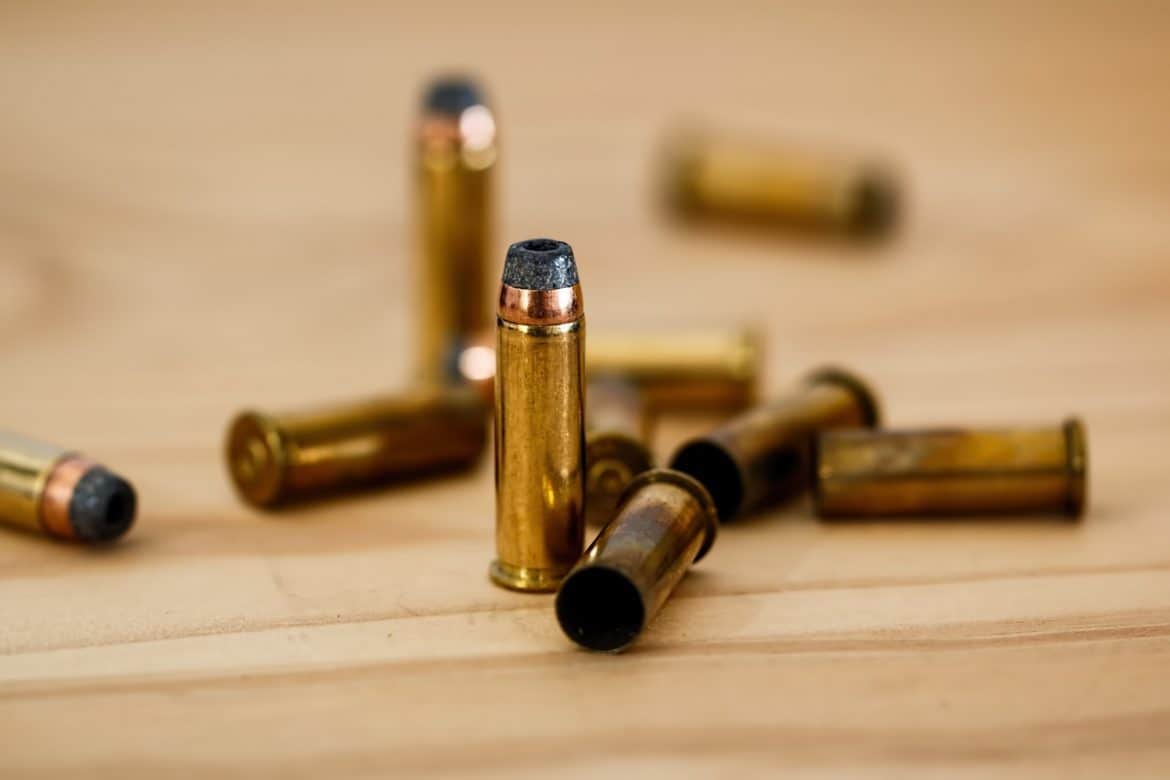
In this episode David talks about What to Do After a Shooting.
Its easy to learn how to shoot. However, it is harder to learn when to shoot. Even more so what to do after. Because that is not always addressed in some classes.
There are two schools of thought when dealing with the police, and David discusses them both
The show is scheduled for Monday at 10pm central time at this link.
If you cannot listen on Monday, you can always download the podcast for listening at your own leisure.
I have several blog posts on this subject and have written about this on other sites like guns.com as well. It is my view that there are many people teaching how to shoot, and a few teaching when to shoot, but learning What to Do After a Shooting is not as well covered in the instructor world.
If you don’t know how to handle yourself during police questioning you can find yourself a suspect instead of a crime victim. The justice system has two different paths depending on its view of you as it relates to victim or subject. Officers quickly decide which path to put you one, and it is extremely hard to get back if you have been derailed off of the crime victim track. This is a topic I have written extensively about.
When I am on the range with new shooters and they have a malfunction they tend to blame the gun. I understand totally, you pay a lot for a firearm, and want to depend on it to function 100% of the time. Especially if you plan on using to defend your life.
If it keeps malfunctioning, you start to wonder if you bought a lemon.
However, it is been my experience that mechanical problems are not the leading reason most semi-automatic handguns malfunction.
There is an acronym that goes over the reasons for handgun malfunction, and it just happens to be in order or likely hood – so when you are on the range and “gun don’t work” try this first That acronym is SAMM.
The list below will show you how to begin firearm stoppage troubleshooting using SAMM.
Shooter
Semi-automatic handguns are amazing things; they are designed to contain and channel explosions, push projectiles at hundreds of feet per second, extract and eject spent casings, push fresh rounds from magazines and then chamber them in the handgun. All this has to be done with a single input of energy and timed and balanced so that everything is done.
The shooter is a variable in the design. If the shooter does not provide a steady platform for the gun to recoil against, then the laws of physics make the whole gun want to recoil equally instead of just the slide. If the slide is not able to move farther and faster than the frame of the handgun you will get failures to extract, failures to eject, double feeds, and failures to load.
In my experience with new shooters, the greatest single cause of handgun malfunctions is the shooter not holding the handgun properly.
Ammo
Ammunition malfunctions are another cause of firearms failing to function as designed. I have no issue with reloads, and done properly by a skilled individual hand loaded ammunition can function much better than factory ammunition. However, there are a lot of variables in ammunition manufacture, and reloads tend to have a greater than normal incidence of misfires, hang fires, and squib loads. Some guns (like my Walther P22) are very finicky about the ammunition it will digest, and ammunition that does not have a lot of pressure will cause the gun to double feed or fail to extract.
Remember, that with a semi-automatic, the round is part of the firearm operation, and it moves inside the firearm. If the nose of the bullet does not smoothly engage the feeding ramp then the firearm will not load smoothly. There is a reason for the recommendation that you practice with the same type of ammunition you choose to carry for defensive use.
If you have malfunction after malfunction, especially with chambering, you may want to switch ammunition brands or styles.
Maintenance
Most, if not all, ranges offer rental guns, and most of those ranges do not spend a lot of effort in ensuring that their rental guns are cleaned properly.
One range I use rents an old red label Sturm, Ruger & Co .22 pistol. I doubt that gun has been cleaned since Mr. Sturm passed in 1951. These guns are popular handguns, and known for their great design, but that particular firearm will not shoot more than 2 rounds before it has a jam. It is simply too dirty. I have thought about cleaning it myself, but I have a side bet to see if it will ever get so dirty it won’t except a magazine….
Glock’s torture test is legendary, but as their armorer course instructor said, it’s a test – not a daily routine.
Just because you CAN drop you loaded gun in the mud, let it sit for a month then fire it without cleaning doesn’t mean you SHOULD. Clean your firearm, lube it according to the manufacturer specifications, hold it properly, and feed it what it likes to eat and your gun will work 99.9% of the time
Mechanical
There is a reason Mechanical is last. Stock guns maintained properly very rarely break on the range. It does happen, and I have had front sights work themselves loose after thousands of practice draws, but it is not routine enough that it is front of my mind when diagnosing why a new shooter is having malfunctions on the range.
Typically, even most mechanical malfunctions I have seen come from shooters using aftermarket parts on their guns. If the designer wanted a titanium firing pin for a lighter quicker primer strike, why did they not put a titanium pin in the gun? It seems to me, that in today’s litigious world, especially with the competition between gun manufacturers, if a part made the gun better, faster, or stronger, the manufacturer would sell it – either in the gun or as an option.
This is just my two cents, it doesn’t butter my biscuit either way – if your gun is stock, or you hung everything but Christmas Lights on it. I am just trying to pass on what I have seen, and what I have learned through the years.
There are three basic causes of a negligent discharge (ND):
Finger on trigger, Finger on trigger, and Finger on trigger
But for those that want to know the three mechanisms that cause that errant finger to pull the trigger they are:
Startle, Stumble, Sympathetic Grip
Startle Response
The first reason your finger may tighten on the trigger when you did not consciously will it to is due to the fight or flight response. If you have ever been startled, or (guys) snuck up and “goosed” your partner, you will recognize that when startled the natural reflex is to make a fist and bring your hands up to protect your head. If your finger is on the trigger when startled it is highly likely you will have a ND.
Stumble (Imbalance Discharge)
This is very similar to the startle response in that it is your body reacting in a protective mode. Whenever you suddenly falls, your arms automatically flay out to catch try to catch something to arrest your fall. The hands grasp at whatever they can to stop the movement. If one hand grabs then the hand holding the gun will also tend to tighten. Basically this is both the startle and the sympathetic responses caused by falling.
Sympathetic Muscle Response (inter-limb reaction)
The next reason is also part of you autonomic nervous system. We have a sympathetic reflex built into our body. It is very hard to squeeze with your whole hand without also squeezing your trigger finger. Not only that, but it is also nearly impossible to apply pressure with one hand without unconsciously tightening your grip in your other hand. This is the reason good law enforcement training teaches to always holster your firearm before going “hands on” with a suspect. If you have your dominant hand gripping your firearm, and begin to fight with your non-dominant hand you may end up squeezing both hands and causing a ND.
No matter the cause of the negligent discharge, the mitigation activity is the same.
Never point your weapon at something you don’t intend to shoot
Keep your finger off the trigger until you intend to shoot
Never go hands on with someone in an attempt to gain compliance while gripping your pistol, obviously this is for situations where lethal force is not justified, but force is needed. This really is more of a LE/Security issue, but it something an armed citizen needs to be aware of.
Today’s post is on checking new duty ammo. Generally I don’t have all that strong attention to detail – I play the averages; however, when it comes to my carry guns I am a little pickier. Looking at the odds I will ever have to use my gun to defend myself or a loved one, I have to admit it would be a rare day. But when I apply risk management to the odds, I see that while it might be rare, it would also be catastrophic.
I take the extra steps to ensure my gun is well cared for, my duty ammunition is quality, my training is up to date, and my skills have not atrophied through lack of practice. Because if I ever have to use my gun, I have already been on losing side of the odds – I cannot afford to be on the losing side of the fight – it’s already a bad day, it would be worse if I expected a bang and heard a click…
With that said let me tell you about a 2 minute routine I go through with my carry/duty ammo.
Ammo is made in huge lots by machines – I like machines, and they make things easier, but I don’t trust them, they are made and maintained by people – and a lot of us are lazy. I have seen several rounds that made it past quality control that were obviously deformed.
Probably the most common factory ammunition defect is an upside down or sideways primer. This will also make “gun don’t work”. To mitigate this, since I cannot prevent it, when I open a box of ammo (either carry or practice) I take a quick scan to make sure the primers all look the same.
If its self-defense ammo I bend down to look across the top of the cases to look for raised primers – You could run a ruler or something across them, but that runs the risk of hearing a bang that you are not expecting it.
Next, I take a quick second to visually inspect each round, as I do this, I have pulled the barrel out of my carry gun, and after I inspect the round, I drop it into the barrel’s chamber to ensure that the round is not bulged out and will fit in the gun.
I know that may be a little anal retentive, BUT it only takes a few extra moments, and my life is worth that.
It is like visual AND physically checking the chamber, or saying out loud “I am done dry firing my gun” when you are dry firing to prevent that “one last practice shot” that kills your TV, or removing the ammunition from the room when you clean. Its extra, its overkill, but no one is hurt by the overkill, and several have been hurt by not going the extra step.
If you have any defensive firearm training of any sort, you have to have heard the term “Reasonable Force” at some point. The Reasonableness standard is probably the most important test when someone is trying to decide if your defensive action is justified or not.
However, you may ask just what is reasonable?
This is a large part of any firearm training I provide because I believe it is a lot easier to teach an individual HOW to shoot than it is to teach the WHEN to shoot.
Each state has its own laws, and I am not an attorney so I cannot give you a legal opinion on the law, but based upon my training and experience as a firearm instructor I can give you some points of consideration for you to research on your own.
I also feel the need to inform you that my training is geared more toward armed professionals (LE and Security), and that the majority of legal case law that I know is geared toward them. However, I do believe that many of the lessons learned from police shootings apply to civilians as long as the armed citizen understands the entire situation, including the legal differences between LE and citizen.
In my security classes I talk a lot about Tennessee vs. Garner and Graham v. Conner, but they are just the starting point for learning about legal use of force.
For citizens, it is important to know that you do not get to decide if your action is reasonable. Of course you think your action was right – otherwise you probably would not have done it.
The first person to decide on the reasonableness of your act will be the responding officer, then prosecutors, judges, the media, your family, friends, and the general public.
We know that no single person is perfect – and as a group we are not perfect – there is no real person that we can hold to be perfectly reasonable 100% of the time, but by creating the legal fiction of a reasonable man –Our legal system can use this fiction as an objective tool to avoid subjective decisions. This creates a system where the law works in a foreseeable, uniform and neutral manner when attempting to determine fault.
The reasonable person standard assumes that each person has a duty to behave as any reasonable person would under the same or similar circumstances.
The law cannot predict specific circumstances of each case, but the reasonable person standard does not change. You have act in a reasonable way, no matter what is happening.
The question on reasonableness is; would a reasonable person, in the similar circumstances act as you did.
This is not democratic – it is not comparing your actions to that of the average person, the average person may be wrong (look at the last couple elections or the ratings for reality TV)– but the fictional Reasonable Person is not.
The Reasonable Person weighs:
The foreseeable risk of harm his actions may create against the utility of his actions.
The extent of the risk he is going to create;
The likelihood such risk will actually cause harm to others;
Any alternatives of lesser risk, and the costs of those alternatives
Taking such actions requires the reasonable person to be informed, capable, aware of the law, and fair-minded. Such a person might do something extraordinary in certain circumstances, but whatever that person does or thinks it is always reasonable.
This is pretty hard for the average person to live up to without a certain amount of preplanning, training, and serious thought.
Calculus of Negligence
Federal Judge Learned Hand wrote about a concept called the “calculus of negligence” he wrote that the duty to provide against injuries is a function of three variables: probability of injury; the gravity of the resulting injury, and the burden of adequate precautions.
It can be expressed as B<PL
B is the cost (burden)
P is the probability of loss.
L is the gravity of loss.
The product of P x L must be a greater amount than B
As this applies to self-defense –
B (The cost in life caused by your actions in shooting the bad guy) has to be less than the product of the probability of him hurting you and how serious your injuries would have been.
If we used a scale from 0 – 100 for injuries – 0 being no injury and 100 being death:
and you shot someone and killed them(100) because he said he was going to kill you but he had no ability to do so (0 for probability 100 for the gravity)
Is your action reasonable? Since you did the highest harm (100) against a 0% probability but with a 100 gravity of loss (100*0)=0
You’re obviously going to jail.
Now – this is an unrealistic formula to use in a self-defense situation, please so not call a time out on the two way range so you can whip out your calculator to decide to shoot back or not. However, since understanding the concept essential, I threw it in to help illustrate the concept.
Reasonable Officer Test
The “reasonable officer” standard is a method often applied to law enforcement and other armed professions to help determine if a use of force was correctly applied. While the use of officer will seem to exclude the armed citizen, and the armed citizen is not a professional, I would posit that the test is useful to them as a guide for their actions.
The test is usually applied to whether the level of force used was excessive or not.
If an appropriately trained professional:
Knowing what the subject of the investigation knew at the time and following their agency guidelines (such as a force continuum)l;
Would have used the same level of force or higher;
Then the standard is met.
For the armed citizen:
If an appropriately trained individual:
Knowing what the shooter knew at the time and following the applicable laws on self defense;
Would have used the same level of force or higher;
Then it would be hard to say the citizen’s action was unreasonable.
What is appropriately trained?
Carrying a gun creates a risk to others – the reason it is called a gunfight is because you have a gun. Whenever a person undertakes a skills-based activity (like shooting) that creates a risk to others, they are held to the minimum standard of how a reasonable person experienced in that task would act, regardless of their actual level of experience. By deciding to be armed you are taking on the responsibility to know what you are doing and will be held accountable – even if you don’t know anything about your gun, the law, or accepted self-defense shooting technique.
However, factors external to the defendant are always relevant. So is the context within which each action is made. It is within these circumstances that the determinations and actions of the defendant are to be judged. There are a virtually unlimited amount of factors that could provide inputs into how a person acts: individual perceptions, knowledge, the weather, etc. The determination of reasonableness has to be made after taking into account the totality of the incident – how big was the attacker, how skilled, was it dark, how fit was the citizen, what was their level or training. It is because of this concept that things like “New York Triggers” and DA only guns were built – lawyers make fortunes attempting to prove or disprove how things such as ammunition type and who manufactured it, firearm modifications, training records apply in specific cases.
Emergency versus Non-Emergency
Lastly, since self-defense is a circumstance that requires urgency is important to preventing hindsight bias from affecting the trier of fact. Given pressing such circumstances, a reasonable person may not always act in a manner similar to how she would have acted in a more relaxed setting. An example would be toy guns versus real guns – if your being kidnapped, and someone is pointing a gun at you and telling you to get in their car, you may not have the presence of mind to tell if the gun is real or airsoft (actually many states have laws that state that for the purposes of determining the crime, the fact that a gun is loaded, unloaded real or fake do not change the charge). If you defend yourself and it later is found that the gun is a fake, this concept may protect you from prosecution.
This is a complicated concept, but if you are an armed citizen you need to understand it. I spend a lot of time thinking about it, and how this concept would change how I act in a situation where I had to protect myself or my family. No internet article or video is going to be enough – I don’t know your state law, and I am no lawyer. Please get training from someone in your area, and if you decide to carry a firearm I would recommend spending a little money and finding a lawyer to talk with you for an hour or two about the specifics of your state’s law.