
Tag: sugar

  • Kitchen DIY: Substituting Honey for Sugar

    Kitchen DIY: Substituting Honey for Sugar

    Kitchen DIY: Substituting Honey for Sugar
    Buy at Amazon

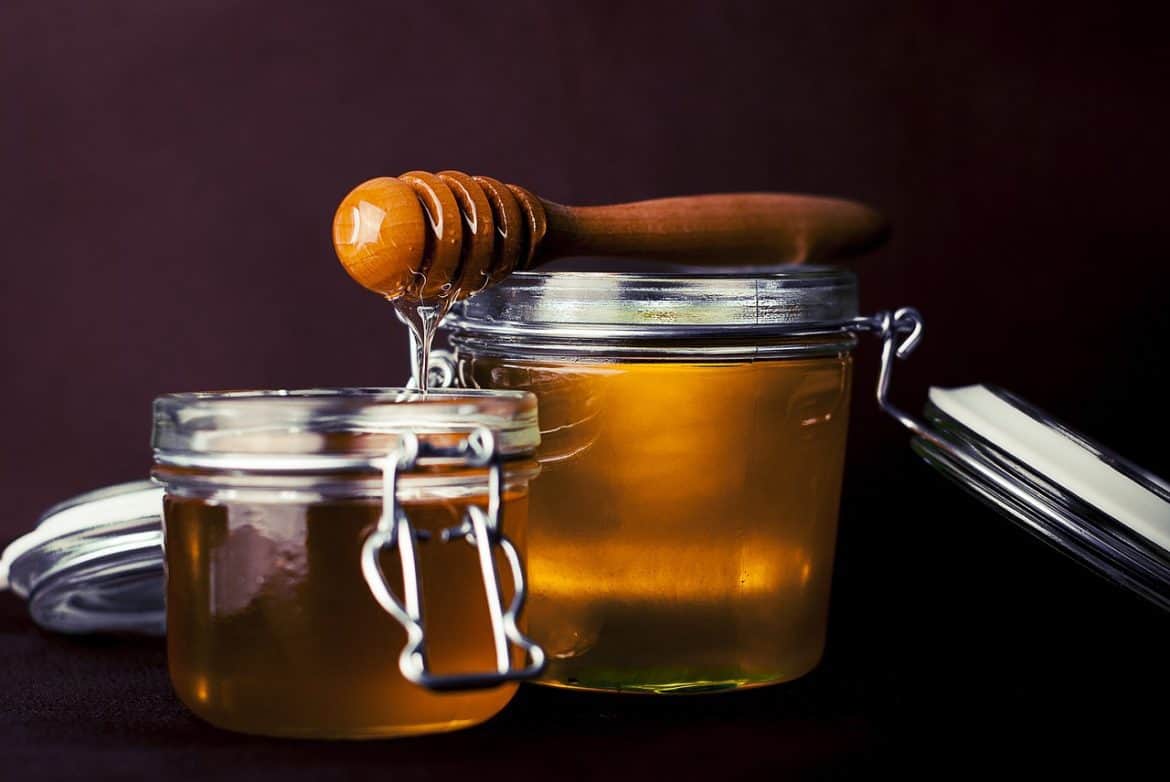
    If you want to eat healthier, or use honey that you have produced yourself, the first thing you need to know is that the rules for Substituting Honey for Sugar are more like guidelines.

    In general, substituting honey for sugar is a matter of preference.

    Some use it cup for cup, others prefer 1/2 cup – 2/3 cup of honey per cup of white sugar.

    However, because of the water content, reduce the amount of other liquids by 1/4 cup for every cup of honey used.

    Honey also causes foods to brown much easier, so lower the oven temp about 25 degrees F to prevent over-browning.

    Also, since Honey is naturally acidic, and baking soda is a base add 1/4 teaspoon of baking soda for each cup of honey to your recipe.

    If you are using the sugar to can, use 7/8 cup of honey for every cup of sugar, but don’t change the other liquids. Honey may be substituted effectively for up to half the sugar called for in a canning syrup recipe. (test this for jellies)

    Remember that Honey has its own unique flavor. In general it is a light and pleasing flavor, but if it conflicts with the desired taste of your recipe, there’s not much you can do about it. However, the flavor depends on the flowers the bees used to make it, and some flowers give an off taste.

    If you are diabetic, as I am, keep in mind that honey does not reduce the calorie or carbohydrate content of the sugar syrup, and thus is not acceptable sugar replacements for people on diabetic diets. However, it is less processed, and there is some evidence that it a much healthier sweetener in other ways.

    You can also use honey as a substitute for other sweeteners

    Brown Sugar: Follow the equation for plain table sugar under General Recommendations, but also substitute molasses for a portion of the honey to retain the expected flavor – (brown sugar is just unrefined White sugar -they take the molasses out).

    Corn Syrup: Use exactly the same amount, but reduce any other sweet ingredients, since honey has more sweetening power than corn syrup.

    Molasses: Use exactly the same amount. The resulting flavor and color will be lighter and less heavy. The reverse is true if you swap molasses for honey.

  • Preserving Food without Freezing or Canning

    Preserving Food without Freezing or Canning

    Preserving Food without Freezing or Canning
    Click the Picture to Purchase

    Typical books about preserving garden produce nearly always assume that modern “kitchen gardeners” will boil or freeze their vegetables and fruits.

    Yet Preserving Food without Freezing or Canning goes back to the future—celebrating traditional but little-known French techniques for storing and preserving edibles in ways that maximize flavor and nutrition.

    Translated into English, and with a new foreword by Deborah Madison, Preserving Food without Freezing or Canning deliberately ignores freezing and high-temperature canning in favor of methods that are superior because they are less costly and more energy-efficient.

    As Eliot Coleman says in his foreword to the first edition, “Food preservation techniques can be divided into two categories: the modern scientific methods that remove the life from food, and the natural ‘poetic’ methods that maintain or enhance the life in food. The poetic techniques produce… foods that have been celebrated for centuries and are considered gourmet delights today.”

    Preserving Food Without Freezing or Canning offers more than 250 easy and enjoyable recipes featuring locally grown and minimally refined ingredients. It is an essential guide for those who seek healthy food for a healthy world.

    I can’t stress how much food production is important for preppers.  I don’t care how much you store, you will eventually run out.  Being able to produce and store food is vital.