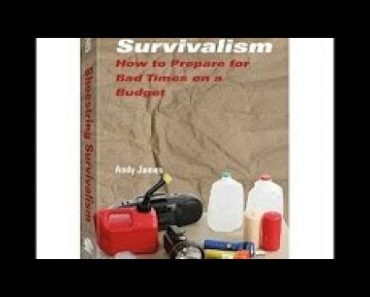
Shoestring Survivalism is a complete budget-minded blueprint for preparing for tough times. Self-reliance veteran Andy James shows you dozens of shoestring survival methods that cost little or nothing yet will tremendously advance your preparedness for any sort of large-scale emergency, from natural disasters (hurricanes, floods, epidemics) to societal eruptions (acts of terrorism, economic depression, widespread crime).
With Andy James’ handy tips and tricks for low-key, low-budget survival.
Shoestring Survival will show you how to:
Take 21 simple, low-cost steps right now that will drastically improve your chances of surviving any disaster
Acquire free stuff that lots of survivalists never think of
Locate the best sources for inexpensive, essential supplies – extra clothing, necessary tools, reliable guns and more
Stock cheap, filling foods to feed you and your family for 30 days or longer
Find hidden values at familiar stores and in surprising corners of the Internet
Determine whether to stay at your home or bug out during an emergency, including how to maintain comfort and safety in a government shelter
You do not need a fully stocked cabin in the mountains or an arsenal of expensive firearms to make it through hard times. You just need the will to begin preparing today, a surprisingly small amount of money to get started and the handy information in Shoestring Survival.
Doing what you can with what you have, and doing it smart is what this website is about. Shoestring Survivalism does not mean going without, it means doing it smart.
My husband Salty and I were riding our bikes along a trail one fine day when we came across a worried huddle at the side of the trail. At the center of the huddle was a middle-aged man, sitting hunched and breathing in short gasps. He was sweating far more profusely than the day called for and was red in the face. The bike he’d rented lay discarded in the weeds (or to be more precise, the poison ivy) beside the trail. Someone was already on the phone to 911.
He figured it would be no big thing. He used to ride a bike (now and then) when he was just a few years younger. Sure, he hadn’t gotten much exercise lately, but it was just riding a bike a few miles along a trail.
Let’s rewrite the story just a bit. Once upon a time there was a prepper. He had a very carefully chosen and packed Get Home Bag, because if Something Bad happened and he couldn’t drive home, his plan was to grab this bag and hoof it to his home just seventeen miles away. Sure, he hadn’t gotten much exercise lately, but it was just walking some miles. He could do it if he had to.
But when this prepper gets to breathing in short gasps, covered in sweat, nauseous, and red in the face … there isn’t any calling 911, and help is not just a phone call away. Our prepper is in a very bad spot.
Be real in your planning:
It does you no good to make plans for the shape you’d *like* to be in, or for doing things you’ll *need* to be able to do in an emergency unless your body can cash that check. Needs are not mechanisms. Needing to do a thing does not make us physically able to do the thing. Ask anybody who’s ever needed to be able to breathe under water if you don’t believe me. O wait, you can’t.
This is why you need an honest evaluation of your health.
The only plans worth breath to describe are the ones you can actually carry out. Stop a moment and think very honestly and realistically about what you can physically do, Today. Compare that to your plans for dealing with emergencies. If you plan to bug out of your city by foot carrying your Bug Out Bag, how far have you hiked carrying that thing this year? Did that hike include the hills that will be in your way, the obstacles you will be likely to have to scramble over?
Sure, you might be able to gut it out; but you might also get stuck with an injury (much more common when you’re pushing boundaries) or a simple inability to follow through and be worse off than when you started.
When plans aren’t realistic:
If anything in your plans is not something your body can handle right now, you’ve got three choices:
Forget this conversation and move on. <– Not a great choice. That’s day-dreaming, not prepping.
Change your plans. For example, Salty (my man) has knees that are not interested in hiking with a pack. Therefore, our plans for getting to The Place (our rural retreat) involve our touring bicycles and saddlebags. We *know* we can bike that far in a day because we do so several times a summer. A less-than-optimal plan you can actually carry out is worth infinitely more than a plan that’s perfect except for that tiny glitch of ‘you can’t do it reliably’.
Change yourself. There are several great reasons to get in better shape. Not needing medical care you won’t be able to get in an emergency is right up there; and so is being able to plan to do things like cut wood for heat and carry water up the hill to the house without having a heart attack.
What about medical needs?
The majority of adults in the U.S. are now on prescription medications; most of those people are on more than one. The best answer is to improve your underlying health not to need the meds. If that’s not possible or you’re not willing to change your lifestyle that much, Plan B would be is to stock up if you can. If that’s not feasible, Plan C is to have researched alternatives and be stocked up on them.
If you struggle with depression, have some St John’s Wort planted where you can get to it, for example. It has nice flowers anyway. If you have diabetes, make sure your food stores are choices that don’t tend to raise blood sugar much (very unlike many standard ‘prepper’ foods). If you have hypertension, keep the salt in your prep foods low, etc.
The main point: The plan’s only good if it is actually likely to work, and asking too much of your body in a high stress situation is a recipe for disaster. This is no place for ego; be honest to yourself about your capabilities and keep your plans within them.
About the author: Spice is one of the founders/owners of the website Beans, Bullets, Bandages and You, and one of the blog’s main contributors. She’s not a doctor, but has worked in the field physiology and medicine and has been published in numerous peer-reviewed medical journals. You can read more of her work at https://beansbulletsbandagesandyou.com. The photo shows the author on one of her training hikes.
I recently was asked to participate in a prepper interview for a new pod caster that is a well known Nashville journalist (but who wants to be anonymous in this new venue).
We talked about Prepping, Reality TV, Nuclear Plants, and the current state of Corrections…
They edited about 5 hours of tape to a good 20 minute tape.
One thing we did wad build a huge smoke bomb, but it was hard to show on an audio recording.
We had a good time, and the two guys were great hosts and it was a blast. I hope you enjoy listening as much as I enjoyed talking to the guys.
The community of preppers grew in 2008 with the launch of My Patriot Supply as a leading Online resource and retailer helping U.S. citizens prepare for the worst should a natural disaster or ‘doomsday’ scenario occur. The retailer has become a major part of the preppers community over the course of its first decade in operation. If you want help preparing for reality, then this company can provide that help.
The community of preppers has largely been misunderstood because of a small number of mainstream TV shows which choose to portray this growing number of Americans as unhinged or worse. However, the majority of preppers are simply concerned citizens who understand a breakdown in society can occur at any time through a natural weather event such as a tornado or hurricane or can take a larger form should an attack on the U.S. create major infrastructure problems. The majority of preppers are not spending their time worrying over the zombie apocalypse arriving but are instead watching The Weather Channel and the news to monitor the global political situation.
Being prepared for any eventuality is the key to the work of My Patriot Supply and preppers across the U.S. who understand there are few options of people or agencies to turn to when a major event leads to the breakdown of a small or large community. In most cases, the decision to become a prepper is taken by those who have either had the first-hand experience of a disaster striking and leaving them with little help from government agencies or those who have woken up to the fact self-reliance is the best option.
Although it has become a commonly held belief because of shows like “The Walking Dead” and movies including “28 Days Later”, the zombie apocalypse is not something preppers worry about each day. As science has so far yet to find the technology capable of reanimating dead tissue there are no reasons to prepare for this fiction becoming a reality.
Instead, many people who may not feel they are part of the preppers community may be shocked to discover they are already getting started with the early stages of preparedness. An individual who has taken the time and effort to think about installing a generator or assembling a disaster emergency kit in case of a major weather event is already a prepper; creating a kit with flashlights, matches, and a supply of canned foods is the first step on the way to becoming prepared for a life where the rule of law may no longer be in place for a short or long period of time.
What the majority of preppers understand is the fact there is a chance of certain situations arising which will result in a period of time when government agencies are unwilling or unable to provide the necessary utilities and requirements for human life. This does not always mean preparing for the worst case scenario but can instead mean creating a survival garden with fruits and vegetables which can be used as a food supply should the usual communication lines of social breakdown. In the short term, this can mean creating a supply of generators and fuel to provide power, heat, and light should the utility supply be knocked out by a storm or a far worse event.
Being a prepper means looking at the chances of certain situations occurring and creating a plan which will protect the individual and their family should a scenario happen. There is a zero percent chance of the zombie apocalypse occurring which means this is a scenario which should be ignored by serious preppers who are looking to create a contingency plan for the future. It is important to remember the government should always be part of the plans being created as no matter why an individual has decided to become a prepper they need to ensure they have taken into account the fact some form of government will always remain in place if and when a natural or human-made disaster occurs.
Although a breakdown in society may take place at some point in the future the rule of law should always be part of the thought process and planning for any serious prepper. Despite the fact a breakdown of society may take place and a prepper isolated for a period of time it is always a good option to become an active member of the prepper community as the advice, tips, and news of the latest technological advances could mean the difference between success and failure in the survival business.
* I added this guest post because I believe in preparing for reality. Too many people spend way too much time preparing for things that aren’t realistic. In a world of limited resources, I believe in balance and that I need to spend my time and money on things that give the most benefit to my family.
I like my patriot supply because they good products as well as provide good information with their survival scout newsletters. To me you can’t go wrong with preparing for reality.
Street E&E isn’t the best book I have ever read, but taken as part of a systematic education it is useful.
I do think every prepper needs some understanding of escape and evasion, but I also think it is easy to go too far with it.In this book, the author tells you how to survive when you’re outflanked and outgunned. Rather than clashing head-on with every problem that comes along, you need to learn to apply hit-and-run tactics, utilize the environment and use your enemies’ weaknesses against them.
This is something that can be pretty useful. However, I still would not recommend buying Street E&E until you have mastered more essential skills. It is in interesting thing to think about, and there are some useful tidbits in the book, but there is an element of Mall Ninja in the idea. Especially for us typical blue collar citizens.
There is no doubt that Animal MacYoung knows his stuff, but I think that in this case, the book is a captivating book title more than a finished work. There are probably much better sources of information for the same or similar money.


 My husband Salty and I were riding our bikes along a trail one fine day when we came across a worried huddle at the side of the trail. At the center of the huddle was a middle-aged man, sitting hunched and breathing in short gasps. He was sweating far more profusely than the day called for and was red in the face. The bike he’d rented lay discarded in the weeds (or to be more precise, the poison ivy) beside the trail. Someone was already on the phone to 911.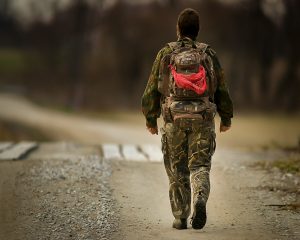

 The community of preppers grew in 2008 with the launch of

