Disguise Techniques is an older book, created by an actor working for the OSS, forerunner of the CIA. I expected more from the book due to its history of being a text of sorts for our spies, however it really did not give any new insights.
It was an interesting read, but you could probably learn more from an acting class…
This book dealt a lot with controlling body language and how putting on a hat or taking off a jacket combined with body expression would change your appearance.
In my mind any one that has watched a modern spy movie where the hero was framed and on the run is familiar with more relevant disguise techniques.
That is not to say I did not enjoy the book – I found it an interesting read, as well as something to provide insight into the mindset of the time. But not being a cynical person I did not get the feel it was something somebody threw together to get a piece of wartime government money.
I don’t really like giving negative reviews, and most of the time I try to not give a review rather than to say “this book is a waste of money”, but in my opinion, if you are buying this book because you think it may someday prove useful to you, save the money and watch mission impossible.
I play around with hot metal, I am just piddling, and while workable, none of my creations would past the inspection of a real blacksmith. However, I do enjoy it, and would like have enough time to practice more.
When I saw Techniques Of Medieval Armor Reproduction on Paladin Press’s scruffy list, I figured that at 50% off I could afford to take a chance on it. When I got this book, I was impressed at how much information was backed into this book.
While this book is geared toward established blacksmiths that want to recreate authentic pieces for SCA and other reenactors and other recreational sword bashers, it has a little for everyone.
It has a section of shop setup and tools, as well as showing specific techniques.
If you are interested in metal working, or medieval life in general, then this is a book worth reading. Now that I have it in my library, I believe it is worth buying at full price…
Techniques Of Medieval Armor Reproduction is one of the favorite books in my library. I don’t have the skill to do anything in the book yet, but I am wanting to try my hand at chainmail at some point.
Lets face it, practicing basic fundamentals is not sexy, it is necessary, but not every shooter will spend money on a school that teaches repetition of basic shooting skills.
Because of this, many firearm instructors will create new techniques so they can fill up classes. In my other site I have repeatedly said that I don’t believe in adding things to your gun without being able to articulate a need.
I feel the same way about training. Progress for the sake of progress complicates the situation, gives you too much to master without enough benefit.
Stressfire is not one of those books. Ayoob tells you the problems his techniques are designed to solve, and step by step explains how they do so. Synthesizing solutions to problems, based upon the entire body of knowledge of a field is the mark of an expert. Ayoob is such an expert. While I have not incorporated every aspect of stressfire into my normal shooting skill-set, I do think each technique has it’s place in the tool box.
By reading this book, you will gain a deeper understanding of your shooting technique by comparing yours to the skills Ayoob describes.
I have a great respect for Ayoob’s work, and along with reviewing many of his books, I also have links to several of his YouTube videos as well.
Working in a kitchen is not a child’s play, and those who work are completely aware of this.
Cooking in the kitchen could be boring or fun.
Those who find it boring are not experimenting at all, which is not right because kitchens are like laboratories.
People should experiment with different food items in order to create something magical.
One of the important kitchen related tasks is ‘cutting’. If you know how to cut properly, then working in the kitchen will be a lot more interesting for you.
It is important for you to know how a knife cuts and in how many ways a knife can be used.
You can’t use all these strokes with a single knife, so you need to have a set of different knives that you can use for performing different tasks. For chopping and back-slicing, you can use santoku-style knives, whereas, for slicing and rock-chopping, you can use western-style curved blades.
If you have no idea regarding using a knife for a particular stroke, then you will get a decent idea by the end of this post.
The Slice:
Slicing is a stroke with which you cut meat and vegetables. You can also cut herbs with a knife that is used for slicing. In order to slice vegetables or meat, you must place them on a solid and stable surface. Then, slice the food item in half followed by holding the food item with your free hand and curling your fingers to a claw. Tuck your knuckles underneath.
The tip of the knife should be in constant contact with the cutting board with the angle of the knife in an upward direction. Press the knife in the downward and forward direction and use the entire length of the knife to slice food. Repeat the process using a circular motion, but make sure that the tip of the knife remains against the board all the time.
The Chop:
If you are looking for a precision while cutting your vegetables or herbs, then the concept of chopping is used. Chopping is same as slicing, but it’s just that chopping is done to style up the vegetables. For chopping, you need a very sharp knife in order to get precise cuts. The surface on which the vegetables are placed needs to be firm and stable. If chopping a long vegetable, then cut it in half. Hold the vegetable with your free hand and curl your fingers to make a claw followed by tucking your knuckles underneath.
Use your knuckles to hold the flat side of the knife blade and life the knife above cutting board. Press the knife in the downward direction making smooth and even stroke. Move the knife in the forward direction to chop further. Lift the knife after one stroke and repeat.
The Back-Slice
This stroke allows you to cut vegetables or herbs into fine, small slices. While slicing herbs, you need to stack leaves and roll them up so as to create a bundle. Hold the bundle tightly with your free hand and curl your fingers into a claw followed by tucking your knuckles underneath.
After that, place the knife’s tip against the cutting board with the rest of the knife resting against your knuckles. You should hold the knife at a very low angle and pull the knife in the backward direction after each stroke, as this will result in the slicing of the food properly. Don’t move the knife in the downward direction.
The Rock-Chop
This stroke is used to finely mince fresh herbs or zest. You don’t have to be that much precise while chopping as you were at the time of back-slicing. Just roughly chop the ingredients using the chop or the slice, then accumulate those into a small pile. Start rocking the knife up and down from one side and regather the ingredients in between. Keep repeating the process until you get finely minced ingredients.
When accumulating the ingredients, make sure to drag the knife blade at a low angle to the cutting board as dragging the blade perpendicular to the cutting board is going to make the blade dull at a much faster pace.
Basic Construction Techniques for Houses and Small Buildings Simply Explained is a great manual for the new builder. I like it because it easily explains how to build things in simple language.
It has helped me tremendously in my desire to build my own homestead. By following traditional building methods my outbuildings go up easier, faster, are stronger, and work better.
A I work on the land, I continually have the need to build things. Since I am not a builder by trade, sometimes I need some advice on how to do what I want.
Basic Construction Techniques for Houses and Small Buildings Simply Explained is that adviser.


 I play around with hot metal, I am just piddling, and while workable, none of my creations would past the inspection of a real blacksmith. However, I do enjoy it, and would like have enough time to practice more.

 Lets face it, practicing basic fundamentals is not sexy, it is necessary, but not every shooter will spend money on a school that teaches repetition of basic shooting skills.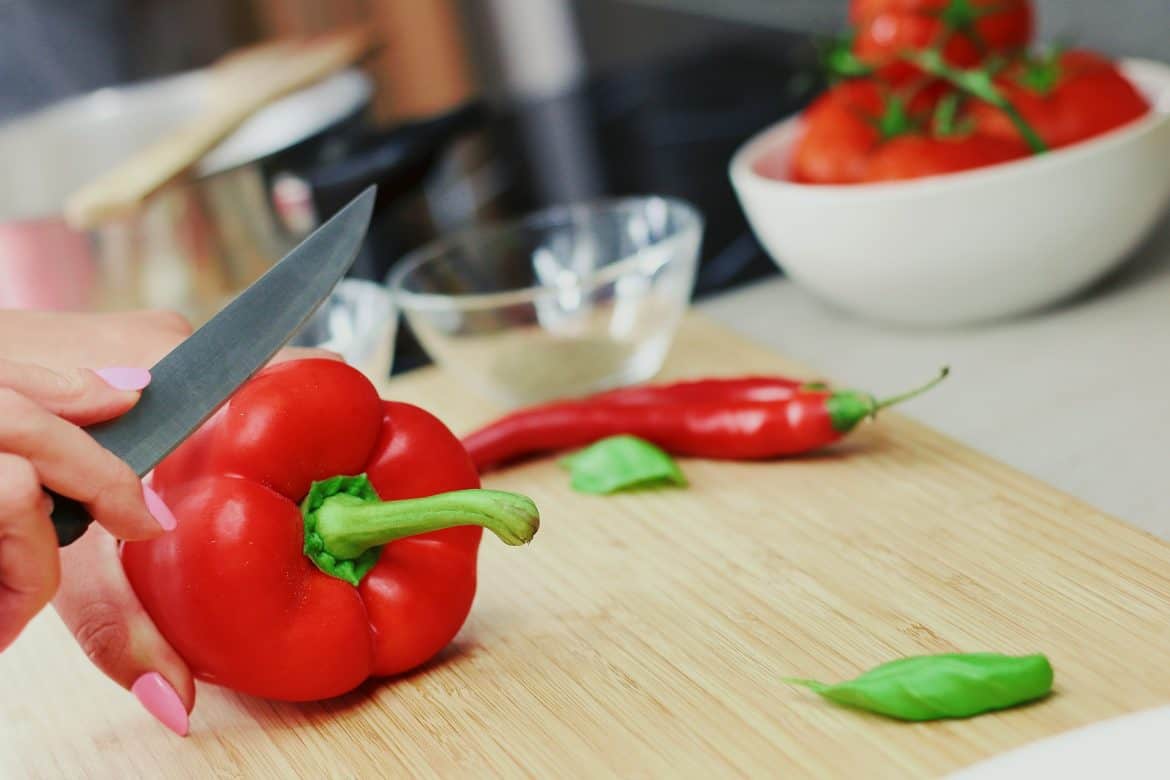


 Basic Construction Techniques for Houses and Small Buildings Simply Explained is a great manual for the new builder. I like it because it easily explains how to build things in simple language.