If you want to win, and not just survive, in a fight for your life, mind-set is at least as critical as tactics.
In his book, The Combative Perspective, Suarez shows how desire for victory, elimination of uncertainty, situational awareness and willingness to act can give you the mental edge.
This book is subtitled The Thinking Man’s Guide to Self-Defense, which is an apt title. In my experience mindset is every bit as vital to survival as training.
If you are serious about personal defense then you need to read this book.
I have studied Gabe Suarez’s work for some time, and I believe that it is quality training material in a time when the combative’s field is glutted with not always valuable material.
If you want to carry a gun for self defense, or if you stock up on ammunition for some future disaster, then you owe it to yourself to become a student of the combative mindset and learn what it takes to survive am armed encounter.
It is not a normal human reaction to pick up a gun and run toward gunfire, but it may be necessary to defend your loved ones. Please take the time to learn how to do it tactically and with some edge to your odds.
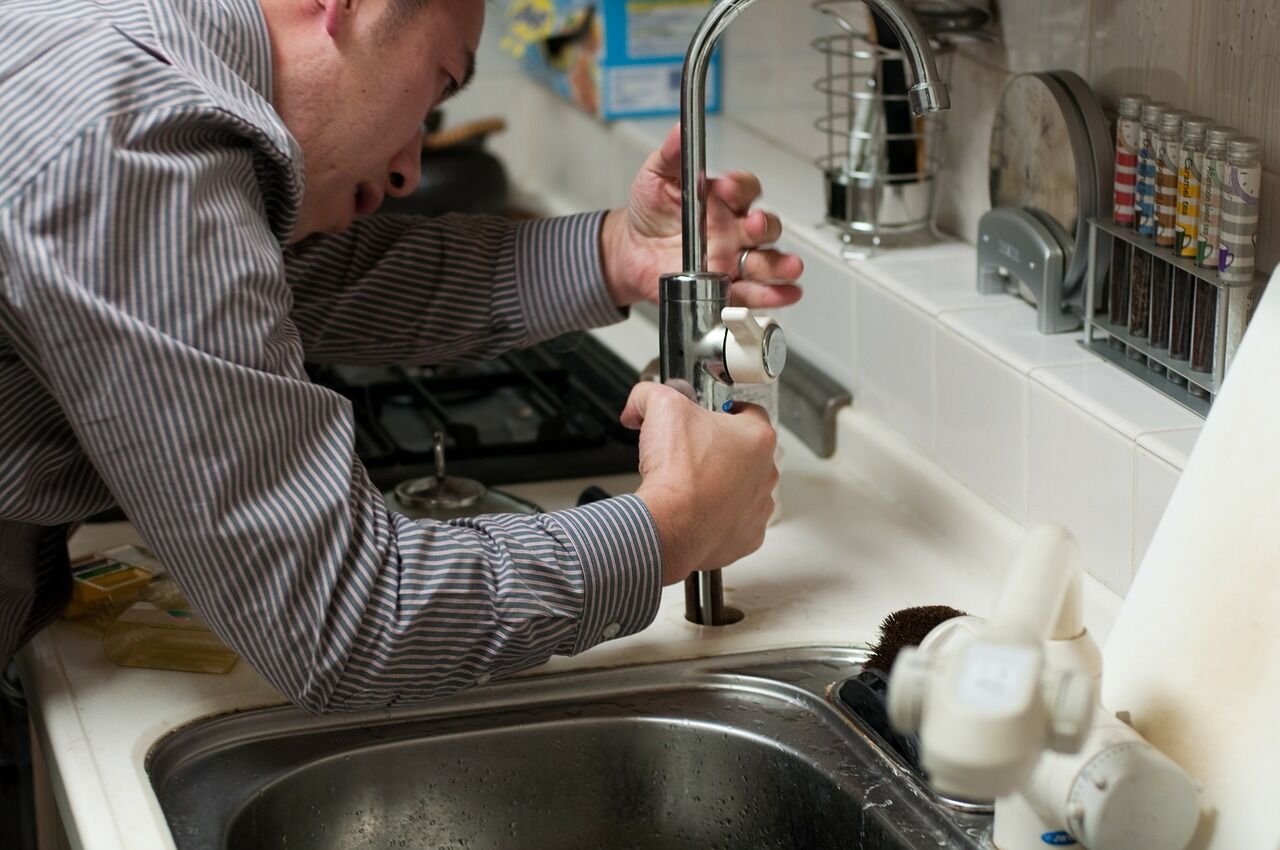
Your pipes are your lifeline for the water in your home. Look out for these 6 signs that your water line needs repairing.
Lack of Pressure
Low water pressure can be caused by a variety of things. Your water heater may be the source of your woes. Aging pipes can corrode, thereby constricting the water flow. If the problem is great enough, you may to see the corrosion on the outside of the pipes.
Sounds of Running Water
You shouldn’t hear running water in your home if no one is using it. This means that you have a leak somewhere. Call a pipe repair services immediately. You’ve already sprung a leak and it could be damaging other parts of your home.
Mysterious Wet Spot
A mysterious wet spot in your yard could indicate that your main water line has sprung a leak. During the summer, a slow leak is almost undetectable. A large soaking area definitely means that you have a problem.
Chunks Exiting Your Pipes
Water should not be chunky. The chunks are the inside of your pipes starting to flake away from the rest of the pipe. This is more common in homes with galvanized plumbing.
Huge Water Bill
Your water bill likely increases over the summer months due to the need to water your yard. A sudden spike in your water bill for no discernible reason can mean that you have a water leak. Have your pipes looked at before it ends up costing you even more money.
Terrible Odor
A horrible smell coming from your faucets could be caused by a broken vent or sewer pipe underneath your home. If you ignore this symptom, you could be undermining the foundation of your home. Bacteria in your water heater or pipes produce the sulfur smell. If you detect a smell, ensure your water supply isn’t contaminated.
Watching for these signs and others will protect your home from a more a costly repair bill. Don’t delay in discovering the problem. The resulting water damage to your home can make it uninhabitable.
The Art of Natural Building is the encyclopedia of natural building for non-professionals as well as architects and designers. From straw bale and cob, to recycled concrete and salvaged materials, this anthology of articles from leaders in the field focuses on both the practical and the esthetic concerns of ecological building designs and techniques. Includes examples of diverse natural dwellings, from a Hybrid Hobbit House to a thatched studio and a cob office.
This is a good primer for concepts, and shows a lot of different ways of natural construction. I imagine, if you are experience, handy, and smart, then you could manage to construct a home using this as your sole guide, but I use it more as a reference to help narrow down what I want, and then get more specific construction books.
It has some very nice pictures, and is a great book to sit down and thumb through while dreaming about what kind of homestead you want to build.
This book has spurred my imagination, I sit and look at it and dream of a time when I can build the buildings it describes. I am a large supporter of cob construction and other forms of natural building, I just wish I had more time to do instead of dream.
I am a fan of Gavin De Becker’s work, and this is (in my opinion) his best work.
He uses The Gift of Fear to further his argument that fear is necessary for survival, and that, in our “safe” modern world, we ignore our gut.
He posits that women’s intuition, uneasy feelings, a man’s gut instinct, and our fear are all signals something is not right. If we learn to harness and train ourselves to use these unconscious signals we would be better trained to deal with unplanned emergencies.
De Becker has a long and distinguished resume to bolster his ideas, for instance, he wrote the program our US Secret Service uses to prioritize and interpret threats to our elected officials.
I have used his work to describe to my students what goes on in the brain when we get instinctive clues and why they should trust their “gut” feelings. This book really does a good job of describing that.
I will say that while adherence to policy and good common sense is important inside the prison, being able to trust those gun instincts have saved me a time or to also.
When I start thinking about what device is the most useful to have for electrical needs around the house, a multimeter definitely is one of the most versatile. You can use it both in your home and on your vehicle to determine different electronic components.
If you’re trying to determine if a fuse is blown, a multimeter can do that. If you want to determine if a battery (car battery, 9V, AA, etc) has any charge left in it, a multimeter can do that too. In your home wiring you can determine if an outlet or wire has an electrical charge by connecting a multimeter to it. These all help you to save time and money by testing things at home by yourself.
Let’s review many of the important things you need to know about a multimeter.
What kind of multimeter should you buy?
When you decide what kind of multimeter to buy you should use the same logic you would with anything else like a car, house or computer. Go with those that meet your needs.
If you need a multimeter for professional use and need something high quality then go for the best Fluke type multimeters as that brand is top of the line. The Fluke 87-V digital multimeter is a great choice for this.
If you’re just starting out and want to play around with it before you spend a lot of money then just buy one of the digital multimeters around $20 USD. The Innova 3320 digital multimeter is a great choice as a starter device for you.
What not to buy?
If you see the old-school multimeters with the needle that moves across a scale, that is not a good multimeter. To say the least, it would be a huge waste of money considering you can get a digital multimeter that is extremely more accurate for the same price if not cheaper. Get the one with a digital screen that displays numeric values which is called a digital multimeter.
What measurements are important to you?
There are different types of multimeters and different measurements it can do so it’s important to understand the basics of it’s measurement capabilities. Lets understand each of these below:
Ranging
When selecting a multimeter, you have to decide whether you want a manual or auto ranging device. Since there are many different measurements you can make knowing what the range of those measurements are is tricky.
If you’re a new user then I’d suggest you pick a multimeter with an auto-ranging capability. For auto-ranging multimeters it will assess the electrical current and then determine what range to use automatically. This often takes some time to complete so for those experienced users they often prefer a manual ranging so they can control it.
Pick one based on your preference, although, in my experience most people choose one based on their patience if they don’t want to wait
Each multimeter should say if it’s manual or auto ranging but if it doesn’t you can always look at the dial on the device. If you see numbers around it then it’s a manual ranging. If you only see symbols/letters then it’s auto-ranging.
DC/AC: Direct Current and Alternating current. You can change this by simply pushing a button or selector on your multimeter. The difference in these two currents is simple in that with DC the flow of electricity is only going one way where as in AC the current can flow in one direction and then change to the other direction.
Most electrical outlets are AC which is easy as they usually have a large grid to work on and can transfer power back and forth to eliminate waste. Most electronic devices and household appliances work on DC as they only require the power source to go one way to the device.
Continuity: This allows you to test if there are breaks in an electrical circuit like a faulty/cut wire etc. It sends electricity into one end and checks if it has a response on the other end.
Voltage: This measures how strong electricity is being pushed through a specific circuit. The higher the voltage the stronger the force. This is measured in Volts (V).
Current: This measures the amount of electricity going through a circuit and is measured in amperes (A).
Resistance: This measures the difficulty of a current of electricity to flow through an object. The higher the resistance means it’s more difficult for energy to flow through it. This is measured in ohms (Ω).
There are many other values including frequency, capacitance, transistor, temperature, etc, but those are useful to specific situations and may not be needed if you are an average at-home user. If you want something that can test everything, then for a little bit more money you can invest in a good quality one that has more options.
How to set up your Multimeter
First thing to do is to give it power. Most multimeters use a 9V battery although some still use AA batteries. Check which one yours needs and if it comes with one or not before you head home with it.
Black and red leads will also come with your multimeter and most of these will need to be plugged into it in order to use it. Simply plug the black lead into the one that says COM and the red one into the one for Volts (labeled with V). You may need to change the red one for different measurements but the black one always remains constant.
Plugging these in wont hurt you to start but it’s best to only ever touch the colored rubber part of the leads and never touch the metal parts if you want to avoid getting shocked (which can be dangerous).
From here you can start to learn the different ways of measuring objects, devices, outlets, fuses and different car parts.




 Your pipes are your lifeline for the water in your home. Look out for these 6 signs that your water line needs repairing.

 The Art of Natural Building is the encyclopedia of natural building for non-professionals as well as architects and designers. From straw bale and cob, to recycled concrete and salvaged materials, this anthology of articles from leaders in the field focuses on both the practical and the esthetic concerns of ecological building designs and techniques. Includes examples of diverse natural dwellings, from a Hybrid Hobbit House to a thatched studio and a cob office.

 I am a fan of Gavin De Becker’s work, and this is (in my opinion) his best work.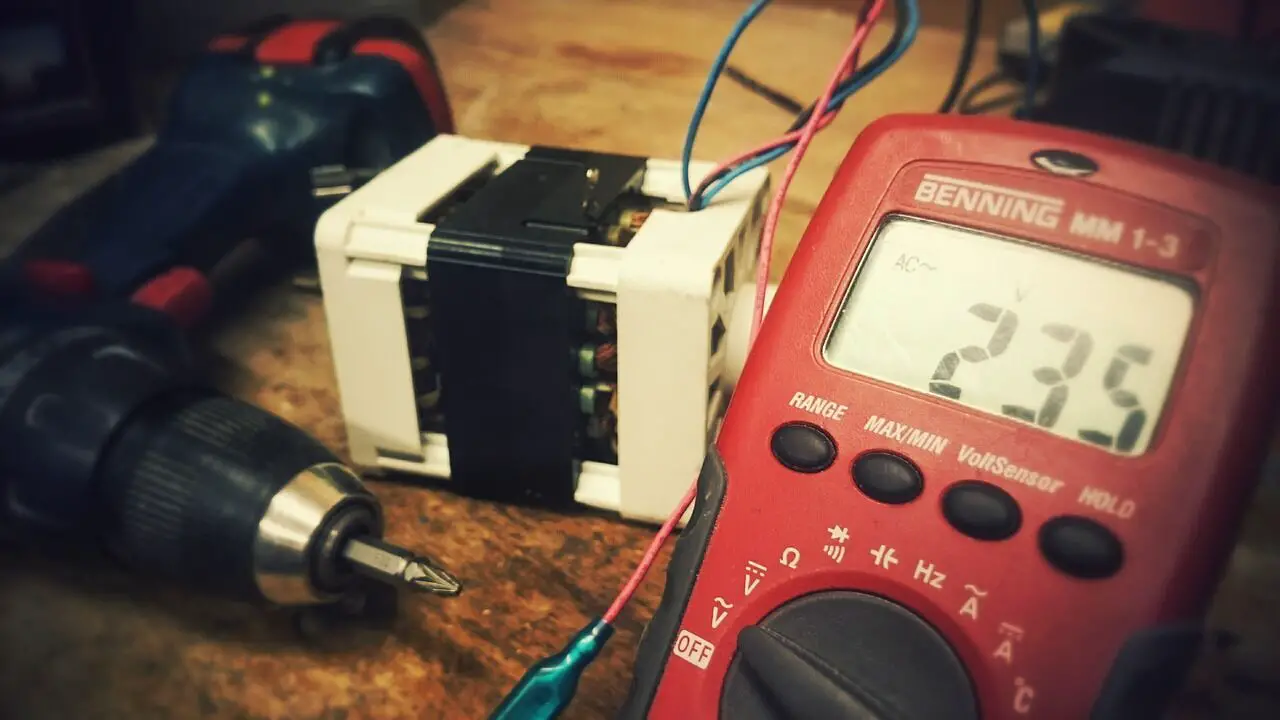

 When I start thinking about what device is the most useful to have for electrical needs around the house, a multimeter definitely is one of the most versatile. You can use it both in your home and on your vehicle to determine different electronic components.