Should You Shoot to Wound?


Should You Shoot to Wound?
Buy at Amazon

Should you shoot to wound?  I talk a lot about lethal force, and one concept comes up almost universally. I call this idea the leg shot syndrome. The leg shot syndrome is expressed by the statement “I wouldn’t aim to kill; I would shoot the robber in the leg”. I believe I know where this thought comes from.

As propponents of self-defense, it is very important that we answer the question “Should You Shoot to Wound”.
It comes from the fact that everyone I give firearms classes to comprise the “good guys”. Good guys don’t go around killing, robbing, and raping people. They believe that everyone has redeeming qualities. Good guys don’t want to kill people, they didn’t start the encounter, and if they had their way, the bad guy would just leave. Now before I get tons of hate mail, let me say that I understand the reason people think this, and I wish everyone in the world felt that way. If there were no bad guys, there would be no crime. I could then put more energy into my primary job of preparing for natural disasters instead of diverting energy to preparing for criminal disasters.

While understanding and admiring this idea, I want to emphasize that this is not a good way to apply this concept. There are many reasons why this philosophy is not sound in the lethal force arena. Some of these reasons are legal, some tactical, and some, yes, are even moral.

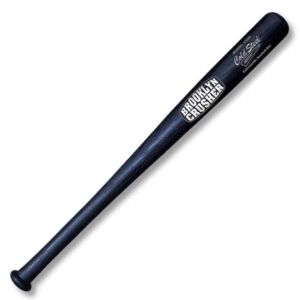
I will jump into what I hear as the most widely use reason why the leg shot syndrome should not be used, legal. A handgun is a lethal weapon. Unlike a baseball bat, a butcher knife, or a policeman’s baton, there is no less lethal way to use a handgun against another human. The law does not distinguish the difference between shooting a person in the head, and shooting a person in the chest. If there is not legally defensible motive and the person dies it is still murder. A bullet cannot be recalled once it leaves the barrel, and what it does upon entering a person cannot be decided by the person who fired the bullet. There is a major artery in the human leg, which if severed, can kill a person as quickly as shooting them in the chest.

Tactically manipulating a firearm under lethal force pressure is extremely hard. Quite a few books, and statistics from a vast amount historical data show that only about 1/3 of the rounds fired impact on the target. This doesn’t seem to be that bad, until you look at other statistics that show approximately 90% of gun fights happen under 7 yards and comprise less than 3 shots total.

How realistic is it then that when most people can would be lucky to hit their attacker, you are going to hit one of the smallest areas, and an area that is most likely to be moving.  Tennessee (and every other state I have found that has a defined handgun training curriculum) specifies shooting center-mass with the intent to stop. This involves two concepts. The first being center-mass, this means aiming your projectile to impact inside the largest target area (the chest), since this is the largest area you have the greatest ability to actually hit it. Also the chest area has the largest ability to stop your attacker due to it being the location of most the bodies organs. Intent to stop, is neither aiming to kill, nor shooting to wound, either of these are irrelevant, your legal self defense ability is centered upon the attacker being able to kill you, and trying to kill you.

If the mere presence of your legally owned firearm cause the attacker to stop, it has done its job, if one well placed round to center mass persuades the criminal to stop, that’s okay, however if it takes 3 ” boxes of bullets to stop a drug crazed, gang-banging, neo-nazi terrorist from killing you, hey so be it. This intent to stop is the half of my moral argument.

The other reason comes from plain street sense. I have a few years working in corrections. These years are split between entry level corrections working on the recreation yards and cages listening to inmates talk about themselves and their crimes, to working as a supervisor in maximum security units and applying inmate psychological knowledge to keeping the prison running smoothly. Criminals do what they do because it works for them. If a mugger or a rapist tries to talk you into leaving with him, it’s because it has always worked for him before.

Believe me, a violent criminal hasn’t decided to start being a violent criminal just because your there, a criminal starts small and works up gradually becoming more violent. If a criminal gets away with hurting you, he will do it to someone else. I am not saying that vigilante justice is okay, I’m not. I am not advocating deadly force as a punishment for a criminal either. What I am saying is that you are a reasonable person, with an inalienable right to life and liberty, minding your own business, living a peaceful life. You have a right do what you need to do to be safe, to go home to your family, this criminal attacked you, tried to hurt you for no reason other than his personal gain, your not trying to kill him, only making him stop trying to kill you. This is not wrong. This is right, your family needs you; make sure you do what needs to be done to be there for them.

I hope you now know the reasons behind the question should you shoot to wound, as well as understand your moral and legal obligations.
Training Survival: Building Shooting Muscle

Training Survival: Building Shooting Muscle
Buy at Amazon

Since you carry a gun for self-defense or to save the life of another, then you are concerned with combative firearms skills rather than shooting merely for the experience of shooting.  To reach this goal, you engage in training, mostly in the form of practice on a range.  How close you get to your goal will depend on the effectiveness of your training.  Building shooting muscle is a big part of proper training regimen.
Since you carry a gun for self-defense or to save the life of another, then you are concerned with combative firearms skills rather than shooting merely for the experience of shooting.  To reach this goal, you engage in training, mostly in the form of practice on a range.  How close you get to your goal will depend on the effectiveness of your training.

Let’s use weight lifting and body building as an analogy.  If you want to get bigger and stronger, we know that you have to concentrate on working the large muscle groups of the legs, back, chest and shoulders.  You do this by training mostly with the foundational exercises for these muscles: squats, dead lifts, bench presses, presses, rows, pull-downs and so on.  There’s a total of maybe a dozen core exercises on which you spend most of your time.  Yet there are hundreds of lifts you could do, and most of these work the smaller muscles.  They are useful, but if your goal is size and strength, you use them sparingly, since you have only a limited amount of time and energy.  Mostly these ancillary exercises are used to refine your shape and to add variety in your core routine to avoid boredom.

But if you go into any gym, you’ll see people spending their precious training time on these secondary exercises.  Either they don’t know any better, or they think they have invented a “better” way, or they read in a magazine somewhere that so-and-so does this exercise, or they’re bored with the core exercises.

Now, go to any range and watch people there.  You’ll see a great deal of shooting for tiny groups, with eyes focused on the sights of the pistol — regardless of the range.  You’ll see people shooting at ten to thirty yards, rather than at zero to seven yards.  You’ll see people standing still as they shoot.  And so on.

Now, it is certainly a better marksman and better shooter who can shoot tiny groups, particularly at long ranges.  But in the light of our goals, these kinds of skills are secondary.  They are far less likely to be needed for our job than other, more foundational, skills. How do we know this?  Here’s three sources.

The first is the consistent statistics from law enforcement shootings in which officers were killed.  These FBI-compiled numbers have been pretty much the same for many years: 50% of LEOs killed are killed at five feet or less, and 75% killed are killed at ten feet or less.   The second source is the Police Marksman Association survey done in 1992 showing the average police gunfight was won at about 20 feet seven yards (but note that this conclusion was from a pretty small sample.)   Finally, there is the data from NYPD’s SOP-9 that indicates that from 1994-2000, 69% of their shootings (of all types) were at two yards or less, and 88% were at seven yards of less.  These numbers are pretty consistent form year to year.

So what do these statistics mean in terms of training?   That the bench press and squats of firearms survival training are the techniques to handle threats at seven yards and in.  We detail the techniques relevant to these distances below, but first, a caveat.

We do most emphatically not mean to say that training at long handgun distances (15 to 50 yards) is not useful or even not important.  Police officers certainly have to engage in long-range shooting on the job.  We are just noting that these long-range skills are less likely to have to be used than close-range skills — that’s just the facts — and thus we suggest that they constitute your ancillary — not core — training.  Longer range skills and super-tight marksmanship skills are the equivalent of weight exercises to develop the smaller muscle groups.  They are  less likely to be used, but they can 1) be useful in and of themselves, 2) they help to keep the training interesting, and 3) they round you out.

Contact distance to 2-3 yards  At this distance, if you do not already have your gun out, and you are facing a deadly force attack, you simply will not have time to draw your weapon.  The physics of the situation dictate that you will have to at least initially deal with this attack with empty hands techniques.  This reality, of course, means that the “equalizing” factor of the firearm — one of its chief advantages — is negated.  It also means that life is unfair, as the small, the weak, the injured and the older are at a disadvantage to their undoubtedly younger, more fit attacker.  Life is, in fact, not fair. Sorry.

Your only choice here, if you want to honestly deal with your most likely self-defense scenario, is to pick up some vicious empty hand techniques.  These, of course, work better if you are in shape, whatever your age.  Such techniques are called “combatives” these days, as opposed to “martial arts”.  The integration of combatives with the use of the firearm generally goes by the term “extreme close quarters shooting”, and the leading edge material in this area today comes from a man known as “SouthNarc”, for the apparent reason.  His DVD on the subject, “Fighting Handgun Volume I” is available from Shivworks, www.shivworks.com, and is highly recommended.

3 yards to 7 yards  At this distance, if you are trying to hit an exposed person, the proven method of Applegate-style target focused shooting (as opposed to many other methods of “point shooting”) is the most likely technique to be useful.  This is for the simple reason that under a lot of stress (some combination of startle and fear), you are hard-wired to look at the threat, not anything less important from an evolutionary viewpoint, like your sights.  (Of course, if you aren’t much startled, or not in much fear, you may well be able to focus on your sights.)  Here the gun is held very firmly, the gun raised to intersect the eye/target line, and the trigger pulled.  The technique works both one-handed and two-handed, and most people find that that the tighter they hold the gun, the better results they get (relaxed, “firm but not too tight” holds work well, by contrast, for precision and non-stressful shooting.)  Since most shooters have been trained to look for their front sight, practicing target-focused shooting takes some mental concentration.  Interestingly, when I am having a not-good day on the range with semi-sighted fire at these distances, if I force myself to target-focus, I can often improve results.  If you are in a law enforcement or military unit, Lou Chiodo of Gunfighters Ltd (www.gunfightersltd.com) is a great source for instruction in this method of shooting.

7-10 yards and out  At these distances, traditional sighted shooting is appropriate.  And we strongly recommend that you practice it, and not only because longer range shooting may be necessary.  When we cite the distances above, we are assuming that you need to hit a man-sized attacker.  Hits anywhere on the torso are acceptable, with most instructors insisting on hits within a roughly 8½ x 11 inch  area (the size of a standard piece of paper) as the goal.  If you have only a part of your attacker available as a target, then the precision demanded of you increases, and thus the effective distance increases.  A half a man target area available at 5 yards is about the same difficulty as a whole man at 10 yards, and so on.

Tennessee Laws on the Use and Carrying of Batons

Buy at Amazon

I am NOT a lawyer and am not giving legal opinions.  The following information is copied directly from the State of Tennessee website and is the code of law for the state.  I believe that if you want to carry a baton, you need to be familiar with baton law.  Law also changes, so please check the most recent version of this code.

Since in my state it is illegal to carry a club or baton, I like to use a tactical pen to use for wrist locks and strikes.  with proper training they are a very effective weapon and aren’t as legally suspect.
39-17-1307. Unlawful carrying or possession of a weapon.

(a) (1)  A person commits an offense who carries with the intent to go armed a firearm, a knife with a blade length exceeding four inches (4″), or a club.

(2) An offense under subdivision (a)(1) is a Class C misdemeanor, except it is a Class A misdemeanor if the person’s carrying of a handgun occurred at a place open to the public where one (1) or more persons were present.

(b) (1)  A person commits an offense who possesses a handgun and:

(A) Has been convicted of a felony involving the use or attempted use of force, violence or a deadly weapon; or

(B) Has been convicted of a felony drug offense.

(2) An offense under subdivision (b)(1) is a Class E felony.

(c) (1)  A person commits an offense who possesses any deadly weapon with intent to employ it in the commission of or escape from an offense.

(2) An offense under subdivision (c)(1) is a Class E felony.

[Acts 1989, ch. 591, § 1; 1990, ch. 1029, § 6.]

39-17-1308. Defenses to unlawful possession or carrying of a weapon.
(a)  It is a defense to the application of § 39-17-1307 if the possession or carrying was:

(1) Of an unloaded rifle, shotgun or handgun not concealed on or about the person and the ammunition for the weapon was not in the immediate vicinity of the person or weapon;

(2) By a person authorized to possess or carry a firearm pursuant to § 39-17-1315 or § 39-17-1351;

(3) At the person’s:

(A) Place of residence;

(B) Place of business; or

(C) Premises;

(4) Incident to lawful hunting, trapping, fishing, camping, sport shooting or other lawful activity;

(5) By a person possessing a rifle or shotgun while engaged in the lawful protection of livestock from predatory animals;

(6) By a Tennessee valley authority officer who holds a valid commission from the commissioner of safety pursuant to this part while such officer is in the performance of the officer’s official duties;

(7) By a state, county or municipal judge or any federal judge or any federal or county magistrate;

(8) By a person possessing a club/baton who holds a valid state security officer/guard registration card as a private security officer/guard, issued by the commissioner, and who also has certification that such officer has had training in the use of club/baton which is valid and issued by a person certified to give training in the use of clubs/batons;

(9) By any person possessing a club/baton who holds a certificate that the person has had training in the use of a club/baton for self-defense which is valid and issued by a certified person authorized to give training in the use of clubs/batons, and is not prohibited from purchasing a firearm under any local, state or federal laws; or

(10) By any out-of-state, full-time, commissioned law enforcement officer who holds a valid commission card from the appropriate out-of-state law enforcement agency and a photo identification; provided, that if no such valid commission card and photo identification are retained, then it shall be unlawful for such officer to carry firearms in this state and the provisions of this section shall not apply. The defense provided by this subpart shall only be applicable if the state where the out-of-state officer is employed has entered into a reciprocity agreement with this state that allows a full-time, commissioned law enforcement officer in Tennessee to lawfully carry or possess a weapon in such other state.

(b)  The defenses described in this section are not available to persons described in § 39-17-1307(b)(1).

[Acts 1989, ch. 591, § 1; 1990, ch. 1029, § 7; 1993, ch. 200, § 1; 1996, ch. 1009, §§ 20, 21; 1997, ch. 476, § 3; 1999, ch. 295, § 1; 2003, ch. 144, § 2.]

In the State of Tennessee, it is against the law to carry a baton for self defense (TCA 39-17-1307).  However if the person carrying the baton is either a licensed security guard or armed civilian with a valid certification card then they have an affirmative defense to the charge (similar to carry permit for handgun).

Defensive Mindset

Defensive Mindset
Buy at Amazon

Defensive mindset is the key to preparedness, all the gear and training in the world won’t help you if YOU won’t help you.

In my experience, there are three basic kinds of people.  Wolves (a.k.a. the bad guys) are the first kind.  They are the human predators, the ones that prey on the weak.  The Sheeple (sheep + people) are individuals that believe it is society’s duty to protect them.  These people blindly submit, even if it means death because they cannot bring themselves to use force.

The third type of person is the Shepherd.  Shepherds are those people who are strong and alert.  They can protect themselves.  Shepherds protect the weak because it is right and because they care.  Police, Firemen, Soldiers, Sailors, and Marines are shepherds, but they are not the only ones.   You don’t have to be one of those ready professionals in order to be a shepherd.  Protecting your own family is enough.  You don’t even have to carry a gun to be one; just stepping up and doing what needs to be done is all it takes.  A shepherd knows that all wolves understand is force, and against someone like that sometimes force needs to be applied.

Force should never be used lightly.  It is the province of serious individuals.  People who use force must make sure that what they are doing is justified.  Your mental state should be that while it is not desirable to hurt or kill another human, anyone that uses force to get you to submit to their will has probably done it before and will probably do it again.  Is it better to do what a wolf wants and risk death simply because he wants no witnesses, or risk death and fight back?  That is a decision only you can make based on the situation.  Think about this, what good is it to submit to violence if the aggressor commits a similar crime next week to someone else?

The FBI’s uniform crime statistics suggests that there is a connection between submitting to the will of a criminal to avoid injury and being injured.  However, before you decide to resist, you must seriously consider all available options.  If all the criminal wants is something you can buy, borrow, or replace, then just give it to him.  It is not worth your safety to fight over the twenty bucks in your wallet.  If he wants to force you or a loved one to go with him, or if you truly believe he has another motive besides theft, then fight.  You have to!  Ask yourself is it better to be shot in a parking lot where people can get you medical attention, or to be found six months later in a shallow grave because you submitted to a kidnapers demand?

Remember it is not just yourself that you are protecting.  On a practical level, you need to be alive for your loved ones.  Your family needs you.  If you are not there, who will be there for your family?  On a larger level, in the equation between you and some criminal scumbag, the world is better served by you, not them, surviving the encounter.

Above all, you must never give up.  You will be hurt, and you will probably be alone.  Fear is a given, just don’t allow fear to paralyze you.  Train hard and remember your training.  Studies have shown time and time again that you fight like you train.  Visualize different scenarios so that mentally you will be ready to survive and go home to your family.  They need you.

PRN Episode 3 Mindset

How to Build an AR-15 Lower Build

AR-15 Lower Build
Buy at Amazon

I’m no lawyer, so check this yourself.  My understanding is that as long as you can legally own a rifle you can make one for your own use.  But you can’t build them with the intent to resale.  Additionally, the firearm you build must meet the legal guidelines in your area.   (i.e no 3 inch anti-aircraft guns).

If you can do so legally, building your own rifle is a very worthwhile experience.  In this post we will show how we completed our own AR-15 lower build for much cheaper than what the same rifle would have cost already assembled.

When I bought my stripped AR-15 Lower Receiver, I had to give my $10 background check and thumbprint just like I was buying a functional firearm.  According to BATFE, a receiver is considered a firearm even if it is is not functional.  All the other parts are just “accessories”.

This is the second AR-15 lower I have built.  It took me less than an hour.  I did not have any specialty tools to make it easier.  I would say that this is a simple project if you have good instructions.

You Can get Good Information from Military Manuals

You can use the military technical manual (TM-9-1005-319-23&P) but remember its for M-16s so some of the fire control parts will look different because your rifle is semi-automatic.  A simple search search on the internet for AR-15 construction guides will help.  Also you can always buy a book on the AR-15 in your local bookstore.

TM 9-1005-249-14 is the operator manual for the M16 Rifle.  Like the technical manual, it is not exactly the AR-15, but it is close enough to work

In our free downloads section I have a good amount of manuals and blueprints for the  AR-15/M-16.  I post them with the hope the manuals will help you.  I suggest you visit AR-15.com and look in their forums as they have great step by step instructions.

Some Things Need to Be Done in Order

Some steps can be done in any order, and some pins can be installed from either side, but some steps need to be done in sequence, and certain pins need to be placed a specific way, so be sure you get a decent set of instructions and follow them.

I build my own lowers for two reasons, the first is cost.  I save about 100 dollars (sometimes more) by DIYing them, but I also like the feeling of taking MY gun to the range.  By putting one together you learn a lot about your rifle which makes troubleshooting and repair a lot easier.

I had to split up the video into two parts and seriously cut it for time, as youtube has a strict 10 minute video policy.  Also for those that get torqued over someone calling a magazine a clip, there are several occasions where I misspoke a part name, you make me nervous….

Part 1 of 2

Magazine Catch, Trigger Guard, Bolt Catch Assembly, Pivot Pin Assembly


Part 2 of 2

Trigger Assembly, Hammer, Selector, Pistol Grip Assembly, Rase Stock, and function check