


Sometimes too much emphasis by observers is placed on the target as the shooter is actually firing. However crazy this might sound, we do realize that the goal of all shooting is the effect on the target. What we are speaking of is placing too much attention on the round holes placed in the target during practice.
While practicing, the shooter’s full attention should be on what is done behind and to the firearm.
This is made possible by the ability of a skilled shooter to read his shooting errors by looking at the placement of his groups on the target.
This skill is very useful and helpful in determining the causes of trends. It should not be used to diagnose why hits are being scored everywhere but the target.
If shots are scattered widely, then more attention should be placed upon the fundamentals.
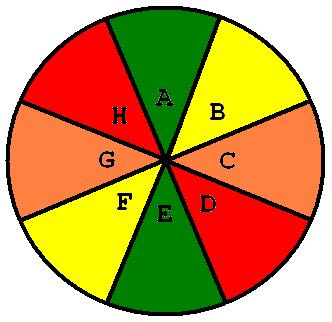
Octant Error Analysis is something I believe in, and I have a lot of personal experience using it to coach competition shooters and to solve many problems shooters have.
The following chart is for right-handed shooters
Reverse instructions for left hand shooting This chart is divided into pie shaped sections numbered alphabetically. This is called Octant error analysis.
A Breaking Wrist Up
B Heeling Anticipating Recoil
C Thumbing
D Tightening Grip while Pulling up on Trigger
E Breaking Wrist Down or Dropping Head
F Jerking or Tightening Fingers
G Trigger Finger not placed Correctly on Trigger
H Pushing: Anticipating Recoil
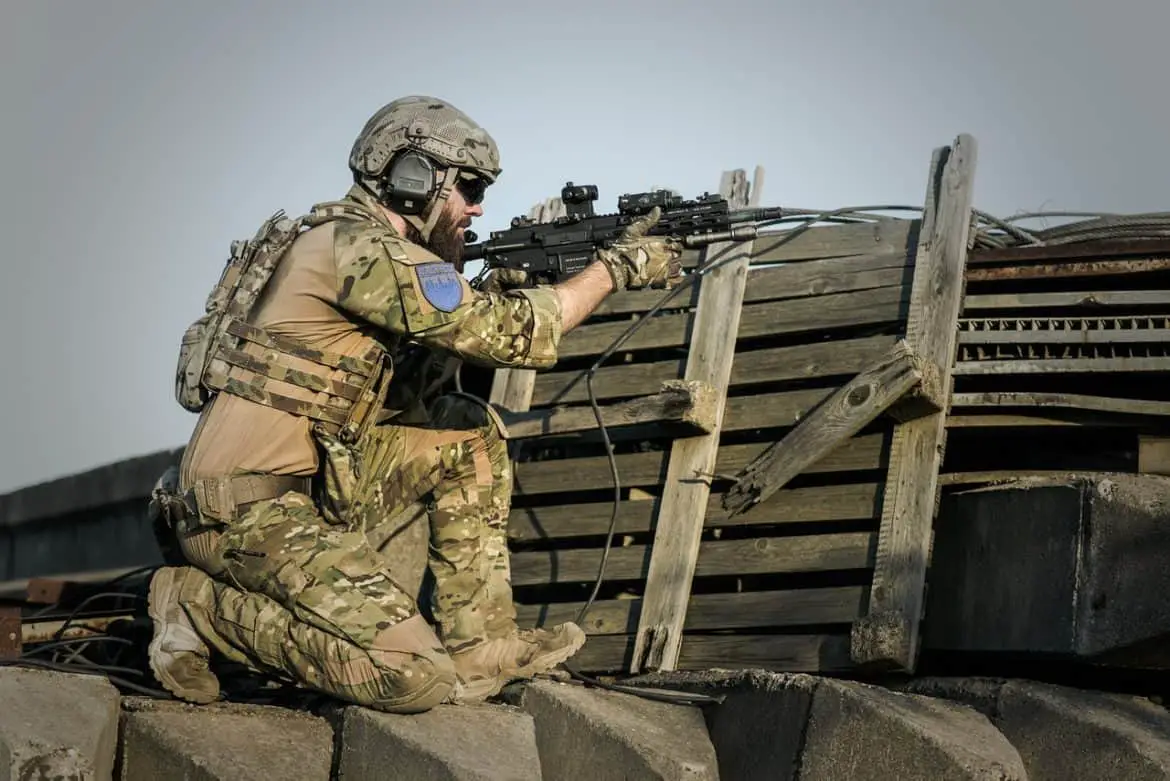
Firing from behind a barricade is an essential part of combat marksmanship. It is a relatively straightforward skill and easily acquired. As all shooting techniques, however, mastery only comes from extensive practice. Contrary to what is seen on movies, most shooting incidents do not happen at high noon on Main Street.
Common sense dictates that when being shot at, the reasonable person will try to find cover from incoming rounds. If withdrawal from the scene is not practical and returning fire is justified, then knowledge of barricade position firing is essential. The most important part of the barricaded position is being behind the barricade. While this seems a simpleminded thing to say, it is amazing how many times while coaching this technique, one sees shooters positioned beside the cover they should be behind. As this is a combat skill, it is important to become as small a target as possible.
A good strategy is to adopt a kneeling position behind the item of cover. Kneeling is a good position because it allows quick adoption from standing and is quick to get up from. As a general rule, the closer your center of balance is to the ground, the more inherently accurate a position is. Therefore the kneeling position is a two-fold better position than standing for return fire, not only for making yourself a smaller target but also for making your shots more likely to hit your aggressor.
The adaptations from a normal two handed shooting position are simple. The shooter does not use the off hand to give support to the weapon by muscle tension as he would in a traditional manner. Instead the off hand is pressed against the covering object. A much-used method to accomplish this is to make a fist with the thumb extended, in a “thumbs up” sign. Press the pad of the thumb and the last knuckle of the support hand into the barricade. Cradle the firing hand and weapon in the support hand. Make sure that no part of the firearm is touching anything other than your flesh. Contact by the weapon with solid objects causes the weapon to bounce and the round to go off target.
The only portions of your body that should be exposed beyond the barricade are your firing hand, and only the amount of your face that is needed to obtain a clear view of the sights, target, and situation. Your arm should be raised enough so that the weapon is brought up to your face, not your face lowered to your sights. It takes practice to enable you to be able to quickly judge the distance needed between your body and cover to allow you to quickly assume the This article is based on the strategies for using a pistol behind a barricade, but long guns can also use this tactic with superficial modifications. Instead of using the knuckles of the support hand against the wall the hand should be extended as if making a “stop” sign. Extend the thumb away from the hand. Press your hand against the cover with your index finger flush against the barricade edge. Your thumb should extend past the cover like a shelf. Rest the forearm of the firearm on this shelf. All other aspects are similar.
It cannot be stressed how important this technique is in a lethal force situation. It is equally important that this technique is practiced so as to allow a seamless transition into this position.


I doubt this cheap adapter will work on anything larger than .22lr, However, I have not tried it.
The adapter was too large to fit on my son’s microscope without adaptation. Instead of doing anything permanent, I simply took painter’s tape and wrapped it around the objective tube. This was to increase its diameter.
I went slow so I could keep the tape in the same area. This ensured a smooth wrap and no wrinkles.
It was not hard, and did not take long. However, it was tedious.
The do make commercial adapters and lenses specially for microscopes. Unfortunately, they cost several hundred dollars and are for specific cameras and microscopes.
I wanted something universal and cheap so I had to be okay with a less elegant solution.
Once I had done his scope, I went back to try it on his rifle.
There are three different adjustments, and none are very fine. It takes a minute to get everything lined up and the screws tightened.
Actually, the installation part is a true PITA. Getting the reticle level and lined up on the scope to reduce parallax and allow the bolt to be thrown takes patience.
It also disallows the use of the actual scope when completed, but this setup allows me to watch over his shoulder and see what he sees. With the phone set to video, it also can be used to go back and look at trigger control and follow through.
For the price I am pretty satisfied with the setup, and if he gets into using it I may buy a better setup – something specific to his rifle scope.
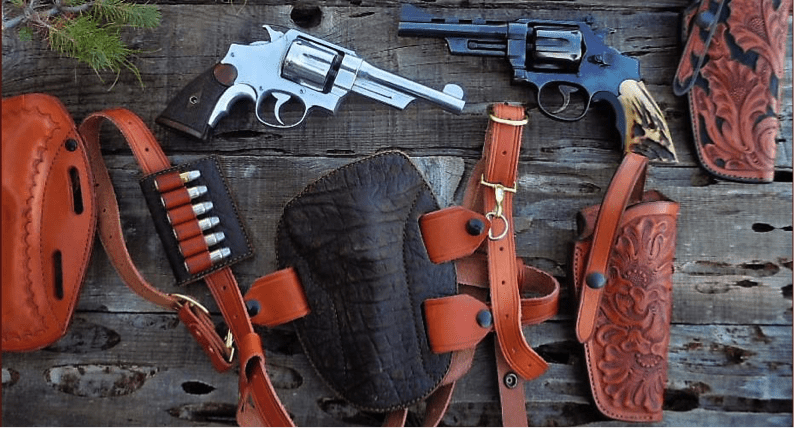

They vary with the body type and the firearms you use. You should always use a holster to prevent any accidental mishaps and protects your gun.
If you are a newbie and don’t know much about the concealed firearms, then this will help you to select the best holster for your firearms.
Selecting holsters for gun narrows down to your personal preferences. You have many options such as size, colors, type of firearms and the position where you wish you carry your gun.
Before you choose a holster, consider how you will be carrying your weapon and the kinds of clothes you will be wearing. It will be a puzzling process for a newbie shooter so select the best holster for them. So, here are a few details that you must go through to find out the best-concealed firearms by considering your related gears and their placement.
Get The Right Holster For Your Gun:
When selecting a holster, it is imperative to make sure it was designed for your specific firearm model. You will get to see a variety of holsters in many colors, styles, and sizes. Selecting the best holster completely depends on your need.
Few questions to keep in mind when selecting a holster for your gun/revolver.
- At what position are you going to carry your holster? Inside or outside your clothes? At your waistband or any other place?
- How many extra firearm magazines are you going to carry?
- What type of material would you like to carry?
The answers to the above questions will identify your need for a holster. This allows you to find the perfect one for your firearm.
The Position of Your Holster:
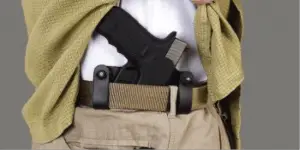 Your holster should not let the gun be visible or seen through your attire and are used to fix your firearm properly where you intend to.
The holster should firmly hold the gun in place during all the movements you make.
Like while you are running, getting in the car, moving up the stairs and many others like this.
You should be fixing your firearm every time, so get the one that gets perfectly fixed on your body.
The Material of Your Holster:
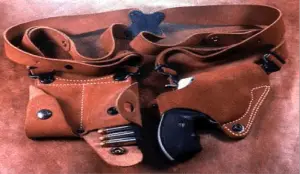 The most common material for the holster is leather which is an excellent choice for the people who carry firearms. It is not only a good material but also gives you comfort in carrying your firearms in a secured manner.
Get Easy Access To The Holster:
The holster must be good enough to be held in a stable position comfortably and securely and to provide you the quick access to your gun in any case of an emergency within a short period. You must be able to access it in compromised positions such as when you are rolling around on the ground or any other.
Choosing holsters can be a frustrating task. It is important to look for one you will be satisfied with, so you do not end up with a drawer filled with holsters. Select the one that fits the best with your need.