Through twitter I was introduced to some really cool guys that run a new Prepper Reality Radio Show.
What is different about these guys is that their hosts specialize in particular topics so instead of having one host with a longer show that covers a lot of topics, they have shorter but more focused shows.
That works for them because they are focusing on teaching topics, so you can listen live or download only what you want to, and don’t have to listen to topics you my not be interested in to hear what you want.
But what really got my attention is that the lead host Maha33, coined the term prepsteading, which is homesteading for preparedness. As soon as I heard the term I focused i, because that is exactly what I am doing, but never thought to label it.
Right now we are working on scheduling a time that I can come on as a guest to talk about firearm issues for preppers.
I look forward to learning more from these guys and I have posted their website addresses below so you can check them out.
Prepper Reality Website: www.anythingprepping.com
New site (under construction): www.prepperreality.com
In the 50’s Time magazine published an article called Ethics at the Shelter Door. This article discussed bomb shelters and the ethics of letting your neighbors in, even if it meant your family would not have enough to survive.
A friar named McHugh wrote a dissenting article. He explained how the Christian thing to do in the event of a nuclear attack would be to get your family inside and lock the door. Even if that excluded your neighbors from safety.
Obviously his opinion controversial. Some even believe the uproar caused the Kennedy administration to move from helping build individual family shelters to building fewer community shelters.
Not too long ago I mentioned that to a friend of mine and he expressed STRONG feelings about that idea.
He was loudly vocal on “What Would Jesus Do”. He could not comprehend how excluding someone from your fallout shelter was Christian.
Here are the assumptions of the article:
There is a well-known threat, the 50’s was the civil defense era. The duck and cover video was played in schools and at the start of movies. Civil Defense (later FEMA) gave out scores of pamphlets on how to build a fallout shelter in your home.
Everyone was told to prepare, not everyone did. What if you choose to build a shelter while your neighbors choose to buy boats, better cars, season tickets, or just go out to eat more than you.
Similar resources, dissimilar values
If you built a bomb shelter you are limited by your resources as to how big it could be. Resources determine how it was stocked. Both determine how long you could stay inside. Once you’re out of air, food, or toilets you have to come outside – even if it’s not safe yet.
Your family is your responsibility. If you let extra people in your shelter you are reducing the safety of the people who you have a duty to provide for.
“Mercy to the guilty is cruelty to the innocent.”- Adam Smith
So it’s pretty easy to see why a man would decide that after all his work and sacrifice that he would be justified in locking the door to his shelter.
If you have ever spent time around me you have heard me say “I love everybody, but I love me (and my family) more”.
I would have tears in my eyes as I did it. Most likely I would never sleep well again. However, if you choose not to prepare and bombs were falling, I would let you and yours die. At least I would do so rather than let my own son suffer for your lack of planning.
The Bible has several verses that deal with preparedness. The Bible is clear on a man’s role as the protector of his home.
God also gave us a set of rules that if we followed them we could have everlasting life with him. Since no man can follow those rules he sent His Son to die for us so that if we have faith we can still go to heaven.
If we choose not to have faith and to disregard what God has done for us then we suffer the consequences.
Anyone who has read the Book of Revelations has the image of Jesus smiting the world for not believing. The world during Tribulation and Apocalypse is very reminiscent of the world in a nuclear holocaust. The Bible is clear in Romans 6 23 “The wages of sin is death”.
God loves us and wants us to follow his word, However, he gave us free will so that our love would be real and not contrived. If we choose to disregard his warnings then he allows us the choice to die alone.
God clearly tells us to work and save and prepare for lean times. He gives strict instructions for men to take care of their families.
If commit a crime and go to jail would you let your kids go hungry to feed mine? No, you would say, “I am sorry about the kids; they have a really crappy dad”. That is not to say I would not give extra to feed your kids. I would not let mine go hungry to do it.
I believe in charity, and have made provisions for it. I try to get others to prepare for future disasters both small scale and catastrophic. But my charity ends at the last box of noodles.
My wife and my son get taken care of first. Anyone that does not think my life and work should go to my family needs to see if they are willing to give their life and their work for mine over theirs.
If not, then they are not just a hypocrite, they are a thief and a looter.
“But if any provide not for his own, and especially for those of his own house, he hath denied the faith, and is worse than an infidel.” Timothy 5:8
Why Prepare? Well, let me take a quick second to tell you why we prepare.
Monday I spent all day out in the woods for work, It was raining, and by the end of the day I was soaked to the bone. I am not complaining mind you, as a bad day in the field is better than a good day in the office, but by the time I got home all I wanted to do was dry off, warm up, and get a nice hot meal and brag to my wife how cool a job I have…
So as I am getting close to home my wife called telling me a tree fell in the yard, she said we still has electricity, but she was worried. On first glance it wasn’t that big of a deal, but as I walked closer I noticed that the tree caught my power line and did a lot of damage.
I was worried about the risk of fire and electrocution, as we had a tree crossing a power-line, into a wire fence, with the meter ripped away from the house and loose wires hanging free, all in the middle of a rain storm
I went into emergency mode, and told the wife to grab a set of clothes for the night and call the electric company as I turned the breaker off and checked the animals.
Luckily, as we have flashlights hanging from several doorknobs, and “go-kits” with a change of clothes medicine and a little emergency cash, emergency mode only lasted a few minutes.
We went up the street to the hotel, splurged on a nice restaurant meal, and the next day I called an electrician and the insurance company.
This was an unexpected problem, and rather minor, but by having a good general preplan, it made our life a lot easier, even though we never thought this particular event would happen.
This leads me to my final point. Plan A is a long, uneventful, and happy life, Plan B is a good rifle, and plenty of beans and bullets. We are not scared, because we are prepared. Prepping makes life easier, and if it doesn’t your doing it wrong.
Maybe you can see how it helps me and my family to have some level of constant preparedness. If it does, maybe you can stop asking the question, Why Prepare?
This guest post is courtesy of Joe Perko, Director of Field Services at Rapid Refile is a recognized leader in document restoration and recovery, vacuum-freeze drying, mold remediation and flood restoration services for businesses and individuals.
Avoid Document Restoration Needs: How to Prepare
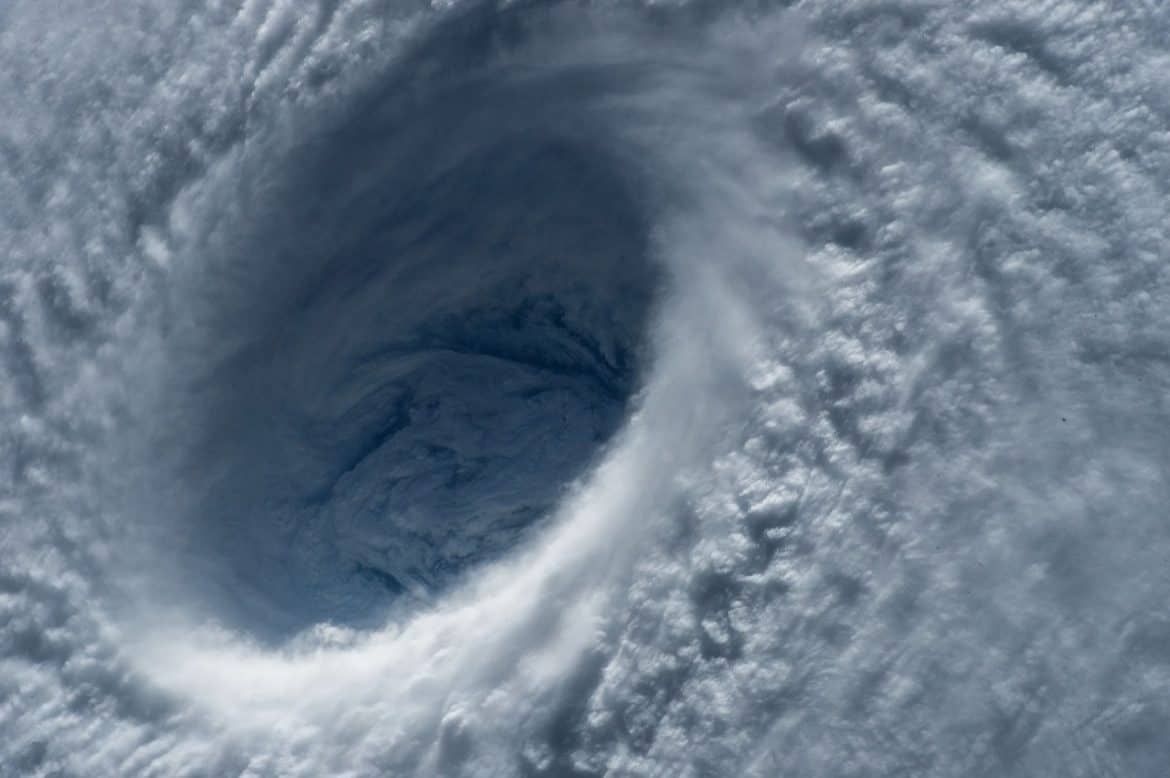
The Atlantic hurricane season runs from June 1 to Nov. 30 and peaks between the months of August and September. About 10 named storms occur each season, with an average of two or three becoming major hurricanes.
How to Prepare for Hurricane Season
In addition to affecting coastlines, hurricanes and tropical storms can affect communities that are hundreds of miles inland. Hurricanes can bring winds exceeding 155 miles per hour, as well as microbursts (straight-line winds that shoot air downward), tornadoes, storm surges, floods and extensive damage. Flying debris and floods are often the most deadly, expensive and destructive results of hurricanes, especially when the storms move slowly through an area. Since it’s difficult to predict what the next hurricane season has in store, being prepared can help you stay safe and recover faster.
Before the hurricane season begins:
Make an emergency plan for your family and/or business. In this plan, include the location of a safe meeting place, important phone numbers, the location of community hurricane shelters and a map of emergency evacuation routes. Additionally, make a plan to recover and get back on your feet after the storm passes.
Prepare an emergency kit. This kit should include a radio, drinking water, food, clothes, blankets, medications, flashlight, pet supplies (if appropriate) and copies of important paperwork.
Know your area. Identify the areas of your community that are most likely to flood to determine the risk to your property.
Review your insurance policy. Sometimes insurance policies don’t cover water damage to homes and buildings. Review your insurance policy with your agent, even if you rent, to make sure you have enough coverage against wind and water damage.
Purchase materials to protect your home. If you don’t have hurricane or storm shutters for your windows, you’ll need to cover them with 5/8-inch marine plywood.
Manicure your landscape. Keep trees and shrubs around your home trimmed so they resist the wind better.
Scan important documents. These documents can include contracts, deeds to buildings, titles for vehicles, photographs, historical pieces, books, medical records and so on. A document restoration service can give you advice about saving important documents.
Restoring Wet Documents
Restoring wet documents after a hurricane or storm can be difficult to do on your own, especially if the weather is humid and there is a loss of power. One of the best ways to recover your wet documents is with the help of a document restoration service that uses vacuum-freeze drying techniques. This method includes the use of a chamber that blast-freezes wet documents and vaporizes the ice using precise pressure and temperature controls to prevent further damage. Vacuum-freeze drying is the ideal, highest-quality method to salvage wet books, photos, specialty or fragile papers and large volumes of books and paper.
It’s a well-known idea in the prepper community that you cannot survive alone. Some folks may want to ignore this and try to get everything they could ever need, but prepping is not just about stuff. No single person can ever be totally self-sufficient – There will always be something you do not have the resources, skill or time to make. Heck even if you could, who will guard you when you sleep, shower, or well…
I think nothing is better preparedness than organizing your community for disaster. It is not easy, and you can’t do it fast, but it is worth every bit of time you spend to do it.
I like to say (which gets me strange or knowing looks depending on who I say it to) – “You cannot shoot everybody”. To me a good plan takes into consideration your neighbors, to get others near you to prep and plan for their own disaster needs. It turns neighbors into allies rather than enemies. It gives you someone to work with and makes a community.
The problem (as I see it) is that while all sorts of government and non-government agencies preach disaster preparedness a similar amount (sometimes under the same czar) or agencies post bulletins telling people to look out for people that prep. If you just tell everyone you’re a prepper you will most likely get invited to less neighborhood cookouts than more.
My attempt to try to organize my community is by going slowly and trying to organize a government sponsored group. That way if it takes off I can slowly build trust in the community, gauge capabilities, and eventually approach the likeminded for a more comprehensive plan.
DHS has a program through Citizen Corps called Community Emergency Response Teams (CERT). A CERT team is a group of volunteers that receive free training in emergency response. They take classes on basic disaster response, light search and rescue, first aid, firefighting, and other needed response activities. The idea is that in the immediate aftermath of a disaster, CERT members grab their gear, meet up, and rapidly assess the needs of the immediate community. They can then report back to the local emergency management agency a list of needs and hazards thereby making response faster and more efficient.
Because it is government sponsored and relatively well known it is a lot less “threatening” to non-preppers. I imagine going door to door talking about bobs, SHTF, WROL, and storing ammo would not be well received in most areas. Going door to door talking about an enhanced neighborhood watch sponsored by FEMA to make sure nobody is left to fend for themselves after a flood or tornado is much less “non pc”.
So what I did was approach the County Emergency Management Director and ask him for support. He told me he thought it was a great idea, but that he has tried it before and did not get a good turnout for the classes.
I then made a flier with the information, what CERT was, that it was free, that it did not take a lot of time, and the benefits. I printed out 100 flyers and over a weekend my wife drove me around to drop them off. I was surprised at the friendliness of my neighbors, I received a very positive response in all but two homes – one was too busy, and the other very haughtily told me she did not think anything could happen, that the government would help if it did, and she did not want to waste her time (I told the wife to remember her – she gets no help if something does happen).
So I passed the fliers out – Part one – hopefully I will get a response. If not, I will continue working in the yard and being a role model for “urban homesteading” and “sustainable living”, if a disaster ever strikes maybe enough will remember my attempt to organize which may give me some credibility toward a response after the fact. Obviously that is not as good as having a local group pre-disaster, but its better than nothing.
I was careful not to mention prepping in my CERT conversations; I am less worried about OPSEC than someone like Mr. Rawles from survivalblog. That is because of my firearm classes who I am and what I am doing is on the internet, but I feel like most who read my articles would be the type to join a CERT team, so I don’t worry about them. However, I did not want to talk about my preps to those that live down the street, as I would not want them to get the idea to take what is mine (Unlike Dilbert, I have no protein bars), if they try, I cannot shoot everybody – They may get me in a rush, but I can turn a head or 30 into canoes…