Category: Fishing | Boating

  • How to Fish With a Crossbow

    How to Fish With a Crossbow

    Buy at Amazon

    So, you want to learn how to fish with a crossbow?

    Maybe you want to impress your hunting buddies with an innovative technique while catching a bunch of fish?

    Well, it’s either that or you want to show off with your skills and new cool gadgets, right?

    All in all, you are reading this article because you are a fisherman or you will be soon. Amateur or professional, whatever your level is, equipment is updating, upgrading and just getting better overall. You should too!

    Luckily for you, I will show you everything you need to know about fishing by using a crossbow as well as about crossbows themselves. All that you need to do is kick back (be careful not to fall asleep as that would leave terrible consequences on the writer – me) and go through the article. You will be ready for crossbow fishing in no time!

    Things you need to know about crossbows

    Surely, you must have already heard about crossbows; at least in movies. However, even if you have never heard about them and have no clue what they are, don’t worry. No big deal! That’s actually the beauty of crossbows – they aren’t that hard to learn, but we will talk more about it later.

    Okay, before we begin one thing must be cleared: You need to pay close attention to every paragraph of the article. Understanding how things work and learning to shoot correctly is one of the key things not just in fishing, but in every aspect of hunting. You need all pieces of the puzzle in order to make the picture, right? Same goes for hunting. You need all the information if you want to execute it successfully.

    What is a crossbow?

    Crossbows are actually quite ancient. They were one of the “go to” weapons in medieval times. Imagine how much they have changed since then. Back in those times, they were effective and strong weapons that people used in wars. Nowadays, they are adapted for hunting purposes. Don’t let that fact make you think that they have lost their power. Actually, they are better than ever.

    Basically, all of the crossbows consist of:

    • Horizontal assembly that looks like a bow
    • The assembly is located on the stock
    • The stock fires arrows / quarrels

    If you are able to handle a gun, not to mention a bow, you are already 90% there when it comes to handling a crossbow. If you never held a gun before (or a bow), you will learn pretty fast as well. Come to think of it, a crossbow may be a good starting point if you want to shoot from rifles.

    How do you shoot a crossbow?

    First things first! You must learn how to cock your crossbow.

    It would be wise to invest in a cocking rope or the crank operating cocking aid. Some of this may even come with the crossbow you bought. If you didn’t receive it, buying a cocking rope would be a pretty good thing to do as it reduces the pulling effort you need to put in when you are getting ready to shoot. This will save you some time, and you know how hunting is – each second counts!

    You can also cock your crossbow without any additional equipment, but that would make things pretty harder.

    Now, after the crossbow is cocked, you must pull the string back and use the same amount of pressure on both sides of the barrel. Also, remember to place your string accordingly. If you don’t align it well (we are talking about inches here), the arrow will most likely miss its target and your prey will escape. We don’t want that to happen, do we?

    Okay, so how do you shoot it now that you know the first step?

    • Load your arrow into the barrel. Make sure that your arrow is firmly in place. Safety is our number one priority!
    • Check for any objects that could deflect your shot or that could end up in front of your crossbow before you shoot.
    • Aim at your target. Your crossbow either has a scope already mounted on it or it has a sight pin.
    • Fire at your target! Simply squeeze the trigger and hold the crossbow tight. The arrow will be launched at your target. Remember to watch over your target at all times. Don’t look elsewhere!

    These steps are essential for your crossbow fishing. As you can see, if you practice these points you will learn how to use the crossbow for hunting all sorts of animals, not just fish.

    You can learn everything about crossbows in greater detail by reading this accurate guide “What Is a Crossbow And How Are Crossbows a Great Hunting Weapon”.

    Okay, now that you know the basic information about the crossbows (keep in mind that you must learn the fundamentals first, not just in hunting with crossbows but in everything in life), let’s move to our specific topic – how do you use them for fishing?

    Crossbow Fishing 1 on 1

    This part of the article will give you tips and ideas regarding crossbow fishing. So, let’s begin.

    I want to let you know right from the start that this type of fishing is way more challenging than your everyday fishing method. Before, you could just sit down comfortably, grab a beer that’s next to you, hold your fishing rod, and wait. That’s it! You would just wait, enjoying the silence (or getting annoyed by it) because you couldn’t risk scaring the fish away.

    Well, this method will bring you the thrill of hunting and will definitely make fishing more interesting. However, you must keep in mind that some general rules are the same even when you are fishing by using a crossbow, because, well, fishing is fishing.

    What are those rules, you may ask?

    1. Silence is still your friend – Fish are easy to be scared. You will be making some noise because you will need to move around and look for the fish. However, making sure that you don’t move as quick and make loud sounds is a MUST.
    2. Keep your eyes wide open – When it comes to regular fishing, you need to watch over your bait in order to know if the fish is hooked, and you need to pick a spot where you want to throw your bait. The rules are same here, only a bit more extreme. You have to pick a spot where you can see through water (that’s another reason why this method a bit more challenging) with ease. So, if your river is full with mud and its water is not transparent enough, you should avoid it.
    3. Be patient – In regular fishing you just had to have patience when it comes to waiting for fish to take the bait. Here, you must have a different “type” of patience. You have to wait for your fish to appear, yes, but you also have to wait for the perfect angle. Don’t forget, your prey is in your hands now. If you miss, you won’t take anything, so wait for the best possible angle to shoot.

    How does fishing with a crossbow look like?

    Assuming you have cover all of the previous points and assuming that you have got the general idea of how your crossbow works, here is how it all looks like.

    You have found a perfect river, the conditions are perfect and you have spotted your fish. Let’s just assume that everything is perfect because this is a learning tutorial. In real life, you will experience many difficulties, but that’s exactly what makes hunting so appealing and thrilling.

    Okay, now you are going inside the water, carefully, not making any noise (because this is a perfect scenario). While you are approaching your fish, you are eyeballing it nonstop. So, you have your crossbow aimed at the fish you want to get. Good. Now, the “hard” part.

    If you didn’t switch for arrows that are specifically made for fishing, you might as well call it a day. If you have the right gear equipped (and we will address that as well, later in the article), you are ready to shoot. You see, your arrows will be attached by your fishing line to your reel. You need to do this in order to retreat the fish.

    Your gear is set, you have the right position, you are ready, now all you need to do is – SHOOT!

    This is the part where it gets tricky. You have raised the alarm for other fish. The arrow is fast and will penetrate the water fast, but nearby fish will notice it and run away. It might also happen that your fish doesn’t get hooked on right away. You might just stun it for a bit. In that scenario, you must remain calm and remember to keep your eyes open. Your fish is stunned now, which means you will spot it easier.

    After you have got a clear shot, shoot again. Now that your fish is hooked, simply use your reel and pull the fish out of the water. You have got your first fish using a crossbow, congratulations!

    That scenario is basically how fishing by using a crossbow should look.

    I mentioned that you need the right gear for the job, right? Here is what you need.

    You will find useful tips regarding crossbows here.

    Crossbows for fishing

    Regular crossbows might not be as suitable for fishing as you would think. You might adjust your crossbow and still use it and be effective, but why bother when you can get a crossbow specifically designed for fishing?

    It is pretty easy to spot a crossbow of that kind. Like I have mentioned earlier, it has a reel and its arrows are attached to the fishing line. However, your job is not done as soon as you spot one of them. Oh no!

    You must keep in mind what kind of fish you want to catch. Is it small? Is it big? Is it huge?

    A regular crossbow won’t be suitable for a big fish, such as the grass carp. With that being said, you will need a stronger crossbow for bigger fish.

    If you have never held a crossbow designed for fishing before, keep in mind that it is quite heavier than your crossbows for other types of hunting. The arrows that these crossbows are firing are heavier as well, as they need to penetrate water.

    While we are talking about gear, we have to address the specialized glass that can help you if you are fishing in murky waters. This can come quite in handy if you don’t pick a good river like we advised.

    Conclusions

    And that brings us to the ending of this article on how to fish with a crossbow. I hope you have enjoyed and haven’t fallen asleep at any part of it! If you have followed and learned the steps that this article showed you, I am sure that you will master your crossbow and start fishing in no time!

    All in all, crossbows are pretty beneficial when it comes to hunting. As a matter of fact, they are even more beneficial than guns. Crossbows aren’t as loud as guns, which means you will be stealthier, and we all know that stealth is a key factor in hunting. Also, crossbows are considered as a part of archery in most states. That means that you could hunt longer than the “rifle guy”.

    On top of that, crossbows are quite easy to learn. Keep in mind that practice makes perfect and that you will be having a hard time at first. Later, however, it will be a whole different ball game. Your fishing adventures will turn by 360 degrees and you will be getting your prey like it is nothing.


  • Saltwater vs.  Freshwater Fishing: Which Suits You?

    Saltwater vs. Freshwater Fishing: Which Suits You?

    Saltwater vs. Freshwater Fishing: Which Suits You?
    Buy at Amazon

    Which is better, saltwater fishing or freshwater fishing? A lot of fishermen are saying their own version of which is better for them. And they all have their good points one way from the other.
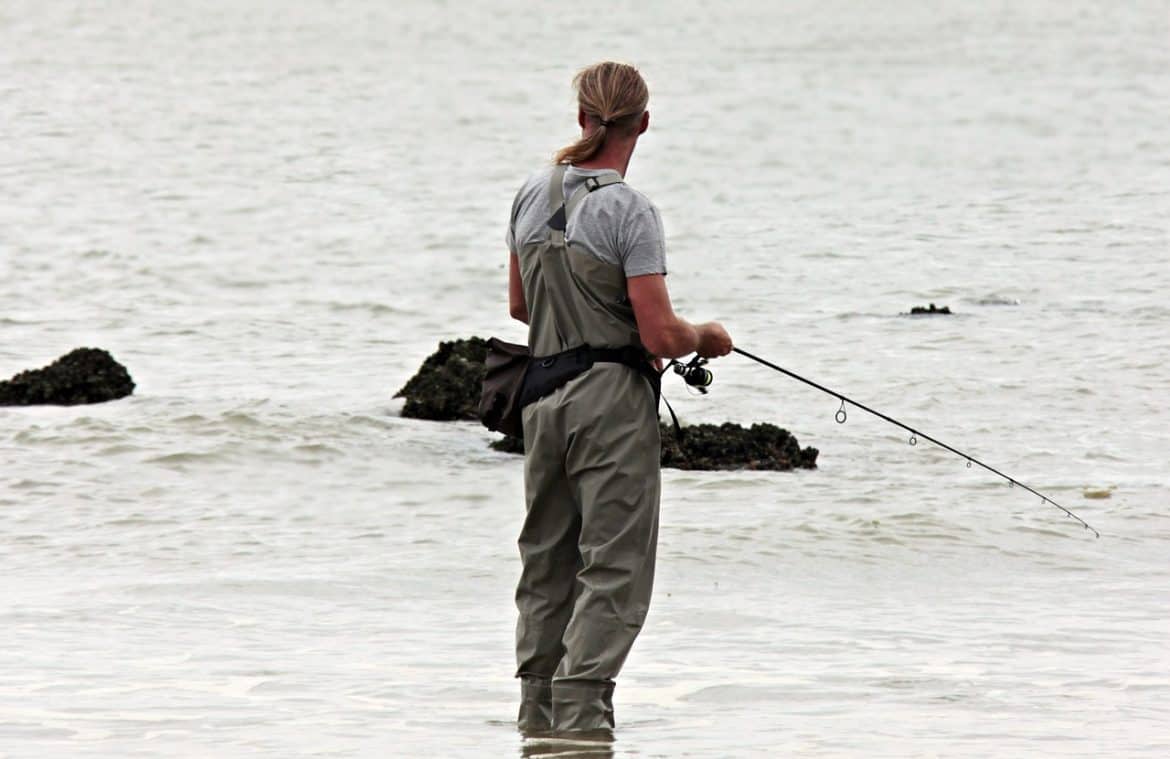
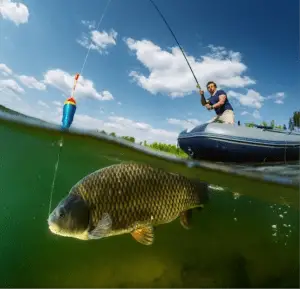
    But saltwater vs. freshwater fishing is not really a thing. That is because each person or fisherman can benefit from any of them with a specific purpose.

    In any case, for the purpose of comparison, this is an article to humor your queries. Here is a comparison about saltwater vs. freshwater fishing and which one suits you.

    The Difference Between Saltwater and Freshwater

    Before heading straight to the comparison, we must first learn to identify the difference between the types of bodies of water. The first thing is saltwater. The saltwater is basically the ocean and the sea. Those bodies of water that are high in salinity or in layman’s term “salty” are obviously the saltwater types.
    The freshwater types are those that we call lakes, stream, rivers, ponds, and other wetlands with salinity as low as 0.05%. Naturally, freshwater areas are not as vast as saltwater areas and so is the amount of creatures in them.

    Saltwater Fishing

    As vast as the world can be, saltwater makes up the 96.5% of the Earth. Can you imagine the number of resources that people and other creatures can benefit from saltwater?
    If you are to use that statistic in terms of the amount of what you can catch between those two, naturally, saltwater will win. But there is no such single person that can cover the whole of this planet just by fishing let alone angling. That would certainly be ridiculous.

    But given the number of areas to which you can go for fishing, how many creatures can you actually catch from saltwater? Honestly, thousands to hundreds of thousands of species can be your prospect. Here are some of the common possible saltwater creatures that you can catch from saltwater:

    • Bonefish
    • Barracuda
    • Bluefish
    • Ballyhoo
    • Bonito
    • Croaker
    • Drum
    • Flying fish
    • Grouper
    • Grunt
    • Herring
    • Hogfish
    • Amberjack
    • Jack
    • Mackerel
    • Marlin
    • Mojarra
    • Mullet
    • Needlefish
    • Perch
    • Pigfish
    • Pilchards
    • Pinfish
    • Pompano
    • Porgy
    • Sailfish
    • Sardine
    • Sea Bass
    • Seatrout
    • Snapper
    • Snook
    • Spadefish
    • Spearfish
    • Spot
    • Stingray
    • Swordfish
    • Tarpon
    • Threadfin
    • Tripletail
    • Tuna

    Saltwater Fish Are Bigger Than Freshwater Fish

    The list can go on and on but we will stick to those for now. As you can see, it can be endless. And each of those fish has other subspecies.
    The most beneficial about saltwater fishing is that the fish caught from there are a lot bigger than freshwater. It is not to say that freshwater fish cannot get bigger. It is just that it is more common with saltwater fishes to grow more than the other. And it is common for saltwater fish to have high in omega-3 fatty acid which is known to be good for the heart.

    Another aspect about saltwater fishing is the part where a lot of big fish caught from these parts often fight back. And since it is common to catch huge fish in this area, expect a lot of fighting every time a fish bites into your bait. So if you are the adventurous type who likes more challenges then saltwater fishing could be good for you.

    The bad thing about saltwater fishing is that due to its salinity volume, equipment such as metallic ones can easily get deteriorated. Boats get ruined much faster and so you will have to invest in a lot of repairs, renew, and replace.

    It should worth noting that the chances of risk and danger in saltwater fishing are higher than freshwater. Not to mention the tides that occur with storms passing through. But that could easily be avoided if you just look out for news about the weather.

    I don’t have much expoerience saltwater fishing except for my time at Camp Lejeune.  I kept getting stranded out on the intercostal waterway because I bought cheap equipment. If you want good stuff Check Global Marine Top Pick Trolling Motor For Saltwater use if you don’t want to paddle back to shore.

    Freshwater Fishing

    For those who love to go fishing and enjoy more about the nature such as the trees and see some wild land animals, freshwater fishing should fit your portfolio.
    Did you know that freshwater is only 2.50% of water all over the globe. But that percentage includes the frozen glacier, ice, snow, and fresh groundwater. Only 0.01% consists of surface water in lakes, swamps, and rivers. That is how small freshwater is around the world. So from that statistic alone freshwater gets defeated by unanimous decision.
    Despite the size of freshwater, there are plenty of fish species that can be found and caught here. Here are some common fish that you can find in these bodies of water:

    • Bluegills
    • Catfish
    • Crappie
    • Largemouth bass
    • Smallmouth bass
    • Freshwater drum
    • Trout
    • Walleye
    • White bass
    • Carp
    • Burbot
    • Giant Gourami
    • Kampango
    • Kapenta
    • Tilapia
    • Longear Sunfish
    • Tahoe sucker
    • Snakehead
    • Sardinella Tawilis
    • Redfish

    The same goes for freshwater fishes. Each fish has its own different subspecies so they are not limited to one type or appearance and even size.
    Although it is not as common to find big fish on this side of the water, there is still some challenge to be had. One is if ever you caught a really big one, it is considered as a jackpot. The memory and the picture are worth hanging on your wall. If you are onto those kinds of stuff, that is.

    Another good thing about freshwater fishing is with expenses. Unlike saltwater, your boat gets to last longer and with lesser maintenance to boot with. And since you can go fishing without always going out in the middle of the deeper areas of the water, you will not always have to spend more on fuel. So you can enjoy more without spending as much. All you need to do is to maintain your fishing equipment such as your rod, baits, and other stuff related to it.

    The bad thing about freshwater fishing is the part where alligators can get a bite off of you. And more instances of encountering some wild and dangerous animal could occur. There is also some chance that a snake, a wild bear, a wolf, or other animals that can bite you along the way. Not to mention the leeches.

    Also, since there are only a number of species in a freshwater lake or river, you could probably just catch common fish such as trout, bass, or catfish. With saltwater, you could end up with an octopus or a shark. There are even reports of freakish squids and other normally small-sized creatures. Otherwise, freshwater is likely best for those who just prefer simpler fishing activities.

    Technically, you could use both natural bait and artificial bait on both bodies of water. There is no definite restriction regarding those things. Just as long as you can catch a fish with what you have, who are we to question which is better or not. It is your expertise that matters and not the bait you put on the end of your line.
    I am not saying that freshwater fishing is easier than saltwater fishing. It is just that if you are looking for a comparison, size and abundance could easily topple the competition. But if you are looking for adventure, it does not matter whether you are into any of those types of fishing. Just as long as you are enjoying yourself and it is what you love doing then your choice is the best way to go fishing. Nothing more and nothing less.

  • 5 Main Health Benefits of Fishing

    5 Main Health Benefits of Fishing

    Health Benefits of Fishing Fishing is one of the all-time favorite hobbies all over the world. It is a favored outdoor activity by many people of all ages: children, adolescents, granny, all of them like fishing. Regarded oftentimes as a sluggish hobby, but the idea that many people engaged in fishing is beguiling.
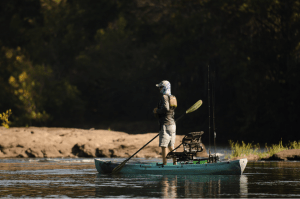
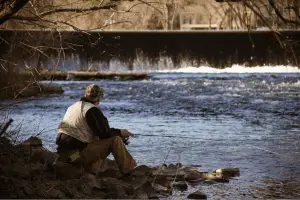
    Aside from being popular and accessible, it is also preferred because of the challenge and satisfaction therein, especially how many fish are obtained. Although fishing is a bit demanding hobby, you can actually get a lot of benefits not only recreation but most importantly is one’s well-being.

    When you give a man a fish, you have fed him for a day. But when you teach a man how to fish, then he will be healthy for life! Read the 5 main health benefits of fishing below to learn why this all-time favorite hobby is also a great way to improve individual’s health.


    Fishing keeps you physically fit.

    Health Benefits of Fishing

    As mentioned, fishing is a bit demanding plus a great way to enjoy the outdoors. Yes, fishing will give you fairly a heavy physical activity such as casting your rod, pulling the reel, lifting the fish, you might consider paddling, and other physical activities that you will keep you physically fit. Through these basic ways to catch a fish, it can surely burn calories, strengthen muscle tone and develop overall fitness.

    Choosing a fishing spot is important to keep you physically fit. A long trek from your car can obviously boost your lower body, and setting up the equipment, casting off and winding in all would lead to physical exertion.  Also, there are a lot of fishing spots that require paddling and hiking which have been proven to improve cardiovascular functions. You can improve your dexterity and reflexes since your fingers and forearms are generally exercised. To simply put, you can make your fishing excursion physically engaging as you want.

    Fishing soothes your mind.

    Health Benefits of Fishing

    Whether you fish in the freshwater or saltwater, both can actually make your mind calm and improve one’s mental state. Being out in nature, constantly face-to-face with your computer, I bet your brain wants to relax and fishing can help you clear your mind. When you are bored or exhausted, don’t doubt to go fishing, it will help your mind refreshed. Fishing has numbers of health benefits for your mind. How could fishing help you to have a healthy mind?

    Fishing does not require mental abilities. It mainly relies on your skills. This is the reason why fishing impacts the mind a lot. Spending long hours in nature is not exhausting, in fact, it can help your mind unwind, loosen up from pressure and decrease anxiety. In short, fishing improves one’s level of concentration, peacefulness, and brainpower.

    Fishing bestows patience.

    Health Benefits of Fishing

    It’s true, fishing has a great deal of patience. If you constantly practice, your patience sharpens and that’s a rewarding fishing offers you. You may have to spend hours or up until you get desperate before a fish will grab the bait. In this kind of struggle, being impatient will aggravate the condition and you will eventually find it difficult and frustrating to get fish.

    Impatience causes a person to develop stress, weakening of immune system and raising of blood pressure. Patience, meanwhile, can soothe you and make you more content, and fishing impacts on learning patience which greatly benefits health. Persistence in fishing makes you more a patient person, accepting of loss but unwilling to quit. Ergo, fishing puts your patience to practice in this world of over-stimulation and instant gratification.

    Fishing teaches Self-Reliance.

    Health Benefits of Fishing

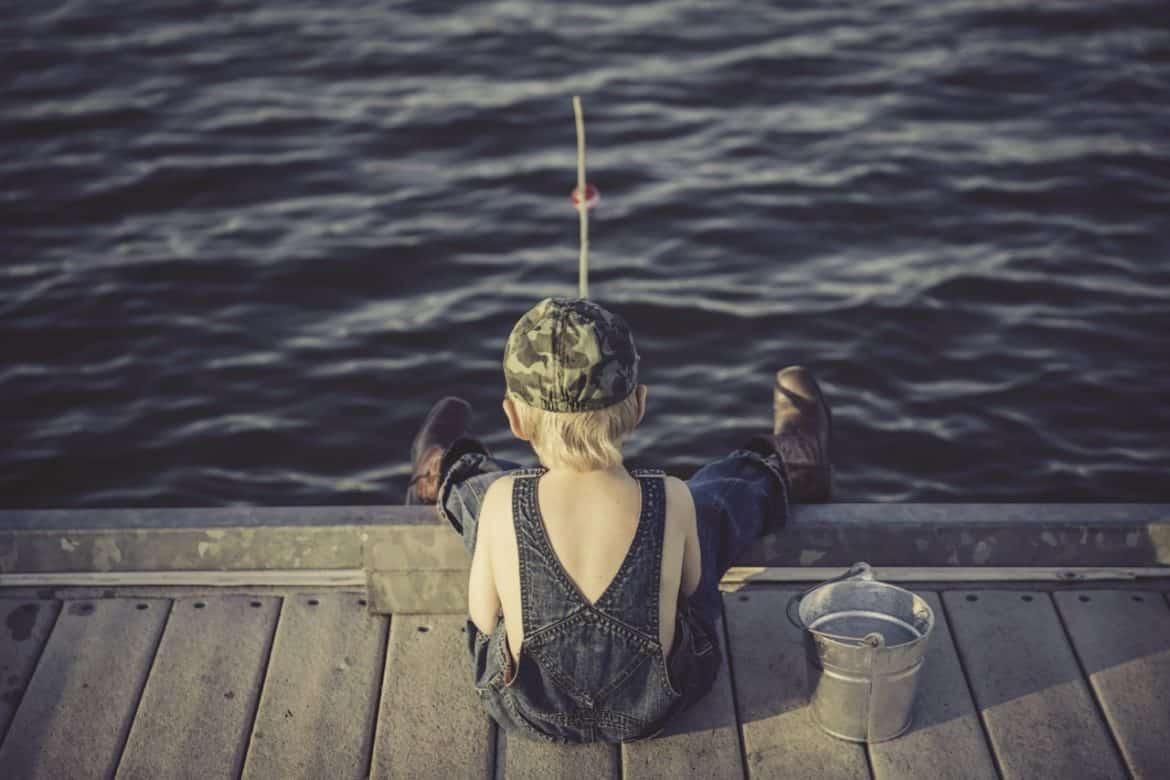
    It is important to learn how to perform on your own and fishing teaches children to keep trying when they don’t succeed. That is how to be healthy in young minds’ social disposition. Children who are fond of fishing, shaped their confidence as they build their skills. This helps to lead to a greater work ethic which is necessary to be successful in their studies and future career.

    As children build their skills in fishing, they become more confident which leads to greater independence. Once children understand the safety measures in fishing, they can engage with little to no help from their parents or guardians. Fishing is all about personal goals, and attaining those goals is a sure way to improve self-esteem.

    Fishing promotes fun and bonding.


    Health Benefits of Fishing

    Fishing brings people together to have fun, bond and learn. Fishing as a hobby serves recreation and camaraderie between families, friends and even the community. Spending time with your family promotes feelings of security and well-being, the sense of belongingness and oneness.

    Simply having fun, enjoying yourself is surely a huge health benefit. Your emotions towards your family, peers/colleagues, people in the community have greatly impacted your social being, thus feeling of happiness is vital and taking time out of life and spend it in fishing can wonderfully work in every area of your life.

    Because of the memories, you shared together while preparing to get a fish, getting the fish will forever be remembered. These memories will pass through generations, your child’s children, perhaps your grandchildren’s grandchildren. Fishing is very great experience, isn’t it?

    In A Nutshell

    Health Benefits of Fishing

    Fishing is an activity that upkeeps wellness. Being active like doing outdoors helps to make you feel better and increases a healthier lifestyle. There is no need to convince the millions of people and fishing enthusiasts, because fishing definitely promotes clear thinking, rebuild personal reserves like interacting with nature, enhance social interaction, provides the active learning opportunities and will advance your strength and mobility. Therefore, fishing is extremely good for your health. I hope these 5 health benefits of fishing are helpful to you.


    About the Author

    Karen Dean is the author for FishingSun.com.  She has been working and passionate with writing for over three years. She spends most of her off-work time reading books, practicing dance, and catching up with the new TV shows she’s been missing.
    You can reach her at karen (at) fishingsun (dot) com

    www.fishingsun.com

    Facebook page: https://m.facebook.com/Fishing-Sun-605375712966582/


  • What is the Best time to go Fishing?

    What is the Best time to go Fishing?

    What is the Best time to go Fishing?
    Buy at Amazon

    Fishing is something that I don’t really like to do, but only because I am not good at it.  Few things excite me more than having a fish on my line, but few things bore me more than waiting for that fish.
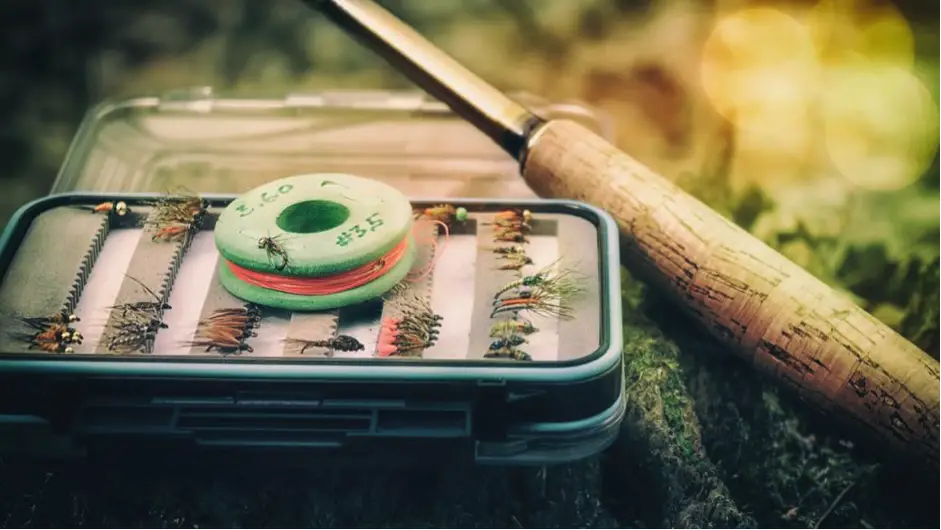
    My problems are because I am pretty ignorant of the skills needed to fish, so when I find articles on how to fish I read them eagerly.

    Here is a good article on What is the best time to go fishing.

    Additionally, I have some articles on this site that will help you with your ability to fish.

    As I write on this site, and learn new things, I keep getting better at fishing- It helps that my son has a lifetime sportsman license, and he always talking about fishing.

    When I started this website, I thought if I wanted to catch big fish I should use large hooks, and ended up never catching anything.  When I started using smaller hooks, better techniques, and – like the link explains – knowing when to fish, I started catching more and more fish.

  • How to Make Tenkara Fishing Rod

    How to Make Tenkara Fishing Rod

    How to Make Tenkara Fishing Rod
    Buy at Amazon

    With the tenkara being the latest trend in fly fishing, I have found many anglers longing to get to know every single detail about it.

    I am lucky to have learnt about it earlier and perfected my skill, thanks to my father.

    Before I proceed, I will let you know what a tenkara is. Tenkara is a trend in fly fishing, used in fresh water fishing, quite common in Japan. It involves fishing using a telescopic reel which has no reel.

    The tenkara method boasts a more simplistic approach, where only a rod, a fishing line and fly, are used.

    Believe me it is very easy. The biggest challenge you will encounter is that you will have to really spend a lot of money to get started, but the good news is that I have quite an appealing secret that I am willing to share with many anglers freely.

    Just read on, and you will get to learn and love my secret.

    How to Make a Cheaper Tenkara

    Careful anglers, here is my secret. I realized that to shop for the right equipment for tenkara, I needed quite some dollars, which I truly didn’t have. My budget for fishing was way too low to give me the luxury of acquiring a tenkara. I desperately needed to find a way out, and that was when I decided to purchase a telescoping rod which could perform as a tenkara. Research came up with simpler and cheaper methods which would give me maximum results at quite a cheap price. I modified a telescoping rod which became a perfect substitute for the tenkara rod which costs about $30.

    Step by step procedure on how to make a tenkara fishing rod

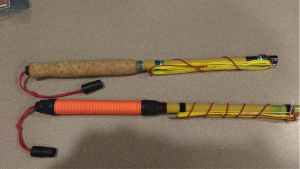
    Make a wine cork grip

    Materials

    • Wine corks
    • Something to make a winding check, brass grommet is preferable
    • A piece of thread used to make a winding at the front part of the grip

    Procedure

    1. Determine the length of your grip by measuring the diameter of the rod at the top and bottom area where your grip will be. This will help you to determine the size of the hole you should make in the corks.
    2. You can now bore holes in the corks. To find out if you got the diameter right, fit the first bored cork on the rod before making holes on the rest.
    3. Remove the beveled ends of the corks. You can choose to sand the ends off.
    4. Stick the corks and the blanks together
    5. You can choose whether to make a winding check or not, having it decorated is also optional.

    Extra steps on decorating winding’s grip with a paracord. You can follow this video:


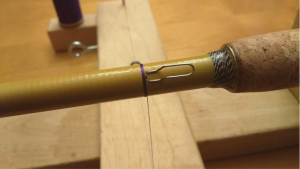
    Add a line keeper

    Step by Step on How to Make Tenkara Fishing RodMaterials

    • Stainless steel wire
    • Polyester embroidery thread. Should be of high quality
    • Epoxy
    • Pair of pliers

    Procedure

    • Shape your line keepers. You can use pliers to bend the wire to the shape of your liking. Just ensure that the ends will be tapered.
    • Fix the keepers to the rod, temporarily though.
    • Wrap your keepers onto the rod. At this point, you use the high-quality embroidery thread.
    • With epoxy, cover the keepers and the rod so that they can remain permanent. This process requires a lot of practice.

    At this point, you are done. You will have done quite some meaningful work at a fair price.

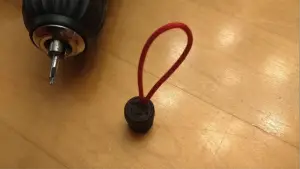
    Butt Cap Keeper Loop or Rod Plug for Looping the Connector.

    Step by Step on How to Make Tenkara Fishing RodIn making the keeper, simply enlarge the pre-existing hole in the butt cap and then add a hole at the center of the rod plug.

    You should make sure that you drill the holes as large as required for accommodating the paracord loops having a smaller diameter.

    After installing the loops, go ahead and attach the butt cap loop to the rod plug loop by simply using a loop to loop connection.


    Making the Handy Carrying Case.

    Procedure

    1. Use the Tenkara Rod to measure and mark the PVC before cutting it to the required length.
    2. Find a way of pressing the end cap onto the PVC by simply gluing it or pushing it hard into the PVC
    3. Gently slid the tenkara rod into the PVC before adding the top. It is advisable to mark the top so that it can be opened from the same end whenever you want to do so.

    End product, the tenkara fishing rod is now ready

    Via: Instructables.

    Having done all this, you will have your tenkara fishing rod at a very cheap price.

    It could be termed as free since you might end up not buying any of the materials.

    You will also have made it suit your specifications, which means that it will eventually be quite attractive.

    GO FISHING!!!

    I hope that this article has been both enjoyable and educative. You can now make your own $10 tenkara fishing rod rather than buying the expensive one which costs approximately $30.

    You will have had fun from the activity of assembling the requirements to create one quite useful fishing equipment. Enjoy your fly fishing spree.

    Make any comments which you may find to be important and let me know of anything that I could have left out.

    Seek clarification on anything that could be an issue to you. I will be glad to assist where I can.