
Homemade Taco Shells

52 Unique Techniques for Stocking Food for Prepper
Buy at Amazon

Tacos are a very easy meal to make, and they can be pretty inexpensive also. In today’s article we will show how easy it is to make your own Homemade Taco Shells.

In the video below we use store bought corn tortillas, but we have done articles in the past about how to make your own tortillas for an even cheaper meal.

You can also buy all sorts of tools to make this easier, the Norpro press we link to at the bottom of this article is very useful, but all you really need is a set of metal tongs or a metal spatula.

Simply use high smoke point oil, get it hot, and then lay a tortilla into the hot oil.

Next, press down in the center of the tortilla with your tongs or spatula; the sides will float, causing the tortilla to take on the familiar taco shell shape.

If your tortillas do not become crisp, then most likely you are not using hot enough oil, and/or not cooking long enough.

Remove, let drain, and then enjoy truly fresh tacos. This is a really fun project to do, and it makes for a special taco night at home.
PRN Episode #21 Interview Rob Roy

PRN Episode #21 Interview Rob Roy

PRN Episode #21 Interview Rob Roy
Buy at Amazon

Lately we have been doing some shows that blend sustainable living and mortgage free DIY home building with a view toward preparedness and disaster resilience.

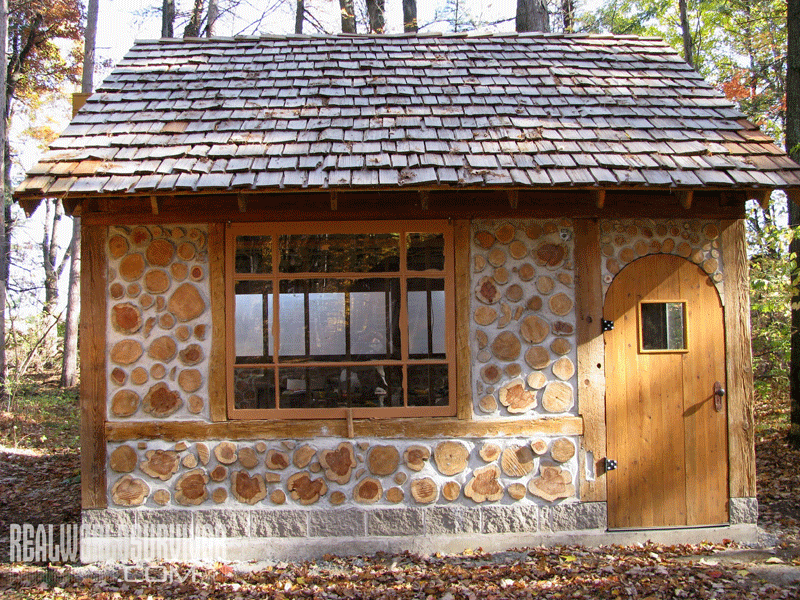
In today’s show David interviews one of the leading innovators in Cordwood masonry, Mr Rob Roy.

Rob Roy runs the Earthwood Building School at www.cordwoodmasonry.com. Here is an explanation on Cordwood from his website.

“Cordwood masonry is an old building technique whereby walls are constructed of short logs (called “log-ends”) laid up widthwise in the wall within a special mortar matrix. The wall derives excellent insulation and thermal mass characteristics from insulation sandwiched between the inner and outer mortar joints. Cordwood houses are low in cost, use indigenous materials, and are easy and fun to build.”

I think cordwood masonry is beautiful, as well as a very interesting method of construction.  Combined with timber framing, I think it would make a wonderful cabin, as well as being something an owner could build mortgage free.

Rob Roy’s Cordwood book is a great book to own and I love talking with him

The show is scheduled for Monday at 10pm central time at this link.

If you cannot listen on Monday, you can always download the podcast for listening at your own leisure.

How to Make a DIY Cold Pack

How to Make a DIY Cold Pack

DIY Cold Pack
Buy at Amazon

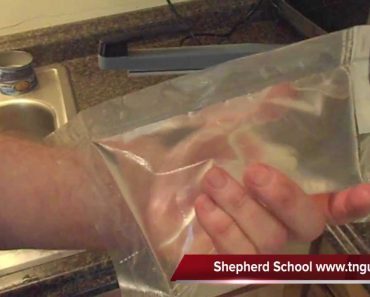
Ice packs are a very useful item to keep around.  Today’s article will show you how to make your DIY cold pack of your own using a foodsaver bag and some simple household ingredients.

If you don’t have a vacuum sealer, then you can use zippered freezer bags, but it will be more prone to leaking.

Making a DIY Cold Pack

Besides bags, you will need water, alcohol, and food coloring.

  • Mix 2 parts water by volume with one part alcohol (rubbing or drinking)
  • Add a couple drops of food coloring to the alcohol mix so you can tell its not water.
  • Add the colored liquid to your bag, and then close it.

The alcohol will keep the water from completely freezing, but It will actually be colder than ice.

This works great, and the coloring lets you know when you have a leak.

This works well, but I still like my store-bought ice pack.  I don’t use this DIY cold pack often, but knowing how to do it lets me make one whenever I need, which is quite useful.

As I said in the start of this article, if you don’t have to use a sealer bag, doubled zip locks work well also.  They just are a little more prone to leak.  However, I figure if you are using a cold pack, you are probably sitting still somewhere…

Gear Review: Survival Still Grill

Gear Review: Survival Still Grill
Buy at Amazon

One of the things I love about the survival still is how versatile it is. In today’s video we use it on a charcoal grill and tried to test how much we could get, unfortunately it began raining and messed up our semi-almost scientific test.

I know a lot of people complain about the Survival Still – some don’t like the inventor, others say that the design is too simple to justify the cost, and some just don’t want to spend close to $300 for a water still.

I have no opinion of the inventor’s personality as I only met him once and he seemed okay to me but I do agree that it is a lot of money, and that the design is simple.

I do not think that those two things make it a rip-off – first I look at the value – what the device provides – which is a virtually inexhaustible method of making pure drinking water from almost any type of contaminated water.

That can be priceless as no other system has the potential to clean up radiological, chemical and biologically polluted waters.  It costs less than a Glock which I also use to protect my family, so to me what it does is worth the money.

Second – a simple design is to be valued rather than diminished.  It takes time, effort, and understanding to design something so simple.  I am not saying I could not have designed the survival still, but I didn’t and I am not envious of the man that did.  To my mind, he deserves to charge what he wants to for the things he creates.

How to Make a Bottle Cap Fishing Lure

How to Make a Bottle Cap Fishing Lure


Camping: Bottle Cap Fishing Lure
Buy at Amazon

I saw this brilliant idea on YouTube and had to share it. A very smart guy figured out how to make a Bottle Cap Fishing Lure out of a discarded beer bottle caps.

He even made a business of recycling buckets of beer caps harvested from local bars until he was sued by beer manufacturers for use of their copy-written logos.

I would link to the website, but it is no longer used as the bottle cap lure guy – it looks like someone else bought it, which is a shame, as the Bottle Cap Fishing Lure is a really cool idea.

All you need is:

  • Beer/Soda bottle top
  • Split rings
  • BB’s or small split shot
  • Treble hook.
  • Tools are simple also:
  • Hammer and small nail/Drill and small bit
  • Pliers

Instructions:

  • Using your fingers, press the sides of the cap until it buckles
  • Before pushing the two ends together, place a couple BB’s or shot into the cavity, so that they can rattle.
  • Carefully drill or punch a hole at either end of the folded cap. It may help to slightly flatten the ends with your pliers.
  • Thread a split ring into each hole
  • Thread a Treble hook into one of the split rings
  • Go fishing…

I would love to post pictures of any catch you have gotten using this piece of DIY fishing tackle.