Outdoor Survival Skills

What is the Best time to go Fishing?
Buy at Amazon

Many people might want to know what exact situation dictates or demands outdoor survival skills. Well, to my opinion, I think that first and foremost the way to approach death is asking what the definition of emergency is. Knowing that an emergency is an unplanned event that requires immediate action. However, it will be safe to say that an outdoor survival situation will come under the heading of an event that is unplanned that calls for an immediate action and skills.

Also, the preparation beforehand with training and gear are the things that will make the situation turn out for better or for the worst to the participants.  I think we live in a society that is so busy and we have all being there. You have weekend plans with your family, friends and loved ones to go hiking or camping. Life it’s been busy, and something comes up- its Friday night, and you are going to leave the next day morning for outdoors, and then you try to rush up and get your stuff and get going. Always remember that the woods and mountains do not move and they will always be there whenever you wish to visit. Do not go out there unprepared. Going to such places as wilderness, there is a risk, and the only safe guard against it is proper prior preparation which can prevent poor performance.

One thing that anyone who is going outdoors: in the woods or under the water and so on should know is that he or she is going out in the Wild’s world. The person is meant to see and encounter things that are uncommon: wild animals, other dangerous insects, and plants that he or she do not see out in the cities or at home. So, the person always has to know that and treat it with a little beat of respect.

Follow the rules below if you are planning for an outdoor tour for the first time and uncertain of what the situation out there might be.

  1. Do not go unprepared. Try to never go unprepared visiting the outdoors. Do your due diligence before venturing the wild. Presently, we live in a world of technologies, and we can equip ourselves with the necessary technology. For example Google earth and TerraServer. So before going backpacking, mountain climbing, bicycling, fishing, hunting, deep diving, hiking, camping, and any other place you wish to go, you can get online and get the area view of the particular field you want to visit.
  2. Do not rely on someone else. Imagine if you are going on a trip with someone that is more experienced in the field or someone has invited you, it’s always easy to have that kind of vacation mindset – what goes along for a ride? Grab the water bottle and hit the trail. But if the unexpected does happen, it is essential that you are able to take the situation into your own hands and get on and track your way out of the wild. So do your homework before venturing into the wild.
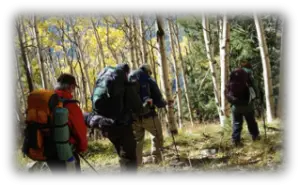
  3. Relying on technology. The modern technology is great, but it can also get us killed. There is a GPS on almost every phone now and different kinds of electronics that if in the wild, you can look through them and they take you back to the point from where you came in. Think also about it the other way: what if the batteries drop dead or the electronics drop in the water? That can tremendously hurt, and if care is not taken, some people in such situation might not make it out. So try to study a paper map and have it with you if possible.

  4. Learn how to use a compass and also learn how to read a map. It is important to go to a local community college, or a local hiking or backpacking clubs or organization and gets a little seminar or workshop just to get a basic understanding of how to use the gadgets can be a life saver for anyone.
  5. This last one is known as the do or die plan. This is having looked on google earth map, having had a framework. You need to determine before you go out there that, if you go west, there is a highway, if you go south, there is a river, and if you go downstream, there is always a fishing camp. You have to get your mind prepared before you leave home that if everything else fails, that you have a direction and a bearing that is going to walk you out of danger to safety. And you are sure you know how to find that bearing after learning how to use your map and compass. Sometimes the compass can break. So it is vital to know how to read from where the sun rises and where it sets. You have to learn how to read shadows. All of these things are part of what will help anyone to survive a do or die situation outdoors.

Conclusion:

Before taking part in an outdoor activity such as hunting, camping, hiking, underwater diving and even bicycling, you have to make sure that you have the proper gears and that you have taken appropriate instruction classes on outdoors survival skills. Having binoculars or a spotting scope can also be a necessity when it comes to looking through an unfamiliar movement within the woods or around the field where you are located.

Author Bio
My name is Max. I am a hunter and an outdoor freak. I enjoy cooking, especially wild game recipes. I also like writing and sharing my outdoor experiences through blogging. If I am not writing or cooking; you will definitely find me outdoors hunting, fishing, hiking or camping. You can connect me on Facebook or take a grasp on my website at perfectriflescope.com
A camping disaster turned into a lifelong learning experience

A Camping Disaster Became a Lifelong Experience

A camping disaster turned into a lifelong learning experience
Buy at Amazon

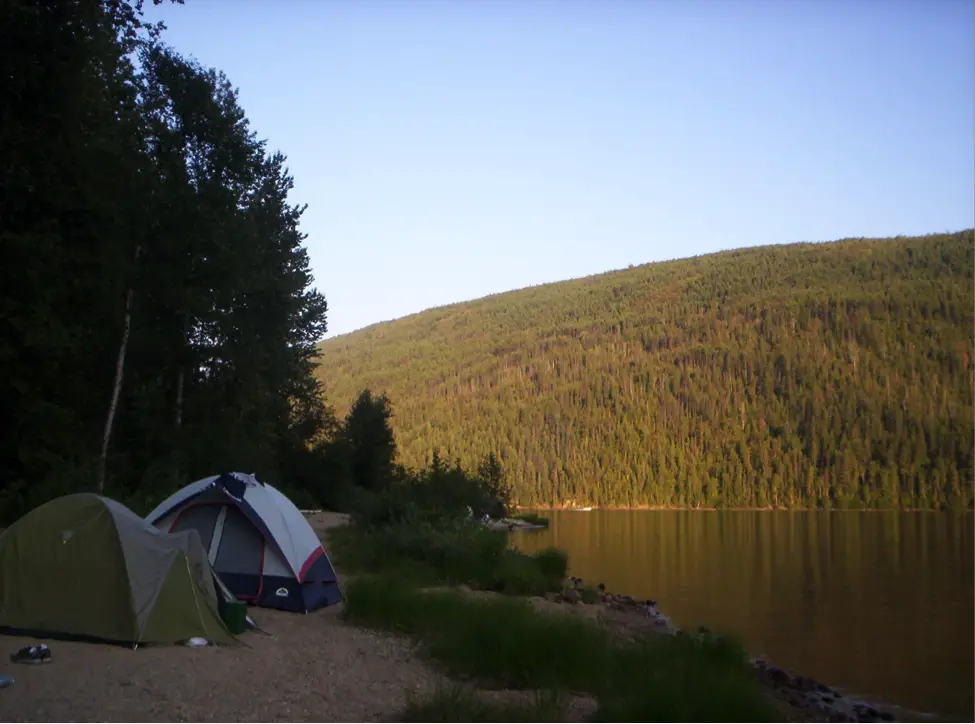
A camping disaster turned into a lifelong learning experienceA few years ago, during my college summer break, me and a group of my second year classmates went to out to the Colorado country for a 5 day long camping trip. Colorado is a beautiful state and a great option for hiking and camping, with both nature and wildlife.

We studied at the Colorado State University and the hiking spot we chose was a few hours away and it was perfect as we didn’t want to drive out too far.We knew that Colorado country is home to black bears so we had already made sure to check out the details of our camp site and we were told that bear and human contact is rare and very much preventable. Black bears can be dangerous if they come near humans although their attacks are almost always made as a defensive action and as a species black bears are not generally aggressive.
We carefully read the instructions displayed on the signs boards and also mentally revised them while walking up to the site where we grounded our tents.

When camping in bear territory, it’s important to never leave food, toiletries, or anything else that has an aroma or smell to it, outside in the camping ground or even in the tents where you sleep. Even if the things are boxed up, it won’t work unless the boxes have been sealed off properly to not allow too much smell to leak out an fill the surrounding air. We actually followed up with an instruction video by the Colorado Parks and Wildlife Department, which a group of campers that we met on the way shared with us. We didn’t have any of the bear resistant containers at our side but we knew from research that cars are also safe as long as the food is properly hidden away and covered.

All was going well as we set up our camps, hiked around the area a bit and started our fire at around 7 in the evening. We made macaroni and cheese which was so delicious for our starving tummies after a long exhausting day and laughed and shared storied as we finished it. As darkness approached, we collected all of our left over mac and cheese carefully in a single container, packed it up and locked it carefully in the car., because we didn’t want to create any unnecessary food waste especially since we still had four more days to go.

The five of us, two boys and three girls, then went for a short walk under the bright moonlight before sleeping. After about 20 minutes, we headed back to our camp ground and upon reaching the site, couldn’t believe what we saw. Our tent was all pulled out and torn from all ends.

And right in front of our eyes and at the spot where our fire was, which we turned off before leaving as we had our torches so we didn’t need it anymore, there was a huge black bear with its slick coat and shiny eyes, reflecting the moonlight, staring right at us.

We froze where we stood, all freaked out. The bear started moving towards us and my friends started to swerve and pray in fear. We couldn’t even run to the car as the bear was bang right in front of it, next to the remains of our tent.

Then somehow, one friend Jake remembered that we can scare the bear by darting rocks at its way so he told us to do that and one by one all of us started doing that while flashing our torches around it. We also started clapping and thumping with our feet very loudly creating lots of noise. This behavior I assume made the bear feel intimidated and he stopped moving towards us. Then I remembered that we can flap our hands in the air to let him know that we are humans and this is our territory, something which I read on the internet. I quickly started doing that and made the group do the same. Eventually after about 7-8 minutes of this whole fiasco the bear glanced around a few times quickly and then started running in the opposite direction.

We were relieved to see that the humongous mammal was finally gone but the devastation which it has caused on the site was irreversible as our tent was totally broken and torn. Only after coming back to the city I read this precious bear proofing your campsite guide which we should have looked up earlier.

We were glad that the bear hadn’t attacked our car and damaged it. Even though we had followed all the instructions, we made one grave mistake, which was leaving the fresh camp site behind unattended, in the night. I think the bear was hungry and it was probably watching us from far away. I am pretty sure if we wouldn’t have left the site, the bear wouldn’t have come. But because it saw us leave it, decided to check the place out because it would have definitely smelled the food there earlier.

Although we were so thankful to have made it past the incident without any harm our exciting camping trip had to come to an end there and then as our tent was not usable. We knew that it’s also sometimes safe to sleep out in the open but we were pretty uncomfortable with the spot as we knew bears were in the area so we cleared up the space, got into the car and drove off in the middle of the night.

Our camping disaster was truly disappointing but it definitely taught us an important lifelong lesson; never to take nature lightly and always come extra prepared. If we had packed an extra tent, and then something like this had happened, who knows we could have probably talked ourselves into staying the night and the day after at least or just move a little further away to a new spot and camp all over again.

Top 10 Survival Skills Your Child Should Know Right Now

Top 10 Survival Skills Your Child Should Know Right Now
Buy at Amazon

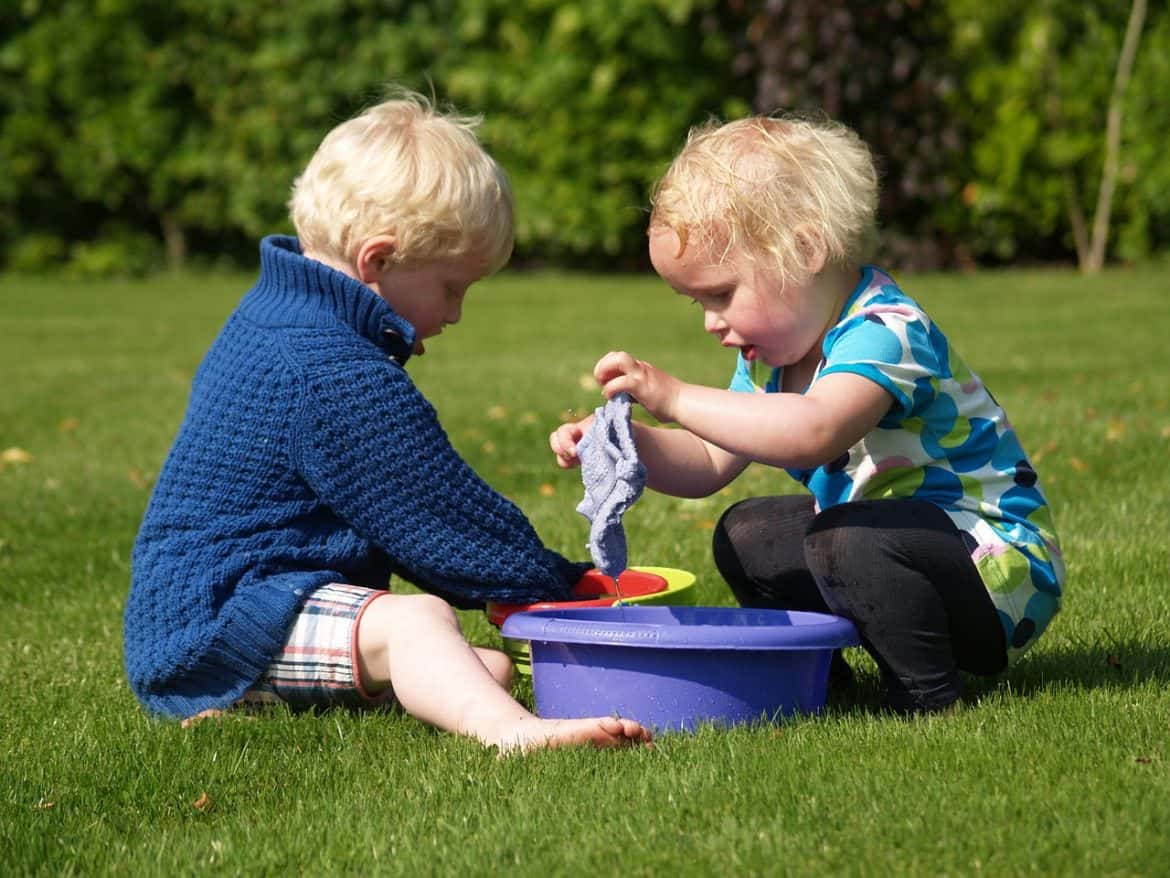
Every individual needs to be able to take care of his or herself, including children. They may not be adults yet, and they may have fewer responsibilities than most of us, but they do need to learn how to survive in this cruel world, especially when outdoors. Hence, in this post, we’ll be rounding up the top survival skills your child should know.

It is every parent’s responsibility to teach their kids various skills they can use throughout their lives. In this modern world of ready-to-eat food and high-tech gadgets made for utmost convenience, the art of survival skills fade as majority of us rarely use them.

However, the greatest thing about survival skills is that no one can predict when and where to use them.

Apparently, it’s better to know how to execute a certain necessary skill, such as starting a fire with wet wood, in case of an emergency than to be stuck without any knowledge.

So without further ado, here’s a list of the top survival skills every kid should learn.

Top 10 Survival Skills Your Child Should Know Right Now

1. Finding Safe Drinking Water

Finding safe drinking water is a crucial skill since the human body can live without food for several days, but not without water. It is, therefore, necessary for every kid to know how to locate water sources and how to purify them.

First off, if the potable water you consume in your home is sourced from a deep well or faucet, you might want to teach your kids how to continue drawing water from them if electricity’s out.

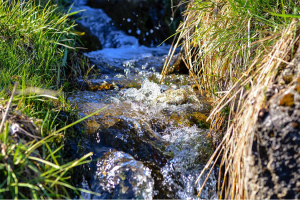
When outdoors, make sure your child brings a bottle of water at all times. Otherwise, the safest water sources outdoors are springs, streams, ice, and snow. Lakes, ponds, and creeks are unsafe, no matter how clear they can be. Next, show them the proper way of testing spring water and other water sources to make them safe for drinking.

Water can be boiled, filtered, or treated with chemicals such as iodine to rid it of bacteria and viruses.

2.  Basic First Aid

Every child and adult should learn basic first aid. First aid is beneficial during emergency situations. It could be a life saver, especially if your child is alone and injured.

Your kid needs to be shown where the first aid supplies can be found, emergency numbers to call, as well as some basic skills such as treating minor wounds, burns, and tying a sling.

This animated video below will teach your kids how to do basic first aid in case of accidents.


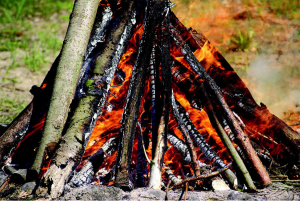
3. Building Fire

Building fire is an essential outdoor skill.

Teach kids how to gather wood, light matches, keep the fire under control, cook with it, and most importantly, kill it when not in use to prevent forest fires.

You might want to go as far as teaching children how to start a fire with wet wood as an advanced survival skill.


4. How to forage

Differentiating poisonous plants and shrubs from non-poisonous ones is a great skill to possess. You can teach your kids this lesson by simply taking them on nature walks and pointing out which are edible or poisonous as you go along.

Since it may be hard for kids to keep track of so much information, encourage them to keep a journal with pictures and names of each plant for future reference.

Start with non-poisonous and edible plants first then move on to those with dangerous look-alikes such as nettle, berries, watercress, dandelions, and cattails.

5. How to find or build shelter in the wilderness

Kids should acknowledge the importance of a shelter in a survival situation and how to find one when needed.

You can teach them how to find the right spot to position a tent, areas to avoid, and creating makeshift shelters if you don’t have a tent with you.

This skill is one of the most fun things to learn, especially building makeshift shelters. You can teach them how to use fallen trees, dry leaves, and other outdoor objects to stimulate their resourcefulness.

6. Self-defense

Children can protect themselves through acquiring self-defense skills. Enrolling them in a self-defense class can benefit him or her in many ways.

They can learn self-discipline, feel more confident, and be able to defend themselves against attackers and potentially dangerous situations.

For the meantime, you can refer to the video below for basic self-defense techniques for kids.


7. Handling a knife

The mere thought of sharp objects scares children away. Knives have become a taboo subject among the youngsters because of its possible dangers, but these tools are also present in our daily lives; that’s why children need to know how to use it safely.

The more aware and knowledgeable they become about knives, the less likely they are to experiment with it. Children should be taught how to hold a knife, walk with a knife, cutting objects with knives, and storing them properly.

8. How to swim

Sadly, drowning is one of the most common forms of accidents faced by children outdoors. Children do love the water, and it’s inevitable to keep them away from it. Hence, the only way to make sure they’re safe while enjoying the waters is to teach them how to swim and float.

Don’t know how to swim yourself? Let little Emma help you!


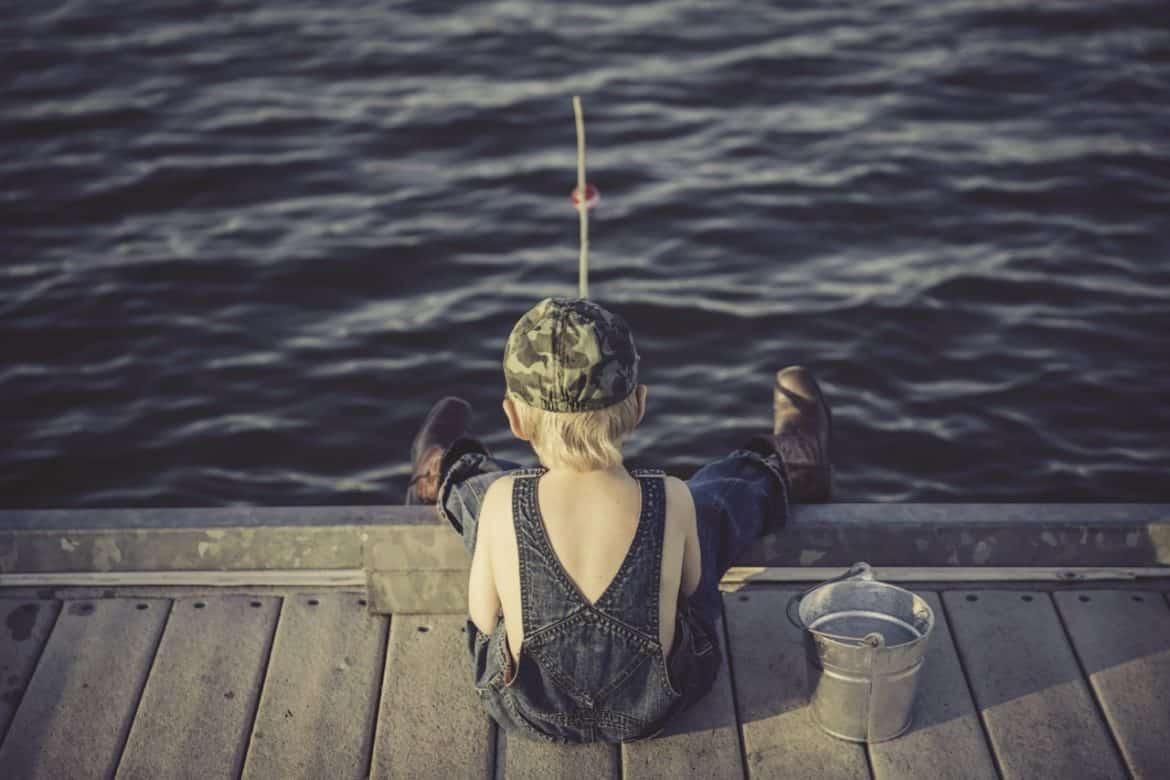
9. How to fish

Fishing is fun. It’s a good form of bonding for parents and kids. It’s easy to learn, and it’s not complicated at all – it doesn’t involve lots of expensive equipment.

Furthermore, kids can appreciate the outdoors more if they know how to fish because of the free food. Teach your children how to fish in 10 simple steps from this article.

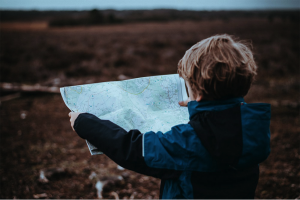
10. Reading a map, compass, and GPS

Maps, compasses, and GPS devices let children know where they are and help them find their way in case they get lost.

GPS systems can let you know your location instantly, but if you run out of battery, compass and maps are your only options for navigation.

Not only will reading these tools provide children with information on their whereabouts, but they also help in enriching kids’ spatial thinking by making them visualize objects in relation with one another.


Final Thoughts

Children should be taught survival skills early on so they can be prepared anytime, especially during a zombie apocalypse. Kidding! So, there you have it — the top 10 survival skills that are extremely helpful for children and for adults too. Know that those 10 bullets are just the tip of the iceberg as there are about a hundred or so skills you can learn from the outdoors.

Hey, camper! Did you find this post useful? Have you learned a lot? Do you know other survival tips or tricks? Let us know in the comments section below. Don’t forget to share this post. Cheers!


How to Build Your Own Camping Van Like A Pro Camper?

How to Build Your Own Camping Van Like A Pro Camper?
Buy at Amazon

It is very difficult for normal people to buy their own camping van because of its high price.

To reduce cost you may try to build your own camping van.  DIY is trickier but at the same time, it makes it more affordable.

It is advisable for common people to choose the second option.  i.e. building their camping van and spend the rest of the money in other amenities.

It requires too much patience and hard work in making camper cargo trailer and so on the blog below; there is a mention about the same.

Building the Exterior Vehicle

While you are preparing the base vehicle for your camping van, the very first step involves cleaning the entire vehicle.

At the same time, it is important for you to check if there is the presence of rust, dents, paint or any other kind of body damage.  If there is then you have to make sure to repair it entirely.  Also, if you are thinking of getting camping, lab-roof top tent then do it right now.

Doing the Interior Work

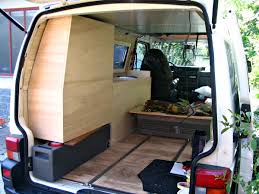
How to Build Your Own Camping Van Like A Pro Camper?It is usually seen that the delivery vans come along with bulk heads following the front row of the seating. You can fasten some of the bulk heads with the help of screws.  However, some of them need welding.

Now is the time for insulation.  This is important as it protects the van from the exterior noise and temperature.

For perfect insulation, you can make use of:

  • Armaflex
  • Rock wool
  • Natural sheep wool

Completing the Water Work

Normally a camper van comprises of a simple cold water running system along with extra water canisters that are stored under the sink. Also, there is a presence of submersible water pump that will pump the water up when the tap is turned on.

The water tanks are available in different shapes and sizes.  Additionally, you can store them as per your need and design of the van. Lastly, it is very important to connect everything with the help of flexible housing.

Finishing the Gas and Electricity Work

It is highly important to note that the gas and electricity installation work should be done by professionals only. If you install propane gas in your van, you can use it for cooking, heating and also run a three-way fridge.

It is very important to store the propane gas bottles in a separate space and vent the place from the bottom. It is necessary to vent the bottom place as the weight of propane gas is more than air, and so it will tend to go down.

Building your camping van like a pro is not at all an easy task but requires too much patience and hard work. At the same time, it requires a little amount of money, and you can easily spend the rest of the amount in other necessities. To make your van you have to consider many things and follow the step by step guide. Starting right from the exterior work to building the furniture, every small step is very important.

What is the Best time to go Fishing?

What is the Best time to go Fishing?
Buy at Amazon

Fishing is something that I don’t really like to do, but only because I am not good at it.  Few things excite me more than having a fish on my line, but few things bore me more than waiting for that fish.

My problems are because I am pretty ignorant of the skills needed to fish, so when I find articles on how to fish I read them eagerly.

Here is a good article on What is the best time to go fishing.

Additionally, I have some articles on this site that will help you with your ability to fish.

As I write on this site, and learn new things, I keep getting better at fishing- It helps that my son has a lifetime sportsman license, and he always talking about fishing.

When I started this website, I thought if I wanted to catch big fish I should use large hooks, and ended up never catching anything.  When I started using smaller hooks, better techniques, and – like the link explains – knowing when to fish, I started catching more and more fish.