I am partial to Storey’s books, they are great all around reference books. While it is not as complete as a book dedicated to a single topic, Basic Country Skills gives basic information on a variety of topics. Which is great if either your knowledge is limited, and you need to know basics, or you space is limited. Either way, this is a great book to have in your prepper library.
Inside Storey’s Basic Country Skills: A Practical Guide to Self-Reliance you will find illustrated instructions on topics such as:
Finding country land
Buying, building, and renovating a home
Developing water sources and systems
Understanding wiring, plumbing, and heating
Using alternative heating and energy sources
Vegetable, flower, and herb gardening
Traditional cooking skills such as baking bread and making maple syrup
Preparing and preserving meat, fruits, and vegetables
Building and maintaining barns, sheds, and outbuildings
Caring for common farm and ranch animals, and pets
As I said, I really like the Storey books, and I have several of them. This one and the guide to rabbits are two that I use most often though. I would recommend any prepper or homesteader look at Storey publishing as their titles are perfect for you.
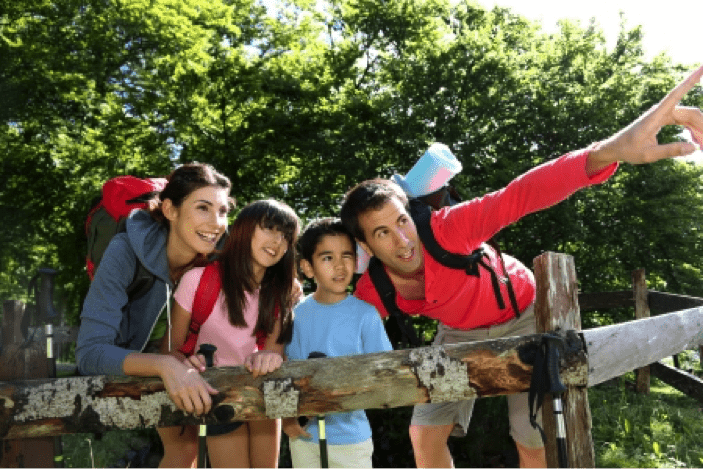
Enjoying the great outdoors by yourself or together with your friends and family is an amazing experience. There is something immensely freeing about sleeping under the open skies and waking up with the smell of fresh, untamed morning air filling your nostrils. However, this experience isn’t one without its challenges.
What You Need to Know
It generally takes campers a long time to get accustomed to all the different situations a camping trip might involve. Fortunately, you can take some shortcuts in the learning process if you are dedicated enough. Here are the four most important prepping skills you master after years of camping.
1. Choosing the Right Equipment
The equipment you bring along with you on your camping trip is vital to your comfort and well-being. A high-quality tent is a must, and so is a well-insulated sleeping bag. Investing in a sturdy backpack that can fit all your essentials is your best bet if you want to be prepared for anything that might occur.
You also need to be prepared in case the weather turns unexpectedly humid. One thing that every seasoned camper needs to know is how to waterproof leather boots in case they don’t have ones that already possess that quality on hand. Add in a sturdy raincoat and you’re all set for even the most unexpected surprises Mother Nature could throw onto you.
2. Packing Lightly
When you’re out in the wild, packing lightly is essential, especially when you prefer hiking up to remote places to get away from the world for one weekend. To do this like a pro, you will need to know what the essentials are depending on the location and duration of your trip. Multi-purpose items such as a Swiss army knife, are an excellently practical choice.
On top of that, always remember not to bring too many separate outfits. You’ll end up not wearing them anyway, so focus on warm, layering appropriate-clothing instead. It’s important to prepare for cold weather, even if the forecast says otherwise. Furthermore, one pair of boots is enough. Always make sure you have clean socks and undergarments on hand, but don’t overdo it.
3. Adequate Food Storage
Naturally, bringing a balanced variety of canned and fresh food is essential while out camping. Cooking out in the open wilderness is a very nourishing experience for both body and mind, but it also comes with its risks. Something that a lot of beginner campers don’t realize is that storing food properly is also crucial while out camping.
During the day, whatever you bring needs to be kept in a cooler to preserve its freshness for as long as possible. Then, before going to sleep at night, make sure to put any leftovers in the car or any anti-bear enclosure on the campgrounds so that wildlife isn’t drawn to it. Bears coming in the middle of the night looking for food aren’t a myth, unfortunately.
While they most likely won’t hurt you during their food foraging, you don’t want to wake up the next day and have nothing left to eat. In addition, scaring them away is potentially dangerous, so it’s best to avoid this hazard altogether.
4. First Aid Kit
According to Recreation.gov, an adequate first aid kit is one of the best things to have on hand if you want to ensure that you and all the other members of your group stay safe. The perfect one contains antiseptics for scrapes and cuts, insect repellent, pain relievers, sunscreen, tweezers and a snakebite kit as well.
If anyone in your group has any special needs as far as allergies or any other health conditions are concerned, make sure to tailor your little emergency box to their situation. Antihistamines are a good addition, as is any other essential medicine. And if you’ve got some room to spare, throw in some duct tape as well. It is a great multi-purpose item to have on hand.
Conclusion
Nature is beautiful, but it can also be dangerous. This is why you need to do your best to always protect yourself and those around you. It will be hard at first, which is why you need to stick to the beaten path. Slowly, you will learn how to deal with various situations and you can venture out into true wilderness when you feel courageous enough.
It’s essential to remember a few things. Always choose the right equipment. Your tent and your sleeping bag are your most trusted allies, so make sure they are sturdy and reliable. When in doubt, always go waterproof, and always pack lightly. Make room in your backpack for what’s important and bring as many multi-purpose items as you can.
Finally, a first aid kit is your best friend in case you or someone nearby gets hurt. Pack it with everything you and your group need to maintain your safety and well-being. But most importantly, don’t forget to have fun!
Only a very few people can survive the wild these days without the modern convenience, such as electricity and electronic gadgets, mobile devices. Although some can still survive without this modern equipment, nobody can survive without water.
Needless to say, water is highly essential for survival. Yes, you can package some water along with you to the wild; they cannot sustain you if you plan to spend a considerable period of time. If you want to spend more time in the wild, then you need to devise some ways to find water in the wild.
Start With the Obvious: Streams, Rivers, and Lakes
Streams, rivers, and lakes are the most obvious source of water in the wild. These sources of water offer clean, clear flowing water which is the best option you can ever think of. Generally, flowing water does not allow bacteria to fester. Small streams are what you should first look for once you get to the wild. You can also consider rivers as a second choice after stream. Larger rivers often have a higher percentage of pollution. If this is this only option available, you should consider purifying the water consumption. Lakes and ponds are also okay but they are stagnant and hence, a high rate of bacteria.
So, how do you find these sources of water? First, you should conduct a research on the location of rivers and streams before you embark on the journey in cases where possible. In the wild, you need to use your senses. If you stand still and silent, you should be able to hear the sound of flowing water. More so, If you stand at a sloppy ground, you should know that there is a flowing river or stream at the extreme base.
Another way to locate rivers or streams is by tracing animal footpaths which can lead to water. Insect swarms, although annoying, is another sign of water proximity. Another way to locate rivers or streams is by following the birds swarm early in the morning or late in the evening.
Collect Rainwater
Rainwater is one of the safest ways to get drinkable water without the fear of bacterial infections. If you are lucky to find yourself in a wild in the tropical region during the rainy season, you wouldn’t have to worry about water all through your stay in the wild.
There are basically 2 ways of collecting rainwater. The first is to place as many containers as you have in the rain. In cases where you have little or no container, then you can try this second method. Tarp around trees a few millimeters off the ground or tie the corners of a poncho, place a small piece of stone at the center to create depression and watch the water collect in it.
Collect Heavy Morning Dew
Heavy morning dew is another source of water in the wild. You can get up to 1 liter of water per hour from morning dew. To do this, tie some absorbent clothes around your ankles take a workout early in the morning before sunrise. When your cloth gets saturated, wring out the water and repeat the process over and over again.
Fruits/Vegetation
You should not underestimate the amount of water you can derive from plants. Plant fruits, roots, vegetables, fleshy plants, and other plants have a lot of water embedded in it. Collect EDIBLE plants, place them into a container, and smash them with a piece of stone or rock. Although it may be a very tedious process, it can be very useful in desperate situations. Try my Leaf Condensation trick.
Collect Plant Transpiration
You can also get some water by trapping the plant’s transpiration. Transpiration is a process whereby water is translocated from the root to the underside of the leaf before it is eventually released to the atmosphere. So, the trick here is to catch the water before it escapes to the sky.
First in the morning, tie a bag or anything that can be mold into a bed around the leafy green area of a shrub. Place a small piece of rock in the bag in order to create a depression and weigh it down a bit for easy water collection. Instead of the vapor to escape to the atmosphere, the water will be collected and retained in the bed. However, do not try this with a poisonous plant.
Tree Crotches/Rock Crevices
Tree crotches and rock crevices are another good sources of water, just like the fruit and vegetation. Although the process can be stressful and demanding, it is a good alternative, especially in difficult situations. To collect water from tree crotches or rock crevices, dip a cloth inside the hole, allow it to soak, and wring it out. Repeat this process as much as possible to get enough water.
Dig an Underground Still
This method is a relatively reliable source of water compared to other ways. It is a good option if you or your team is camping in the wild for a considerable long period of time. The process of digging well is very common which you are surely aware of. Although the process is tasking, the outcome always worth the energy invested. However, make sure you site your well or still close to a reputable water source or riverine area.
Conclusion
While you can survive without electricity or electronic gadgets in the wild, it is quite impossible to survive without water. Getting water in the wild may first sound difficult to you. However, we hope this guide on ways to find water will help you a lot.
By nature, a child likes to play around, do things on their own, sometimes lousy and even think they are old enough. Because all children are different, they exhibit different types of capabilities and skills. Remember, children have great individual variations of temperament, development and behavior.Every prepper plans and strategize for disasters but an often neglected aspect of prepping is training for children.
Help your growing child understand what is expected of him or her as they grow, with a little help from you as dear parents.
Since knowledge takes time to develop, so we need to start teaching them as soon as possible, and that is now.
Check out this article on the Top 20 Survival Skills a Kid Should Know to see what skills you should be teaching your kiddos.
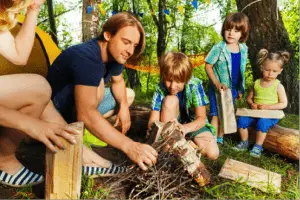
Know how to make a fire.
Your child needs to know how to make a fire. You must be care to locate fire in a place where the wind wouldn’t blow directly on it, also, it works well in a large boulder. You need to have matches during camping and make sure your kid knows how to keep it safely under your control.
Know how to cook on a fire.
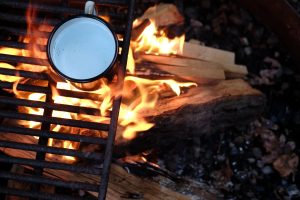
This survival skill is great to teach while you are on a camping trip. Help your kids how to cook on a fire and determine when food is ready to eat. You will need tinder, kindling, and logs.
Know to eat healthy and stay fit.
Your kids should know what foods are healthy to eat and how to stay in good shape. Explain the importance of having a healthy system and what it brings to you. If you are not in good shape, you will have a hard time surviving in a difficult situation.
Know how to handle and use a knife.
Every child should be shown how to hold and carry a knife for their own safety in everyday tasks around the house.
If an emergency occurs, a knife could be the only tool they will have available to help them survive until help arrives. Your child could learn using knife in cutting branches for shelter but also for hunting, if necessary, and to catch fish as well.
Know to find water and see if it’s safe to drink.
Help your child learn to locate water sources, and how to purify and clean the water, that is by using filters and boiling. Your child must know how to find water that is safe to drink.
In case your home has a deep well, you may continue to drink water from it and should be taught how to draw water from that well in case the electric is out. If your home does not have a well, then they need to search for bottled water.
Know basic first aid.
Every child should learn basic first aid and should know to treat wound or injury then tie a sling. Your child needs to be shown where your first aid supplies are stored and how to treat minor wound or injury. They also need to learn how to differentiate minor injuries from ones that require the attention of a doctor.
In case your child is alone, being able to cover and mend a cut or wound could save their life.
Know basic sewing.
Basic sewing should be taught to kids so they can patch clothing or any kind of garments when necessary. Mending clothes or any fabric and even make things like bags or scrap quilts are good advantage you can get when you know basic sewing.
Know basic self-defense.
Self-defense is another vital survival skill everyone should know, and that includes the kiddos. This is a skill your child needs to know to stay safe.
You can teach your child how to get away if someone grabs them. Instead of pulling away, tell your child to push towards the other person. Because of this, it could actually cause a person to lose its balance, then, will let go of your child as they would fall.
You don’t need to teach them any fancy skills – they need to know basic skills. Teach them to always follow their gut instincts. This could save your child’s life in a survival situation.
Know how to find or build shelter.
Your child needs to know how to find shelter away from home. Let them know the importance of a shelter in a survival situation and how to find a shelter when needed. under their clothes or use as a blanket.
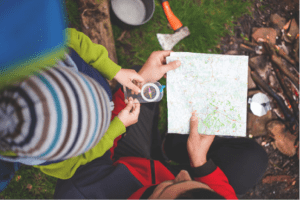
Know how to read a map and compass.
A lost child is a scared child, and usually their first instinct is to begin searching for their family.
Teaching the kids reading a map is like making a lesson into a treasure hunt.
You may draw up a map marking the location of the treasure and then help them understand the directions.
Know where your family and friends live.
Your child needs to know where family and friends are to find a safe place especially if your child is in trouble. They need to know how to get to those safe homes.
Know what to do when they get lost.
A child if lost will sure feel uneasy and terrified. Wherever your child is lost; in a grocery store, on a hiking trip or along the street, the instruction is the same. In case your child realizes they lose their way, condition their mind to stop, sit as soon they are in this situation. No matter how scared they might be, assure them that you are searching for them.
Know how to grow garden.
Every child must need to understand how to plant a seed and harvest it. Teaching kids to grow their own food gives them knowledge and power. Encourage your child to learn and appreciate how to grow food.
Know what to do in bad weather.
Your child needs to know what to do when a bad weather is coming regardless he or she is both at home and away. Does your child know what to do if he or she is home alone and a bad storm is coming?
Always plan on them being alone so that they can be independently safe, with this, they will not be dependent, they could count on themselves. Remind them to go to a basement and to stay away from windows.
Know how to swim.
Unfortunately, drowning is the third most common form of accidental death in children, so learning to swim really is an essential life skill. Swimming is one of the few skills that once learned is rarely forgotten. And, this is fun too for kiddos.
Know to raise and care for animals.
Teaching your kids, the responsibility of having a pet is very important and it is another great lesson to them. If you do not have room for livestock, consider keeping a few chickens or rabbits for your kids to care for.
Know basic woodworking.
If your kids could learn basic carpentry that will be a bonus. If they can work well with woods or logs, then they can learn building almost everything. And, if possible, you can teach your kids to safely use tools like axe or hatchet in doing basic woodwork.
Know to Fish.
Fishing is easy to learn, easy to teach and doesn’t have to involve lots of expensive equipment. This can be a good bonding with the whole family especially on a vacation.
Know how to answer the door when they are home alone.
The best way is either not to answer or open the door. When the door is opened and closed with kids in and out, it leaves those in the home vulnerable to someone who is watching the home. Train your kid to be keen in keeping the windows locked, your blinds and curtains always closed.
Know how to climb a tree.
This is part of the dangerous things you should let your kids do, as long as they are under your control.
Teach them how to climb safely which is really important, tell them when to stop climbing and when it is dangerous.
This skill can be useful because it eliminates a potential accident risk.
Final Say
One of the most important of parental goals is to make them independent and autonomous while they’re still young as soon as possible. As crises or emergencies arise, their survival training and real determination will decide if you get to ever tuck them in bed again.
When crisis strikes, knowing as many survival skills as possible may it’s a life and death situation for your children. You don’t have to be aggressive or scary about it, but you should teach your kids how to take care of themselves as they grow.
The sooner the children become self-sufficient, the greater their chance of surviving in any type of collapse. Make a game out of teaching survival skills and have fun with your child. You never know when your child may need to take care of himself/herself for a few days.
An individual without any home will find it really challenging to lead a life without any struggle. Moreover, during the wintertime, it becomes really troublesome to spend the night on the streets.
The situation can become even worse if it is required to spend several nights outdoors in wintertime. It would be a real life or death scenario. Especially since he will not have any resources at his disposal.
Fortunately, there are several methods which can be adopted in order to survive these situations.
In the subsequent paragraphs, we mention 6 essential winter survival skills.
Beef up your insulation
When you are trapped in the extreme cold weather, make it a point to enhance the insulation value of the clothing that you are wearing. Try to make some loose balls by crumpling up some type of paper materials and stuff them inside your garments. You can put them inside your trousers, your shirt or even down your sleeves.
Besides this, try not to sleep on the bare ground. Cardboard is a fantastic insulator. You can try to stack up several layers of this material to sleep on.
Lastly, you can even prepare a makeshift sleeping bag by stuffing a big trash bag with any insulating material that is available. In this way, you can protect yourself from the bitter cold as well as the wind.
Prepare a warm shelter
This particular survival skill is crucial for almost any situation. Most particularly in winter conditions. It is imperative for you to keep yourself warm and dry during winter. Therefore it is advisable to spend time in building a shelter. Try to construct the shelter in a flat place protected from the wind and falling snow.
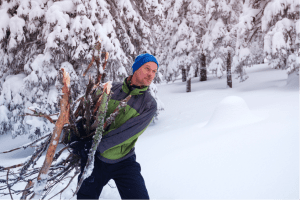
These trees will also offer the natural resources for preparing your winter shelter. It would be better if your shelter has a natural covering like the boughs of a tree. You may dig around the tree’s trunk below the lowest boughs. This will get you protection from the wind and snow by the branches which are spread above. In that case, you will receive extra protection from the snow walls and it might also be ideal for you to make a fire.
Use snow goggles
Although the majority of us use sunglasses during summer, there is a possibility for us to get blinded by the ice and the snow during winter which can reflect the sun’s rays back to the eyes. In case you do not have any goggles with you, make it a point to learn how to prepare them by yourself from natural resources.
You can prepare goggles easily from birch bark. This material is ideal for snow goggles since it is possible to remove them from the trunk of a tree in sheets.
Although it might appear to be rather simple, these goggles will definitely offer protection to your eyes during the daytime.
Make a pair of snowshoes
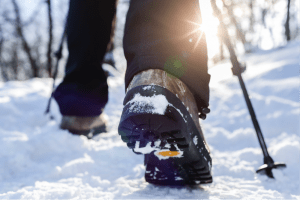
It is advisable to choose the best winter boots while you are stranded outside in cold weather conditions. While you are putting on a pair of snowshoes, your weight will be distributed over a larger area and this will prevent your feet from sinking completely into the snow. You perhaps realize how exhausting it is to walk through a forest during winter months without any snow shoes.
These types of shoes will definitely save you plenty of energy and time. In case you do not have any snowshoes available to you, try to make one by yourself. It is possible to make such types of shoes with the help of boughs which are tied together and then lashed onto your feet. It will take much more time and effort to prepare other types of traditional snowshoes.
You have to find out a long and flexible stick which can be bent and tied at the end and following this you need to crisscross the inside of the snowshoe with some more sticks or vines.
Remain active
It is advisable to stay active so that your heart rate remains normal and also there is a proper circulation of blood within your system.
However, take care not to overexert yourself. In case you perspire excessively, the moisture will be responsible for sapping the warmth away from you.
Consequently, try to perform your activities at a moderate pace whether you are preparing a shelter or even hiking. You may remove your clothing layers to maintain your temperature which will help you to keep warm and not hot. Also, you must take a breather at regular intervals so that your energy is not completely burnt out.
Keep your mind clear
Finally, you must try to keep your mind free from all anxieties and tensions since this can distort your thoughts and also prevent you from making proper survival decisions. In case you feel lonely and monotonous, it will be very difficult for you to survive in these types of challenging conditions.



 Enjoying the great outdoors by yourself or together with your friends and family is an amazing experience. There is something immensely freeing about sleeping under the open skies and waking up with the smell of fresh, untamed morning air filling your nostrils. However, this experience isn’t one without its challenges.

 Only a very few people can survive the wild these days without the modern convenience, such as electricity and electronic gadgets, mobile devices. Although some can still survive without this modern equipment, nobody can survive without water.