Tag: survival

  • The Tiger’s Way

    The Tiger’s Way


    Book Review: The Tiger's Way
    Buy at Amazon

    I have a friend that runs a local “mutual aid group” that uses The Tiger’s Way as a field manual, if you pick this book up, you will soon know why. The author, John Poole, has been both a commissioned infantry officer, as well as a noncom (USMC). He has also spent several years as a trainer and researcher.

    I have to give him some credit simply because of his opening line on his amazon author bio “Through an inverted military career, H. John Poole has discovered a few things that more promotable people miss”. This guy is not afraid to say things that go against institutionalized dogma.  His statement made laugh and think about the different types of majors you find in the military.

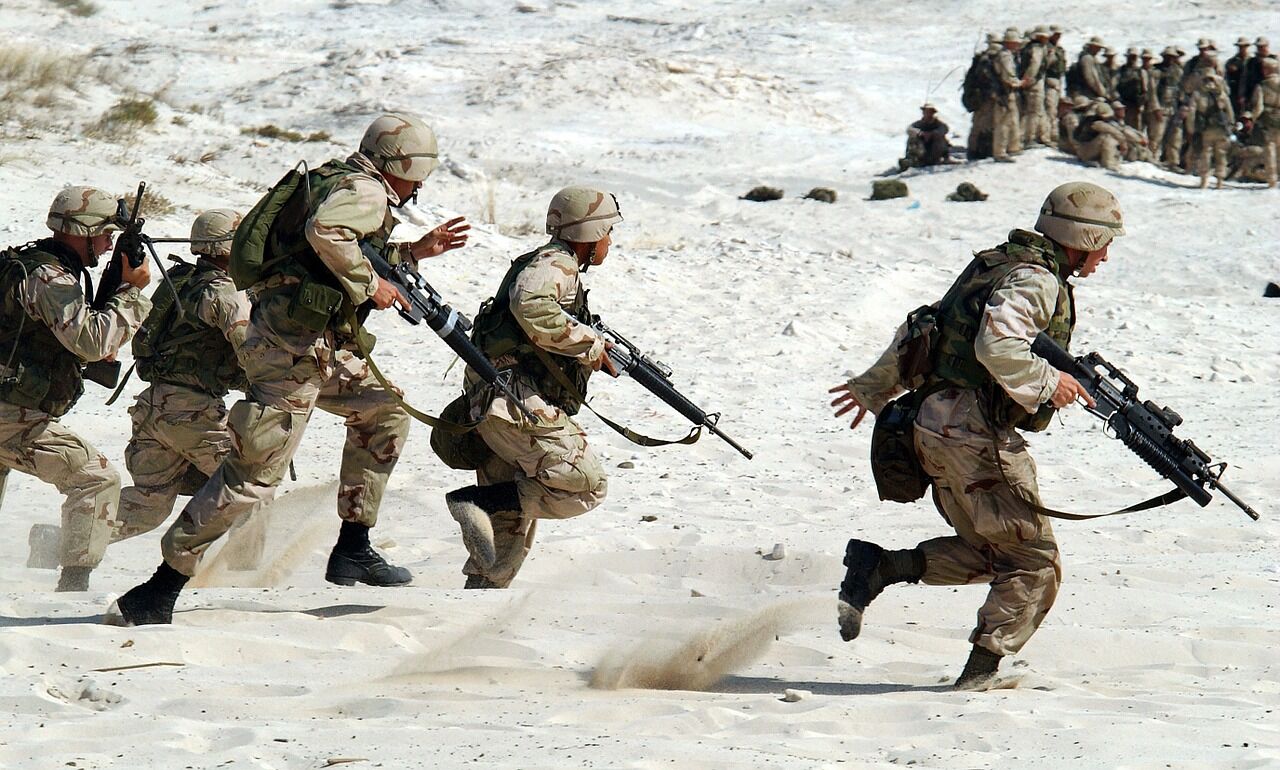
    This book gives a path toward a better trained US soldier, he describes strengths and weaknesses of the eastern soldier and explains how we can adapt their ways of doing things to make our guys better.

    Besides giving a warrior some very interesting food for thought the back of the book contains a section of battle drills and training options that are worth the price of the book.

    John Poole has done his homework, and is a great author of books to better prepare our American soldiers and Marines.  Stay tuned, If you liked The Tiger’s Way I also have another interesting read from Poole coming soon its called Phantom Soldier.

  • 6 Survival Items Every Hunter Should Use

    6 Survival Items Every Hunter Should Use

    6 Survival Items Every Hunter Should Use
    Buy at Amazon

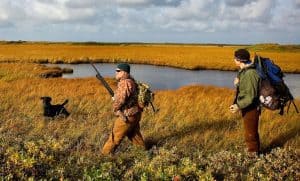
    As a hunter, there are items that you should never go hunting without. These tools are important whether as a newbie or a seasoned hunter.

    This is because no one can be absolutely sure of what will happen while in the field. While hunting, many things can happen. Among the most common things are bad weather, accidents in the wild as well as other emergencies. All these can reduce your chances of success when hunting.

    To be able to able to achieve your targets, you need to know the right tools that will be necessary when hunting. In this article, we shall look at some of the best survival items that as a hunter, you should have.

    Knife

    The knife should rank top on your list of items that you intend to pack for hunting. This is because there are many things that you can do with a knife. The type of knife that you choose to go with should be made of high-quality material.

    Make sure that you can cut anything of whichever texture without it folding. Also, you ensure that the knife is well sharpened before you go. You can use the knife among other things, cut meat as you prepare meals in the wild. Also, you can prepare ropes that you can use to tie the kill, protect yourself from dangerous animals that might reach you without noticing among many other things. The knife should be as close to you as possible. You should not put it in a different bag from the one you are carrying on your back.

    Backpack

    For every hunter carrying a backpack is mandatory.

    This is because many of the tools that you will be carrying will be put in the backpack.

    But even as you consider which backpack you should carry, you need to have in mind the fact that you need to be light for you to walk faster.

    This will mean that the backpack needs to be of a considerable weight which does not weigh too much on you.

    Remember that when the backpack is too heavy, your chances of success are equally reduced.

    As because you might not be able to move with speed when pursuing game.

    At the same time, if you are heavily loaded, you might get very tired even before you reach your destination.


    Cordage

    This is another very useful item that any good hunter would not forget to carry. The functions of a cord are many. One can use it to build a shelter, secure loads to the backpack, tie splint, climbing down from steep areas among many more things. You should ensure that you have carried accord of proper length. Hunting experts recommend that one should carry at least 50 meters of the cord if he intends to be successful in the field.


    Spotting scope

    As a hunter, you need a tool that will make your work easier while in the wild. You do not have to strain too much when trying to locate game animals to hunt. To be able to spot animals quickly, you need to ensure that you have a spotting scope in your backpack. This is important as it will make it easier for you to spot an animal and quickly take it out without much effort. With a spotting scope, you will be able to locate animals when still far away thus giving you a chance to shoot without them noticing your presence. You need to ensure that the spotting scope is portable and also of high quality.

    Mobile phone

    In the field, you need to be able to communicate with your partners. This is best done when you carry a mobile phone or two-way radios which will enable you to communicate with ease. Communication is key when hunting as you will be able to communicate strategies on how to quickly locate and shoot a game animal. Also, you will be able to inform each other in the event of danger. Even if you are hunting alone, you should never forget to carry your mobile phone. The reason is you might need help from other people back home.

    Blanket

    When one sets out to go hunting, he does not really know for how long he might be out there in the field. It is only prudent for you to remember to carry a blanket that will keep you warm. This is especially important during winter when the weather is generally chilly. The blanket will also be important at night when having a rest after the day’s activities.

    In conclusion, therefore, one needs to know some of the best survival items that are necessary when hunting. This article provides a few of them.

  • Survival Skills: 7 Ways to Find Water in the Wild

    Survival Skills: 7 Ways to Find Water in the Wild

    Buy at Amazon

    Only a very few people can survive the wild these days without the modern convenience, such as electricity and electronic gadgets, mobile devices. Although some can still survive without this modern equipment, nobody can survive without water.

    Needless to say, water is highly essential for survival. Yes, you can package some water along with you to the wild; they cannot sustain you if you plan to spend a considerable period of time. If you want to spend more time in the wild, then you need to devise some ways to find water in the wild.

    Start With the Obvious: Streams, Rivers, and Lakes

    Streams, rivers, and lakes are the most obvious source of water in the wild. These sources of water offer clean, clear flowing water which is the best option you can ever think of. Generally, flowing water does not allow bacteria to fester. Small streams are what you should first look for once you get to the wild. You can also consider rivers as a second choice after stream. Larger rivers often have a higher percentage of pollution. If this is this only option available, you should consider purifying the water consumption. Lakes and ponds are also okay but they are stagnant and hence, a high rate of bacteria.

    So, how do you find these sources of water? First, you should conduct a research on the location of rivers and streams before you embark on the journey in cases where possible. In the wild, you need to use your senses. If you stand still and silent, you should be able to hear the sound of flowing water. More so, If you stand at a sloppy ground, you should know that there is a flowing river or stream at the extreme base.

    Another way to locate rivers or streams is by tracing animal footpaths which can lead to water. Insect swarms, although annoying, is another sign of water proximity. Another way to locate rivers or streams is by following the birds swarm early in the morning or late in the evening.

    Collect Rainwater

    Rainwater is one of the safest ways to get drinkable water without the fear of bacterial infections. If you are lucky to find yourself in a wild in the tropical region during the rainy season, you wouldn’t have to worry about water all through your stay in the wild.

    There are basically 2 ways of collecting rainwater. The first is to place as many containers as you have in the rain. In cases where you have little or no container, then you can try this second method. Tarp around trees a few millimeters off the ground or tie the corners of a poncho, place a small piece of stone at the center to create depression and watch the water collect in it.

    Collect Heavy Morning Dew

    Heavy morning dew is another source of water in the wild. You can get up to 1 liter of water per hour from morning dew. To do this, tie some absorbent clothes around your ankles take a workout early in the morning before sunrise. When your cloth gets saturated, wring out the water and repeat the process over and over again.

    Fruits/Vegetation

    You should not underestimate the amount of water you can derive from plants. Plant fruits, roots, vegetables, fleshy plants, and other plants have a lot of water embedded in it. Collect EDIBLE plants, place them into a container, and smash them with a piece of stone or rock. Although it may be a very tedious process, it can be very useful in desperate situations.  Try my Leaf Condensation trick.

    Collect Plant Transpiration

    You can also get some water by trapping the plant’s transpiration. Transpiration is a process whereby water is translocated from the root to the underside of the leaf before it is eventually released to the atmosphere. So, the trick here is to catch the water before it escapes to the sky.

    First in the morning, tie a bag or anything that can be mold into a bed around the leafy green area of a shrub. Place a small piece of rock in the bag in order to create a depression and weigh it down a bit for easy water collection. Instead of the vapor to escape to the atmosphere, the water will be collected and retained in the bed. However, do not try this with a poisonous plant.

    Tree Crotches/Rock Crevices

    Tree crotches and rock crevices are another good sources of water, just like the fruit and vegetation. Although the process can be stressful and demanding, it is a good alternative, especially in difficult situations. To collect water from tree crotches or rock crevices, dip a cloth inside the hole, allow it to soak, and wring it out. Repeat this process as much as possible to get enough water.

    Dig an Underground Still

    This method is a relatively reliable source of water compared to other ways. It is a good option if you or your team is camping in the wild for a considerable long period of time. The process of digging well is very common which you are surely aware of. Although the process is tasking, the outcome always worth the energy invested. However, make sure you site your well or still close to a reputable water source or riverine area.

    Conclusion

    While you can survive without electricity or electronic gadgets in the wild, it is quite impossible to survive without water. Getting water in the wild may first sound difficult to you. However, we hope this guide on ways to find water will help you a lot.

  • My First Hardcover: Basic Survival

    My First Hardcover: Basic Survival

    Buy at Amazon

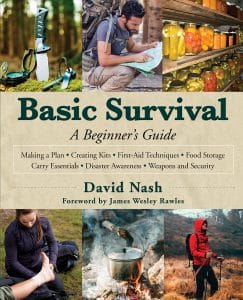
    Basic Survival – A beginner’s guide is my first hardback book, It is larger than all my other titles, and the pictures make me feel like its a coffee table book, but when I wrote it I included all the basics I learned starting out as a prepper.

    Don’t let the name fool you, this is not a wilderness survival handbook – it is a surviving emergencies handbook.  I believe in an all hazards approach to survival.  If you knew what kind of disaster would kill you a smart thing to do would just be to avoid that type of disaster.  Since no one knows what might happen to them, a smart person prepares to deal with all kinds of issues.

    I take academic theory learned during my education as an Emergency Management Planner and add common sense skills learned by life as a prepper to bring you this book.

    In my emergency management career, I have a lot of experience dealing with disasters of all kinds, I have worked in shelters and know what goes on behind the scenes.  That experience causes me to try to keep my family out of emergency shelters.

    It makes me especially proud as James Wesley Rawles of SurvivalBlog wrote the introduction.  His site remains one of my favorite resources, and I have long been a reader of his blog and learn learn something new almost weekly.

    I updated the David’s Books Page so check that page out as well.

  • Learning Survival from Books: 6 Best Books to Start

    Learning Survival from Books: 6 Best Books to Start

    Learning Survival from BooksAre you making your first steps in the world of survivalism? If so, learning survival from books in the very beginning makes a lot of sense.

    Books are essential to proper training.  The knowledge within them can guide your personal experiences and prevent mistakes.

    Nothing beats practical experience with a good instructor, but that is not available to everyone.

    Needless to say, survival books are not created equal. To learn from the best, you may want to consider a few of these titles.

    The Prepper’s Long-Term Survival Guide

    The list starts with the Prepper’s Long-Term Survival Guide. The book tops many charts in relevant forums and discussion boards. Published in 2014, this book is written by Jim Cobb – a trainer for a disaster preparedness company.

    Cobb has long written articles about survival, disaster preparedness and budget-friendly preparation.

    This book focuses predominantly on long-term survival in emergency situations. It doesn’t focus too much on surviving in nature.  Rather it addresses scenarios of chaos and turmoil (something that we could be facing in the near future?).

    The book has a big number of positive reader reviews and most focus on the practical and actionable tips.

    Cobb’s guide includes chapters on food, water, medicine and personal hygiene, security, tools and even how to survive the boredom that could be linked to living in a bunker for a prolonged period of time.

    Wilderness Survival

     If you are specifically interested in wilderness survival, you will definitely fancy the second edition of Wilderness Survival by Gregory J. Davenport.

    As the name suggests, this book will teach you how to make the best of your circumstances whenever you’re stranded in nature.

    People who love the outdoor have to prepare for all kinds of extraordinary circumstances and the book provides a lot of valuable information.

    The book is the result of the work and the experience of a former USAF survival instructor.

    Davenport is also an escape specialist and a top survival expert worldwide.

    Thus, learning from the best is possible with this title.

    Some of the most important topics covered in Wilderness Survival include:

    • How to sustain health in the wilderness
    • Medical kits, gear and other essentials for survival
    • Personal protection
    • Sustenance
    • How to return home

    The Survival Handbook

    The name of this book by Collin Towell says it all. The Survival Handbook also comes with a pretty impressive cover design.  Not the most important characteristic of the book but certainly one that catches the eye.

    Collin Towell is a prolific writer that specializes in the survival genre.

    He’s published a number of books on the topic, including Essential Survival Skills, The Survival Handbook in Association with the Royal Marines Commandos and the Survival Handbook: Endurance Essentials for the Great Outdoors.

    As the name suggests, the book offers a comprehensive look on everything pertaining to survival.

    It doesn’t focus on one specific scenario as some of the previous entries in the list. Another great aspect of this publication is that it features a wide array of detailed illustrations that provide additional information on top of the text.

    98.6 Degrees: The Art of Keeping Your Ass Alive

    With such a cool title, 98.6 Degrees: The Art of Keeping Your Ass Alive by Cody Lundin deserves inclusion in the list.

    A few of the essential topics that the book focuses on include the following:

    • Different survival situations and how they start
    • Survival psychology
    • Overcoming fear
    • Adaptation
    • Surviving in the outdoors
    • Your first line of defense
    • How to come in contact with rescuers
    • Survival kits

    As you can see, the book discusses both actionable tips and somewhat philosophical aspects of staying alive. If you are interested in a comprehensive look at survival that’s delivered with a nice sense of humor, the book will be the right option for you.

    98.6 Degrees is based on the experience and knowledge of Cody Lundin – the finder of Aboriginal Living Skills School. Another fun fact you may want to know is that Lundin is the only person in Arizona to hold a license for catching fish with his hands.

    US Army Survival Manual

    When learning, it’s a good idea to learn from the best.

    Army personnel are professionally trained to survive all kinds of situations, which is why you may want to take a look at the US Army Survival Manual by the Department of Defense.

    The US Army has training for survival in all kinds of climates and under any circumstances.

    All of the information in this book has been field-tested, which adds to the practical application points of the publication.

    The book features both step-by-step instructions and illustrations to ensure outdoor survival in any scenario.

    There are actionable suggestions for hikers, hunters, athletes and outdoor enthusiasts who could face potentially dangerous situations.

    Field Guide to North American Edible Plants

    The final entry in the list is a slightly more specialized publication that can prove to be very beneficial for survival enthusiasts.

    Field Guide to North American Edible Plants by Thomas Elias covers more than 200 edible plant species and there are detailed illustrations to make the identification of each easier. There is also information about the distribution of the species, their seasonality, the ways to harvest and to prepare each one.

    This book isn’t the most imaginative survival guide out there but it can prove to be life-saving. Some wild plants are potently toxic and they can lead to serious issues. Thus, consuming plants to stay alive isn’t something simple or safe. The book is an ideal read for hikers and other individuals who like to spend a lot of time in nature.


    From the Owner of this Website:

    The Prepper’s Guide to Foraging is not a plant identification guide in the traditional sense. It is instead a guide to using plants to supplement other means of food production and subsistence living. Author David Nash believes that there is not enough land available for to support a large-scale return to the hunter-gatherer lifestyle in the event of a large-scale disaster, but that botanical knowledge does provide an edge to the well prepared.

    This book advocates the acquisition of knowledge to allow its reader to safely identify, harvest, and use common North American plants. Wild plants can provide shelter, material, medicine, and food to help the reader extend stored food as well as to create items that may be otherwise unavailable during a crisis.