Teaching Women to Shoot is a book I use in every firearm class I teach.
Vicki Farnam’s husband is well known in the firearm world, but she is a great instructor in her own right.
This book really opened my eyes as an instructor and taught me how to deal with the realities of training men and women shooters.
There are psychological, physiological and sociological differences between the genders. One is not better than the other- but there are differences, and since most of the techniques of instruction, holsters, stances, grip sizes were all designed by men for men – it was interesting to see a female perspective.
If you are an instructor then you really should read this book at least once.
The way Vicki Farnam writes illustrates points clearly and shows a unique understanding of issues concerning gear, mindset, and training. If I could make this required reading for new firearm instructors I would.
This book has made me better able to Teaching Women to Shoot, which also helped me in carry permit classes where we have couple come in – it helps me understand the dynamic and the differences going through the heads of the two genders as I run the class.
It could be that I am just dense, but this book really opened my eyes to a different way of thinking.
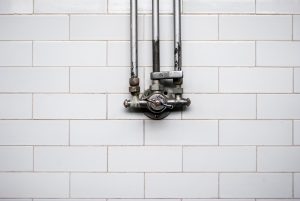
Plumbing emergencies are among the most expensive sources of headaches that homeowners have to deal with. Too many homeowners have discovered, first hand, what it’s like to fork out thousands of dollars to repair the damages caused by these disasters. And in many cases, prevention could have played a huge role. Here are a few helpful tips to avoid and address the most common plumbing issues.
1. Sewer System Backup
A backed-up sewer system is one of the most regular plumbing issues to deal with and is never pleasant to be around. Sewage backups are almost always related to the ejector pump or sump pump, thus making the correct diagnosis for ejector pumps is key.
Some are lucky enough to learn of a malfunctioning pump early on when alarms are sounded for a variety of issues. This is the most desired method of finding out, as issues are easier to fix when you catch them in their early stages. Not to mention the fact that you don’t have to deal with the intrusive scent of sewage lingering in your home.
The Fix
• Test for a bad “float” switch. Switches can easily be replaced for about $20.
• If an alarm stops after halting water usage, you may be using more water than your pump can manage. Try cutting back on the amount of water you use.
• Sewage odors in the bathroom may be a result of a clogged dry trap in the shower drain. Try pouring a few gallons of water down the drain to easily resolve the issue.
2. Burst Pipes
Issues with burst pipes can range from tiny pinhole leaks to completely broken pipes that cause severe water damage and flooding. The latter will have to be addressed by a plumber, but if you have a minor issue you may be able to resolve or temporarily fix the issue yourself.
The Fix
• For a temporary fix to a small leak, use duct tape.
• Another temporary fix for minor leaks is to use a C-Clamp.
• Use a sleeve clamp for a longer lasting fix that can be used for larger leaks.
3. Frozen Pipes
Frozen pipes can easily turn into costly burst pipes if you don’t catch them early enough and handle them appropriately. However, this is an emergency that can be avoided by following the proper steps to ensure that those frozen pipes don’t burst.
Better yet, there are a few recommendations on what you can do to cut back on the likelihood that you will ever have to deal with your pipes freezing over in the first place.
Preventing Frozen Pipes
• Insulate any pipes that are easily accessible.
• Keep cold winter air out by filling any cracks or holes with either caulk and/or insulation.
• Place insulating covers over all of the hose bibs. Be sure to disconnect the hose bibs first.
• Leave all faucets dripping during the time your area experiences freezing temperatures.
• If you will be traveling out of town, turn off the water supply.
The Fix
To check for frozen pipes, you should turn on the cold water, then hot water, at each water source. You want to ensure that the water flow has not been reduced. If the water flow is minimal, or absent altogether, here’s how you can remedy the situation:
• Leave the faucet turned on.
• Find out where the blockage is coming from. This is typically found in the area of most exposure.
• Heat the supply line with a blow dryer until the flow of water has returned to normal.
4. Washing Machine Failures
Washing machine issues are a common reason for extensive water damage and flooding. In fact, this type of an issue regularly results in damages exceeding $5,000. Most of these disastrous situations can be linked back to supply hose failure.
Preventing Washer Mishaps
• Be sure to avoid pinching the supply hose during moves or installation.
• Replace the hose after five years of use.
• Ensure that the drainage pipe is lined up right and free of clogs.
• Avoid overloading the washing machine as it causes shaking that can make parts come loose.
• If you do notice trouble, shut off the intake valve immediately.
Another protective measure that can be taken is to be choosy when purchasing a new washing machine. It is recommended investing in brand new, top-load washers in order to prevent any such unfortunate incidents from happening.
5. Water Heater Issues
Water heater leaks and issues frequently cause thousands of dollars in damage because they go unnoticed for too long. In July of 2015 the Union County, Pa., Government Center experienced over $100,000 in damage due to a slow leak in their water heater. Avoid falling victim to this type of disaster by following these tips:
The Fix
• Know the life expectancy of your water heater. Don’t wait long after reaching this point to invest in a new water heater.
• Have the water heater inspected every one to two years.
• Attach a garden hose to the base valve to flush the tank out every six months.
Conclusion
Remember that when facing plumbing issues such as the ones caused by cold temperatures and unexpected technical failures, it’s best to take a step back and determine whether you can deal with these on your own or not. Sometimes it’s an absolute necessity to request professional assistance if the job that needs to be done involves more than a few resources that maybe you don’t have at that time (such as tools, for example).
Fixing these problems as soon as they appear might save you hundreds of dollars in the long run, along with the headache of having to replace your possessions
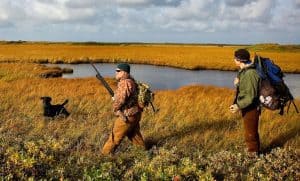
As a hunter, there are items that you should never go hunting without. These tools are important whether as a newbie or a seasoned hunter.
This is because no one can be absolutely sure of what will happen while in the field. While hunting, many things can happen. Among the most common things are bad weather, accidents in the wild as well as other emergencies. All these can reduce your chances of success when hunting.
To be able to able to achieve your targets, you need to know the right tools that will be necessary when hunting. In this article, we shall look at some of the best survival items that as a hunter, you should have.
Knife
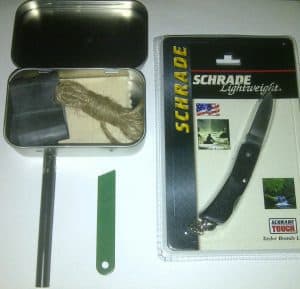
The knife should rank top on your list of items that you intend to pack for hunting. This is because there are many things that you can do with a knife. The type of knife that you choose to go with should be made of high-quality material.
Make sure that you can cut anything of whichever texture without it folding. Also, you ensure that the knife is well sharpened before you go. You can use the knife among other things, cut meat as you prepare meals in the wild. Also, you can prepare ropes that you can use to tie the kill, protect yourself from dangerous animals that might reach you without noticing among many other things. The knife should be as close to you as possible. You should not put it in a different bag from the one you are carrying on your back.
This is because many of the tools that you will be carrying will be put in the backpack.
But even as you consider which backpack you should carry, you need to have in mind the fact that you need to be light for you to walk faster.
This will mean that the backpack needs to be of a considerable weight which does not weigh too much on you.
Remember that when the backpack is too heavy, your chances of success are equally reduced.
As because you might not be able to move with speed when pursuing game.
At the same time, if you are heavily loaded, you might get very tired even before you reach your destination.
Cordage
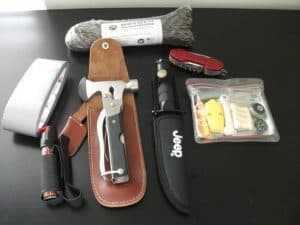
This is another very useful item that any good hunter would not forget to carry. The functions of a cord are many. One can use it to build a shelter, secure loads to the backpack, tie splint, climbing down from steep areas among many more things. You should ensure that you have carried accord of proper length. Hunting experts recommend that one should carry at least 50 meters of the cord if he intends to be successful in the field.
Spotting scope
As a hunter, you need a tool that will make your work easier while in the wild. You do not have to strain too much when trying to locate game animals to hunt. To be able to spot animals quickly, you need to ensure that you have a spotting scope in your backpack. This is important as it will make it easier for you to spot an animal and quickly take it out without much effort. With a spotting scope, you will be able to locate animals when still far away thus giving you a chance to shoot without them noticing your presence. You need to ensure that the spotting scope is portable and also of high quality.
Mobile phone
In the field, you need to be able to communicate with your partners. This is best done when you carry a mobile phone or two-way radios which will enable you to communicate with ease. Communication is key when hunting as you will be able to communicate strategies on how to quickly locate and shoot a game animal. Also, you will be able to inform each other in the event of danger. Even if you are hunting alone, you should never forget to carry your mobile phone. The reason is you might need help from other people back home.
Blanket
When one sets out to go hunting, he does not really know for how long he might be out there in the field. It is only prudent for you to remember to carry a blanket that will keep you warm. This is especially important during winter when the weather is generally chilly. The blanket will also be important at night when having a rest after the day’s activities.
In conclusion, therefore, one needs to know some of the best survival items that are necessary when hunting. This article provides a few of them.
If you are a trainer, CCW holder, martial artist, cop, soldier, Marine, or otherwise involved in self defense – you need this book.
Sharpening the Warriors Edge tells you how to program your mind for self-defense through proper training and practice.
Bruce Siddle is well known in the firearm trainer field and this book is full of knowledge to make you better prepared to deal with a use of force situation.
Between Mr. Siddle and Col. Grossman, just about everything you need to prepare your mind for surviving lethal force encounters is written down.
While some people don’t feel the need to examine what goes on mentally when engaged in a killing situation, I feel that every little bit of information on the process will help be better understand what is going on so that I can better survive the actual event, as well as be prepared for the aftermath.
This book is about performance, how to understand the science behind it as well as how to manipulate it to get the best from your mind and body during times of extreme stress. It is a very interesting read, and the concepts within may one day save your life.
Which is better, saltwater fishing or freshwater fishing? A lot of fishermen are saying their own version of which is better for them. And they all have their good points one way from the other.
But saltwater vs. freshwater fishing is not really a thing. That is because each person or fisherman can benefit from any of them with a specific purpose.
In any case, for the purpose of comparison, this is an article to humor your queries. Here is a comparison about saltwater vs. freshwater fishing and which one suits you.
The Difference Between Saltwater and Freshwater
Before heading straight to the comparison, we must first learn to identify the difference between the types of bodies of water. The first thing is saltwater. The saltwater is basically the ocean and the sea. Those bodies of water that are high in salinity or in layman’s term “salty” are obviously the saltwater types.
The freshwater types are those that we call lakes, stream, rivers, ponds, and other wetlands with salinity as low as 0.05%. Naturally, freshwater areas are not as vast as saltwater areas and so is the amount of creatures in them.
Saltwater Fishing
As vast as the world can be, saltwater makes up the 96.5% of the Earth. Can you imagine the number of resources that people and other creatures can benefit from saltwater?
If you are to use that statistic in terms of the amount of what you can catch between those two, naturally, saltwater will win. But there is no such single person that can cover the whole of this planet just by fishing let alone angling. That would certainly be ridiculous.
But given the number of areas to which you can go for fishing, how many creatures can you actually catch from saltwater? Honestly, thousands to hundreds of thousands of species can be your prospect. Here are some of the common possible saltwater creatures that you can catch from saltwater:
The list can go on and on but we will stick to those for now. As you can see, it can be endless. And each of those fish has other subspecies.
The most beneficial about saltwater fishing is that the fish caught from there are a lot bigger than freshwater. It is not to say that freshwater fish cannot get bigger. It is just that it is more common with saltwater fishes to grow more than the other. And it is common for saltwater fish to have high in omega-3 fatty acid which is known to be good for the heart.
Another aspect about saltwater fishing is the part where a lot of big fish caught from these parts often fight back. And since it is common to catch huge fish in this area, expect a lot of fighting every time a fish bites into your bait. So if you are the adventurous type who likes more challenges then saltwater fishing could be good for you.
The bad thing about saltwater fishing is that due to its salinity volume, equipment such as metallic ones can easily get deteriorated. Boats get ruined much faster and so you will have to invest in a lot of repairs, renew, and replace.
It should worth noting that the chances of risk and danger in saltwater fishing are higher than freshwater. Not to mention the tides that occur with storms passing through. But that could easily be avoided if you just look out for news about the weather.
I don’t have much expoerience saltwater fishing except for my time at Camp Lejeune. I kept getting stranded out on the intercostal waterway because I bought cheap equipment. If you want good stuff Check Global Marine Top Pick Trolling Motor For Saltwater use if you don’t want to paddle back to shore.
Freshwater Fishing
For those who love to go fishing and enjoy more about the nature such as the trees and see some wild land animals, freshwater fishing should fit your portfolio.
Did you know that freshwater is only 2.50% of water all over the globe. But that percentage includes the frozen glacier, ice, snow, and fresh groundwater. Only 0.01% consists of surface water in lakes, swamps, and rivers. That is how small freshwater is around the world. So from that statistic alone freshwater gets defeated by unanimous decision.
Despite the size of freshwater, there are plenty of fish species that can be found and caught here. Here are some common fish that you can find in these bodies of water:
The same goes for freshwater fishes. Each fish has its own different subspecies so they are not limited to one type or appearance and even size.
Although it is not as common to find big fish on this side of the water, there is still some challenge to be had. One is if ever you caught a really big one, it is considered as a jackpot. The memory and the picture are worth hanging on your wall. If you are onto those kinds of stuff, that is.
Another good thing about freshwater fishing is with expenses. Unlike saltwater, your boat gets to last longer and with lesser maintenance to boot with. And since you can go fishing without always going out in the middle of the deeper areas of the water, you will not always have to spend more on fuel. So you can enjoy more without spending as much. All you need to do is to maintain your fishing equipment such as your rod, baits, and other stuff related to it.
The bad thing about freshwater fishing is the part where alligators can get a bite off of you. And more instances of encountering some wild and dangerous animal could occur. There is also some chance that a snake, a wild bear, a wolf, or other animals that can bite you along the way. Not to mention the leeches.
Also, since there are only a number of species in a freshwater lake or river, you could probably just catch common fish such as trout, bass, or catfish. With saltwater, you could end up with an octopus or a shark. There are even reports of freakish squids and other normally small-sized creatures. Otherwise, freshwater is likely best for those who just prefer simpler fishing activities.
Technically, you could use both natural bait and artificial bait on both bodies of water. There is no definite restriction regarding those things. Just as long as you can catch a fish with what you have, who are we to question which is better or not. It is your expertise that matters and not the bait you put on the end of your line.
I am not saying that freshwater fishing is easier than saltwater fishing. It is just that if you are looking for a comparison, size and abundance could easily topple the competition. But if you are looking for adventure, it does not matter whether you are into any of those types of fishing. Just as long as you are enjoying yourself and it is what you love doing then your choice is the best way to go fishing. Nothing more and nothing less.




 Plumbing emergencies are among the most expensive sources of headaches that homeowners have to deal with. Too many homeowners have discovered, first hand, what it’s like to fork out thousands of dollars to repair the damages caused by these disasters. And in many cases, prevention could have played a huge role. Here are a few helpful tips to avoid and address the most common plumbing issues.

 As a hunter, there are items that you should never go hunting without. These tools are important whether as a newbie or a seasoned hunter.
 For every
  This is another very useful item that any good hunter would not forget to carry. The functions of a cord are many. One can use it to build a shelter, secure loads to the backpack, tie splint, climbing down from steep areas among many more things. You should ensure that you have carried accord of proper length. Hunting experts recommend that one should carry at least 50 meters of the cord if he intends to be successful in the field.

 If you are a trainer, CCW holder, martial artist, cop, soldier, Marine, or otherwise involved in self defense – you need this book.

 Which is better, saltwater fishing or freshwater fishing? A lot of fishermen are saying their own version of which is better for them. And they all have their good points one way from the other.