
Cowboy Sushi

How to Make Cowboy Sushi

52 Unique Techniques for Stocking Food for Prepper
Buy at Amazon

I made some cowboy sushi because I wanted to make something nice for my wife.  I told her it was to help her with her Thanksgiving meal at her school, but really I just wanted her to know I was thinking about her.

She always says I am too inventive in the kitchen, but I felt that Cowboy Sushi (while novel) was something she would like.

What is Cowboy Sushi

This recipe for cowboy sushi is really nothing but cream cheese and ham wrapped around s pickle.  I understand that people may think that combination sounds weird.  However, let me tell you cowboy sushi actually tastes very good.  For some reason this just works.  In that manner, this “sushi” recipe is a lot like my green onion wraps

I got this idea from pinterest, but the original site is http://goodwifeinthekitchen.blogspot.com/2008/09/cowboy-sushi.html.

This is a neat site, and it has some interesting posts on organization that you may find useful.

I found I needed to modify the technique to work, but I really enjoyed the finished product.

Recipe for Cowboy Sushi

Ingredients:

  • large whole kosher dill pickles
  • Sliced Ham
  • Softened cream cheese

Procedure:

  • Spread a thin layer of cream cheese over a ham slice (you will need 4 or five slices for each pickle)
  • Roll the ham around the pickle
  • Place the center of the second slice of ham where the ends of the first slice met (this overlaps the ends)
  • Repeat 2 or three more times to build a good ham wrap around the pickle
  • Refrigerate to firm the cheese and the ham
  • Slice into thick slices (I like cutting off the ends first)

This is a very simple snack, and like sushi is relatively light and is great to eat on hot days when you don’t feel like making a big production of cooking.
Making Homemade Pasta

Making Homemade Pasta

Homemade Pasta
Buy at Amazon

I have a very easy recipe for making your own homemade pasta. I love pasta, and since boxed pastas cannot compete with fresh noodles, I wanted to share my recipe. It is very simple and easy to modify once you get the principles down.

Basically it is one cup flour to one cup egg.

All you need is flour (I used All Purpose, but adding some high protein flour helps), eggs, and water.
You can mix directly on your table and use your hands, but I used a mixing bowl and fork to start.
A rolling pin and knife are needed to shape and cut your pasta.

Step 1: Add eggs and incorporate into dough

Make a indent into your flour, and break the egs into the center of the depression. Gently beat eggs, and slowly move outward incorporating the flour bit by bit until you end up with a ball of dough.
Depending on the weather, the flour, the size of the eggs, and if you held your mouth right, you may need to add a small bit of water to totally form the dough.
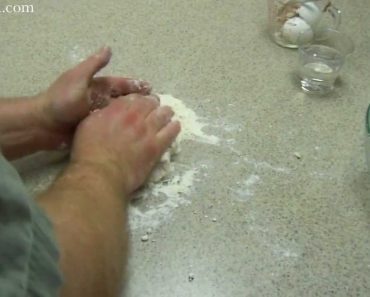
Once you have a ball of dough, dump it out onto a large floured surface.

Step 2: Knead

Knead the dough thoroughly. You want to really work the gluten in the wheat. It will become smooth and take a consistency a lot like play dough.

Step 3: Roll out very thinly

Using a rolling pin roll your dough out until it is as thin as you can make it. Pasta will plump as it cooks, so take that into consideration. It is nice if you can keep your dough roughly rectangular in shape, but I always give up as I try to keep it thin.

Step 4: Cut into strips

You can cut your dough by hand (great if you have patience and attention to detail and want very thin strips) This is most easily done with a pizza cutter or very large dough knife. BUt I find it easier to roll the dough and cut little pinwheels (see my article on the easy way to cut pasta dough).

Step 5: Cook

You could dry the noodles for later by handing them up. They make special drying racks made of small wood dowels, but I think past is much tastier if cooked fresh.

All you need is boiling water. Dump the noodles in the water and they will cook in 2 or 3 minutes.

Drain and serve with whatever sauce you like best.

Enjoy

Recipe Bean Bark


Recipe Bean Bark
Buy at Amazon

Bean Bark is a food storage method that is economical as well as easy and versatile.
It lends credibility to my idea that if prepping does not make life easier, you are doing it wrong.

The bean bark we will show you how to make can be used to make or to add protein and fiber to

  • Stews
  • Soups
  • Spreads
  • Chips

Making it is simple

  • Dump an entire can (liquid and all) of vegetarian baked beans through a blender until creamy.
  • Don’t use bean products containing bacon or pork because fatty meats will spoil and cause a rancid taste.
  • Pour the blended beans on dehydrator trays covered with parchment paper and spread thinly with a spatula.
  • 28 ounces of blended beans takes up three 15 x 15 Excalibur Dehydrator trays.
  • Dry at 135° for eight hours. The bean bark will dry like mud… full of cracks.
  • About halfway through the dehydrating time, cover the bark with a sheet of parchment and an upside down tray, flip and remove the first tray and paper that is now on top. This will allow even dehydrating in less time.

Yield: 28 ounces of beans will bark down to three cups weighing seven ounces. Variations: Bark other types of canned beans such as black beans, red beans, and kidney beans. Follow the steps above.

Once you have the bark, break it into pieces and store in an airtight container.

Here are some recipes for using Bean Bark

Bark Stew

Ingredients:

  • 1/2 cup Bean Bark
  • ½ cup Instant Brown Rice
  • ¼ cup Dehydrated Mixed Vegetables (carrots, corn, peas, and green beans)
  • ¼ Dehydrated Ground Beef
  • 1 cup water
  • Combine all ingredients with water in pot, cover, and light stove.
  • Bring to a boil and cook for an additional minute or two.
  • Remove from stove and transfer pot to insulating cozy for another five or ten minutes.
  • Stir before eating and the bark will dissolve into gravy.

Bean Bark Spread

Ingredients:

  • 1/2 cup Bean Bark
  • 1/3 cup water
  • Combine Bark with water in pot, light stove.
  • When water starts to get hot, begin stirring until the mixture gets pasty.
  • Three or four minutes of heating should do the trick.
  • Be prepared to lift the pot off the stove with a pot gripper to prevent burning.
  • Spread on pita bread or use as a dip for freeze-dried vegetable chips.

Sterilizing Water in a Pressure Cooker

52 Unique Techniques for Stocking Food for Prepper
Buy at Amazon

This method Sterilizing Water in a Pressure Cooker is much like pressure canning. Except instead of sterilizing food, we will be sterilizing drinking water in glass canning jars. Unlike filtering or distillation, this will not do anything for contaminate – just organisms.

To truly sterilize something, it must be free of all microbes AND spores.

Boiling does NOT kill all bacteria. Some bacteria are actually resistant to the temperature of boiling water at 212° F. (100 ° C.). Many bacteria formed spores can withstand boiling.

To kill all the bacteria, you need to raise the temperature to about 250° F. (121° C.). Sterilizing with steam heat is the most common method to obtain this level of sterility.

It is also the most effective, since spores can resist dry heat, but 30 minutes of exposure to steam at 250° F. 121°C will kill almost anything.

As a matter of fact, pressure canners kill so effectively, you can use them to sterilize medical equipment.

Procedure

  • Add approximately 2 inches of water into the pot.
  • Place the supporting rack inside.
  • Fill the canning jars with water, leaving 1 inch head space before closing the lid, and only tightening the bands just finger tight.
  • Add the water filled jars to the pot.

For Canners or Cookers with A Weighted Pressure Regulator

  • Lock the lid in place, but do NOT place the weight on the vent pipe.
  • Turn the heat to high
  • As soon the water at the bottom of the pot begins boiling the steam will displace the air inside the unit.
  • Let the steam escape from the cooker or canner in order to expel the air.
  • Wait until a good jet of steam is venting from the vent pipe before replacing the pressure regulator weight on the vent pipe.
  • Once the pressure setting reaches 15psi, turn down the heat and start a 30 minute timer.
  • Make sure the pressure setting remains constant, if pressure drops, get back up to 15 psi and restart timer.
  • After 30 minutes, turn off the heat and allow the pot to cool naturally until the pressure slowly drops.
  • The jars of sterile water should now be removed immediately.

As long as the sterilized liquid remains sealed the jars should be free of microbes until it is opened again.

It occurs to me that if you are having to sterilize water in a pressure cooker, the chances are good you kitchen stove isn’t working so I have included below instructions in using a pressure cooker on a wood fire.

If your pressure cooker is stainless steel and does not have any sort applied coating or non-stick finish, it can be heated outside over a wood or charcoal fire.

  • Start by digging a shallow depression in the dirt and build a fire in it.
  • Build up a large enough fire to produce a deep bed of coals.
  • Position the canner in the heart of the coals.
  • Cooking on a fire is harder than on a stove because it will be necessary to reposition it in order to maintain proper pressure
    Moving it in or out of the hottest part of the coals as needed.

How to Make Cold Smoked Cheese


52 Unique Techniques for Stocking Food for Prepper
Buy at Amazon

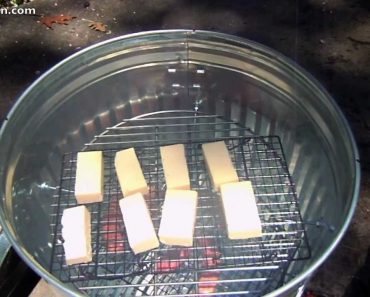
After enjoying the sausage, I had to try some Smoked Cheese – when smoking hard cheese you need to ensure the smoke is less than 175 degrees unless you want to pick melted cheese from the bottom of your smoker.

It does not take very much to smoke cheese – a little goes a long way – I like mine at 45 minutes – but the wife likes hers at about an hour.
It is no different functionally than smoking meat – other than the cooler the better, and it does not take very long.

I also find after doing this a couple times I like my smoked cheese to be of a mild sharpness – which is interesting, because if just eating cheese plain I like it to be extra sharp. I think the smoke adds the extra “bite”.

Smoked cheese makes a great gift – it is something that is unique, and that people generally do not buy for themselves.  I love it when I get it as a Christmas present from those that I know.

And for those that love to make comments about the galvanized metal – the food is not on the gavanized sides, and the heat never reaches high enough to burn off the zinc.  That happens at 200 degrees and above- the cheese melts and drips down off the greats at 175 – so I find it okay – if you don’t that’s great go buy a smoker.