Everything You Need to Know About Cabin Tent Camping

Everything You Need to Know About Cabin Tent Camping
Buy at Amazon

Spending time outdoors is very therapeutic. The fresh air and the sight of natural vegetation will help you relax and forget some of your troubles. Life can get quite difficult and if you don’t find a good activity to blow off some steam, you may lose it all or even run mad.

Camping is one of those activities that any physician would recommend for relaxing and unwinding and in this article we will tell you of the best way to camp which is by cabin tent camping. We all love cabins and how laid back they are and having a tent that has been built like a cabin will make sure that you enjoy your stay out in the woods.

Cabin tents are quite advantageous over other types of tents and we will discuss why that is the case in this article. We will also help you to understand the factors that you have to consider when picking a cabin tent for your outdoor adventures so as to make your stay outdoors enjoyable.

The basics of cabin tent camping

Here is what to expect if you get a cabin tent for your camping needs.

Vertical surfaces

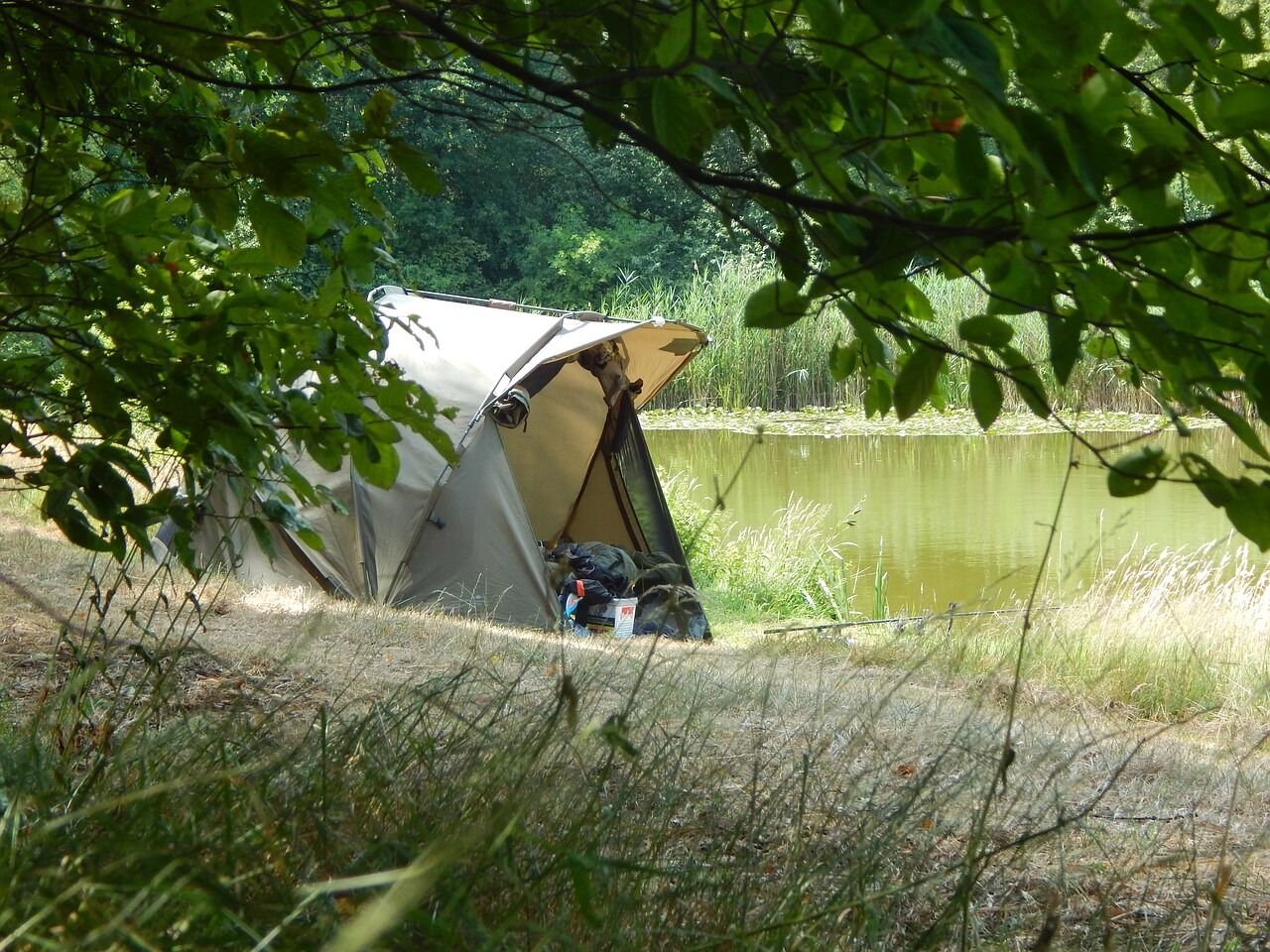
The basic of cabin tent camping is a tent that looks like a cabin. The surfaces are almost vertical unlike other tents that have curved surfaces and this means that you have a lot of space within the tent to maneuver. If you are the type that hates closed spaces, then a cabin tent is what you should get for your next camping trip as they usually come with a lot of space in the interior.

With all the extra space, you can easily fit all the luxuries that you need to make your stay outdoor comfortable. You can fit in some furniture like a table and several chairs that you will use as you hang out with your camping mates. The weather outdoors can get quite unbearable but the living space within your cabin tent will make sure that you have a warm and cozy place to chill as you wait for the storm to pass.

Multiple rooms

Cabin tents are also quite spacious and this makes them ideal for family or group camping adventures. Most cabin tents are divided into a large room at the center that serves as the living room and multiple rooms on the side that can be used for sleeping. You can get a cabin tent with multiple rooms on the side if you are camping with a large entourage or pick one with a few of them if you are not that many.

A separate room for each camper makes for added comfort and this will go a long way to make your camping enjoyable. Camping was seen as a strenuous activity that involved a lot of hard work but that is not the case anymore. People expect to be comfortable when they are out there camping and if this is what you want, then a cabin tent is the way to go.

 Easy set up

This is another thing that you will appreciate when you make a cabin tent your preferred outdoor shelter. Such tents are built with color-coded poles that easily fit into each other for a seamless set up. You will only need about 10 minutes to set up a cabin tent and this will ensure that you have a lot of time left to do other things.

You don’t want to spend a lot of time setting up your tent especially when you have kids around as they can get quite restless. There are also cabin tents that are available in a pop-up nature. This means that they pop right up when setting it them up and no time, your shelter will be ready for accommodation.

Strong and durable build

When you are out there against the cold, rain, and storms, you need a tent that is very strong and this is what you get when you buy a cabin tent for your outdoor shelter needs. The material used to make cabin tents is usually very strong and this will protect you and the other campers from the rain, hail, and strong wind.

Thanks to advancement in technology, the material used to make cabin tents is strong without being bulky and this will ensure that you don’t carry around a lot of weight if you plan on moving from place to place with your cabin tent.

Impressive build

Cabin tents are the most comfortable of outdoor camping structures and their impressive build is to thank for this. The temperatures in a tent can get quite high but this is not something that you will have to deal with when you camp with a cabin tent. This is because most cabin tents have ventilating meshes that allow for the proper circulation of air within the tent.

Cabin tents also have large windows that you can open to let in more air if it gets too hot out there. The large windows also provide you with a large field of view that will make sure you don’t miss out on the amazing sights out in nature.

The disadvantages of cabin tents

Cabin tents are amazing outdoor structures but they still have some disadvantages. They are quite heavy when compared to other tents such as dome tents and this means that you will have to put some effort if you are to move around with it.

The raised vertical surfaces can also act as an obstruction to the wind and this can get quite dangerous especially when it gets too stormy out there. The tents that are not pop up in nature are somehow difficult to set up and this means that you will spend some time doing so.

Conclusion

A cabin tent is one of the best shelters that you can get for your outdoor adventures. It is large enough and this makes it quite comfortable. Read this article on cabin tent camping to understand the other advantages of such tents.

Rope For Boating and Marine Use: What You Need to Know

Buy at Amazon

Anchors away – but, wait, what’s your anchor attached to? Rope is an important but often overlooked part of maritime activity, serving many functions.

Most widely used for docking, anchoring, towing, and rigging, rope is an important member of any boat crew! That’s why it’s important to pick rope for anchors and general marine use that will do its duty.

In the end, most boaters will generally use either Nylon rope or Polypropylene rope, depending on the size of their boat, weather conditions, and the activity they need it for of course.

To learn about the best rope for boating and marine use, read on!

What Rope Should You Use For An Anchor?

Unless you want to float away, having a good anchor in place is vital. The ground tackle system consists of the actual anchor and then the anchor rode, which can be a rope/chain combination or, all chain. Which kind of system you’ll uses largely depends on the size and type of boat you have.

However, if you decide that a rope/chain combo is the way to go, you should use Nylon rope. The elastic quality of nylon gives this rope great shock absorption. This is necessary given the force of the wind and waves. In addition, Nylon rope is very strong, flexible, rot/mildew resistant, and generally inexpensive. This rope is also easy to handle (compared to other types of rope) and holds up very well in the sunlight.

For nylon anchor lines, three strand rope is the preferred type, as it has stretch and resistance to abrasion, but braided will work as well. If you go with a braided line, be sure to pick a type that is less likely to snag. Remember, although your Nylon based anchor line will have no problem under tough conditions like wind, its breaking strength will decrease with age from knots, kinks, etc.

What’s the Best Rope For a Dock Line?

Just like with anchor lines, Nylon rope is generally your best choice for dock lines. When selecting rope for a dock line, it’s important to have two sets in mind: temporary slips and permanent slips, as they’ll both have different needs.

Nylon rope is the best for docking and mooring because of its strength and stretch. Double braid or three-strand line should do the trick. Easy to splice and reasonably priced, nylon rope is the way to go.

If you have permanent dock lines, you’ll want to protect the rope from chafe since it will be constantly in use. This can be done with chafe guards, eye splices or galvanized shackles. Transient, or temporary dock lines, are lines stored on board designated specifically for travel.

What Rope Do I Need For General Marine Use Like Pulling/Towing?

Polypropylene rope (sometimes referred to as the “Yellow Rope”) is most commonly used for activities like wake-boarding and water skiing. It’s also used to tow dinghies and tenders, although Nylon Rope can work too.

Polypropylene rope floats and is almost as strong as Nylon, making it perfectly acceptable for these types of activities. Keep in mind though, this rope is far less resistant to the sun’s UV rays and will not last as long as Nylon rope.

There’s a reason that sailors know so many different types of knots.  It is because there are many ways to incorporate rope into their work.  As you can see, rope serves many important functions onboard your vessel, so don’t skimp!  Always select the best rope for boating and marine use that you can.  Ootherwise it can rot, degrade, and break.

*Not part of an article on marine rope, but many of the reasons yellow Polypropylene rope works well for skiing makes it great for other tasks.  I use it myself for lashing projects, and the 1/2 thick 600 foot roll pictured at the top is very useful for homestead building projects.

A Prepper’s Guide to Choosing the Best Work Boots

Buy at Amazon

A Prepper’s Guide to Choosing the Best Work Boots

When hard times hit, your old sneakers, chunky high heels, and furry slippers will not be useful to you. Hiking, long distance traveling and making your way through rough terrain will be difficult if you have the wrong footwear. Top quality tactical work shoes help in keeping your feet issues at bay. Whether you are struggling with blisters, fasciitis or sore spots, a good pair of work boots will help you get through any situation; harsh elements, rough terrains and toxic spills.

They need to feel like a second skin whether you are marching through forests or urban areas. Therefore you need to be sure of your choice, and whatever you opt for, your boots need to be manufactured from heavy duty materials, as well as being comfortable and secure.

Practical Tips on How to Choose Your Best Footwear for Survival

As a self-sufficient prepper, you need multi-functional boots that are not only a good fit for the tactical environment but also complement your natural lifestyle. Check out these extensive boot features that will make your prepping efforts effortless:

Safety Toes

Safety features can either break or make your work shoes. A perfect work boot consists of a robust safety toe feature that makes for an excellent addition to your work shoe especially when you regularly deal with heavy falling objects.

They include a steel toe, aluminum toe, and composite toe. Steel toes are extremely important since they handle more of a crushing force than composites and they also act as conductors in cold and hot climates. Composite toes, on the other hand, consist of plastic, carbon fiber or Kevlar and they offer you protection without exposing your feet to the harshest of elements. According to MyBestWorkBoots, steel toe work boots allow you to face any situation with confidence.

Metatarsal Guards

It is another layer of heavy-objects-falling protection for your toes and higher foot. It preferred by by companies operating in the most extreme conditions. They are incredible for welding and surroundings wherever hot objects can be a headache.

Traction

Traction is a vital factor that keeps you on your feet once the going gets tough. One-third of all construction-related accidents were a result of a fall or slip. Therefore traction is the key to avoiding some significant hazards.

The best methodology for avoiding stupid accidents is for you to be aware and mindful. That is why prepping is all about; being tuned in to the inevitable misfortune and preparing for it preemptively.

To cut the story short, you will need Vibram rubber soles with superior index.

If you are however operating with some harsh chemicals, TPU (Thermo Poly Urethane) they can provide you with high resistance to grease, abrasion and other chemicals. TPU is lighter and possesses more wear-resistance than a rubber sole.

Support

Every a part of your operating boots influences its support system. Midsoles, insoles, puncture plates, shanks, and outsoles all provide their overall contribution to the general feel. If there is no universal formula here, you will only try them on and see how supported your feet and ankles feel. If you experience frequent blistering, you need to consider upgrading the insoles and opt for EVA midsoles for ultimate flexibility and cushioning. You have all the protection you need in the world in your work boots. Therefore you do not have to deal with stiffer polymer midsoles.

Construction

Your work boot construction is essential. The primary feature of any work shoe is the Cement Construction. It refers to the “cementing” of the out-sole and upper. They are very flexible and lightweight and you can re-sole them. There is also the Goodyear Welt that is the most durable option for your boots’ construction and is very simple. Last but not least, there is the Blake Stitch where uppers, sock liner, and soles are all connected via single stitch. It is a very secure attaching method, forming a robust bond between all the integral parts of the work boot.

In conclusion, A Prepper’s Guide to Choosing the Best Work Boots will hell you keep your feet prepped and ready for action with these robust features because they are paramount in any survival situation.

5 Best Funnels for Deer Hunting

5 Best Funnels for Deer Hunting
Buy at Amazon

Now if you are a hunter or new to hunting the very first knowledge is not just going out to the woods with a gun and shot a deer down. As much as coordinating a state or a project needs execution of a plan, so does a deer hunting. Let’s say you and your friends decided to leave the busy lifestyle of the city and out to embrace the wilderness of the nature for a few days. One of your excursion itinerary includes Deer hunting and you must be wondering how would it be like to hunt a deer.

It’s not a cliché a big deer didn’t get to be big by being stupid, he knows the game. He knows what it takes to be big to limp to maturity and what does this mean? It means when he gets older, his roaming territory shrinks. Why is that? Because he knows where he’s safe he knows where he can get what he needs, where he can get food. water and breeding opportunities.

How can you find these deer? A new piece of gear, a new piece of tree stand helps but that’s not how you find the deer, that’s not how you get in position to kill these deer. You have to know a deer to be able to hunt one. You have to know their nature to know how to hunt them successfully.

One thing to remember, deer hunting could be daunting but you need to have patience, know a few skills, learn the pinch points all of which will come in aid to your hunting experience. Yes, you will come across a lot of thoughts but you need to brainstorm a few ideas and make sure you’re geared up before you embark on your kill. You must know the suitable destination and the time year for deer hunting. Always maintain safety measures and then you can aboard on your mission.

Here are a five funnel techniques and pinch points to consider that’ll assist you hunting a deer

Hillside Gully

To hunt a deer several aspects of its habitat should be monitored such that the hunter gets a clear view from where he or she would get a clear shot. The hunter should have enough visibility on the pinch points.

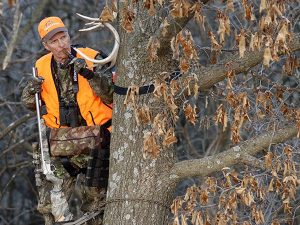
For instance, an elevated positioning or a tree stands avails a better field view which allows better deer-shots. Obviously to make funnels for deer movement requires careful scouting of the hunting area. This is a traditional method as most hunters finds it effective, as it keeps the aim well and aware within range.

The terrain feature has a great influence on the deer as they can be spotted wandering around the gully, usually water washes out from the hill and your best shot could be from this prime spot.

Outcropping Side


Outcropping Side deer hunting

Hunters are always on the lookout for best stand spots, one of which is the rocky outcropping – a down sloping corridors.

It is one ideal sight for a hunter to scout for a deer.

Usually deer are seen walking alongside these pathways. These outcropping is incremental simply because they force deer movement on either side of the hill. This is called macro-level funnel finding and it is a great spot during the season.

Wetlands

Wetlands deer hunting

Deer can be spotted on lands saturated with water, either edge of a lake, marshes or ponds and swamps, where they don’t mind getting themselves muddy or cooling themselves off.

A highland ridge is one of the best funnel for deer. You can also bait the deer with some food at the edge but you are likely to find a pounded deer trail.

Just have your hunting crossbow ready and it is important to remain concealed and as motionless as possible for deer are quite intelligent and may notice your presence.

So, to hunt them successfully a wetland funnel with a narrow point with an elevated ridge gives makes a travel route between the high grounds through which a kill is possible.

Creek or River crossing

Creek or River crossing deer hunting

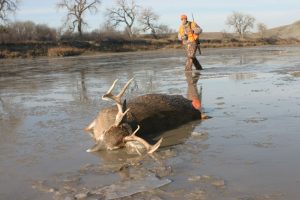
Creek or river crossing is an amazing place for hunting deer. This is one spot hunters often camp on, where you can come across a deer. Steep slope of the river bed or just the right run after a deep pool in a creek can lure deer to cross precisely there. The crossing of the deer around the banks of the creek or the river is an advantage for any hunters in action. Deer needs to drink water every day and it gets even better if you are camped next to a large river. It is not easy for a deer to cross the river on a whim which is one the other hand a better pinch point than ridge.

But deer mostly love traveling along river and if they don’t these ridges force their movements towards the banks. If you have running water on your deer ground, scout its length and identify all the crossings. It’s very often the terrain has an influence on the locomotion of the deer resulting an exclusive stand site for hunting.

Cropland

Cropland Funnel Setup for Hunting a Deer

Now if you are out on a large land surrounded by crop field, it’s wise to look for hunting areas via GPS for aerial photos. An ideal spot should be two fields that is divided or separated by a thin strip of cover. Deer use those covers to camouflage themselves and move from one point to another.

This an ideal time of the hunting season when the deer sighting is found. It is an amazing funnel for deer movements as it subsequently creates a rut. Therefore, a terrain feature formed that forces the deer to travel a certain way.

It also forces all the deer in all times of the season not only during the hunting period. For if you are a hunter and out for a kill, you are about to get close and consistent season long action. Agricultural feeding areas are usually one of the pinch points you can bank.

Now you and your friends can sit by the campfire, discuss on your stand sites and find those pinch points, hunt using those funnels. And we can almost guarantee you and your friends will enjoy some of the best rut hunting action of your life. Last but not least always be careful about your safety. Hunting requires patience and little bit of skill. Whether hunting for survival or hunting as a spot, you need to know that you are in legal grounds to hunt. Happy Deer hunting!


How to Make Your Own Fishing Net

How to Make Your Own Fishing Net

How to Make Your Own Fishing Net
Buy at Amazon

While some prefer to purchase a fishing net, some people enjoy the relaxation that comes from making their own.

If you are like me then knowing how to make your own fishing net is something you find to be a neat skill to have.

If a do it yourself net is what you’re after, there are several things you should keep in mind.

In this article, we are going to look at a few things to consider, the materials you will need, and the steps to making a net that you can use for your next fishing trip. Here is what you need to know.

Things to Consider

Before you get started making your fishing net, you need first to consider the size of the net you want to make. If you want a larger fishing net, you will need to repeat the steps until you have reached the size you want. If you want a smaller net, it might not take you quite as long to make it. However, before you buy your supplies and get started, you need to know your ideal net size.

You need to also consider the desired quality of your fishing net. Do you want a high-quality net or just a simple fishing net? Your preferences will determine the type of string and handle you should purchase to make your net out of. The last thing to consider before you get started is your intention for the net. How will you use your fishing net? If you are planning to use it for heavy duty fishing, you might want to invest in a high quality string. If you are just using it for a few fishing days out of the year, cheaper string should work just fine.

The Supplies

Now that you have somewhat of an idea about your ideal fishing net, you can start shopping for your supplies. To begin, you are going to need a set of needles. Your local sporting goods store should have several needle options. You will also need a good pair of scissors or a knife to cut the string or line that you will be using. Once you have these, you can then get your string or line. The amount you purchase will depend on the size of the net you want to make. Along with your line, you will need a few net gauges to help you decide how wide to make the holes in the net. To finish off the net making materials, you need a good set of net handles so you can easily use your net while you are out fishing.

How to Make Your Own Fishing Net

Now that you have your materials, it is time to get started making your net.

The first step will be the start of your net. Start by holding your thread snugly and making a loop. Tightly grip the intersection of the loop. By using your free hand, grab the tag end of the string, and thread it through the loop and around it once again. This makes your first knot of the net when you pull the knot closed.

The second step involves grabbing your net gauge. You will need to decide how wide you want the holes in the net. The fish size that you fish for the most will determine which gauge you need to use. For example, typical 20-pound fish will need a net with a 1-inch gauge. You can create this gauge by using your fingers, index and middle fingers. You should use both of them as your guide for creating your knots.

The third step is the construction of the first row. You will need to make this row as long as you want your net. If you happen to run out of thread during the process at any time, use a sheet bend knot to the last loop to connect more thread. You will need to pass that tag end back over the top and join those knotted ends with the new piece of thread. You will construct your net row by row.

Step four involves finishing off your net. You should gather the net up in your hands, letting it drape to the ground. A standard fishing net is only between 12 and 18-inches in depth. To finish off the net, you will fold a 1-inch flap of this netting over the handle of your choice. Use the needle to sew the net onto the handle by passing the thread under and over the handle until it is secure. Then, just knot off the net to finish.

Drew Bishop is a contributing writer and media specialist for Delta Net and Twine. He regularly produces content for a variety of fishing and outdoor blogs.