
Category: Outdoor Skills | Survival

  • Knots: Taut Line Hitch

    Knots: Taut Line Hitch

    Knots: Taut Line Hitch
    Buy at Amazon

    Today’s knot is the Taut Line Hitch.

    Since it can be slipped to tighten or loosen a line, and it also holds well under load, it is a great not for camping.

    This makes it useful for lines that may need adjustment.

    I learned it in the boy scouts and use it to tie tent and tarps to stakes, because it slides freely, yet jams under load, which makes adjustments easy.

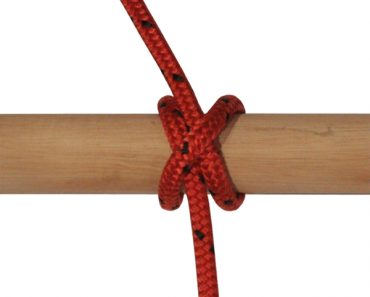
    Tying a Tautline Hitch

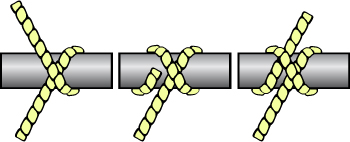
    • Make a turn around a post or other object several feet from the free end.
    • Coil the free end twice around the standing line working back toward the post.
    • Make one additional coil around the standing line on the outside of the coils just made.
    • Tighten the knot and slide it on the standing line to adjust tension.

    The taut line hitch was the first knot I learned in the Boy Scouts (but I already knew the square knot from my dad).  This knot is perfect for guy lines on tarps and tents.

    I can think of 8 taut line hitch knots being used semi-permanently at the land – tying down the tarp at my campsite, and trying down a tarp on the back of the shed.

  • How to Extract Clean, Drinkable Water From Plant Leaves

    How to Extract Clean, Drinkable Water From Plant Leaves


    Survival with Water Condensed from Leaves
    Buy at Amazon

    As a child I used to read about solar stills made by digging a hole in the desert and covering it with clear plastic, I was an adult by the time I actually visited a desert environment, but I was very disappointed with the results.

    However, by placing a plastic bag over the leaves of a living plant, you can extract clean, drinkable water from plant leaves. This survival tip is very easy to do.

    I was able to collect much more water condensed from leaves than I could from the typical solar still dug into the ground.  Additionally, this method too far less work and effort.

    Condense Drinkable Water From Plant Leaves

    Material:

    • Several Large clear plastic bags
    • String or cord
    • Live, non-poisonous vegetation with green deciduous leaves

    Procedure:

    1. Tie a clear plastic bag on the end of a plant or small tree branch. The bag should be sealed very tightly over the branch so water cannot escape.
    2. Water vapor will collect and condense in the bag.
    3. Wait until evening for maximum condensation before removing the bag.
    4. Switch the bag to another branch and repeat.

    Yield:
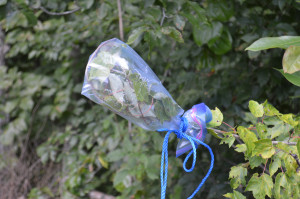
     Water Condensed from LeavesYou can expect an average of one cup of water per bag per day – which means you will need 16 of these devices per person to collect the minimum recommended one gallon per person per day or water.

    Gathering water condensed from leaves is much easier than other condensation methods, but as with any method it takes a lot of stills to get enough water.

  • How to Make a Homemade Cable Snare

    How to Make a Homemade Cable Snare


    Building a Homemade Cable Snare
    Buy at Amazon

    My friend William Smith, who used to trap in Alaska and now builds very inexpensive, but quality snares.  He agreed to show me how he builds homemade cable snares.

    The Parts are Pretty simple

    • 3/32 aircraft cable
    • Sure-lock snare lock
    • Double ferrule
    • Single ferrule.

    To Build a Homemade Cable Snare:

    • First, you run the cable through the sure-lock device, make a loop, and then run it back through
    • Next, lock it in place with a single ferrule on the loop end.
    • Then, run the long end of the cable through the double ferrule, loop it around, and put the free end back into the ferrule to make a loop for a swivel or to attach to the tree.

    As you can see it is pretty easy to make a homemade cable snare.  When Smitty gets his shed wired so we don’t have to yell over the generator I want to show how to make a snare lock using a penny.

    I plan on buying some of his snares, but before I do that, I have to get him to show me how to wax and dye them so I can actually catch some meat with them.

  • Using a Pencil Sharpener for Tinder

    Using a Pencil Sharpener for Tinder

    Using a Pencil Sharpener for Tinder
    Buy at Amazon

    As far as survival gear goes, I like cheap, light, unobtrusive, and multi-use. Today’s tip of using a Pencil Sharpener for Tinder fits all those things.

    If you keep a small pencil sharpener in your gear you can use it to make tinder for your fire. It the outside of the wood is wet from a quick rainstorm, by cutting into the wood you can access dry material.

    As a side benefit – the pencil sharpener will put a point on small diameter wood which you could use to make traps, fishing implements, tent stakes – whatever – and in a pinch the razor can be removed and uses as a small knife.

    Not bad for something you can buy at the dollar store…

    The best thing about using a pencil sharpener for tinder is that it weighs practically nothing, is small and ob obtrusive, and if you take care when selecting it, you may be able to disassemble it to get a razor you could use if needed.

    This is a great survival kit idea, it it light, cheap, small, and never goes bad.  I make a point to keep a pencil sharpener in all my tool bags just for those reasons.

  • Knots: Figure Eight

    Knots: Figure Eight

    Knots: Figure Eight
    Buy at Amazon

    If you are involved in either sailing or rock climbing, it is likely you know the importance of the Figure Eight knot. It is used to stop ropes from running out of retaining devices.
    Like the overhand knot, it will jam under strain, but unlike the Overhand, which often causes the rope to have to be cut, the figure of eight is usually more easily undone than the overhand knot.


    Tying the Figure 8

    • Pass the tail over itself to form a loop.
    • Continue under and around the standing end.
    • Complete the knot by passing the tail down through the loop

    Can also double the rope up and make a figure 8 on a bite to be used for anchoring rope.

    When my dad taught me about mountaineering and repelling this was one of the first knots he had me memorize.

    He told me that proper knots are more than just pretty.  They were a sign of professionalism and knowledge.  He said that proper knots did the job they were designed to do, and as a rule (with the double fisherman as an exception) were easier to untie than improper knots.

    To this day, I cannot tie a load down without thinking of him.